
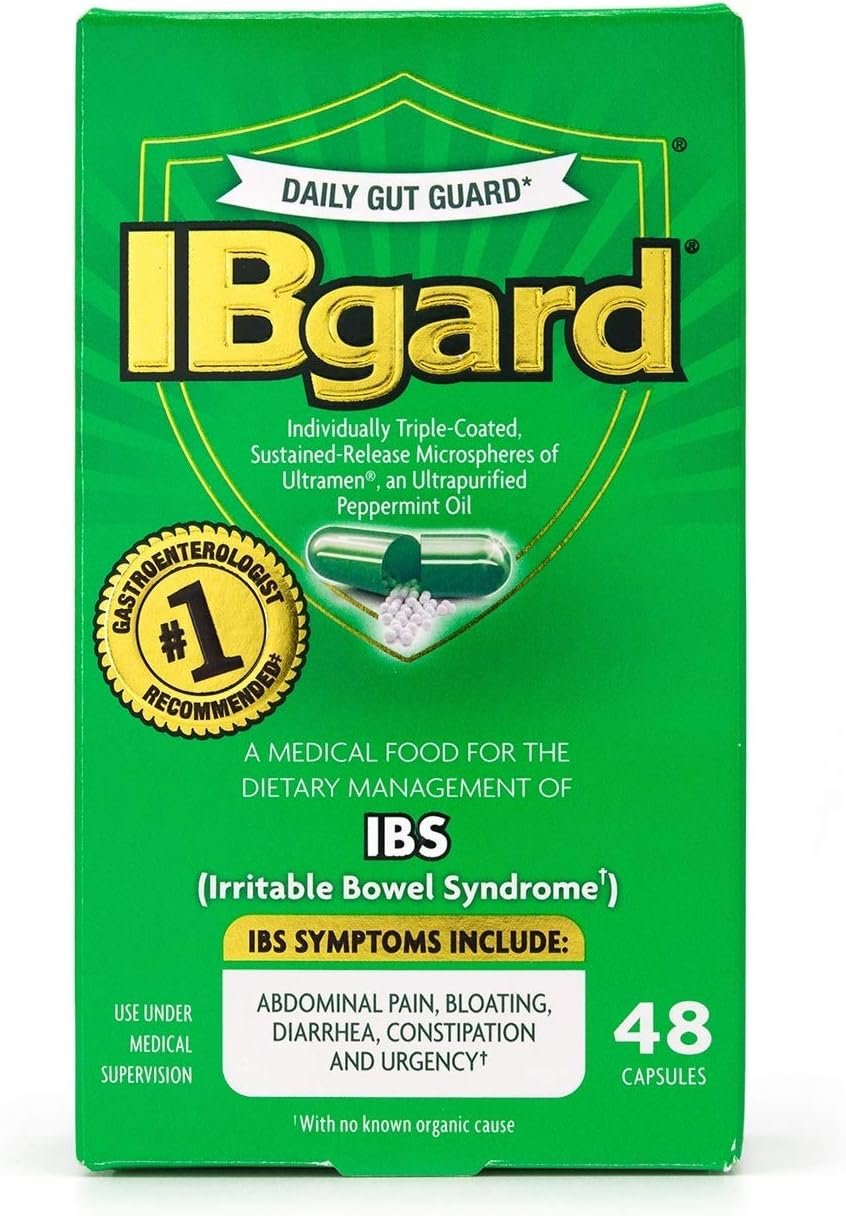
Quick answer: Is IBgard worth it?
IBgard is a targeted peppermint-oil option for adults seeking help with IBS-related abdominal discomfort, bloating and cramping. Some clinical evidence supports peppermint oil for short-term IBS symptom relief, but results vary and evidence for long-term benefits is limited. The value five-pack contains 240 capsules total (five packs of 48). It is not a cure for IBS or a treatment for SIBO.
Editorial disclosure: This is a research-based product assessment, not a claim that Purely Vital Living personally tested the product. Retailer links may be affiliate links; purchases may earn us a commission at no extra cost to you.
IBgard review: At a glance
| Product | IBgard for Irritable Bowel Syndrome, Value 5 Pack |
|---|---|
| Package size | 5 × 48 capsules = 240 capsules |
| Primary ingredient | Specially formulated peppermint oil in sustained-release microspheres |
| Designed for | Dietary management of IBS-related symptoms |
| Best fit | Adults considering a peppermint-oil approach to abdominal discomfort, bloating or cramping after discussing suitability with a clinician |
| Important limitations | Not a cure for IBS; not established as treatment for SIBO; benefits and tolerability vary |
| Purchase format | Bulk five-pack; check current seller, expiry dates and per-capsule price |
What is IBgard?
IBgard is a branded peppermint-oil product intended for the dietary management of irritable bowel syndrome (IBS). Its formulation uses triple-coated, sustained-release microspheres designed to deliver peppermint oil farther along the digestive tract. Peppermint oil contains menthol and has antispasmodic properties that may help some people with intestinal discomfort. The manufacturer’s delivery-system claims should not be confused with proof that every user will experience symptom relief.
This review concerns the value five-pack with 48 capsules per pack, not a single 48-capsule box. The underlying capsule formulation may be similar across pack sizes, but value depends on the total price, expiration dates and how often it will actually be used.
Potential benefits: What might IBgard help with?
Abdominal pain and cramping
Peppermint oil is most relevant to IBS-related abdominal discomfort and cramping. Clinical guidelines conditionally suggest peppermint oil for IBS, based on evidence that is promising but not consistently high quality. It does not address every cause of abdominal pain.
Bloating and digestive discomfort
Some people may notice improvement in bloating or a sensation of intestinal discomfort, but responses differ. Persistent or worsening bloating requires proper evaluation, particularly when accompanied by alarm symptoms.
Overall IBS symptom burden
Trials and systematic reviews of peppermint-oil products suggest possible short-term improvement in overall IBS symptoms. However, not all studies use IBgard specifically, so results from other peppermint-oil formulations cannot automatically be attributed to this exact product.
Does IBgard actually work? What the research says
The U.S. National Center for Complementary and Integrative Health (NCCIH) reports some evidence that enteric-coated peppermint-oil capsules may reduce IBS symptoms in the short term, while long-term effectiveness remains uncertain. A Canadian gastroenterology guideline suggests peppermint oil with a conditional recommendation based on low-quality evidence. Notably, a later six-week randomized trial found similar improvement in peppermint-oil and placebo groups. This mixed picture makes it inappropriate to promise rapid or reliable results.
Important distinction: Research on peppermint oil as an ingredient is broader than research on IBgard’s exact proprietary formulation. Manufacturer-sponsored or product-specific studies should be considered alongside independent evidence and study limitations.
IBgard ingredients and delivery system
The central active ingredient is peppermint oil, delivered using the brand’s coated microsphere system. A Nestlé Health Science product guide lists peppermint oil at 90 mg per capsule in one referenced market formulation; labels can vary by market or change over time. Check the Supplement Facts or product packaging for the specific U.S. five-pack purchased rather than assuming every package has identical details.
Additional capsule and coating ingredients may matter for allergies, dietary restrictions and tolerability. Review the current package label if you avoid particular dyes, gelatin or other excipients.
How to take IBgard
Follow the current instructions printed on the specific package and the advice of your healthcare professional. Manufacturer guidance for a referenced formulation describes taking capsules before meals with water, but dosing can differ by market and individual circumstances. Do not increase the dose to compensate for persistent symptoms. Swallow capsules as directed; altering a coated formulation may change where the peppermint oil is released.
Side effects and who should be cautious
Peppermint-oil capsules can cause heartburn, reflux, belching, nausea or a burning sensation around the anus. Peppermint oil may worsen symptoms in people with gastroesophageal reflux disease (GERD) or a hiatal hernia. People who are pregnant or breastfeeding, have gallstones or other relevant medical conditions, or take regular medication should seek individualized medical advice before use. Stop and seek help for a suspected allergic reaction.
IBS-like symptoms can overlap with celiac disease, inflammatory bowel disease, SIBO and other conditions. Seek medical evaluation for rectal bleeding, unexplained weight loss, anemia, fever, persistent vomiting or new severe symptoms. Do not use IBgard to postpone an appropriate diagnosis.
IBgard for IBS vs SIBO: Important difference
IBgard is positioned for IBS symptom management. It has not been established as a treatment that eradicates small intestinal bacterial overgrowth (SIBO). IBS and SIBO can cause overlapping symptoms, and symptoms alone cannot reliably distinguish them. Readers uncertain about the cause of their symptoms can consult our SIBO vs IBS comparison and discuss diagnostic testing with a clinician when appropriate.
Pros and cons
Potential advantages
- Uses a recognizable peppermint-oil approach with some supportive IBS evidence.
- Coated delivery format designed for intestinal release.
- Convenient capsules rather than preparing peppermint tea.
- Five-pack may reduce cost per capsule compared with smaller packages, depending on current pricing.
Potential drawbacks
- Does not work for everyone; research findings are mixed.
- Heartburn or reflux can make it unsuitable for some people.
- Large bulk purchase may be wasteful if not tolerated.
- Not a substitute for diagnosis or individualized IBS treatment.
- Current price, expiry dates and retailer authenticity require checking.
Is the five-pack good value?
The advertised configuration contains 240 capsules. To compare value fairly, divide the checkout price by 240, then compare that per-capsule cost with the price of a single 48-count pack. Factor in shipping, subscription terms, expiration dates and return eligibility. We have not verified a current price, so this review does not claim that the bundle is always cheaper.
Who should consider IBgard — and who should skip it?
May be worth discussing with a clinician: Adults with an established IBS diagnosis who are interested in a short-term trial of a peppermint-oil product, especially when cramping or abdominal discomfort is prominent.
Consider another approach first: People with significant reflux or heartburn, unexplained digestive symptoms, suspected SIBO requiring evaluation, or those unable to tolerate peppermint oil. A smaller pack may be a more practical first purchase than a five-pack.
IBgard vs other IBS approaches
Peppermint oil is one possible symptom-management option, not a complete IBS plan. Depending on IBS subtype and medical history, clinicians may consider soluble fiber (especially psyllium), a supervised limited trial of a low-FODMAP diet, gut-directed psychological therapies or prescription treatments. Probiotics and digestive enzymes should not be assumed to help every IBS patient. Choose interventions based on symptoms, evidence and individual tolerability rather than stacking supplements.
Final verdict: Is IBgard worth buying?
PVL editorial assessment: IBgard is a reasonable product to research if you have diagnosed IBS and want to discuss peppermint oil for abdominal discomfort. Its biggest strengths are a focused formulation and a plausible, evidence-informed role in short-term symptom management. Its limitations are variable effectiveness, reflux-related side effects and uncertainty about long-term outcomes. For first-time buyers, a single smaller pack may be more sensible than committing to 240 capsules. This is an editorial assessment based on available research and product information, not hands-on testing.
Frequently asked questions
1. Is IBgard good for IBS bloating?
It may help some people with IBS-related bloating or abdominal discomfort, but it is not guaranteed. Evidence for peppermint oil is more supportive of short-term overall symptom improvement than of reliably resolving every individual symptom. If bloating is new, severe, persistent or associated with warning signs, consult a healthcare professional instead of relying on a supplement.
2. How long does IBgard take to work?
Individual responses vary, and the available research does not establish a reliable timeline for every user. Marketing claims about fast relief should not be treated as a personal guarantee. Follow the product label and discuss a reasonable trial period with your clinician. If symptoms worsen or persist, reassess the diagnosis and management plan rather than simply increasing the dose.
3. Can IBgard cause heartburn or acid reflux?
Yes. Peppermint oil can cause or aggravate heartburn and reflux, although coated products aim to limit release in the stomach. People with GERD or a hiatal hernia should be especially cautious and discuss suitability with their clinician. Stop using the product and seek medical advice if reflux becomes troublesome or new symptoms develop.
4. Does IBgard treat SIBO?
No clinical evidence establishes IBgard as a treatment that eradicates SIBO. IBS and SIBO can share bloating, abdominal pain and changes in bowel habits, but they are not interchangeable diagnoses. A peppermint-oil product might affect discomfort without addressing the underlying cause. If SIBO is suspected, ask a clinician whether evaluation and targeted treatment are appropriate.
5. Is the 5-pack better than a single 48-count pack?
Not necessarily. The five-pack contains 240 capsules, so it may offer a lower per-capsule cost, but only if the current total price supports that comparison. New users may prefer a smaller pack to assess tolerability first. Check expiration dates, shipping, seller reliability, return rules and whether any subscription discount changes the final checkout price.
6. Can I use IBgard alongside other IBS treatments?
Possibly, but combinations should be reviewed with your healthcare professional, particularly if you use prescription medications, have reflux or follow a restrictive diet. IBS care often involves several approaches tailored to symptom subtype and individual needs. Adding multiple supplements simultaneously can make it difficult to tell which intervention is helping or causing side effects.
Sources and further reading
- NCCIH: Irritable Bowel Syndrome — What You Need to Know
- Canadian Association of Gastroenterology clinical guideline for IBS
- American College of Gastroenterology: Irritable Bowel Syndrome
- Nestlé Health Science product guide (historical formulation reference)
Medical disclaimer: This article provides general educational information and is not medical advice. Supplements do not replace professional evaluation, diagnosis or treatment.



Reviews
There are no reviews yet.