
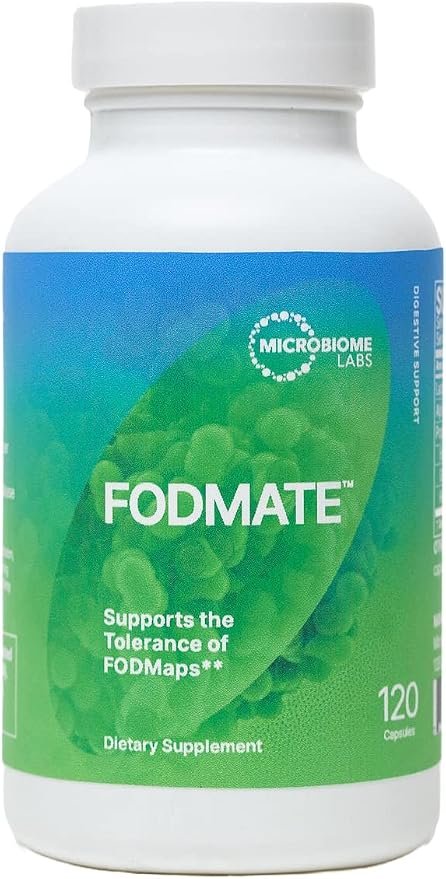
Microbiome Labs FODMATE is a targeted digestive enzyme supplement intended for meals containing certain FODMAP carbohydrates. Its current manufacturer-listed formula includes inulinase, pectinase, lactase and alpha-galactosidase. These ingredients have plausible food-specific roles, but robust clinical trials of the finished FODMATE product are limited. It may suit people with identified food triggers; it does not diagnose or treat IBS or SIBO.
PVL editorial disclosure: This is a research-based product assessment, not a hands-on test or personal medical recommendation. PVL may earn from qualifying affiliate purchases.
PVL editorial rating: 4.1/5
Overall: 4.1 out of 5 — provisional editorial assessment. FODMATE earns credit for a focused enzyme blend, measurable lactase and alpha-galactosidase activities, and a convenient capsule format. Points are deducted for limited independent clinical evidence on the complete formula, proprietary blend disclosure, formula inconsistencies across older and current product materials, and uncertainty about who benefits. This is not a customer-review aggregate.
FODMATE review: At a glance
| Product | Microbiome Labs FODMATE |
|---|---|
| Size | 120 capsules |
| Serving | 2 capsules; 60 servings per bottle |
| Current manufacturer-listed enzymes | Endo- and exo-inulinase, pectinase, lactase, alpha-galactosidase |
| Listed enzyme activities | Lactase 10,000 ALU; alpha-galactosidase 1,000 GalU per serving |
| Proprietary enzyme blend | 530 mg on current U.S. manufacturer page |
| Amazon ASIN | B097WJWD4T |
| Best fit | Occasional support with meals containing relevant carbohydrates |
| Not intended for | Diagnosis or treatment of IBS, SIBO, celiac disease or food allergy |
What is FODMATE?
FODMATE is a digestive enzyme supplement from Microbiome Labs. It is marketed for people who experience occasional digestive discomfort around certain FODMAP-containing foods. FODMAPs are fermentable short-chain carbohydrates that can contribute to bloating, gas, pain and altered bowel habits in susceptible people. FODMATE aims to break down some of these carbohydrates during digestion rather than requiring users to avoid every trigger food. That is a plausible mechanism, not proof of universal symptom relief.
FODMATE ingredients: What does each enzyme do?
| Enzyme | Potential target | Practical relevance |
|---|---|---|
| Endo- and exo-inulinase | Fructans/inulin-type fibers | Foods such as onion, garlic and wheat contain fructans |
| Pectinase | Pectin in plant foods | Breaks down pectin; clinical symptom benefits are not established for this finished formula |
| Lactase (10,000 ALU) | Lactose | Relevant to dairy-associated symptoms in people with lactose malabsorption |
| Alpha-galactosidase (1,000 GalU) | Galacto-oligosaccharides (GOS) | Relevant to legumes and some other GOS-rich foods |
Important formula discrepancy: The current U.S. manufacturer product page lists a 530 mg proprietary blend with inulinase and pectinase. Older manufacturer brochures and some retailers list a 730 mg blend that additionally contains glucose isomerase. Because glucose isomerase may be relevant to excess fructose, this difference matters. Check the actual Supplement Facts panel and batch with the seller before purchasing. Do not assume glucose isomerase is present in today’s version.
Does FODMATE work for bloating, gas and abdominal discomfort?
Its most credible rationale is enzyme-assisted digestion of specific food components. Lactase has an established role in lactose intolerance. Alpha-galactosidase may help some people digest GOS-containing foods. Inulinase and pectinase have plausible biochemical actions, but laboratory breakdown of a carbohydrate is not the same as a demonstrated improvement in symptoms in randomized human trials. Evidence for individual enzymes should not be treated as evidence that the complete FODMATE formula relieves every digestive complaint.
Bloating, gas and discomfort can also arise from constipation, gut sensitivity, food intolerance, medications and other conditions. An enzyme supplement may be less helpful when the symptom is not caused by a carbohydrate the product can break down.
Can FODMATE help with diarrhea or constipation?
The manufacturer describes support for occasional symptoms associated with FODMAP-rich foods, including altered bowel habits. That does not establish FODMATE as a treatment for chronic diarrhea or constipation. Persistent symptoms, blood in stool, unexplained weight loss, fever, anemia or severe pain require medical assessment rather than supplement experimentation.
FODMATE for IBS versus SIBO
IBS is a disorder of gut–brain interaction, and food-related symptoms are only one part of its management. Targeted enzymes may be considered as an adjunct for a known trigger, but they do not cure IBS. SIBO involves an overgrowth of microorganisms in the small intestine; FODMATE has not been established to eradicate it or replace clinician-directed testing and treatment. Learn more in PVL’s SIBO vs IBS comparison.
How to take FODMATE
The manufacturer’s current U.S. directions say to take two capsules with meals or as recommended by a healthcare practitioner. The 120-capsule bottle therefore contains 60 two-capsule servings. Older labels and some retail pages mention two capsules two to three times daily; follow the directions on the specific bottle and individualized professional advice rather than combining instructions from different versions. This product is intended for use with food, not as rescue treatment after symptoms develop.
Safety, allergens and precautions
Microbiome Labs describes its current product as non-GMO and free from nine major allergens, but people with severe allergies should verify the current ingredient panel and manufacturing information. The current manufacturer warns people who are pregnant or nursing, take medication or have a medical condition to consult a doctor. Keep the product away from children and do not use it if the seal is missing or broken. An enzyme that acts on wheat fructans does not remove gluten and cannot make wheat safe for someone with celiac disease.
Some older promotional materials advise short-term use and caution against taking FODMATE alongside prebiotic supplements. Such guidance should be confirmed with a clinician and the latest manufacturer labeling. There is insufficient evidence to claim that normal use inevitably harms the microbiome.
FODMATE pros and cons
Pros
- Targeted enzymes for several commonly troublesome food carbohydrates.
- Quantified lactase and alpha-galactosidase activities on the current label.
- 120 capsules provide 60 standard two-capsule servings.
- Capsules are convenient for travel or eating out.
- Potentially useful as a selective dietary tool rather than permanent food avoidance.
Cons
- Limited high-quality independent trials of the complete FODMATE product.
- Proprietary blend does not disclose the individual activity of each component.
- Different versions of the formula appear in published manufacturer materials.
- Cannot cover every FODMAP, including polyols.
- May become expensive with repeated daily use.
Price and value: Is 120 capsules worth buying?
At two capsules per meal, one bottle supplies 60 servings. Retailers reviewed during research displayed prices of approximately $57–$64, but those are retailer snapshots, not verified current Amazon checkout prices. That corresponds to roughly $0.95–$1.07 per two-capsule serving before shipping or taxes. Check the live seller price, authenticity, expiration date and refund policy. An occasional-use approach may be more economical than taking it with every meal.
FODMATE vs FODZYME and FODAWAY
FODMATE comes in capsules and currently lists inulinase, pectinase, lactase and alpha-galactosidase. FODZYME uses a powder sprinkled directly on food and targets fructans, GOS and lactose. FODAWAY advertises a wider combination including xylose isomerase, although product-specific evidence and actual label activities matter more than enzyme count alone. Compare confirmed current ingredients, targeted foods, administration method, cost per meal and independent clinical data before choosing.
Who should consider FODMATE?
It is most relevant to people who have noticed a consistent relationship between specific carbohydrate-rich meals and occasional digestive symptoms, ideally after discussion with a dietitian or clinician. It is less suitable as a first response to unexplained persistent symptoms, suspected celiac disease, possible food allergy or an unconfirmed SIBO diagnosis. A supervised low-FODMAP dietary approach generally involves a short elimination phase followed by reintroduction and personalization rather than lifelong restriction.
Final verdict: Our FODMATE review
PVL editorial rating: 4.1/5. FODMATE has a sensible food-specific enzyme rationale and a practical capsule format. However, there is a meaningful gap between the evidence for individual enzyme activities and reliable clinical proof for the finished supplement. The discrepancy between current and older formulas deserves particular attention. We view it as a potential adjunct for selected triggers, not a general IBS remedy or SIBO treatment.
Frequently asked questions
1. Does FODMATE really help bloating?
FODMATE may help some people digest selected fermentable carbohydrates, which could reduce meal-related gas or bloating when those foods are the trigger. But the full product has limited independent controlled clinical evidence. Results will depend on your particular food sensitivities and the cause of symptoms. Persistent or worsening bloating deserves clinical assessment.
2. What is the difference between FODMATE and FODZYME?
FODMATE is a capsule supplement; FODZYME is a powder applied directly to food. Both target certain fermentable carbohydrates, but their enzyme blends and directions differ. FODMATE’s current manufacturer page lists inulinase, pectinase, lactase and alpha-galactosidase. Neither covers all FODMAPs or has been proven to treat SIBO. Compare the latest labels before purchasing.
3. Does FODMATE contain glucose isomerase?
Some older Microbiome Labs materials list glucose isomerase in a 730 mg proprietary blend. The current U.S. manufacturer page instead describes a 530 mg blend containing inulinase and pectinase, without listing glucose isomerase. This is an important formulation difference for people concerned about fructose. Check your bottle’s Supplement Facts and ask the seller about the version supplied.
4. How many FODMATE capsules should I take?
The current U.S. manufacturer’s suggested use is two capsules with meals, or as directed by a healthcare practitioner. A 120-capsule bottle contains 60 two-capsule servings. Older retail descriptions sometimes give different frequency guidance. Follow your actual package and medical advice, especially if you have a gastrointestinal condition, take medications, or plan regular use.
5. Can FODMATE treat IBS or SIBO?
No. FODMATE is a digestive enzyme supplement, not an approved treatment for IBS or SIBO. It may help break down some food carbohydrates that contribute to discomfort in sensitive individuals. It does not correct the underlying causes of IBS or eliminate small intestinal bacterial overgrowth. A clinician can help determine appropriate testing and treatment.
6. Is FODMATE worth the price?
With 60 two-capsule servings per bottle, value depends on how often you need it and whether your symptoms match its enzyme targets. Sample retailer prices around $57–$64 translate to approximately $0.95–$1.07 per serving, but prices can change. Check the current listing and consider whether dietary personalization offers a more affordable long-term approach.
Related reads from Purely Vital Living
- SIBO vs IBS: How They Differ in Symptoms, Causes, and Testing — why the distinction matters.
- FODZYME Review: Do FODMAP Enzymes Really Work? — powder-based alternative.
- IBgard Review: Peppermint Oil for IBS — a different approach to IBS symptom support.
Sources and further reading
- Microbiome Labs — current U.S. FODMATE product page and Supplement Facts.
- Microbiome Labs UK — 2023 FODMATE brochure (older formula).
- Microbiome Labs — product overview.
- American College of Gastroenterology — IBS clinical guidance.
Medical disclaimer: This review is educational and is not individualized medical advice. Supplements are not substitutes for clinical diagnosis or treatment.


Reviews
There are no reviews yet.