

Quick Verdict
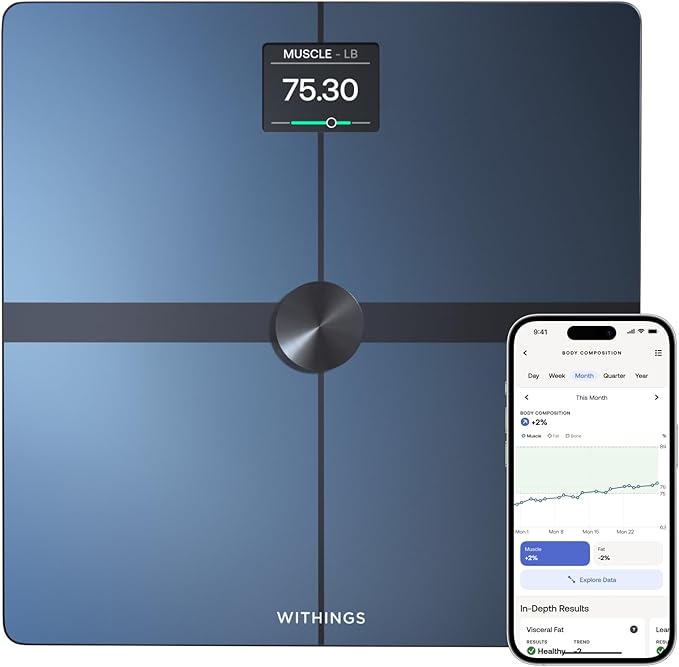
A Withings smart body-composition scale can make regular weight tracking and trend logging convenient, but its body-fat, muscle, water, and bone-related numbers are estimates rather than direct measurements. The existing PVL listing does not identify the exact Withings model, so features, compatibility, and validation cannot be assumed across the brand’s range.
PVL Rating: 3.9/5 (provisional)
- Weight-tracking convenience: 4.5/5
- App-based trend logging: 4.5/5
- Body-composition measurement principles: 3.6/5
- Exact-model validation evidence: 2.6/5
- Value: 4.0/5
What Does a Withings Smart Scale Measure?
A scale directly measures force and converts it into an estimated body-weight reading. Some Withings models use bioelectrical impedance analysis (BIA), which passes a small electrical signal through the body and combines impedance with equations to estimate body composition. BMI is calculated from weight and height; it is not a direct measure of body fat.
Which Withings Model Is This?
The exact model is not established by the current listing. Withings offers different scales with different body-composition measurements, app features, connectivity, and specialized functions. Confirm the model name and current manufacturer specifications before purchase; do not assume every Withings scale offers the same metrics or technology.
How Accurate Is Body-Fat Percentage?
BIA body-fat percentage is an estimate, not a laboratory measurement. Individual error can be meaningful, even when group-level correlations with reference methods look reasonable. Changes in hydration, recent exercise, food intake, skin contact, and measurement conditions can shift the reading without a corresponding change in actual body fat.
Can It Measure Muscle Mass?
A consumer BIA scale estimates muscle-related mass using a predictive model. It does not directly measure skeletal muscle tissue or diagnose sarcopenia. Apparent day-to-day muscle changes may reflect hydration and algorithm variability rather than muscle gained or lost. Strength, physical function, and longer-term trends offer additional context.
What About Hydration and Bone Mass?
Estimated body-water percentages are derived from impedance models, not a clinical assessment of dehydration. Likewise, a scale’s bone-mass estimate does not measure bone mineral density or diagnose osteoporosis. Bone health concerns require appropriate clinical assessment, which may include DXA when indicated.
Are Smart-Scale Trends Useful?
Weight trends may be more informative than isolated daily readings. Tracking under similar conditions can help reveal changes over weeks and months. Body-composition estimates can be viewed cautiously as rough trends, but small shifts should not be interpreted as definitive fat loss or muscle gain.
How Should You Weigh Yourself Consistently?
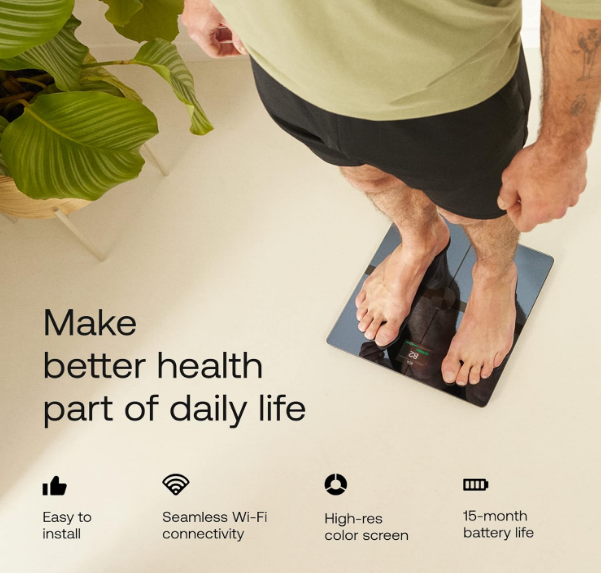
Place the scale on a firm, level floor and use it at a similar time of day, often in the morning after using the bathroom and before breakfast. Follow the manufacturer’s instructions for bare-foot contact if BIA is enabled. Avoid comparing readings obtained after intense exercise, large meals, or major fluid shifts as though conditions were identical.
Does the Withings App Improve Measurement Accuracy?
No. Automatic syncing can make tracking easier and reduce manual recording, but it does not correct underlying measurement limitations. Charts can help users observe longer-term patterns; they cannot independently diagnose obesity-related disease, low muscle mass, dehydration, or metabolic health.
Who Should Avoid BIA Measurements?
People with implanted electronic medical devices, such as some pacemakers or defibrillators, should follow the specific scale’s manufacturer safety instructions and clinical guidance before using impedance-based measurements. Pregnancy and other circumstances can also affect interpretation. Weight-only operation, if offered, should be verified for the exact model.
Can It Diagnose Osteoporosis, Dehydration, or Sarcopenia?
No. Consumer body-composition outputs do not replace DXA bone-density assessment, medical evaluation of hydration, or clinical assessment of muscle strength and function. Seek professional evaluation for unexplained weight change, edema, weakness, or concerns about bone health.
Does Tracking Body Composition Improve Longevity?
Recording data can support awareness, but the scale itself has not been shown to extend life or improve metabolic outcomes. Healthy habits, appropriate medical care, and sustainable behavior matter more than any one proprietary body-composition score.
What This Withings Scale Has Not Been Shown to Do
- Directly measure body fat, muscle tissue, or bone density
- Diagnose dehydration, osteoporosis, or sarcopenia
- Guarantee precise day-to-day changes in fat or muscle
- Improve accuracy simply by syncing to an app
- Establish longevity or metabolic-health improvements
- Offer every advertised feature across all Withings models
Pros and Cons
Pros
- Convenient regular weight logging
- App-based long-term trend visualization
- Potential multi-user convenience depending on model
- Easy integration into a consistent routine
Cons
- Exact model and features not identified in current listing
- BIA estimates vary with hydration and measurement conditions
- Bone and muscle outputs may be mistaken for clinical tests
- Electrical impedance functions require attention to safety instructions
Who Should Consider It?
Adults who value automated weight records and can interpret body-composition estimates cautiously may appreciate a compatible Withings model. Confirm the exact product and prioritize consistency rather than reacting to small daily fluctuations.
Frequently Asked Questions
How accurate is the Withings smart scale for body fat?
Body-fat percentage from a smart scale is an estimate, not a direct measurement. Bioelectrical impedance calculations depend on device algorithms and conditions such as hydration, recent exercise, meals, and skin contact. PVL has not verified accuracy for the unspecified model in this listing. Small daily changes should not be treated as precise fat gain or loss.
Can a Withings scale accurately measure muscle mass?
A consumer scale estimates muscle-related mass rather than directly measuring skeletal muscle tissue. Hydration shifts and predictive equations can affect results. A change on the display does not necessarily mean new muscle was gained or lost. Evaluate longer-term trends alongside strength and function instead of relying on one measurement.
Does a Withings smart scale measure bone density?
No. A bone-mass estimate is not a bone mineral density test. Consumer impedance scales cannot diagnose osteoporosis or determine fracture risk from that figure. If you have risk factors or concerns about bone health, ask a healthcare professional whether formal assessment, potentially including DXA, is appropriate.
What is the best time to use a body-composition scale?
Consistency matters more than a supposedly perfect time. Many people weigh themselves in the morning after using the bathroom and before breakfast, with the scale on a firm floor. Follow the model’s instructions and compare readings under similar conditions, because meals, exercise, and hydration can alter body-composition estimates.
Is bioelectrical impedance safe with a pacemaker?
Do not assume BIA is suitable for someone with an implanted electronic medical device. Follow the exact Withings model’s warnings and seek guidance from the treating clinician or device manufacturer. If a weight-only mode exists, verify its safety and operation in the current instructions rather than assuming impedance is disabled.
Does the Withings app make body-composition readings more accurate?
No. App synchronization helps record and display trends but does not eliminate measurement error. Body-fat and muscle estimates still depend on impedance signals, equations, and measurement conditions. Use the charts to observe broad patterns over time, not to diagnose dehydration, low muscle mass, or precise changes in body composition.
Final Verdict
PVL Rating: 3.9/5 (provisional). A Withings smart scale may be a convenient long-term weight-tracking tool, but the current listing needs exact model identification before its feature set and validation can be assessed. Treat BIA-derived body-composition numbers as rough estimates and prioritize consistent measurements over daily fluctuations.
Reviews
There are no reviews yet.