
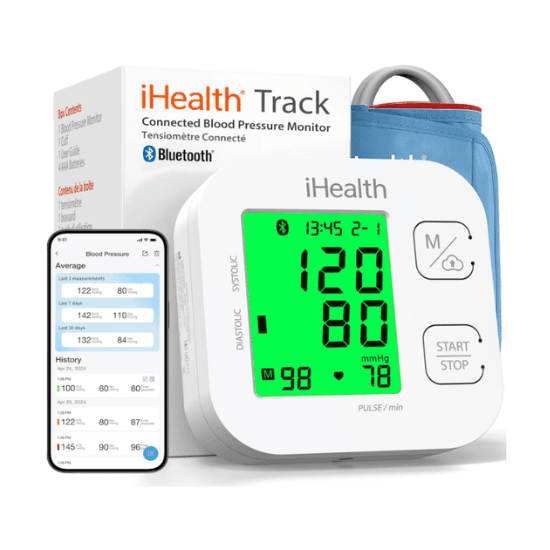
Quick Verdict
The iHealth Track Smart Blood Pressure Monitor is a convenient upper-arm monitor for recording blood pressure at home, but correct cuff fit, measurement technique, and verification of the exact model’s clinical validation matter more than its app features. PVL has not independently established the current listing’s precise model identifier or its validation documentation.
PVL Rating: 4.0/5 (provisional)
- Display and ease of use: 4.5/5
- History and connectivity: 4.4/5
- Upper-arm measurement format: 4.3/5
- Verified finished-model accuracy evidence: 2.8/5
- Value: 4.0/5
Best for: Adults who want an easy-to-use upper-arm monitor to record readings and share trends with their healthcare professional, provided cuff fit and model-specific validation are confirmed.
Not ideal for: Users whose arm circumference falls outside the supplied cuff range or anyone expecting an app, color-coded display, or one reading to diagnose hypertension or determine medication changes.
What Is the iHealth Track Monitor?
The iHealth Track is marketed as an automatic upper-arm blood pressure monitor with a digital display and Bluetooth-enabled history tracking. These features can simplify home recording. They do not by themselves demonstrate clinical accuracy; consumers should verify the exact model number, cuff size range, regulatory information, and independent validation evidence before purchase.
Is the iHealth Track Clinically Validated?
PVL has not independently verified a current model-specific validation record for the exact product listing reviewed here. Validation should refer to the specific device and cuff configuration under a recognized testing protocol, not merely to the brand or a different model. Check an established validated-device registry and the manufacturer’s documentation for the exact model identifier.
Why Does Cuff Size Matter?
An incorrectly sized cuff can produce misleading results. Measure upper-arm circumference and compare it with the specific cuff’s stated fit range; do not assume that an adjustable cuff fits everyone. A cuff that is too small may overestimate blood pressure, while other fit errors can also distort measurements.
How Do You Measure Blood Pressure Correctly at Home?
For a routine measurement, avoid exercise, smoking, and caffeine for about 30 minutes beforehand; empty your bladder, then sit quietly for at least five minutes. Sit with back supported, feet flat, legs uncrossed, and the cuff on bare upper-arm skin at heart level. Rest the arm on a surface and do not talk during measurement. Follow the manufacturer’s instructions and your clinician’s schedule.
Should You Take One Reading or Several?
One reading is a snapshot, not a diagnosis. Home monitoring commonly uses repeated measurements, often two readings about one minute apart, recorded over multiple days according to a clinician’s plan. Share the readings and timing with your healthcare professional; avoid selectively recording only reassuring results.
What Do Blood Pressure Numbers Mean?
Blood pressure has two values: systolic pressure (during heart contraction) and diastolic pressure (between beats), reported in mmHg. Diagnostic thresholds and treatment targets vary by guideline and individual circumstances. A color-coded screen is a convenience feature, not a substitute for clinical interpretation.
Can the iHealth App Diagnose Hypertension?
No. An app may organize readings and trends, but data storage and charts are not evidence of diagnostic capability. A clinician interprets repeated measurements alongside symptoms, medical history, medications, and other relevant information. Do not start, stop, or adjust prescribed blood-pressure medication solely because an app displays a trend.
How Should You Respond to a Very High Reading?
If a reading is unexpectedly high, follow your clinician’s action plan and repeat it after a brief rest using proper technique. A reading around or above 180 systolic or 120 diastolic mmHg warrants prompt attention; seek emergency care when severe readings occur with chest pain, shortness of breath, neurological symptoms, severe headache, or other concerning symptoms. Do not wait for the app to update.
What About Irregular Heartbeats?
Automatic monitors may have difficulty obtaining accurate results with some arrhythmias. Pulse-rate display or an irregular-beat symbol, if supported by the exact model, does not diagnose an arrhythmia. Repeated irregular readings, palpitations, fainting, or concerning symptoms warrant appropriate medical assessment.
Can You Use It for Fitness or Recovery Tracking?
Blood pressure monitoring can be important for some people, but this device has not been shown to quantify workout recovery, longevity, stress reduction, or readiness to train. The strongest use case is structured home blood-pressure recording when measurements are obtained correctly and interpreted appropriately.
What This Monitor Has Not Been Shown to Do
- Diagnose hypertension from one reading
- Replace clinical evaluation or individualized treatment
- Provide accurate results with every cuff size or technique
- Make medication changes safe without professional guidance
- Validate itself through Bluetooth or app connectivity
- Measure workout recovery or longevity
Pros and Cons
Pros
- Upper-arm format suitable for routine home measurements when correctly fitted
- Large display and simple operation
- Bluetooth history may make trends easier to share
- Portable design for repeated home use
Cons
- Exact listing/model validation not independently confirmed here
- Incorrect cuff size or technique can substantially affect readings
- Color categories may oversimplify individual clinical targets
- Connectivity is not evidence of accuracy
Who Should Consider It?
Adults who need convenient home blood-pressure records and can verify cuff fit and model-specific validation may find the iHealth Track useful. Discuss a measurement schedule and interpretation thresholds with your healthcare professional.
Frequently Asked Questions
Is the iHealth Track blood pressure monitor accurate?
Accuracy depends on the exact model’s validation, correct cuff fit, and measurement technique. PVL has not independently verified the current listing’s specific validation documentation. Check a recognized validated-device registry using the precise model number, and follow the manufacturer’s instructions. Bluetooth connectivity and a large display do not establish clinical accuracy.
How do you use the iHealth Track correctly?
Rest quietly for at least five minutes before measuring. Sit with your back supported, feet flat, legs uncrossed, and your arm supported at heart level. Place the correctly sized cuff on bare skin and avoid talking. Follow manufacturer guidance and avoid caffeine, smoking, or exercise for about 30 minutes beforehand.
Can one home blood pressure reading diagnose hypertension?
No. A single reading is only a snapshot. Diagnosis generally depends on repeated properly obtained measurements and clinical interpretation, sometimes including home or ambulatory monitoring. Record readings according to your clinician’s plan rather than relying on one high or low result. Do not change prescribed medication without professional guidance.
Does the iHealth app make readings more accurate?
No. App connectivity helps organize readings but does not improve the underlying measurement accuracy. Accuracy depends on the device, cuff fit, positioning, and technique. Charts may make patterns easier to discuss with a clinician, but an app does not diagnose hypertension or determine whether a medication adjustment is appropriate.
What should you do with a very high reading?
Follow your clinician’s action plan and recheck using proper technique. Readings around or above 180 systolic or 120 diastolic mmHg require prompt attention. If severe readings occur with chest pain, breathlessness, weakness, vision changes, or other concerning symptoms, seek emergency medical care rather than waiting for an app alert.
Why is cuff size important for blood pressure accuracy?
An incorrectly sized cuff can produce misleading blood pressure readings. Measure your upper-arm circumference and compare it with the cuff’s specified range before buying. A cuff that is too small may overestimate pressure. An adjustable design does not guarantee correct fit for every user, and positioning errors can further affect results.
Final Verdict
PVL Rating: 4.0/5 (provisional). The iHealth Track offers accessible home blood-pressure logging and useful convenience features. Its medical value depends on confirming the exact model’s validation, using a correctly sized cuff, and following a consistent measurement routine. It should support—not replace—clinical care.

Reviews
There are no reviews yet.