
Quick Verdict
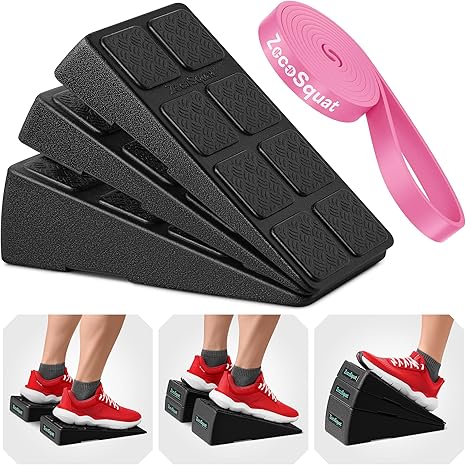
A squat wedge block set may help some people achieve a more comfortable heel-elevated squat position and provide an inclined surface for controlled calf stretches. The original listing describes stackable wedges, EPP foam, and a 960 lb capacity, but PVL has not independently verified those specifications. Wedges change exercise geometry; they do not automatically improve ankle mobility, correct squat technique, prevent injury, or treat a medical condition.
PVL Rating: 3.8/5 (provisional)
- Potential squat and stretching versatility: 4.2/5
- Portability and storage: 4.3/5
- Evidence for heel-elevated squat mechanics generally: 3.9/5
- Exact material, angle, and load-rating verification: 1.8/5
- Value pending specifications and current price: 3.7/5
What Is a Squat Wedge Block Set?
Squat wedges are inclined platforms placed beneath the heels or feet during selected exercises. The existing product description markets this set as stackable, with adjustable incline angles and EPP construction. The exact number of blocks, dimensions, angle range, surface texture, and load rating are unverified for the current linked offer. Confirm those details before using the blocks under load.
Why Elevate Your Heels During Squats?
Heel elevation changes the ankle position and may allow some people to squat with a more upright torso or greater knee travel. The effect varies with anatomy, stance, technique, and training goals. Heel elevation does not fix every mobility limitation and should not be assumed to reduce joint stress or injury risk.
Can Wedges Improve Squat Depth?
They may make a deeper squat position easier for some users by changing the movement’s mechanical demands. This does not necessarily mean the underlying ankle range of motion has improved. Practice squatting without wedges as appropriate, and select the setup that best matches your goals and comfort.
Do Squat Wedges Improve Ankle Mobility?
A wedge can support certain calf stretches and ankle-positioning exercises, but lasting mobility gains depend on a suitable training program. Merely standing on an incline does not guarantee increased dorsiflexion. Avoid forcing a painful range or using steeper angles than you can control.
Can You Use Wedges for Calf Stretching?
Inclined platforms can provide a convenient surface for selected calf stretches. Keep your balance, apply gradual pressure, and stop if you feel sharp pain or unusual tingling. A gentle stretch should not require maximal incline. People with Achilles tendon problems or recent lower-leg injuries should follow clinician guidance.
Are Stackable Angles Better?
Adjustable incline options may help users find a comfortable position for different exercises. However, stacking introduces a need to verify that the blocks interlock or remain stable as intended. Do not improvise combinations, exceed stated limits, or place blocks on slippery floors. More incline is not automatically better.
How Stable Are Foam Squat Wedges?
Stability depends on material density, dimensions, surface grip, flooring, user weight, and external load. The original listing claims high-density EPP construction and a 960 lb capacity, but neither has been independently verified. Test the setup without weights first, and discontinue use if the wedges shift, compress unevenly, or show damage.
Can You Lift Weights on Squat Wedges?
Only if the manufacturer explicitly permits loaded exercises and provides a suitable load rating and setup instructions. Combined body weight and external load matter. Start conservatively, use appropriate footwear and a stable surface, and avoid heavy lifting on wedges that slip or deform. A claim in marketplace copy is not a substitute for verified safety documentation.
Are Wedges Suitable for Beginners?
Beginners may find heel elevation helpful for certain squat variations, but they should first learn controlled movement and stable foot placement. Start with bodyweight exercises, a modest incline, and a clear area. If balance is uncertain, use a more stable alternative or seek coaching rather than increasing the angle.
Can They Help With Knee Pain?
Heel elevation changes how forces are distributed during a squat and may increase knee-forward movement. It is not a treatment for knee pain, and comfort varies by condition. If you have persistent pain, recent injury, or swelling, seek individualized assessment rather than assuming a wedge will solve the problem.
Can You Use Them in Rehabilitation?
Slant boards and wedges are used in some clinician-directed exercise programs, but the correct incline and exercise depend on the diagnosis and recovery stage. This consumer set is not a medical device or a treatment plan. Follow professional restrictions after surgery or injury and stop if symptoms worsen.
How Do Wedges Compare With Weightlifting Shoes?
Weightlifting shoes provide a fixed raised heel integrated into a stable shoe, while separate wedges can offer variable incline for specific exercises. Shoes may be more practical for dynamic lifting, depending on design and training needs. Neither option is universally superior; secure footing and appropriate technique matter most.
What Should You Verify Before Buying?
Check block count, dimensions, angle options, interlocking method, surface grip, verified load capacity, material, care instructions, warranty, and current price. Confirm whether the manufacturer permits loaded squats and how the stated capacity was tested. Avoid relying on the unverified 960 lb figure when making safety decisions.
Pros and Cons
Pros
- May make certain heel-elevated squats more accessible
- Can provide an inclined surface for calf stretching
- Adjustable angles may add exercise versatility if properly designed
- Potentially compact for home training
Cons
- Does not automatically increase ankle mobility or correct technique
- Slipping or shifting can create a fall risk
- Claimed 960 lb capacity and EPP construction remain unverified
- Loaded exercise requires confirmed manufacturer guidance
Frequently Asked Questions
Do squat wedges help you squat deeper?
They may help some people reach a deeper squat by elevating the heels and changing ankle demands. Results depend on body proportions, stance, technique, and comfort. A deeper squat on wedges does not prove that ankle mobility has improved. Begin with bodyweight movements and prioritize stable footing over depth.
Can squat wedge blocks improve ankle mobility?
They can support selected stretching and movement exercises, but lasting mobility gains are not guaranteed. Standing on an incline changes ankle position without necessarily improving your unrestricted range of motion. Use a gradual program and avoid forcing painful stretches. Seek professional advice for persistent stiffness or injury-related limitations.
Are these squat wedges safe for heavy lifting?
Only if the manufacturer confirms they are designed for loaded exercise and specifies an appropriate capacity. The original listing claims a 960 lb limit, but this has not been independently verified. Test stability without weights first, follow setup instructions, and avoid using blocks that shift, crack, or compress unevenly.
What angle should I use for calf stretches?
Start with a gentle incline that allows a controlled stretch without pain or loss of balance. The ideal angle varies with mobility, the exercise, and any existing conditions. Steeper is not necessarily better. Keep your footing secure and follow clinician guidance if you have Achilles tendon symptoms or a recent injury.
Can squat wedges help with knee pain?
They are not a proven treatment for knee pain and may change loading around the knee. Some people find a heel-elevated squat more comfortable, while others do not. Avoid painful repetitions and do not assume wedges prevent injury. Persistent pain, swelling, or instability warrants individualized medical or rehabilitation advice.
Are squat wedges better than weightlifting shoes?
Neither is universally better because they serve different exercise needs. Separate wedges may provide adjustable incline for stationary squats or stretching, while weightlifting shoes offer an integrated raised heel. The best choice depends on stability, movement demands, and fit. Avoid dynamic lifts on loose or unstable blocks.
Final Verdict
PVL Rating: 3.8/5 (provisional). The Squat Wedge Block Set may be useful for selected heel-elevated squats and calf stretches, provided the blocks are stable and used within manufacturer limits. Treat claims of improved mobility, injury prevention, and very high load capacity cautiously until product-specific evidence is available.

Reviews
There are no reviews yet.