
Quick Verdict
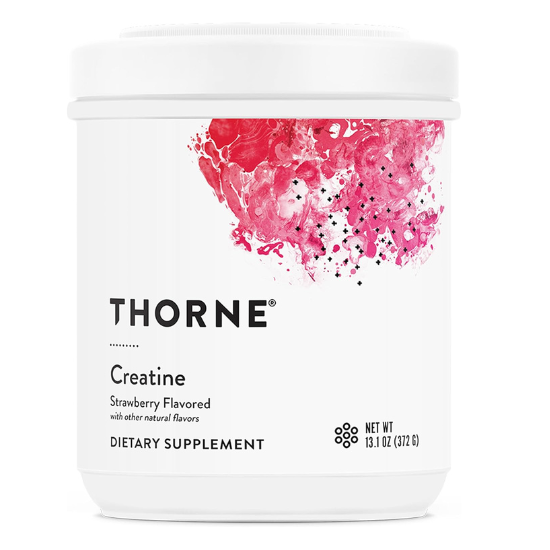
THORNE Creatine Monohydrate Powder is a practical creatine supplement for adults pursuing strength and repeated high-intensity exercise performance. Creatine monohydrate is well studied as an ingredient, but benefits from the broader literature should not be mistaken for clinical trials of this exact THORNE formulation. Claims about faster muscle healing, longevity, and cognitive enhancement need stronger qualification.
PVL Rating: 4.4/5 (provisional)
- Ingredient evidence for strength and high-intensity performance: 4.8/5
- Simple creatine monohydrate format: 4.6/5
- Product-specific quality assurance: 4.1/5, subject to exact SKU verification
- Finished-product outcome evidence: 3.0/5
- Value: 4.0/5
What Is THORNE Creatine?
The existing listing describes micronized creatine monohydrate with 5 g per serving and references NSF Certified for Sport. THORNE offers multiple product variations, so confirm the precise flavor, ingredient panel, serving count, and current certification for the exact item sold. The original listing’s strawberry flavor and 60-serving details have not been independently confirmed here.
What Does Creatine Monohydrate Actually Do?
Creatine helps replenish phosphocreatine, which supports rapid ATP regeneration during short, intense muscular efforts. Supplementation can increase muscle creatine stores and, alongside appropriate training, improve performance in repeated high-intensity activities and support gains in strength and lean mass. It is not a substitute for progressive resistance training, sufficient food, or sleep.
Does THORNE Creatine Build Muscle?
Creatine monohydrate can modestly improve training adaptations, including lean-mass gains, when combined with resistance exercise. Some early weight gain reflects increased muscle water rather than newly built muscle tissue. Evidence applies primarily to creatine monohydrate as an ingredient; PVL did not identify independent trials proving this THORNE powder is superior to other quality creatine monohydrate products.
Does Creatine Speed Workout Recovery?
Recovery evidence is less consistent than strength evidence. Some studies explore soreness, muscle-damage markers, or return of performance, but findings vary by exercise protocol and population. Do not interpret improved training capacity as proof of faster repair of injured muscle, tendon, or connective tissue.
Does Creatine Improve Endurance?
Creatine is most relevant to brief, repeated high-intensity efforts rather than steady-state aerobic endurance. Any benefit to endurance athletes depends on event demands and training context. Added body mass from water retention can be a drawback in some weight-sensitive sports.
Does Creatine Improve Memory or Brain Health?
Research into cognitive outcomes is developing, but results are heterogeneous and may depend on age, diet, sleep deprivation, and study design. This product should not be presented as proven to prevent dementia, improve everyday cognition in all adults, or extend lifespan.
Is Micronized Creatine Better Absorbed?
Micronization mainly changes particle size and can improve mixing or mouthfeel. It does not establish superior muscle uptake, strength gains, or clinical outcomes compared with ordinary creatine monohydrate. The ingredient form and consistent intake matter more than marketing language about particle size.
What Is a Typical Creatine Dose?
Many adult strength-training protocols use 3–5 g of creatine monohydrate daily. An optional loading approach uses roughly 20 g daily in divided doses for five to seven days, followed by a maintenance dose; loading is not necessary to achieve eventual muscle saturation. Follow the exact product label and seek individualized advice when appropriate.
Do You Need to Take Creatine Before or After Exercise?
Consistent daily use is more important than precise timing. Evidence does not establish that taking creatine immediately before or after a workout produces consistently superior outcomes. Choose a time that makes regular intake convenient.
What Side Effects Can Occur?
Creatine can cause temporary increases in body weight from water retention and occasional gastrointestinal discomfort, especially with large single doses. Split doses or taking it with food may improve tolerance. Do not mistake initial scale changes for fat gain or assume every increase reflects new muscle.
Is Creatine Safe for the Kidneys?
At commonly studied doses, creatine is generally well tolerated in healthy adults, and research has not consistently shown kidney injury in that population. However, people with kidney disease, abnormal kidney tests, or relevant medical conditions should consult a clinician before use. Creatine can increase serum creatinine without necessarily indicating kidney damage, complicating interpretation of laboratory results.
What Does NSF Certified for Sport Mean?
NSF Certified for Sport is a third-party program that tests certified products against specified quality and banned-substance requirements. Certification is not proof that a supplement improves recovery, cognition, or longevity. Confirm the exact THORNE product and SKU in the current NSF directory; do not assume certification extends to every flavor or package.
Who Should Be Cautious?
People who are pregnant or breastfeeding, minors, those with kidney disease, or anyone managing a complex medical condition should seek individualized professional guidance. Athletes subject to testing should verify the precise product’s current certification and follow their sport’s rules. Avoid using creatine to push through an injury or substitute for rehabilitation.
What THORNE Creatine Has Not Been Shown to Do
- Heal damaged muscle or tendon tissue faster
- Prevent dementia or guarantee cognitive enhancement
- Extend lifespan or reverse aging
- Improve steady-state endurance in every sport
- Outperform standard creatine monohydrate because it is micronized
- Provide product-specific clinical benefits merely because of certification
Pros and Cons
Pros
- Creatine monohydrate has strong ingredient-level evidence for strength performance
- Simple daily dosing and flexible timing
- Micronized format may mix more easily
- Third-party certification may offer added quality assurance when verified for the exact SKU
Cons
- Finished-product outcome trials not established
- Recovery and cognition claims are less certain
- Water-weight changes may concern some users
- Flavor, serving count, and certification require exact-SKU verification
Frequently Asked Questions
Does THORNE creatine help build muscle and strength?
Creatine monohydrate can support strength and lean-mass gains when combined with resistance training. Its best-established benefits involve repeated high-intensity efforts and improved training capacity. Some early weight gain comes from water stored in muscle. PVL did not identify evidence that this specific THORNE powder produces better outcomes than other quality creatine monohydrate products.
How much creatine should adults take each day?
Many adult protocols use 3–5 g of creatine monohydrate daily. A short loading phase is optional rather than essential; consistent intake eventually increases muscle stores. Follow the exact product label and seek personalized guidance if you have a medical condition. Taking larger amounts does not automatically provide greater strength benefits.
Does creatine help muscles recover faster after workouts?
Evidence for faster post-workout recovery is mixed. Some studies investigate soreness, muscle-damage markers, or performance restoration, but results differ across populations and protocols. Creatine’s stronger evidence concerns high-intensity performance and training adaptations. It should not be promoted as proven to heal injured muscle, tendons, or connective tissue more quickly.
Is micronized creatine better than regular monohydrate?
Micronized creatine may mix more smoothly, but superior results have not been established. Smaller particles do not necessarily mean better absorption, greater muscle creatine storage, or larger strength gains. Standard creatine monohydrate already has extensive supporting research. Choose a reputable product and a consistent routine rather than paying solely for particle-size claims.
Is THORNE creatine safe for kidney health?
Creatine is generally well tolerated at studied doses in healthy adults, but individual circumstances matter. People with kidney disease or abnormal kidney tests should seek medical guidance before supplementing. Creatine can affect serum creatinine readings without necessarily indicating kidney damage, so tell your clinician about use when laboratory results are interpreted.
Does NSF Certified for Sport prove THORNE works better?
No. NSF Certified for Sport concerns specified product quality and banned-substance screening, not superior clinical effectiveness. Verify the exact flavor and package in the current certification directory before relying on the claim. Certification does not prove faster recovery, better cognition, or greater muscle gains compared with another properly formulated creatine monohydrate product.
Final Verdict
PVL Rating: 4.4/5 (provisional). THORNE Creatine Monohydrate Powder has a compelling ingredient-level rationale for strength and repeated high-intensity exercise. Verify the exact product variant and certification, and view recovery, cognition, and longevity claims more cautiously than established training benefits.

Reviews
There are no reviews yet.