
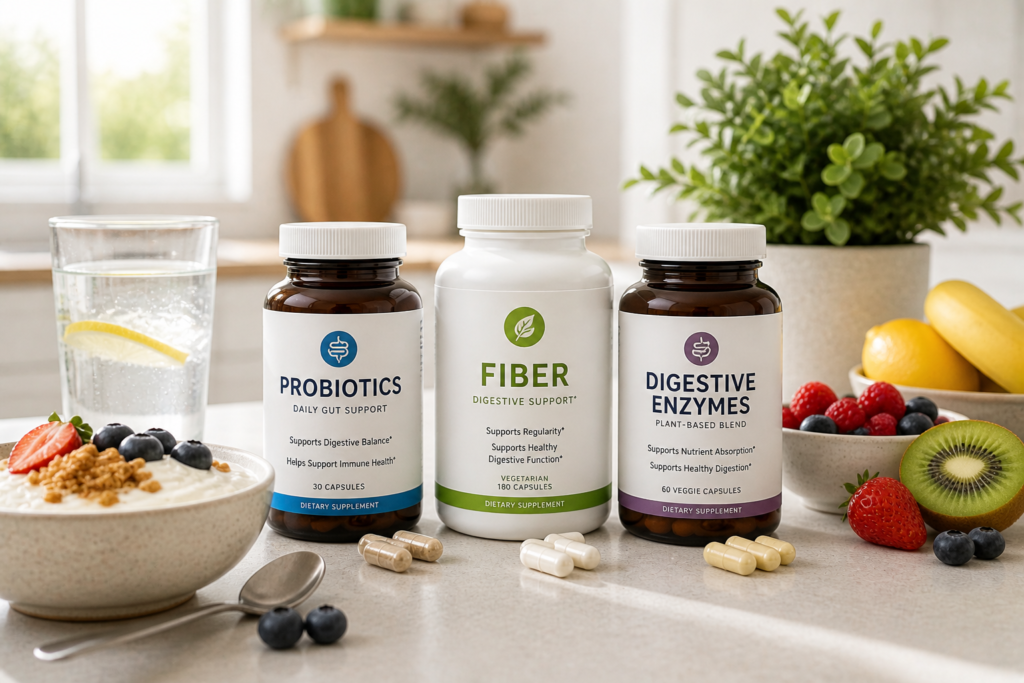
Quick Answer
The best supplements for gut health depend on what you are trying to support. Probiotics may help specific digestive concerns when the strains are appropriately matched, while prebiotic fibers help nourish beneficial gut bacteria. Synbiotics combine both approaches, and fiber supplements such as psyllium can support bowel regularity as well as the gut environment. Rather than taking several products at once, choose one targeted option based on your needs and introduce it gradually. Persistent pain, bleeding, unexplained weight loss, or major bowel changes need medical evaluation rather than supplement experimentation.
Key Takeaways
- Match the supplement to your gut-health goal. Probiotics, prebiotic fibers, synbiotics, postbiotics, and psyllium support different aspects of the microbiome and bowel health.
- Probiotic benefits are strain-specific. Choose products with clearly identified strains and evidence that matches the reason you are considering them.
- Prebiotic fiber supports the gut environment. Increase fiber gradually and drink enough water because too much too quickly can worsen gas, bloating, or constipation.
- Start one supplement at a time. This makes it easier to judge benefits, side effects, and whether the product actually fits your needs.
- Supplements do not replace evaluation for ongoing symptoms. Seek care for bleeding, severe pain, unexplained weight loss, or persistent bowel changes.
- Key Takeaways
- Introduction
- What Is Gut Health and Why Does It Matter?
- Best Supplements for Gut Health & Microbiome Support
- Which Gut-Health Supplement Fits Your Goal?
- Foundations That Support Gut Health
- Gut Symptoms Worth Paying Attention To
- How to Choose a Quality Gut Supplement
- Common Mistakes When Buying Gut Supplements
- How to Fix It Without Overwhelm
- 7-Day Gut-Health Foundation Plan
- How Long to Evaluate a Gut-Health Supplement
- What to Track When Evaluating Gut Health
- Examples for Microbiome & Bowel Support
- FAQ
- When to Seek Help
- Final Summary
Introduction
Gut health is broader than digestion alone. It includes the gut microbiome, bowel regularity, the intestinal environment, and how well your digestive system functions day to day.
The best supplements for gut health are not all designed to do the same job. Probiotics introduce specific microorganisms, prebiotic fibers help nourish beneficial gut bacteria, synbiotics combine complementary approaches, and soluble fiber such as psyllium can support bowel regularity.
Other options, including magnesium, peppermint oil, ginger, and digestive enzymes, may be useful for narrower symptoms or meal-related concerns, but they should not automatically be treated as microbiome supplements.
The goal is not to take the longest list of products. It is to choose the supplement category that best matches your gut-health goal and introduce it carefully.
Someone focused on microbiome support may consider a strain-specific probiotic or prebiotic fiber, while someone with constipation, nausea, or meal-related discomfort may need a different approach entirely.
This guide focuses on gut health and microbiome support: what the main supplement categories do, where the evidence is strongest, how to choose a targeted option, and when ongoing symptoms need professional evaluation instead of another supplement.
Shop Gut-Health & Microbiome Support
Explore our curated collection of probiotics, prebiotic and fiber supplements, synbiotics, and other products selected for microbiome and bowel-support goals. Compare clearly identified strains or fiber types, serving sizes, storage requirements, third-party testing, and suitability for your individual needs.
What Is Gut Health and Why Does It Matter?
Gut health is about more than avoiding stomach discomfort. It influences how efficiently you digest food, absorb nutrients, maintain regular bowel movements, and tolerate different foods. Our guide to healing your gut microbiome naturally explains the food and lifestyle foundations in more detail.
The gut microbiome interacts with digestion, bowel function, and the intestinal environment. Research is also exploring broader connections with immune and metabolic health, but these relationships are complex and should not be reduced to simple supplement claims.
When gut function is disrupted, people may notice symptoms such as bloating, gas, constipation, loose stools, or other changes in bowel habits. These symptoms can have many causes, so they should not automatically be attributed to the microbiome.
While supplements are not replacements for healthy habits, the right supplement can sometimes make it easier to restore balance when paired with better nutrition, hydration, sleep, and stress control.
Gut health usually refers to how well your digestive system functions and how balanced your gut environment is.
Good gut health may support:
- Comfortable digestion
- Regular bowel movements
- Less bloating
- Nutrient absorption
- Support for the intestinal environment
- More consistent bowel habits
- Better tolerance of a varied, fiber-rich diet
When gut health is off, symptoms may include:
- Bloating
- Gas
- Constipation
- Loose stools
- Changes in stool consistency
- Irregular bowel habits
- Digestive discomfort
Supplements are not magic fixes, but they can be useful tools when paired with sleep, stress management, hydration, and a balanced diet.
Best Supplements for Gut Health & Microbiome Support
1. Probiotics — Best for Targeted Microbiome Support
Not all probiotics are identical. Different strains may have different uses, which is why one product may help one person more than another.
When trying probiotics, consistency matters more than taking random capsules occasionally. Many people evaluate results too early after only a few days.
How long to evaluate a probiotic depends on the strain, the reason for using it, and the outcome you are tracking. Follow the product guidance and avoid assuming that every probiotic should work on the same timeline.
Probiotics are beneficial bacteria that may help support a healthier gut balance.
Evidence for probiotics is strain- and condition-specific. A product should be chosen for a defined goal rather than simply because it contains a large number of strains or colony-forming units.
Situations in which someone may discuss a targeted probiotic with a healthcare professional include:
- A specific digestive concern for which particular probiotic strains have been studied
- Questions about microbiome support after antibiotic treatment
- A need for a strain-specific approach rather than a generic probiotic blend
Better Fix Strategy
Look for a label that identifies the microorganism to the strain level when possible, then check whether that strain has evidence for the outcome you are targeting. Follow the product directions and evaluate tolerance rather than relying on a universal trial period.
Real-Life Example
For example, someone considering a probiotic for a defined concern should compare products by the exact strain and supporting evidence, while changing only one major variable at a time so the response is easier to evaluate.

How to Compare the Top Probiotics in 2026
When comparing the top probiotics in 2026, look beyond the total CFU count. The label should identify the genus, species, and preferably the strain; explain storage requirements; and provide a viable count through the expiration date rather than only at manufacture. The best probiotic for microbiome support is not universal—the most appropriate strain or blend depends on your symptoms, health history, and reason for taking it.
2. Prebiotic Fiber — Best for Nourishing Beneficial Gut Bacteria
Prebiotic fiber works best when introduced gradually. Increasing too quickly may temporarily worsen bloating in sensitive people.
Starting small and increasing slowly often creates a better experience than using a full serving immediately.
Hydration also matters because fiber generally works better with enough fluids.
Prebiotics feed beneficial gut bacteria. Unlike probiotics, they help nourish what is already there.
They may also support:
- Better regularity
- Satiety
- A more supportive environment for beneficial gut bacteria
Common forms include:
- Inulin
- Partially hydrolyzed guar gum
- Acacia fiber
Better Fix Strategy
Increase slowly and drink water. Too much too fast can worsen bloating.
Real-Life Example
A person with a low fiber intake who wants to support bowel regularity and beneficial gut bacteria may benefit from introducing fiber gradually.
3. Synbiotics — Combined Microbiome Support
Synbiotics combine live microorganisms with a substrate intended to support beneficial microbes. They can be useful when the probiotic and prebiotic components are deliberately formulated for a complementary or synergistic effect.
Do not assume that every product containing both a probiotic and a prebiotic is equally useful. Compare the identified strains, the type and amount of prebiotic substrate, storage requirements, and evidence for the finished formulation when available.
Because the prebiotic component can increase fermentation, people who are sensitive to fermentable fibers may prefer to introduce a synbiotic gradually and monitor tolerance.
Synbiotics are more closely aligned with this page’s microbiome focus than digestive enzymes. For meal-specific enzyme formulas, see our separate guide to the best digestive enzymes.
The value of a synbiotic depends on the exact formulation and intended use, so broad claims about all synbiotics should be treated cautiously.
When comparing synbiotics, check:
- Probiotic strains identified as specifically as possible
- The type and amount of prebiotic substrate
- Evidence connected to the intended use or finished formulation
Better Fix Strategy
Introduce one product at a time and monitor tolerance, especially when the formula contains a meaningful amount of fermentable prebiotic fiber.
Real-Life Example
Someone already considering both probiotic and prebiotic support may prefer a well-characterized synbiotic rather than adding two unrelated products at the same time.

4. Magnesium — Targeted Bowel Support
Magnesium may offer dual benefits for some users because it can support relaxation while certain forms may also help bowel regularity.
That may make certain forms relevant for some people with occasional constipation, while other forms are usually chosen for non-bowel goals.
Choosing the right form matters more than choosing the biggest dose.
Magnesium is known for sleep and stress support, but certain forms may also support bowel regularity. Our magnesium guide explains the differences between citrate, glycinate, threonate, and other forms.
Some people with constipation, tension, or low magnesium intake may benefit.
Common forms:
- Magnesium citrate
- Magnesium glycinate (more for relaxation)
- Magnesium oxide (varies by person)
Better Fix Strategy
Choose the form that matches your goal and start conservatively.
Real-Life Example
Someone with occasional sluggish bowel habits may prefer magnesium citrate in moderation.
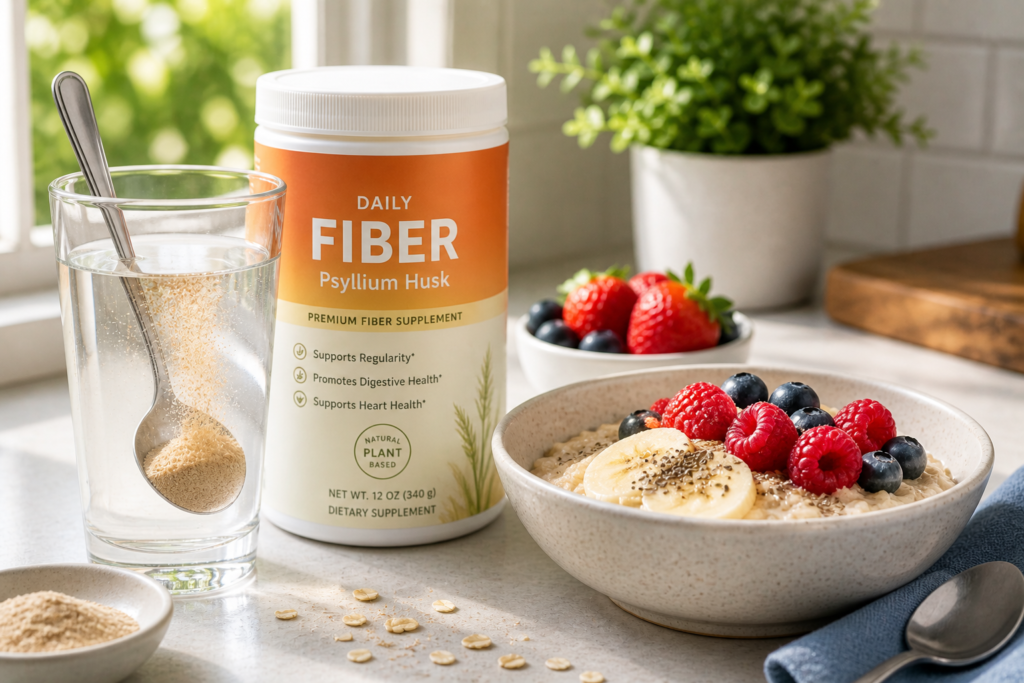
5. Psyllium Husk — Best for Bowel Regularity
Psyllium is often valued because it can support stool consistency, not just frequency.
That means some people use it for irregularity patterns that swing between extremes.
Consistency and adequate water intake are key.
Psyllium is a soluble fiber known for supporting regularity and stool consistency.
It may help both constipation and loose stools depending on use and hydration.
Better Fix Strategy
Take with plenty of water.
Real-Life Example
A person with inconsistent bathroom habits may benefit from a daily fiber routine.
6. Postbiotics — Emerging Microbiome Support
Postbiotics are preparations containing inanimate microorganisms, their components, or metabolites that may provide a health benefit. Unlike probiotics, they do not rely on live microorganisms remaining viable during storage or after consumption.
Research on specific postbiotic preparations is developing, so benefits should not be assumed across every product. Look for a clearly identified preparation, an appropriate dose, and evidence connected to the exact ingredient or finished formulation rather than broad claims about all postbiotics.
Postbiotics fit this guide’s microbiome focus more closely than ginger, peppermint oil, or digestive enzymes, but they should still be selected for a defined purpose rather than treated as a universal gut-health solution.
7–8. Secondary Digestive-Comfort Options
Ginger and peppermint oil may help with narrower digestive symptoms, but neither should be presented as a primary microbiome-support supplement.
Ginger
Ginger is commonly used for occasional nausea or digestive discomfort. It may be taken as food, tea, or a supplement, but its role is symptom-focused rather than microbiome-focused.
Peppermint Oil
Enteric-coated peppermint oil may be considered for certain bloating or abdominal-discomfort patterns. It can worsen reflux or heartburn in some people, so product guidance and individual tolerance matter.
Use either option selectively for a specific digestive concern rather than as a general strategy for changing the gut microbiome.
9. Digestive Enzymes — Secondary, Meal-Specific Support
Digestive enzymes help break down specific food components and may be useful for particular meal-related needs, but they are not microbiome supplements. They are included here only to clarify the distinction between supporting food digestion and targeting the gut microbiome.
If meal-specific symptoms are the main concern, use our digestive enzyme guide or top supplements for digestion rather than treating enzymes as a general gut-health solution.
Which Gut-Health Supplement Fits Your Goal?
Choose a supplement category by the outcome you want to track, not by a broad promise to “fix” digestion or balance the microbiome.
For Targeted Microbiome Support
Consider a probiotic only when the identified strain has evidence relevant to your goal. Prebiotic fiber or a well-characterized synbiotic may be more appropriate when the aim is to nourish beneficial microbes, provided the formula is introduced gradually and tolerated.
For Bowel Regularity
Psyllium can support stool consistency and regularity when introduced gradually with adequate fluid. Certain forms of magnesium may have a laxative effect, but they are not microbiome supplements and may not be appropriate for everyone.
For Bloating
Bloating has many possible causes, so there is no universal supplement choice. A strain-specific probiotic may fit some defined situations, while additional fermentable fiber can make symptoms worse for some people. Persistent or painful bloating needs evaluation rather than repeated supplement trials.
For Meal-Related Discomfort
Digestive enzymes and ginger address narrower meal-related concerns rather than the microbiome. Compare enzyme options in our dedicated digestive-enzyme guide instead of treating them as general gut-health supplements.
After Antibiotic Treatment
Antibiotics can alter the gut microbiota, but taking any probiotic automatically after treatment is not an evidence-based rule. Whether a probiotic is appropriate depends on the exact strain, the clinical situation, other health factors, and guidance from a healthcare professional.
Foundations That Support Gut Health
Supplements are only one part of gut health. Daily eating patterns, fiber intake, hydration, movement, sleep, and stress can all influence digestive comfort and bowel habits.
Useful foundations to review include:
- Eating too fast
- Chronic stress
- Low fiber intake
- Dehydration
- Poor sleep
- Highly processed diets
- Lack of movement
This is why supplements work best when paired with better habits.
Gut Symptoms Worth Paying Attention To
Symptoms can help you decide what to track, but they cannot show whether the microbiome itself is the cause. Relevant changes include:
- Persistent or frequent bloating
- Constipation or loose stools
- Changes in stool consistency or bowel frequency
- Recurring gas or abdominal discomfort
These symptoms have many possible causes and do not prove that the microbiome is unhealthy. Severe pain, bleeding, unexplained weight loss, fever, or persistent bowel changes require medical evaluation rather than another supplement trial.
How to Choose a Quality Gut Supplement
The supplement industry is crowded, so product quality matters.
Look for:
- Reputable brands with transparent labels
- Third-party testing when available
- Clear ingredient amounts
- Reasonable serving sizes
- Reviews mentioning consistency, not miracle claims
Be cautious with products promising instant cures or dramatic detox claims.
Often, simple well-made products outperform flashy marketing blends.
Common Mistakes When Buying Gut Supplements
Many people waste money by making avoidable mistakes.
Common examples:
- Buying five products at once
- Quitting after three days
- Ignoring diet and hydration
- Taking too much fiber too quickly
- Chasing trendy products instead of matching symptoms
- Switching brands constantly
A better strategy is choosing one targeted product and giving it a fair trial.
How to Fix It Without Overwhelm
Do not buy five supplements at once.
Start with basics first:
Week 1 Foundations
- Hydrate better
- Eat slower
- Add vegetables
- Walk after meals
- Reduce ultra-processed snacks
Then Add One Targeted Supplement
Examples:
- Bloating → probiotic or enzymes
- Constipation → magnesium or fiber
- General support → probiotic + food quality
Simple beats complicated.
Remember that supplements are support tools, not the full solution.
If you continue eating too fast, sleeping poorly, and living under constant stress, even great supplements may disappoint.
The best results usually come from combining one smart supplement with better daily habits.
7-Day Gut-Health Foundation Plan
Day 1
Increase water intake.
Day 2
Add one high-fiber meal.
Day 3
Walk 10 minutes after dinner.
Day 4
Reduce overeating speed.
Day 5
Try probiotic food like yogurt or kefir.
Day 6
Assess symptoms.
Day 7
Choose one supplement if still needed.
How Long to Evaluate a Gut-Health Supplement
Short-Term Changes
Changes from hydration, meal pacing, fiber intake, or other lifestyle adjustments may be noticed relatively quickly, but that does not mean a supplement has changed the microbiome. Track the specific outcome you care about rather than assuming every change comes from the product.
For Probiotics, Prebiotics, and Fiber
The appropriate evaluation period depends on the specific probiotic strain, prebiotic ingredient, fiber type, dose, and the outcome being tracked. Follow product guidance and evidence for the exact ingredient rather than relying on one fixed timeline for every gut-health supplement.
Longer-Term Evaluation
For longer-term gut health, diet quality, fiber diversity, hydration, sleep, physical activity, and other habits remain important. Continue a supplement only when it is appropriate for your goal, tolerated well, and providing a benefit you can reasonably assess.
What to Track When Evaluating Gut Health
Instead of expecting a fixed result after 30 days, track a few practical measures that match your goal. Useful signs may include:
- Better regularity
- Less bloating
- More comfort after meals
- More consistent stool form
- Better tolerance of the foods or fibers you are introducing
Keep the same basic diet and routine as consistent as practical while testing one change at a time. That makes it easier to tell whether a supplement is helping, doing nothing, or causing side effects.
Examples for Microbiome & Bowel Support
This section keeps the examples narrow: one probiotic option for microbiome-focused use and one fiber option for bowel regularity. For broader digestive-health supplement categories, see our digestive health supplements guide. For ranked product picks and meal-specific digestive aids, use our top supplements for digestion.
1. Probiotic Example — Microbiome-Focused
A probiotic belongs on this page only when it is evaluated by the microorganisms and strains it contains, not simply as a generic digestive supplement. Compare the label, intended use, dose, storage requirements, and strain-specific evidence before deciding whether it fits your microbiome goal.
⭐ Editor’s Pick
Physician’s Choice 60 Billion Probiotic
Best For: High-Potency Digestive & Gut Balance Support

Physician’s Choice 60 Billion Probiotic is a high-potency probiotic formula that combines multiple probiotic strains with prebiotics to support digestive balance and gut wellness.
✔ Multiple probiotic strains
✔ Includes prebiotic support
✔ Helps support digestive balance
✔ Daily microbiome wellness support
👉 Looking for high-potency probiotic support?
2. Fiber Example — Bowel Regularity & Gut Environment
Fiber is included here because soluble and prebiotic fibers can support bowel regularity and the gut environment. The type of fiber matters: psyllium is mainly used for stool consistency and regularity, while prebiotic fibers are chosen for their fermentability and effects on gut bacteria.
⭐ Editor’s Pick
Metamucil Psyllium Fiber Powder
Best For: Digestive Regularity & Daily Fiber Support
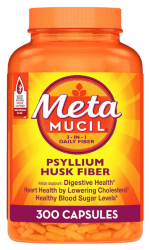
Metamucil Psyllium Fiber Powder is one of the most widely used fiber supplements for digestive regularity and gut support. Many people use psyllium fiber to help increase daily fiber intake and support digestive consistency.
✔ Helps support digestive regularity
✔ Adds fiber to daily nutrition
✔ Supports gut health routines
✔ Easy to mix into drinks
👉 Want an easier way to increase daily fiber intake?
Digestive Enzymes Belong in the Separate Digestion Guide
Digestive enzymes can be useful for specific food-digestion needs, but they are not core microbiome supplements. To keep this page focused, product comparisons for enzyme formulas are covered in our digestive enzyme guide and our top supplements for digestion.
FAQ
What are the best supplements for gut health and microbiome support?
The best supplements for gut health and microbiome support depend on the goal. Probiotics may be useful when a specific strain is supported for the outcome you are targeting, while prebiotic fibers help nourish beneficial gut bacteria. Synbiotics combine complementary approaches, and psyllium can support bowel regularity. Digestive enzymes and magnesium are better viewed as targeted options for particular needs rather than general microbiome supplements.
What is the best supplement for gut health overall?
There is no single best supplement for everyone. A probiotic should be chosen by strain and intended use, prebiotic fiber may suit people focused on nourishing beneficial gut bacteria, and psyllium may be more appropriate when bowel regularity is the main goal. The best choice depends on the outcome you are targeting and your tolerance.
What helps bloating the most?
There is no single best supplement for bloating because the cause matters. A strain-specific probiotic may fit some defined situations, while added fermentable fiber can worsen symptoms for some people. Persistent or painful bloating needs evaluation.
Can magnesium support bowel regularity?
Some forms, especially magnesium citrate, are commonly used to support bowel regularity. Other forms may be chosen more for relaxation or sleep support.
Do I need probiotics forever?
Not necessarily. Some people use probiotics for a short targeted period, while others prefer longer-term use. Results and needs vary.
Can supplements replace diet changes?
No. Supplements usually work best when paired with hydration, better food quality, fiber intake, movement, and stress control.
Are gut health supplements regulated in the USA?
Yes, but they are not regulated in the same way as prescription drugs. In the USA, dietary supplements are regulated by the FDA as a category of food, and the FDA generally does not approve them for safety or effectiveness before they are sold. Manufacturers and distributors are responsible for product safety, accurate labeling, and compliance with good manufacturing practices. The FDA can inspect facilities, monitor adverse-event reports, and take action against adulterated or misbranded products. Learn more from the FDA’s dietary supplements guidance.
When to Seek Help
Speak with a healthcare professional if you have:
- Ongoing pain
- Blood in stool
- Unexplained weight loss
- Severe constipation
- Chronic diarrhea
- Symptoms worsening over time
Want free practical tips for better gut health, sleep, energy, and healthy aging?
Join the Purely Vital Living newsletter and get science-backed wellness tips delivered to your inbox.

Final Summary
The best supplements for gut health and microbiome support depend on your goal, symptoms, diet, and health history.
Top options include:
- Strain-specific probiotics for defined microbiome goals
- Prebiotic fiber for nourishing beneficial gut bacteria
- Synbiotics when the probiotic and substrate are deliberately paired
- Psyllium for bowel regularity and stool consistency
- Postbiotics when the exact preparation has relevant evidence
Start with food and lifestyle foundations, then choose one targeted supplement based on a defined microbiome or bowel-health goal.