Quick Answer
The most effective daily habits to lower stress naturally include morning sunlight exposure, regular movement, balanced meals, hydration, limiting caffeine, reducing screen time, and creating a calming evening routine. These simple habits help support the nervous system, improve mood, and reduce daily stress without relying on medication or extreme lifestyle changes.
Introduction
Stress is part of modern life.
Work demands, constant notifications, poor sleep, and busy schedules can leave many people feeling overwhelmed, tense, or mentally drained. While occasional stress is normal, chronic stress can affect energy, mood, sleep, and overall well-being.
The good news is that you don’t need complicated routines or expensive solutions to feel better.
Small, consistent changes can have a powerful impact.
In this guide, you’ll discover 7 daily habits to lower stress naturally, why they work, and how to build a routine that helps you feel calmer and more in control.
What Causes Daily Stress?
Stress is often not caused by one big problem—but by many small daily triggers.
Common contributors include:
- Poor sleep
- Constant screen exposure
- Skipping meals
- High caffeine intake
- Lack of movement
- Overloaded schedules
- Mental multitasking
Over time, these factors can keep your body in a constant “alert” state.
Daily stress is often not caused by one major problem, but by repeated small pressures that build up over time.
Many people underestimate how much their daily environment contributes to stress. Constant notifications, background noise, poor sleep, and rushed schedules all add subtle pressure to the nervous system.
Even habits like skipping meals, sitting for long hours, or drinking too much caffeine can quietly increase stress levels without being obvious.
This is why stress often feels constant rather than situational. It is not just what happens to you — it is how your daily routine interacts with your body.
Daily Habits That Quietly Increase Stress
Sometimes stress is not caused by big life events, but by small repeated habits that keep your body in a constant alert state.
Common stress-increasing habits include:
- Checking your phone immediately after waking
- Skipping meals or eating too quickly
- Drinking too much caffeine
- Staying indoors all day without natural light
- Constant multitasking and switching tasks
- Scrolling late at night before bed
These behaviors may seem normal, but over time they can overstimulate your brain and prevent proper recovery.
Recognizing these patterns is the first step toward building a calmer daily routine.
How Stress Builds Throughout the Day
Stress rarely appears all at once. It usually builds gradually through the day based on your habits.
Morning
Rushed mornings, phone notifications, and immediate caffeine can push your body into stress mode before the day begins.
Afternoon
Energy dips, work pressure, and poor meals can increase irritability and mental fatigue.
Evening
Screen exposure, lack of downtime, and irregular routines can prevent your body from fully relaxing.
Understanding this pattern explains why small daily habits can either increase stress or help reduce it.
7 Daily Habits to Lower Stress Naturally
1. Get Morning Sunlight
Many people begin their day by immediately checking their phone or rushing into tasks. This can trigger stress before the brain has fully woken up.
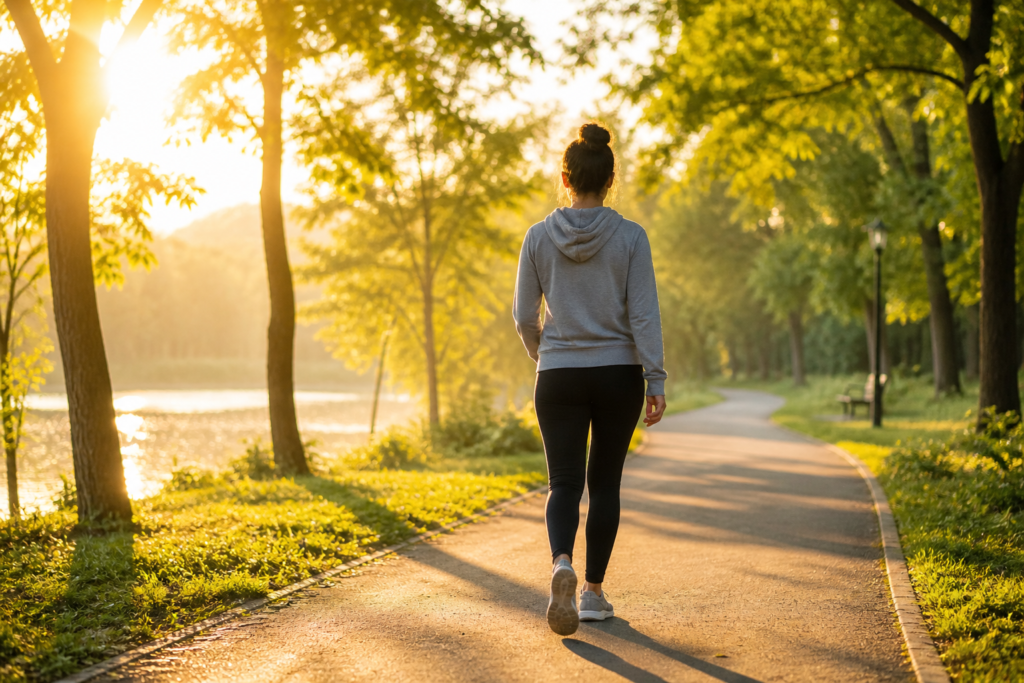
Morning sunlight provides a different signal. It helps your body transition naturally into wakefulness and supports a calmer start to the day.
Even a short walk or standing outside can help reduce that early stress buildup
Natural light helps regulate your body clock and supports mood.
Why It Helps
Morning sunlight may help signal your body to wake up properly and support a more balanced stress response throughout the day.
Simple Action
Step outside for 5–10 minutes within the first hour of waking.
2. Move Your Body Daily
Many people spend most of their day sitting—whether at a desk, in a car, or on the couch. After a long day, it can feel easier to rest than to move, especially when energy is low.
However, staying inactive often makes stress feel heavier. Tension builds in the body, circulation slows, and mental fatigue increases.
Movement helps release that built-up pressure. It doesn’t need to be intense. Even light activity like walking or stretching can help shift your body out of a stressed state.
A simple improvement is to add short movement breaks during the day. A 10-minute walk or quick stretch can make a noticeable difference in how you feel.
You don’t need intense workouts to reduce stress.
Why It Helps
Movement supports circulation and can help release built-up tension.
Simple Action
Take a 10–20 minute walk, stretch, or do light exercise.

3. Eat Balanced Meals
When life gets busy, many people either skip meals or grab quick, processed foods. This usually happens due to time pressure, convenience, or lack of planning.
The problem is that these choices can lead to unstable energy levels. Blood sugar rises quickly and then drops, which can increase irritability, cravings, and feelings of stress.
Balanced meals help prevent these ups and downs. When your body gets consistent fuel, it’s easier to stay calm and focused.
A simple improvement is to include protein, fiber, and healthy fats in each meal. Even small upgrades—like adding eggs, nuts, or vegetables—can help stabilize energy.
Unstable meals can increase irritability and stress.
Why It Helps
Balanced meals help support steady energy and reduce mood swings.
Simple Action
Include protein, fiber, and healthy fats in each meal.
4. Stay Hydrated
Many people go through most of the day slightly dehydrated without realizing it. Coffee, busy schedules, and lack of routine often replace regular water intake.
Even mild dehydration can affect how you feel. It may lead to headaches, fatigue, and difficulty concentrating, all of which can increase stress.
Hydration supports your body’s basic functions and helps maintain steady energy levels.
A simple improvement is to keep water visible and accessible. Drinking a glass of water after waking and between meals can help build a consistent habit.
Dehydration can affect mood and focus.
Why It Helps
Even mild dehydration may increase fatigue and stress feelings.
Simple Action
Drink water consistently throughout the day.
5. Reduce Excess Caffeine
Caffeine is often used as a quick fix for tiredness. Many people rely on multiple cups of coffee or energy drinks to get through the day.
While caffeine can boost alertness, too much can overstimulate the nervous system. This may lead to jitteriness, anxiety, and difficulty relaxing later in the day.
Over time, this cycle can increase stress rather than reduce it.
A simple improvement is to limit caffeine intake, especially in the afternoon. Replacing one cup of coffee with water or herbal tea can help reduce overall stimulation.
Too much caffeine can increase nervousness and tension.
Why It Helps
Lowering caffeine intake may reduce jitteriness and improve calmness.
Simple Action
Limit coffee to earlier in the day and avoid late intake.
6. Limit Screen Overload
Modern life involves constant screen exposure—phones, computers, and notifications throughout the day. Many people feel the need to stay connected at all times.
This constant input can overwhelm the brain. Switching between apps, messages, and tasks keeps the mind in a reactive state, making it harder to relax.
Over time, this can increase mental fatigue and stress levels.
A simple improvement is to create short breaks from screens. Even stepping away for a few minutes can help reset your focus and reduce overstimulation.
Constant notifications can overwhelm your brain.
Why It Helps
Reducing screen exposure can support mental clarity and reduce overstimulation.
Simple Action
Take short breaks from screens throughout the day.
7. Create a Calming Evening Routine
Evenings often become an extension of the day’s stress. Many people continue working, scrolling, or watching stimulating content right up until bedtime.
This makes it harder for the body to switch into a relaxed state. Sleep quality may suffer, and the next day starts with less energy and more stress.
A calming evening routine helps signal that it’s time to unwind.
A simple improvement is to reduce screen time before bed and create a consistent wind-down habit. This could include reading, stretching, or listening to calming music.
Evening habits influence stress levels the next day.
Why It Helps
A calm evening routine supports better sleep and recovery.
Simple Action
Dim lights, reduce screens, and unwind before bed.

Why It Happens: The Stress Cycle
Stress builds when your body never gets a chance to reset.
Poor sleep, constant stimulation, and lack of recovery keep stress hormones elevated.
Breaking this cycle requires daily habits—not occasional fixes.
Hidden Signs Your Routine Is Increasing Stress
You may need changes if you often feel:
- Tired but wired
- Irritable
- Overwhelmed
- Unable to relax
- Mentally scattered
- Dependent on caffeine
These signals often point to lifestyle patterns, not just external stress.
How to Fix It Without Overwhelm
Trying to change everything at once can quickly feel exhausting and unrealistic. Many people start strong but lose motivation after a few days because the routine feels too demanding.
A better approach is to focus on just one or two habits at a time. This allows your body and mind to adjust without creating additional stress.
For example, you might begin by adding morning sunlight and improving hydration. Once those feel natural, you can introduce movement or reduce caffeine gradually.
This step-by-step method helps build consistency, which is more important than perfection. Small changes practiced daily are far more effective than big changes that don’t last.
What to Do When Stress Hits in the Moment
Even with good habits, stress can still appear during the day.
Having simple reset strategies can make a big difference.
Quick stress-reducing actions:
- Take a short walk, even for 2–3 minutes
- Drink a glass of water
- Step away from screens
- Take slow deep breaths
- Stretch your body
These small actions help interrupt the stress cycle and bring your body back to a calmer state.
7-Day Stress Reset Plan
Day 1
Get morning sunlight.
Day 2
Take a daily walk.
Day 3
Improve one meal.
Day 4
Drink more water.
Day 5
Reduce caffeine.
Day 6
Take screen breaks.
Day 7
Create an evening routine.
What to Expect After 30 Days
After 30 days of consistent stress-reducing habits, many people notice meaningful improvements.
Common changes include:
- Feeling calmer during busy situations
- Better sleep quality
- More stable energy levels
- Reduced dependence on caffeine
- Improved focus and clarity
Perhaps the most important change is not the complete removal of stress, but the ability to respond to it more calmly.
Best Products to Consider
1. Blue Light Blocking Glasses
Helpful for reducing evening screen strain.
Protect your evenings — explore blue light glasses.
2. Herbal Tea (Chamomile or Ashwagandha blends)
Supports relaxation routines.
Unwind naturally — try calming herbal teas.
3. Water Bottle
Encourages hydration habit.
Stay consistent — upgrade your hydration routine.
FAQ
What is the fastest way to reduce stress naturally?
Simple actions can reduce stress within minutes. Short walks, deep breathing, stepping away from screens, or drinking water can quickly calm the body. These actions help interrupt the stress response and give your nervous system a chance to reset. While these quick fixes are helpful, long-term stress reduction usually comes from consistent daily habits rather than one-time actions.
Can habits really reduce stress?
Yes, daily habits play a major role in how your body responds to stress. Your nervous system reacts to repeated signals over time. When your routine includes calming inputs like movement, sunlight, balanced meals, and proper rest, your body gradually shifts away from constant stress mode. Consistency matters more than intensity, which is why small habits practiced daily can be very effective.
How long does it take to see results?
Some improvements can happen within a few days, especially from changes like better hydration, reduced screen time, or short daily walks. However, more noticeable and lasting results often take a few weeks of consistent effort. The key is to stay patient and focus on building habits that are easy to maintain rather than expecting immediate transformation.
Is caffeine bad for stress?
Caffeine affects people differently, but too much can increase nervousness, restlessness, and tension. This is especially noticeable when caffeine is consumed on an empty stomach or late in the day. Reducing intake gradually, rather than cutting it suddenly, is often more manageable. Many people find that limiting caffeine improves both stress levels and sleep quality.
Do I need supplements for stress?
Not always. Many people see meaningful improvements by adjusting daily habits such as sleep, nutrition, movement, and screen use. Supplements may be considered in some cases, but they usually work best as a complement to a healthy routine rather than a replacement. Building strong daily habits is often the most reliable foundation for long-term stress management.
When to Seek Help
If stress feels overwhelming, persistent, or affects daily functioning, consider speaking with a healthcare professional.
Want free practical tips for better energy, sleep, gut health, and healthy aging?
Join the Purely Vital Living newsletter and get science-backed wellness tips delivered to your inbox.
Final Summary
The best daily habits to lower stress naturally are simple, consistent actions that support your body’s ability to recover.
Focus on:
- Light exposure
- Movement
- Nutrition
- Hydration
- Screen control
- Evening routines
Small habits practiced daily often reduce stress more effectively than occasional big changes.