

Quick Answer
The best morning routine for energy and focus includes getting morning sunlight, hydrating, moving your body, eating a balanced breakfast, limiting early screen time, planning your day, and creating a calm start. These simple habits help support mental clarity, steady energy, and better productivity throughout the day.
- Introduction
- What Makes a Morning Routine Effective?
- How Mornings Affect Your Energy and Focus
- Morning Habits That Quietly Drain Energy
- What to Do When Mornings Feel Rushed
- What Are the Best Morning Habits for Energy?
- Best Morning Routine for Energy and Focus
- Sample 30-Minute Morning Routine for Energy and Focus
- Why It Happens: The Morning Energy Cycle
- Morning Habits That Drain Energy
- How to Fix It Without Overwhelm
- 7-Day Morning Routine Reset
- What to Expect After 30 Days
- Best Products to Consider
- FAQ
- When to Seek Help
- Final Summary
Introduction
How you start your morning often shapes how the rest of your day feels.
Many people wake up feeling rushed, tired, or immediately pulled into emails, notifications, and responsibilities. This reactive start can make it harder to feel focused and energized.
The good news is that you don’t need a complicated routine to improve your mornings.
With a few intentional habits, you can build the best morning routine for energy and focus—one that helps you feel more in control, productive, and mentally clear.
Many people try to improve their mornings by copying strict routines they see online. While those routines may look productive, they often feel unrealistic and difficult to maintain.
The goal is not to create a perfect morning. It is to create a routine that works consistently in your real life.
A sustainable morning routine should feel simple, flexible, and supportive—not stressful. Even small improvements can lead to noticeable changes in your energy and focus throughout the day.
What Makes a Morning Routine Effective?
An effective routine does not need to be long or perfect.
It should:
- support your energy
- reduce stress
- create structure
- prepare your mind for the day
Consistency matters more than doing everything at once.
How Mornings Affect Your Energy and Focus
Your body follows a natural rhythm.
The first hour after waking influences:
- alertness
- mood
- focus
- productivity
Poor habits early in the day—like scrolling or skipping meals—can lead to energy crashes later.
Another important factor is how quickly your brain becomes overloaded in the morning. When you introduce too much stimulation too early—such as checking emails, scrolling social media, or jumping straight into work—your brain has less time to organize and prioritize information.
This often leads to scattered thinking and reduced focus throughout the day.
In contrast, a slower and more intentional start gives your brain time to process information and set clear priorities. This can improve decision-making, reduce stress, and help you stay more productive.
Over time, the way you start your morning becomes a pattern that shapes your overall mental performance.

Morning Habits That Quietly Drain Energy
Many people unknowingly follow habits that reduce energy early in the day.
Common examples include:
- Checking your phone immediately after waking
- Drinking coffee without eating
- Skipping hydration
- Staying indoors without natural light
- Rushing through the morning without structure
These habits may feel normal, but they can lead to lower energy, poor focus, and increased stress.
Recognizing these patterns is the first step toward building a better routine.
What to Do When Mornings Feel Rushed
Not every morning will go as planned.
Busy schedules, work demands, or family responsibilities can make it hard to follow a full routine.
In these situations, focus on the essentials:
- Get a few minutes of light exposure
- Drink water
- Avoid immediate phone use
Even doing one or two habits is better than doing nothing.
Consistency over time matters more than perfect mornings.
What Are the Best Morning Habits for Energy?
The best morning habits for energy are simple actions that support your body clock, hydration, movement, nutrition, and mental focus. A practical morning routine for energy can follow this order:
- Get natural morning light.
- Drink water before relying on caffeine.
- Move for 5–10 minutes.
- Eat a balanced breakfast if breakfast suits your schedule.
- Delay email, news, and social media.
- Choose your top three priorities.
- Begin the day calmly instead of rushing.
Best Morning Routine for Energy and Focus
1. Get Morning Sunlight
Many people wake up and immediately look at their phone or start thinking about tasks. This creates a mental load before the body has fully adjusted to being awake.
Morning sunlight offers a natural way to reset that pattern. It helps signal to your body that it is time to be alert and active.
Even a few minutes outdoors can feel different from staying inside. Over time, this simple habit can support more stable energy levels throughout the day.
Light exposure helps your body wake up naturally.
Why It Helps
Morning light supports your internal clock and can improve alertness.
Simple Action
Step outside or near a window within the first hour.

2. Hydrate First Thing
After several hours of sleep, your body naturally wakes up slightly dehydrated. However, many people reach for coffee first instead of water.
Starting with caffeine alone can sometimes increase feelings of jitteriness or fatigue later.
Drinking water first helps your body rehydrate and supports basic functions like circulation and focus.
A simple improvement is to drink one glass of water before anything else in the morning.
Your body wakes up slightly dehydrated.
Why It Helps
Hydration supports energy and mental clarity.
Simple Action
Drink a glass of water after waking.

3. Move Your Body
It’s common to feel stiff or sluggish after waking up, especially if you go straight into sitting or working.
Without movement, your body may take longer to fully wake up, which can affect both energy and mental clarity.
Light movement—like stretching or walking—helps activate your body and improve alertness.
You don’t need a full workout. Even 5–10 minutes of movement can make a difference.
Gentle movement can wake up both body and mind.
Why It Helps
Movement improves circulation and reduces sluggishness.
Simple Action
Stretch, walk, or do light exercise.
4. Eat a Balanced Breakfast
Many people skip breakfast or rely on quick sugary options due to time pressure.
This can lead to unstable energy levels and difficulty concentrating later in the morning.
A balanced breakfast provides more steady energy. Including protein, fiber, and healthy fats can help you stay full and focused.
Even simple options like yogurt with fruit or eggs with toast can improve your morning.
Skipping breakfast can affect energy levels.
Why It Helps
Balanced meals support steady energy.
Simple Action
Include protein, fiber, and healthy fats.
5. Avoid Immediate Screen Time
Checking your phone right after waking exposes your brain to information overload.
Messages, emails, and social media can immediately trigger stress or distraction.
This reactive start makes it harder to stay focused later.
Delaying screen time allows your brain to wake up more calmly and intentionally.
Even waiting 20–30 minutes can improve mental clarity.
Phones can overload your brain early.
Why It Helps
Delaying screens reduces stress and improves focus.
Simple Action
Wait 20–30 minutes before checking your phone.
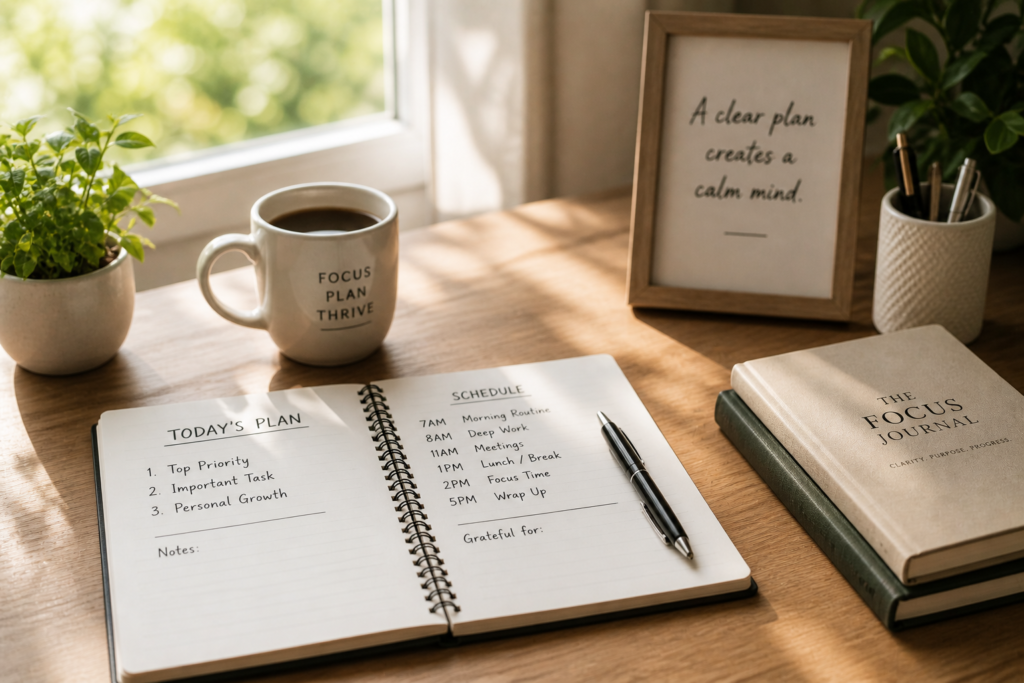
6. Plan Your Day
Starting the day without a plan can lead to scattered thinking and wasted time.
Many people jump between tasks without clear priorities, which reduces productivity.
Taking a few minutes to plan helps create structure and direction.
Writing down 2–3 key tasks can make the day feel more manageable and focused.
Clarity reduces mental stress.
Why It Helps
Planning improves focus and productivity.
Simple Action
Write 3 key tasks for the day.
7. Create a Calm Start
Rushed mornings often create unnecessary stress.
When you move quickly from one task to another, your brain stays in a reactive state.
A calm start allows you to feel more in control.
Simple practices like sitting quietly, breathing, or journaling can help create a smoother transition into the day.
A rushed morning increases stress.
Why It Helps
A calm routine supports better decision-making.
Simple Action
Take a few minutes to breathe, journal, or sit quietly.
Sample 30-Minute Morning Routine for Energy and Focus
You do not need a two-hour routine. This sample 30-minute morning routine combines the most useful habits into a realistic schedule that can be adjusted around work, family, health, and breakfast preferences.
| Time | Action | Purpose |
|---|---|---|
| 0–5 minutes | Drink water, open the curtains, and step outside or near bright natural light. | Rehydrate and give your body a clear daytime signal. |
| 5–15 minutes | Walk, stretch, or complete a short mobility routine. | Reduce stiffness and increase alertness without requiring a full workout. |
| 15–20 minutes | Sit quietly, breathe slowly, or write a few lines in a journal. | Create a calmer transition into the day. |
| 20–25 minutes | Prepare a balanced breakfast or organize a nutritious option for later. | Support steadier energy with protein, fiber, and healthy fats. |
| 25–30 minutes | Write your three most important tasks before checking messages. | Protect attention and begin with clear priorities. |
If 30 minutes is not realistic, use the first 10 minutes for light, water, and movement. Consistency matters more than completing every step perfectly.
Why It Happens: The Morning Energy Cycle
When mornings are rushed and reactive, your brain stays in stress mode.
When mornings are calm and structured, your body enters a more focused state.
Morning Habits That Drain Energy
- Checking phone immediately
- Skipping breakfast
- Drinking only coffee
- Staying indoors
- Rushing without structure
How to Fix It Without Overwhelm
Start small.
Choose 1–2 habits and build from there.
For example:
- sunlight + hydration
- then add movement
- then improve breakfast
Small steps build lasting routines.
Trying to build a full routine overnight can feel overwhelming.
Instead, focus on adding habits gradually.
For example, start with hydration and sunlight. Once those feel natural, add movement or planning.
This approach makes the routine easier to maintain and reduces the chances of giving up.
7-Day Morning Routine Reset
Day 1: sunlight
Day 2: hydration
Day 3: movement
Day 4: breakfast
Day 5: reduce screens
Day 6: planning
Day 7: full routine
What to Expect After 30 Days
After 30 days of consistent morning habits, many people notice meaningful improvements.
These may include:
- More consistent energy levels
- Better focus during work or study
- Reduced stress in the morning
- Improved productivity
- A stronger sense of control over the day
The biggest benefit is not perfection, but consistency.
Best Products to Consider
1. Smart Sleep & Wellness Devices
Smart sleep devices are designed to support healthier bedtime and wake-up habits using calming sounds, gentle alarms, white noise, and guided routines that may improve sleep quality and morning focus.
⭐ Editor’s Pick
Loftie Smart Alarm Clock
Best For: Screen-Free Sleep & Calm Morning Routines

Loftie Smart Alarm Clock is a minimalist bedside device designed to replace phone alarms and reduce nighttime screen exposure. It includes white noise, meditation sounds, breathwork, and a two-phase alarm system for gentler wake-ups
✔ Encourages phone-free sleep habits
✔ Includes white noise and relaxing sounds
✔ Gentle two-phase wake-up alarm
✔ Modern minimalist bedside design
👉 Want calmer mornings without using your phone?
2. Portable Nutrition & Smoothie Tools
Portable blending tools help simplify healthy breakfast preparation, especially for busy mornings when consistent nutrition can support stable energy and focus.
⭐ Editor’s Pick
Ninja Blast Portable Blender
Best For: High-Potency Digestive & Gut Balance Support

Ninja Blast Portable Blender is a compact cordless blender designed for smoothies, protein shakes, fruit drinks, and quick breakfasts at home or on the go. Its portable design makes it useful for busy morning routines.
✔ Easy smoothie preparation
✔ Portable cordless design
✔ Convenient for protein shakes
✔ Helps simplify healthy breakfasts
👉 Need a faster healthy breakfast option?
3. Workspace Wellness & Ergonomic Office Tools
Ergonomic workspace accessories are designed to support comfort, posture, and movement during long work or study sessions, which may help reduce fatigue and improve focus
⭐ Editor’s Pick
Topo Mini by Ergodriven
Best For: Standing Desk Comfort & Productivity

Topo Mini by Ergodriven is a premium anti-fatigue standing desk mat designed specifically for standing desk users. Unlike flat mats, it includes ergonomic terrain zones that encourage subtle movement while standing. It is widely recommended for office productivity and comfort
✔ Encourages movement while standing
✔ Helps reduce foot and leg fatigue
✔ Ergonomic terrain design
✔ Premium standing desk comfort
👉 Upgrade your standing desk setup naturally.
FAQ
What is the best time to start a morning routine?
The first hour after waking is usually the most effective time. This is when your body is transitioning into an active state, and small habits can have a strong impact on energy and focus.
How long should a morning routine be?
A routine can be effective even if it lasts only 15–30 minutes. The key is consistency rather than duration.
Can a routine improve focus?
Yes. Repeating the same structured habits each morning helps your brain prepare for work, which improves concentration and productivity.
What if I don’t have time?
Start with one or two habits, such as hydration or sunlight. Even small actions can create noticeable improvements.
Is coffee bad in the morning?
Coffee is not necessarily bad, but relying on it alone without proper hydration or nutrition may lead to energy crashes later.
What is a simple 30-minute morning routine for energy?
Spend the first 5 minutes hydrating and getting natural light, 10 minutes moving, 5 minutes breathing or journaling, 5 minutes preparing a balanced breakfast, and the final 5 minutes choosing your top three priorities. Shorten the routine when needed rather than abandoning it.
When to Seek Help
If fatigue persists despite routine improvements, consult a healthcare professional
Want more practical routines for energy, sleep, and wellness?
Join Purely Vital Living and get expert-backed tips delivered weekly.

Final Summary
The best morning routine for energy and focus is simple, consistent, and realistic.
Focus on:
- sunlight
- hydration
- movement
- nutrition
- reduced screens
- planning
Small daily habits create powerful long-term results.