
Quick Answer
There is no universal step count that guarantees weight loss. For many adults, 7,000–10,000 daily steps can be a practical long-term range, but the best starting goal is usually a gradual increase from your current baseline. Walking supports weight management by increasing daily energy expenditure, but results also depend on food intake, body size, pace, terrain, sleep, health, and consistency. Start with an amount you can recover from and maintain.
Key Takeaways
- Use your current average as the baseline and increase gradually rather than jumping to 10,000 steps immediately.
- Step counts estimate activity; walking pace, distance, terrain, body size, and tracker accuracy affect calorie estimates.
- Walking can support a calorie deficit, but nutrition still plays a major role in weight change.
- Brisk walking and short intervals can increase intensity, but comfortable walking still provides health benefits.
- Pain, dizziness, chest symptoms, or major mobility limitations require appropriate medical guidance.
Introduction
Walking is one of the simplest, safest, and most accessible forms of exercise available. Unlike expensive gym memberships or complicated workout routines, walking requires little equipment and can fit into almost any lifestyle. Whether you walk around your neighborhood, on a treadmill, during work breaks, or while running errands, those daily steps can add up and contribute significantly to your overall health.
For years, I assumed that effective weight loss required intense gym workouts. However, during periods when my energy levels were low and my health challenges limited my ability to exercise intensely, I discovered that daily walking could still make a meaningful difference. What started as short walks to improve my energy and overall well-being gradually became one of the most sustainable habits in my routine. Over time, I noticed that regular walking not only helped me stay more active but also improved my mood, reduced stress, and encouraged other healthy habits such as eating better and sleeping more consistently.
Many people associate weight loss with strenuous exercise, but scientific research consistently shows that increasing daily movement plays an important role in reducing body fat and supporting healthy weight management. Walking burns calories, increases daily energy expenditure, and may improve cardiovascular health, insulin sensitivity, stress levels, and overall wellness.
One common question is whether everyone needs to reach the famous 10,000 steps per day target. Daily walks taught me that the answer is not always straightforward. Some people can experience meaningful health improvements with fewer steps, while others may need additional activity depending on their goals, body composition, and lifestyle. Interestingly, modern research also suggests that health benefits often begin well before reaching 10,000 daily steps.
In this guide, you’ll learn how many steps a day to lose weight, what my daily walking experience taught me, what current science says about step goals, how walking burns calories, the best walking pace for fat loss, common mistakes to avoid, and practical strategies for increasing your daily movement.
How Many Steps a Day to Lose Weight?
There is no universal step goal that guarantees weight loss for everyone. The number of steps needed varies depending on factors such as body weight, calorie intake, metabolism, age, and activity level.
However, research suggests that increasing daily movement beyond a sedentary lifestyle can significantly improve health outcomes and support weight management.
General recommendations include:
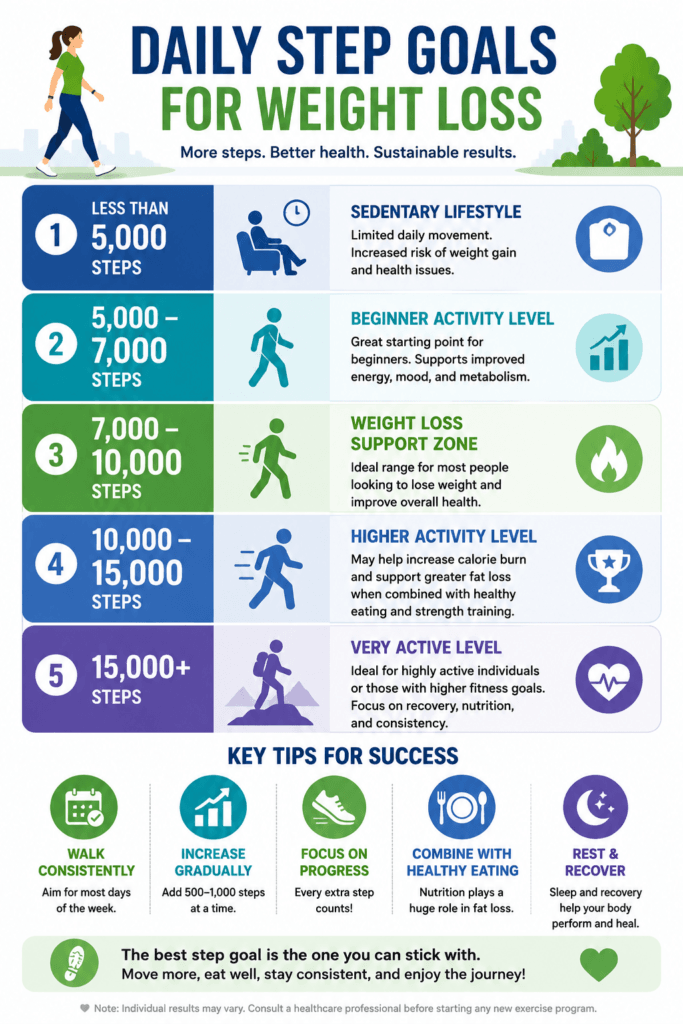
- 5,000 steps or fewer: Considered largely sedentary.
- 7,000–8,000 steps: May support improved health and modest weight loss.
- 8,000–10,000 steps: Often recommended for individuals pursuing weight-loss goals.
- 10,000+ steps: May provide additional benefits for some people, especially when combined with healthy eating habits.
The most important principle is gradual improvement. Someone currently averaging 3,000 daily steps does not need to immediately jump to 10,000 steps. Increasing activity by 1,000 to 2,000 steps per day over several weeks is often more realistic and sustainable.
Is 10,000 Steps Necessary?
The widely recognized goal of 10,000 steps originated decades ago as part of a marketing campaign for a Japanese pedometer rather than from scientific research.
Interestingly, studies now show that health benefits begin to appear well below 10,000 steps per day.
For many adults, moving from a sedentary lifestyle to approximately 7,000–8,000 daily steps may produce meaningful improvements in:
- Cardiovascular health
- Blood sugar control
- Energy levels
- Body composition
- Overall mortality risk
That said, individuals pursuing significant fat-loss goals may benefit from higher activity levels if appropriate for their fitness and health status.
Rather than obsessing over a specific number, focus on consistently increasing your daily movement.
Recommended Step Ranges for Weight Loss
The following ranges are examples rather than prescriptions. Choose a level that reflects your current average, mobility, health, schedule, and recovery:
Beginners
5,000–7,000 steps per day
Ideal for sedentary individuals beginning a walking routine.
Intermediate Walkers
7,000–10,000 steps per day
Suitable for many people seeking gradual, sustainable weight loss.
Advanced Walkers
10,000–15,000 steps per day
May help support additional calorie expenditure when paired with balanced nutrition.
Remember that nutrition remains critically important. Walking alone cannot compensate for consistently overeating.
Why More Movement Matters
Many adults spend much of their day sitting.
Long periods of inactivity have been associated with:
- Increased risk of weight gain
- Reduced calorie expenditure
- Poor blood sugar control
- Reduced cardiovascular fitness
Walking increases non-exercise activity thermogenesis (NEAT), which refers to calories burned through everyday movement outside of formal exercise.
Examples include:
- Walking while shopping
- Taking the stairs
- Walking the dog
- Housework
- Gardening
- Walking during phone calls
These seemingly small activities may contribute significantly to total daily calorie burn.

How Walking Supports Weight Loss
Walking supports weight loss through multiple mechanisms beyond simply burning calories.
Walking Increases Daily Calorie Burn
Every movement requires energy.
The more you move throughout the day, the more calories your body expends.
Although walking burns fewer calories per minute than vigorous exercise, its accessibility makes it easier to perform consistently. Many people can realistically walk every day, whereas high-intensity exercise may be difficult to sustain long term.
For example, a brisk 45-minute walk may burn approximately 200–350 calories depending on body size and pace.
Repeated regularly, these calories can contribute to meaningful long-term fat loss.
Walking Helps Create a Calorie Deficit
A calorie deficit occurs when your body uses more energy than it receives from food.
This energy gap encourages the body to use stored energy reserves, including body fat.
Walking can support a calorie deficit by increasing total daily energy expenditure without placing excessive stress on the body.
For instance, adding a daily 30-minute walk while modestly improving dietary habits may produce sustainable weight-loss results without requiring extreme measures.
Walking Supports Fat Loss and Overall Health
Weight loss is only one benefit of walking.
Regular walking may also help:
- Improve heart health
- Lower blood pressure
- Improve insulin sensitivity
- Reduce stress
- Improve sleep quality
- Enhance mood
- Increase mobility
- Support healthy aging
Because walking is low impact, it is appropriate for many individuals, including beginners, older adults, and those returning to exercise after a long break.

How Many Calories Does Walking Burn?
Calorie expenditure varies significantly between individuals.
Factors influencing calorie burn include:
- Body weight
- Walking speed
- Distance covered
- Terrain
- Fitness level
- Age
- Walking efficiency
Calories Burned at 5,000 Steps
A person walking 5,000 steps typically covers approximately 2 to 2.5 miles.
Estimated calorie burn:
- 150-pound person: approximately 150–220 calories
- 180-pound person: approximately 180–260 calories
- 220-pound person: approximately 220–320 calories
These values vary depending on pace and terrain.
Calories Burned at 10,000 Steps
Ten thousand steps generally equals approximately 4 to 5 miles.
Estimated calorie burn:
- 150-pound person: approximately 300–450 calories
- 180-pound person: approximately 350–500 calories
- 220-pound person: approximately 400–600 calories
Over weeks and months, these calories can accumulate and contribute to significant weight-loss progress.
Factors That Affect Calorie Burn
Body Weight
Larger individuals generally burn more calories because moving a greater body mass requires more energy.
Walking Speed
Brisk walking increases heart rate and energy expenditure compared with leisurely strolling.
Terrain
Walking uphill, climbing stairs, or hiking uneven terrain typically burns more calories than walking on flat surfaces.
Age and Fitness Level
Fitness level and age can influence walking efficiency and total energy expenditure.
However, regardless of these differences, increasing daily movement almost always provides health benefits.
What Is the Best Walking Pace for Weight Loss?
Walking pace influences both calorie expenditure and cardiovascular benefits.
Although any movement is beneficial, a faster pace generally burns more calories.
Casual Walking vs Brisk Walking
Casual walking usually occurs at a relaxed pace where conversation is effortless.
Brisk walking increases intensity and typically raises breathing and heart rate while still allowing conversation.
Many experts define brisk walking as approximately 3 to 4 miles per hour.
Brisk walking often provides greater benefits for weight loss and cardiovascular fitness compared with slower walking.
Walking Intensity and Fat Loss
Higher-intensity walking sessions may increase calorie expenditure while improving endurance.
Simple ways to increase intensity include:
- Walking faster
- Walking uphill
- Adding inclines on a treadmill
- Carrying light weights
- Increasing total distance
However, beginners should gradually increase intensity to reduce injury risk.
Interval Walking
Interval walking alternates periods of faster walking with slower recovery periods.
Example:
- Walk briskly for 2 minutes.
- Walk comfortably for 2 minutes.
- Repeat for 20–30 minutes.
Interval walking can increase calorie burn while making workouts more engaging and enjoyable.

Common Mistakes That Slow Results
Walking can be highly effective for weight loss, but certain habits may prevent people from seeing the results they expect.
Overestimating Calories Burned
One of the most common mistakes is assuming that walking burns more calories than it actually does.
Fitness trackers and calorie calculators provide estimates, but they are not always perfectly accurate. Some people unintentionally reward themselves with extra snacks after a walk, consuming more calories than they burned.
For example, someone may burn 300 calories during a long walk and then consume a 500-calorie coffee drink or dessert afterward.
Tracking food intake occasionally and practicing portion awareness may help prevent this problem. If you want a short-term logging tool, our free food-tracking app guide compares simple app and diary options.
Sitting Too Much After Walking
Completing a morning walk does not completely offset a sedentary lifestyle.
Research suggests that prolonged sitting may negatively affect health even among individuals who exercise regularly.
Someone who walks 45 minutes but spends the remainder of the day sitting at a desk may benefit from adding more movement throughout the day.
Simple strategies include:
- Standing every hour.
- Taking short walking breaks.
- Using stairs instead of elevators.
- Walking during phone calls.
Ignoring Nutrition
Walking alone may not produce substantial weight loss if eating habits remain unchanged.
Nutrition plays a major role in creating the calorie deficit necessary for fat loss. Our energy-supporting diet guide explains how balanced meals can help reduce crashes that make activity and food choices harder to sustain.
Highly processed foods, sugary beverages, and frequent overeating can easily offset the calories burned through walking.
Combining regular walking with balanced nutrition typically produces the best results.
Inconsistent Walking Habits
Many people start enthusiastically, walk every day for one week, then stop altogether.
Long-term consistency matters far more than short periods of extreme effort.
Walking for 30 minutes most days of the week is usually more beneficial than walking several hours once every few weeks.
Relying on Walking Alone
Walking provides numerous benefits, but incorporating other healthy habits may further improve results.
Strength training, adequate protein intake, quality sleep, and stress management all support healthy body composition and long-term weight management.
How to Increase Your Daily Step Count
Many people are surprised by how easy it is to add extra movement throughout the day.
Small changes often accumulate into thousands of additional daily steps.
Walk After Meals
Walking for 10 to 15 minutes after meals may support digestion, improve blood sugar control, and increase total daily activity.
Three short walks each day can quickly add 2,000 to 3,000 steps.
Take Walking Breaks
Set a reminder to stand and walk for a few minutes every hour.
Even brief movement breaks can contribute significantly to your overall step count.
Use the Stairs
Whenever possible, choose stairs instead of elevators or escalators.
Stair climbing increases intensity and may burn more calories than flat walking.
Park Farther Away
Parking farther from store entrances or workplace buildings creates an easy opportunity to accumulate extra steps without dedicating additional exercise time.
Schedule Daily Walks
Treat walking sessions like important appointments.
Scheduling walks on your calendar increases the likelihood that they become a consistent habit.

Walking Plan for Beginners
Starting slowly often improves adherence and reduces injury risk.
Week 1
Aim for:
- 5,000 steps per day
- 15–20 minutes of walking most days
Focus on establishing consistency rather than speed.
Week 2
Increase to:
- 6,000–7,000 steps daily
- One longer walk during the weekend
Pay attention to comfort and recovery.
Week 3
Progress toward:
- 7,000–8,000 daily steps
- Introduce brisk walking intervals
Example:
Walk briskly for one minute followed by two minutes at a comfortable pace.
Week 4
Aim for:
- 8,000–10,000 daily steps
- Three to five structured walking sessions weekly
By the end of the month, many beginners notice improvements in stamina, mood, and energy.

How Long Does It Take to Lose Weight by Walking?
Weight-loss results vary considerably from person to person.
Factors affecting progress include:
- Starting body weight
- Daily step count
- Walking intensity
- Calorie intake
- Sleep quality
- Stress levels
- Consistency
Some individuals may notice changes within several weeks, while others require more time.
Healthy, sustainable weight loss typically occurs gradually.
Rather than focusing solely on scale weight, monitor additional indicators such as:
- Waist measurements
- Clothing fit
- Energy levels
- Fitness improvements
- Daily habits
Remember that lasting lifestyle change often produces better long-term outcomes than rapid weight loss.
What to Expect After 30 Days of Walking
Walking consistently for one month may provide noticeable physical and mental benefits.
Possible improvements include:
Increased Energy
Regular physical activity often improves endurance and reduces feelings of fatigue.
Improved Fitness
Walking may increase cardiovascular fitness, making everyday activities feel easier.
Better Mood
Exercise stimulates the release of chemicals that support mood and emotional well-being.
Improved Sleep
Many people report better sleep quality after establishing a regular walking routine.
Healthier Habits
Walking frequently encourages other positive behaviors, including healthier food choices and increased water intake.
Weight and Body Composition Changes
While results vary, some individuals may experience modest reductions in body weight, waist circumference, or body fat when walking is combined with nutritious eating habits.
Best Products to Consider
1. Smart Fitness Tracker
Tracking daily steps may improve accountability and encourage consistency. The Garmin vívosmart 5 monitors steps, calories burned, heart rate, sleep, and activity levels to help users stay on track with their movement goals.
Garmin vívosmart 5
Best For: Daily step tracking and healthy habit monitoring
The Garmin vívosmart 5 tracks daily steps, calories burned, heart rate, sleep quality, and activity levels in a lightweight design. It is ideal for individuals looking to increase daily movement and stay consistent with walking goals.
*Price may change at any time.

2. Smart Watch
Apple Watch provides comprehensive health and activity tracking, including workouts, daily movement, heart rate, and calorie expenditure.
Apple Watch Series 11
Best For: Comprehensive health and fitness monitoring.
Apple Watch helps users monitor workouts, daily movement, calories burned, and overall health metrics, making it easier to stay accountable to walking and fitness goals.
*Price may change at any time.

3. Walking Shoes
Comfortable footwear can improve walking enjoyment while reducing fatigue during longer walks.
HOKA Bondi 9
Best For: Comfortable daily walking
The HOKA Bondi 9 offers exceptional cushioning and support, helping reduce foot fatigue during longer walks and encouraging greater daily movement.
*Price may change at any time.

4. Smart Scale
Etekcity Smart Scale
Tracking trends in weight and body composition may provide additional motivation and help you evaluate long-term progress.
From $22.99 on Amazon* 👉 Check Price on Amazon
5. Hydration Support
Stanley Quencher H2.0 FlowState Tumbler
Staying hydrated supports exercise performance and overall wellness.
From $23.95 on Amazon* 👉 Check Price on Amazon
Frequently Asked Questions
Is 10,000 steps enough to lose weight?
For many people, 10,000 steps per day may support weight loss when combined with balanced nutrition. However, some individuals may lose weight with fewer steps, while others may require additional activity depending on their goals and calorie intake.
How many steps should beginners aim for?
Beginners may benefit from starting with approximately 5,000 to 7,000 steps per day and gradually increasing activity levels over time.
Can I lose weight by walking alone?
Walking alone may contribute to weight loss, especially for previously sedentary individuals. However, combining walking with healthy eating habits often produces better and more sustainable results.
Is walking every day safe?
Daily walking is generally safe for most healthy adults. Individuals with medical conditions or mobility limitations should consult a healthcare professional before beginning a new exercise program.
How fast should I walk to lose weight?
Brisk walking, typically around 3 to 4 miles per hour, may provide greater calorie expenditure and cardiovascular benefits compared with slower walking.
How many calories does walking burn?
Calorie expenditure varies depending on body weight, pace, distance, and terrain. Most people burn between 200 and 500 calories during a moderate to long walking session.
When Should You Speak With a Healthcare Professional?
Speak with a qualified healthcare professional before beginning a walking program if you:
- Have heart disease or other chronic medical conditions.
- Experience chest pain or dizziness during activity.
- Have significant mobility limitations.
- Are recovering from surgery or injury.
- Notice unexplained weight changes.
Personalized medical advice can help ensure that your exercise plan is safe and appropriate.
Want free practical tips for better sleep, energy, gut health, and healthy aging?
Join the Purely Vital Living newsletter and get science-backed wellness tips delivered to your inbox.
Final Summary
If you’re wondering how many steps a day to lose weight, aiming for approximately 7,000 to 10,000 daily steps is a practical goal for many adults. However, the ideal number varies depending on your current activity level, diet, body weight, and personal goals.
Walking supports weight loss by increasing calorie expenditure, improving overall health, and helping create a sustainable calorie deficit. Importantly, consistency matters more than reaching a specific step target.
Combining regular walking with nutritious eating habits, quality sleep, and other healthy lifestyle practices often leads to the best long-term results.
Remember that every additional step counts. Whether you begin with 4,000 steps or 10,000 steps, gradually increasing your daily movement can provide meaningful benefits for your health and well-being.
Related Reads
- How to Lose Body Fat Naturally
- 5 Effective Ways to Lose Weight Fast Naturally
- How to Heal Your Gut Microbiome Naturally: Complete Guide
- How to Lose Face Fat Naturally: What Actually Works?
- Best Free Food Tracking App? New Nutrition Features Explained