Quick Answer
If you want to lose weight fast naturally, avoid crash diets and focus on manageable food, movement and sleep habits. Rapid scale drops are often partly water, not just fat. Gradual loss is usually easier to maintain; the suitable pace depends on your health. No food, detox or supplement guarantees fast fat loss.
Before You Start: Suitability and Safety
These suggestions are for adults for whom weight reduction is appropriate. A lower weight is not automatically healthier. Children and adolescents, pregnancy or breastfeeding, low weight, frailty, unintended weight loss, and current or past eating disorders require individualized guidance rather than a self-directed calorie deficit.
Review major food or activity changes with your care team if you use insulin or other glucose-lowering medicines, or have kidney disease, heart disease or significant limitations. Do not change medicines yourself. Stop activity for chest pain, faintness or unusual breathlessness and seek appropriate medical help.
Medical conditions, medicines and circumstances can affect weight; difficulty losing weight is not proof of poor willpower or a hormone disorder. Evidence-based care can include nutrition support, medicines or surgery when appropriate. See NIDDK guidance on individualized weight management.
What Counts as Realistic Progress?
For many adults aiming to lose excess weight, CDC describes gradual loss of about 1–2 lb (0.5–0.9 kg) weekly as more maintainable than faster loss. This is a general reference, not a target or promise for everyone. Early scale changes can reflect fluid and gut contents. See CDC guidance.
A seven-day plan organizes habits; it does not reset metabolism. There is no guaranteed 30-day weight or body-fat result. Track comfort, nutrition, strength and sustainable habits as well as weight when doing so is helpful. Stop tracking and seek support if it fuels restrictive or compulsive behavior.
Key Takeaways
- Improve food quality and portions instead of relying on severe restriction.
- Replacing sugary drinks can reduce calories without shrinking meals.
- Walking, strength training, and everyday movement all contribute to energy expenditure and fitness.
- Consistent sleep can support appetite regulation, recovery, and better daily choices.
- Fast initial scale loss is not the same as rapid body-fat loss; sustainable habits matter more than a seven-day result.
- Before You Start: Suitability and Safety
- What Counts as Realistic Progress?
- Introduction
- Why Fast Weight Loss Often Fails
- 1. Improve Your Food Quality
- 2. Increase Daily Movement
- 3. Reduce Liquid Calories
- 4. Improve Sleep Quality
- 5. Stay Consistent Instead of Extreme
- Hidden Habits That Slow Weight Loss
- How to Lose Weight Without Overwhelm
- 7-Day Healthy Weight Loss Reset Plan
- Review Habits Without a Fixed Results Deadline
- Best Products to Consider
- How These Product Examples Were Selected
- FAQ
- Final Summary
Introduction
Many people want to lose weight quickly, but the internet is full of extreme advice that can feel confusing, unrealistic, or unhealthy.
Crash diets, detoxes, and “miracle” weight loss products often promise fast results while ignoring long-term health and sustainability.
The truth is that healthy weight loss does not need to feel extreme.
In many cases, the most effective ways to lose weight fast involve improving simple daily habits that influence metabolism, hunger, energy levels, and overall lifestyle consistency.
Small changes practiced consistently often create better long-term results than aggressive short-term dieting.
This is especially important because many people regain weight after restrictive programs that are difficult to maintain.
The goal should be appropriate, sustainable change, including:
- healthier habits
- sustainable energy
- improved wellness
- realistic routines
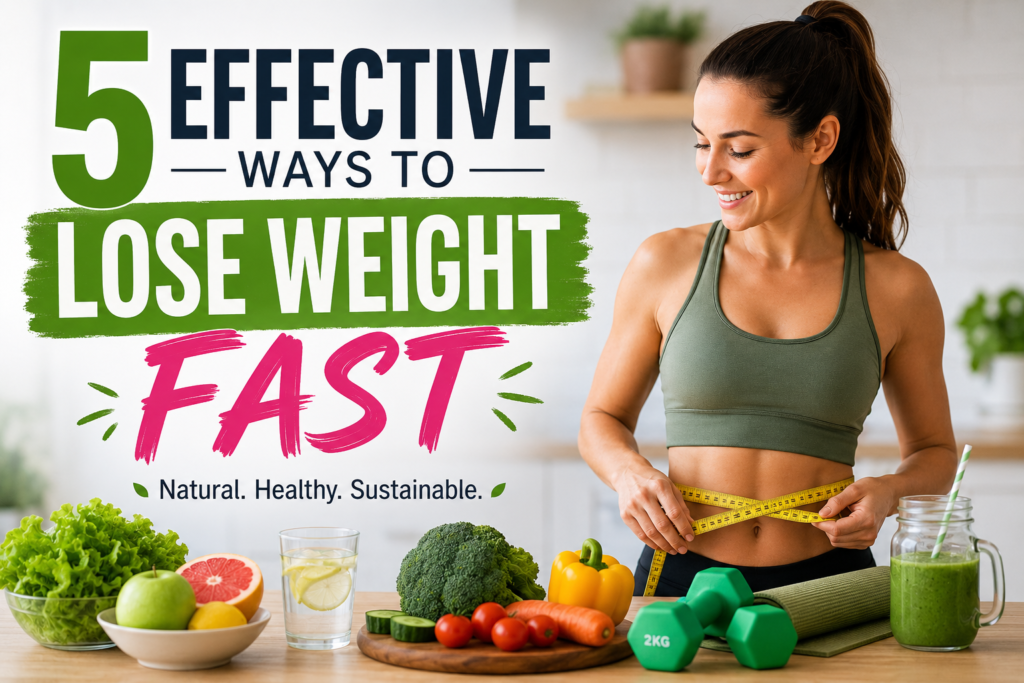
In this guide, we’ll explore five effective ways to lose weight fast naturally while supporting healthier long-term progress.
Why Fast Weight Loss Often Fails
Many weight loss attempts fail because people try to change everything at once.
Extreme calorie restriction, exhausting workouts, and unrealistic rules can quickly lead to burnout.
When the body feels overly restricted, hunger, cravings, low energy, and frustration often increase.
This makes consistency difficult.
Another common issue is focusing only on the scale instead of overall habits and body composition.
Sustainable weight loss usually happens when healthy routines become easier to maintain over time.
This is why gradual, realistic improvements often produce better long-term results than short-term extremes.
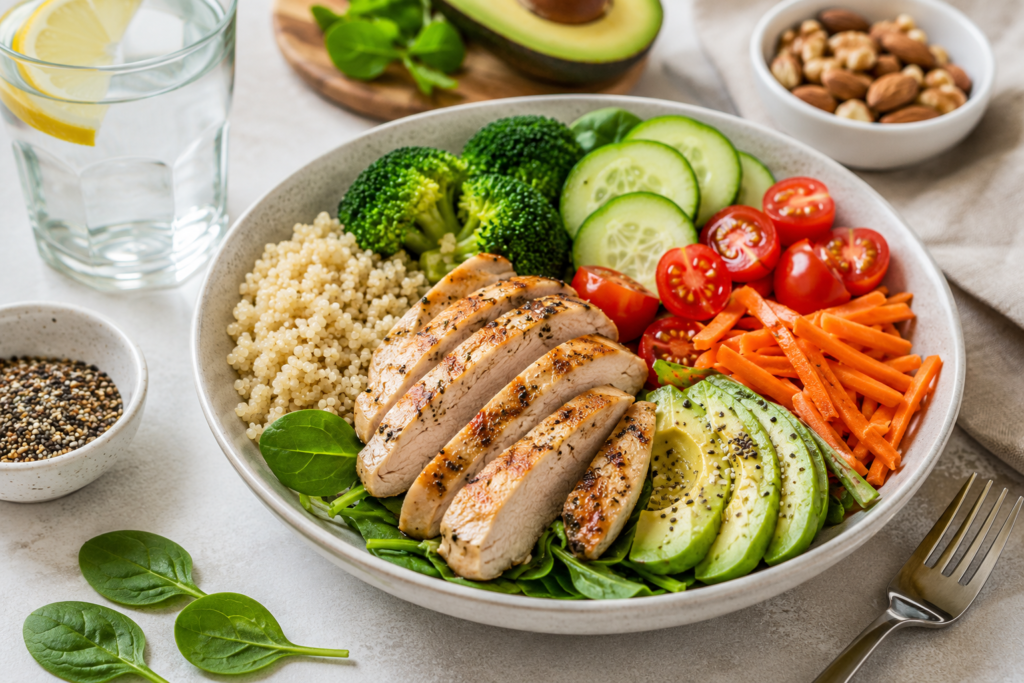
1. Improve Your Food Quality
Meals that provide adequate nutrition and satiety may help create a manageable energy deficit. Better food quality alone does not guarantee weight loss.
Many highly processed foods are designed to be extremely easy to overconsume while providing low nutritional value.
These foods may increase cravings and make appetite control more difficult.
On the other hand, meals built around:
- lean protein
- vegetables
- healthy fats
- high-fiber foods
- complex carbohydrates
often help improve fullness and reduce overeating naturally.
Many people notice that when they improve food quality, they feel more satisfied even without aggressively counting calories.
This issue often builds gradually rather than appearing suddenly. Many people don’t notice how heavily processed snacks, sugary drinks, and fast food influence their hunger patterns until weight gain becomes consistent.
A better approach is to focus on adding healthier foods before obsessing over restriction.
Simple improvements often become easier to maintain long term.
2. Increase Daily Movement
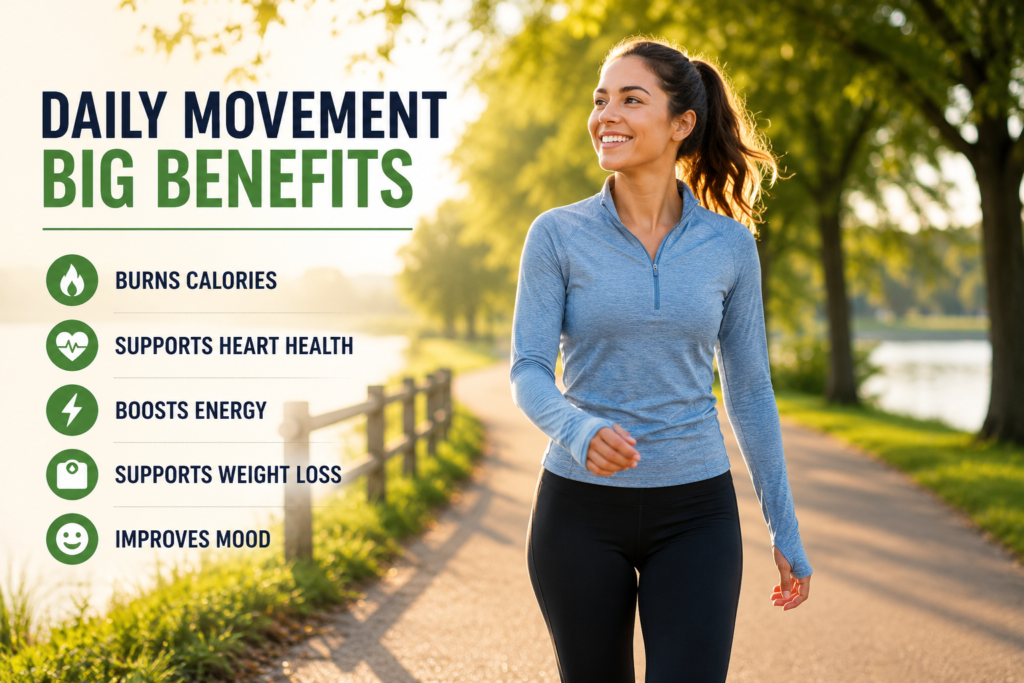
Weight loss is not only about structured workouts.
Daily movement throughout the day also plays a major role in calorie expenditure and overall health.
Walking, standing more often, stretching, household activity, and regular movement breaks can significantly increase daily energy use.
Many people underestimate how much sitting impacts metabolism and energy levels.
Exercise is helpful, but staying active consistently throughout the day is equally important.
This issue often develops slowly because modern lifestyles encourage long periods of inactivity.
Over time, low movement levels may contribute to lower calorie burn and reduced energy.
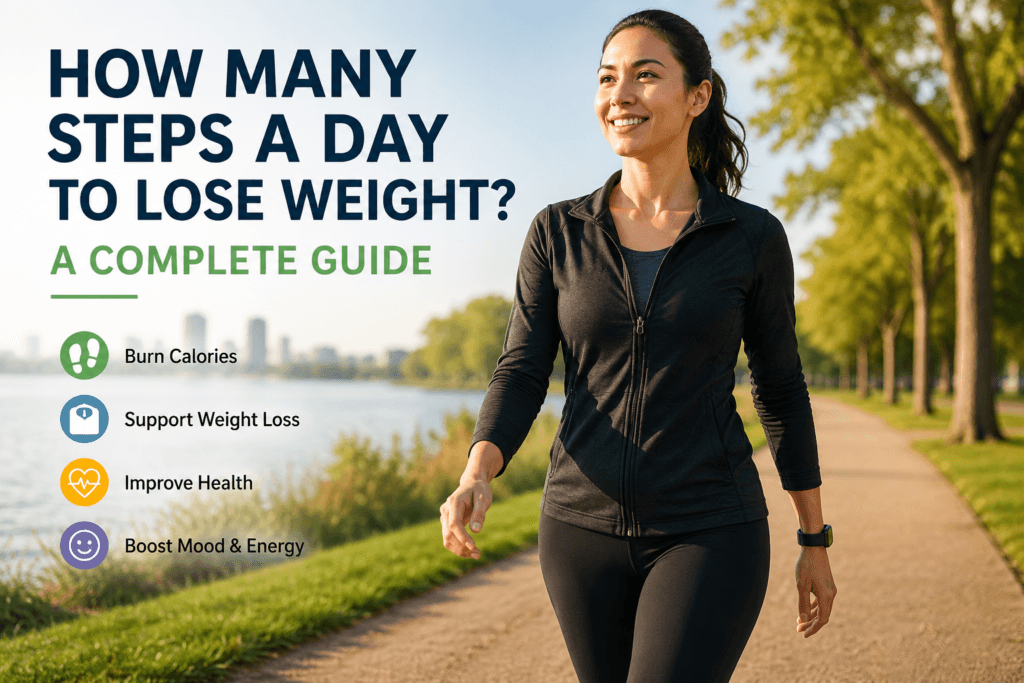
A practical approach is to focus on movement you can realistically maintain. Our steps-per-day guide explains how to build from your current activity level without treating 10,000 steps as a universal requirement.
Examples include:
- daily walks
- beginner strength training
- taking stairs
- short activity breaks
Consistency matters far more than perfection.
3. Reduce Liquid Calories
Many people consume large amounts of calories through drinks without realizing it.
Sugary coffee drinks, soda, alcohol, energy drinks, and sweetened beverages can add significant calories while doing very little to support fullness.
Liquid calories are often less satisfying than solid foods, which may lead to higher overall calorie intake throughout the day.
Replacing high-calorie drinks with:
- water
- sparkling water
- unsweetened tea
- black coffee
- lower-sugar alternatives
may reduce energy intake when those drinks are not needed to meet nutritional needs. Weight change still varies.
This habit often becomes automatic over time because beverages feel less “serious” than meals.
However, multiple high-calorie drinks per day can substantially increase calorie intake over weeks and months.
Reducing liquid calories is often one of the simplest weight loss changes people can make.
4. Improve Sleep Quality
Poor sleep can significantly affect hunger, cravings, stress levels, and energy balance.
When people are sleep-deprived, appetite-regulating hormones may become disrupted, which can increase cravings for highly processed foods.
Low sleep also affects energy and motivation, making exercise and healthy routines harder to maintain.
Many people focus heavily on diet while ignoring how strongly sleep influences metabolism and recovery.
This issue often builds gradually because inconsistent sleep habits become normalized.
Late-night screen exposure, stress, caffeine, and irregular schedules can slowly reduce sleep quality over time.
Improving sleep habits may help support:
- appetite control
- energy
- recovery
- healthier decision-making
Small improvements in sleep consistency often have surprisingly strong effects on wellness habits overall.

5. Stay Consistent Instead of Extreme
One of the biggest mistakes people make is chasing extreme short-term results.
Aggressive diets may initially produce quick weight changes, but they are often difficult to maintain.
Sustainable weight loss usually comes from habits that fit realistically into everyday life.
This means focusing on:
- consistency
- meal quality
- movement
- sleep
- stress management
rather than perfection.
Many people become discouraged after occasional setbacks and assume they have failed completely.
However, long-term progress is rarely perfectly linear.
This issue often becomes worse when people rely on “all-or-nothing” thinking.
Missing one workout or eating one unhealthy meal does not erase overall progress.
The most effective weight loss strategies are usually the ones people can continue long after motivation decreases.
Hidden Habits That Slow Weight Loss
Many everyday habits can quietly slow progress without people realizing it.
Common examples include:
- mindless snacking
- emotional eating
- poor sleep
- high stress
- low movement
- inconsistent routines
- excessive liquid calories
These behaviors often seem small individually, but they can add up significantly over time.
Awareness and consistency are usually more effective than extreme restriction.
How to Lose Weight Without Overwhelm
Trying to completely transform your lifestyle overnight can quickly become exhausting.
A more sustainable approach is to improve one or two habits at a time.
For example:
- start walking daily
- improve breakfast quality
- reduce sugary drinks
- increase protein intake
Once those habits become easier, additional improvements feel far more manageable.
This gradual approach is often more realistic and sustainable long term.
7-Day Healthy Weight Loss Reset Plan
Day 1
Remove sugary drinks.
Day 2
Add more protein to meals.
Day 3
Take a 20-minute walk.
Day 4
Improve sleep schedule consistency.
Day 5
Reduce processed snacks.
Day 6
Drink more water.
Day 7
Plan healthier meals for the upcoming week.
Small consistent improvements often create stronger long-term momentum.
Review Habits Without a Fixed Results Deadline
Use your first month to assess whether meals, activity and recovery are manageable. Weight change varies; hunger, dizziness, fatigue or weakness are reasons to review the plan, not signs to restrict more.
Best Products to Consider
How These Product Examples Were Selected
These are research-based editorial examples, not hands-on testing or proven weight-loss treatments. Products are optional. Check the exact current model, ingredients, allergens, price and safety notices. Retailer ratings and marketing do not establish weight-loss benefits. Consumer scales estimate body composition; wearables estimate calorie expenditure and are not diagnostic tools.
Protein Powders & Weight Management Support
Protein foods may help satiety and muscle maintenance; a powder is optional. Adding a shake on top of an adequate diet does not automatically cause weight loss.
PVL pick – Protein powder
Fullness, Muscle Recovery & Healthy Weight Management
Best For: Convenient Plant-Based Protein Support
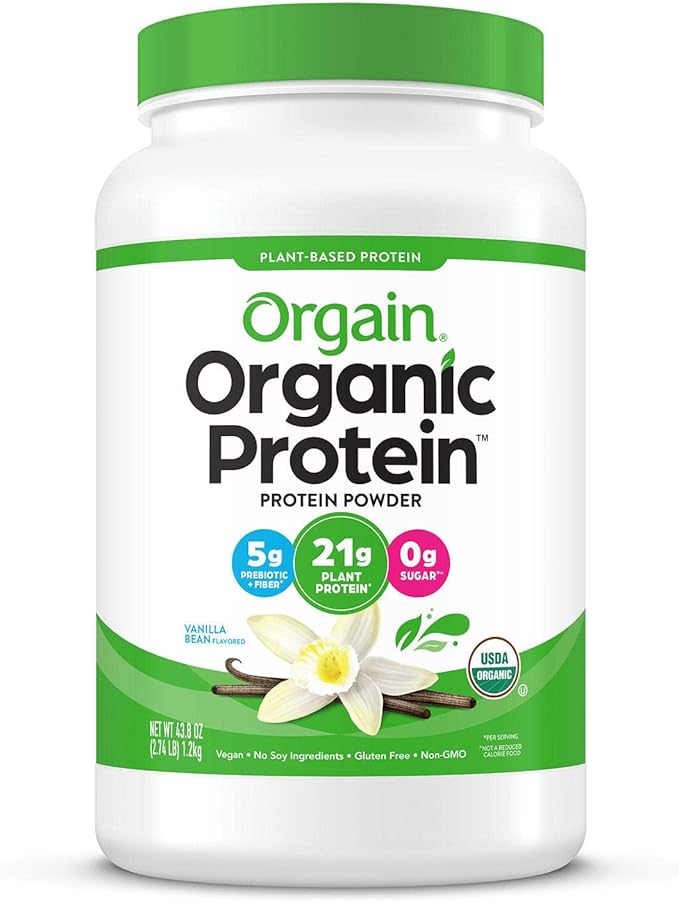
Orgain Organic Protein Powder is a convenient food supplement example when ordinary meals do not meet protein needs. It is not a fat burner or necessary for weight loss. Check allergens and the current ingredient list.
✔ Helps support fullness between meals
✔ Supports muscle recovery after workouts
✔ Plant-based protein formula
✔ Convenient smoothie and meal support
👉 Support healthier weight loss habits naturally.
Smart Fitness & Weight Tracking Devices
A scale may help track trends if weighing supports your well-being. It does not directly measure every body compartment or determine whether a weight-loss plan is medically appropriate.
PVL pick – Body weight scale
RENPHO Smart Scale
Best For: Tracking Weight Loss Progress & Body Metrics

RENPHO is a body-weight tracking example. Body-fat and muscle readings are algorithmic estimates affected by hydration and other conditions. Do not use daily changes to diagnose fat gain or muscle loss; follow device instructions for medical-device precautions.
✔ Tracks weight and body metrics
✔ Syncs with fitness apps
✔ Helps monitor long-term progress
✔ Modern minimalist design
👉 Stay motivated by tracking healthier progress trends.
Meal Prep & Healthy Eating Organization
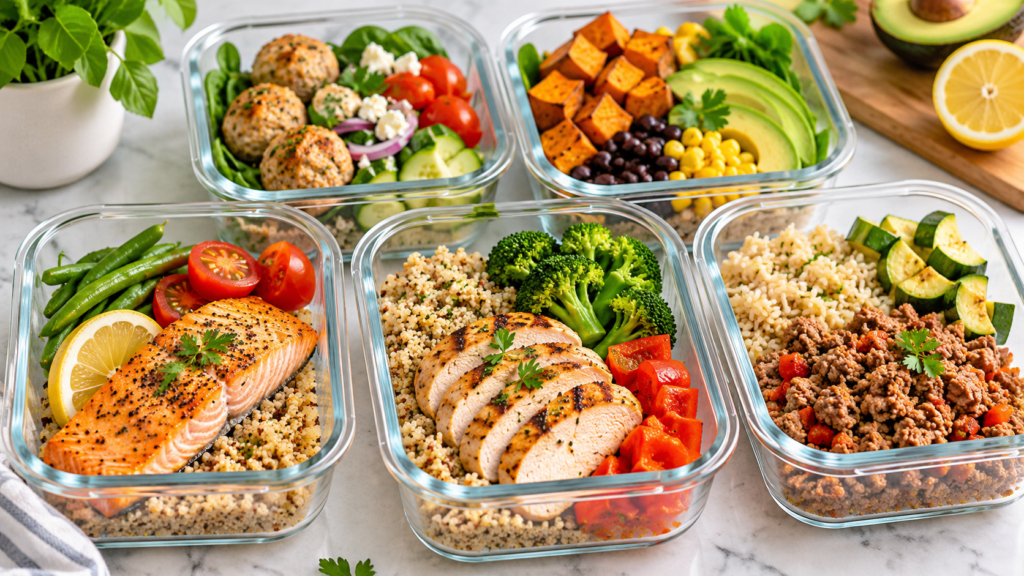
Meal prep containers are commonly used to support healthier eating consistency, portion control, and organized nutrition habits throughout the week.
PVL pick – Meal prep containers
Freshware Meal Prep Containers
Best For: Organizing Balanced Meals and Portions
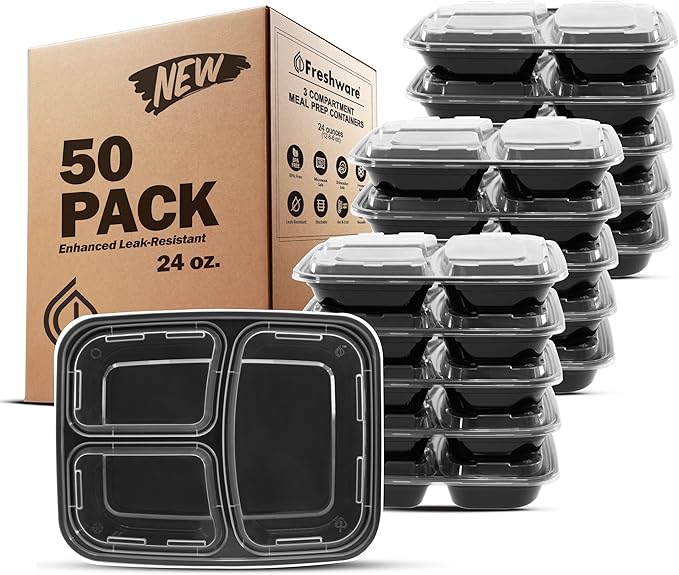
Freshware Meal Prep Containers are designed for weekly meal organization, helping simplify healthier eating habits and improve food consistency during weight loss routines.
✔ Helps improve portion control
✔ Supports weekly meal organization
✔ Convenient grab-and-go meals
✔ BPA-free reusable containers
👉 Build healthier eating habits more consistently.
FAQ
What is the fastest healthy way to lose weight?
There is no fastest healthy method suitable for everyone. Gradual food and activity changes are generally preferable to crash diets; individual health and starting weight matter.
Can walking help with weight loss?
Yes. Walking increases daily movement and calorie expenditure while supporting overall wellness and consistency.
How important is sleep for weight loss?
Sleep strongly affects hunger hormones, energy, recovery, and food cravings.
Should I completely avoid carbs?
Not necessarily. Many healthy weight loss plans include balanced complex carbohydrates.
Why do people regain lost weight?
Extreme dieting is often difficult to maintain long term, leading many people to return to old habits.
Healthy weight loss starts with realistic habits.
Support your wellness journey naturally with healthier routines and sustainable lifestyle strategies from Purely Vital Living.
Final Summary
The most effective ways to lose weight fast naturally usually involve realistic improvements that support healthier habits long term.
Improving food quality, increasing movement, reducing liquid calories, improving sleep, and staying consistent can all contribute to sustainable progress without extreme restriction. For a fuller explanation of fat loss versus scale weight, read our body-fat loss guide.
Long-term success often comes from small daily habits repeated consistently—not perfection.
Related Reads
- Why Am I Tired All the Time? 9 Hidden Causes + Fixes
- Stress and Sleep: How Stress Affects Sleep Quality
- Sleep Hygiene Tips: 7 Bedtime Habits for Better Sleep
- Best Vitamins for Energy After 40
- How to Lose Body Fat Naturally: The Ultimate Guide (2026)
- How Many Steps a Day to Lose Weight? Complete Guide
- Best Diet for Energy: Foods That Help Prevent Energy Crashes