
Quick Verdict
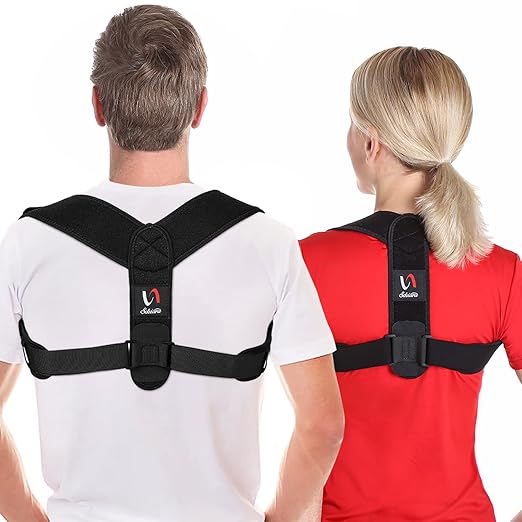
The Schiara Posture Corrector is best viewed as a temporary wearable posture cue, not a device that permanently realigns the spine or “fixes” posture. Its adjustable straps may remind some users to change shoulder or upper-back position while worn, but PVL did not identify strong independent evidence showing that this finished brace produces lasting postural correction or treats back pain.
PVL Rating: 3.7/5
- Posture-reminder concept: 4.1/5
- Adjustability and simplicity: 4.2/5
- General posture-bracing evidence: 3.2/5
- Finished-product evidence: 2.8/5
- Value: 3.9/5
Best for: Adults who want an inexpensive, short-duration tactile reminder to notice slouching or shoulder position during selected activities.
Not ideal for: Anyone expecting a brace to permanently correct posture, realign the spine, strengthen postural muscles, treat persistent neck or back pain, or replace appropriate assessment and exercise.
What Is the Schiara Posture Corrector?
The Schiara is an adjustable upper-back and shoulder brace designed to sit around the shoulders and apply a backward cue when the upper body moves into certain positions. Its practical appeal is simplicity: it is wearable, adjustable, and does not require electronics.
That mechanical cue should be separated from stronger claims about spinal alignment or long-term postural change. A brace can alter position while it is worn without proving that the change persists after removal.
Does the Schiara Posture Corrector Actually Fix Posture?
PVL did not identify strong independent evidence that the Schiara permanently corrects posture. A wearable brace can provide tactile feedback and temporarily influence shoulder or thoracic position, but lasting postural habits depend on many factors including movement, strength, endurance, comfort, task demands, and individual anatomy.
“Better posture” also does not have one universal shape. Normal posture varies between people and across activities.
Can a Posture Corrector Realign Your Spine?
PVL would not describe this brace as a spinal-realignment device. Pulling the shoulders backward can change upper-body position while the straps are under tension, but that is not evidence that vertebrae have been structurally repositioned or that a spinal deformity has been corrected.
Known or suspected scoliosis, kyphosis, fracture, or another structural spinal condition requires appropriate clinical assessment rather than a generic consumer brace.
Can the Schiara Brace Help Back or Neck Pain?
Some users may feel more comfortable when a brace reminds them to change position, but temporary comfort should not be generalized into treatment of back or neck pain.
Pain is influenced by many factors and does not map neatly onto a single “bad posture.” Persistent, severe, radiating, or progressively worsening pain deserves appropriate evaluation rather than increasingly tight or prolonged bracing.
Is Slouching Always Bad for Your Back?
No single sitting or standing posture needs to be held rigidly all day. Prolonged exposure to any position can become uncomfortable, and regular movement or position changes are often more practical than trying to maintain an idealized upright pose continuously.
A posture reminder can therefore be used as a cue to vary position rather than as a tool for forcing the body into one “perfect” alignment.
Can a Posture Corrector Strengthen Your Back?
A passive brace is not a substitute for progressive strength or endurance training. Wearing straps does not provide the same training stimulus as exercises that challenge the trunk, upper back, shoulders, and surrounding musculature.
If improved physical capacity is the goal, appropriately selected resistance exercise and regular movement are more direct strategies than relying on external support alone.
Should You Wear the Schiara All Day?
PVL would not recommend assuming that longer wear is better. A posture corrector is more defensibly used as a limited reminder rather than continuous external support.
Start conservatively and follow the current manufacturer instructions. Remove it if you develop pain, numbness, tingling, skin irritation, chafing, breathing restriction, or unusual weakness or discomfort.
Can Wearing a Posture Brace Make Muscles Weak?
It is too simplistic to claim that occasional brace use automatically weakens muscles. However, relying on external support for prolonged periods is not the same as building strength, endurance, or movement capacity.
The goal should generally be awareness and independent movement rather than feeling unable to maintain comfort without the brace.
How Tight Should a Posture Corrector Be?
Tighter is not better. The straps should provide a noticeable cue without causing pain, numbness, tingling, skin discoloration, restricted breathing, or pressure around nerves and soft tissue.
A brace that must be aggressively tightened to force the shoulders backward is moving away from a reminder and toward unnecessary restraint.
Does a Posture Corrector Help Desk Workers?
It may remind a desk worker to notice shoulder position, but it does not solve an entire workstation or movement problem. Screen height, keyboard and mouse position, chair setup, task duration, breaks, vision, stress, and movement habits can all influence comfort.
For desk work, the brace is better considered one optional cue alongside regular position changes and a workable setup.
When Should You Get Back or Neck Symptoms Checked?
Seek appropriate assessment for persistent or severe pain, progressive weakness, significant numbness, symptoms radiating into an arm or leg, major trauma, fever with spinal pain, or unexplained functional decline.
New bowel or bladder dysfunction, saddle-area numbness, or rapidly progressive leg weakness can indicate a neurological emergency and requires urgent medical evaluation rather than posture correction.
What the Schiara Posture Corrector Has Not Been Shown to Do
- Permanently correct posture after the brace is removed
- Realign vertebrae or structurally straighten the spine
- Treat scoliosis, kyphosis, or another spinal deformity
- Cure chronic neck, shoulder, or back pain
- Strengthen postural muscles simply by being worn
- Prevent future musculoskeletal injury
- Produce superior long-term outcomes through all-day wear
Pros and Cons
Pros
- Simple, inexpensive posture-awareness concept
- Adjustable straps allow fit customization
- May provide an immediate tactile cue when shoulders move forward
- Portable and easy to use for short selected periods
- No app, charging, or subscription required
Cons
- Limited finished-product evidence identified
- Temporary positional change does not prove lasting posture correction
- Can irritate skin or create pressure if fitted too tightly
- Does not replace strength, movement, or workstation changes
- “Alignment” language can imply structural effects that have not been demonstrated
Who Should Consider It?
The Schiara may suit an otherwise healthy adult who wants a low-cost tactile cue during selected desk or daily activities and understands that the goal is awareness, not forced alignment. It should complement independent movement rather than become something you feel dependent on all day.
Who Should Choose Something Else?
People with persistent pain, neurological symptoms, known spinal deformity, recent injury or surgery, or symptoms that worsen with bracing should seek appropriate assessment. If the main goal is long-term physical capacity, a progressive exercise and movement program addresses that goal more directly.
Frequently Asked Questions
Does the Schiara Posture Corrector permanently fix posture?
PVL did not identify strong independent evidence that the Schiara produces permanent postural correction. The straps may provide a temporary tactile cue and change shoulder position while worn, but lasting posture depends on movement habits, strength, endurance, task demands, comfort, and anatomy. A temporary positional change should not be described as permanent realignment.
Can the Schiara brace realign your spine?
No evidence establishes this consumer brace as a spinal-realignment device. Strap tension can pull the shoulders backward and alter upper-body position temporarily, but that does not prove structural repositioning of the vertebrae. Suspected scoliosis, kyphosis, fracture, or another spinal condition should be appropriately assessed rather than treated with a generic posture corrector.
Can a posture corrector help back pain?
A posture corrector may change comfort for some users, but it should not be presented as a back-pain treatment. Pain has multiple contributors and does not map neatly onto one “bad” posture. Persistent, severe, radiating, or worsening pain deserves appropriate assessment instead of progressively tighter or longer brace use.
Should you wear a posture corrector all day?
Longer wear is not automatically better. A posture corrector is more reasonably used as a limited reminder than continuous external support. Follow the manufacturer’s current instructions and remove the brace if it causes pain, numbness, tingling, skin irritation, chafing, breathing restriction, or unusual weakness or discomfort.
Will a posture corrector weaken your muscles?
Occasional brace use does not automatically make muscles weak, but external support is not strength training. Relying heavily on a brace does not build the strength, endurance, or movement capacity that progressive exercise can develop. The practical goal should be greater awareness and comfortable independent movement rather than dependence on continuous bracing.
How tight should the Schiara Posture Corrector be?
Tighter is not better. The brace should provide a noticeable posture cue without forcing the shoulders backward or causing pain, numbness, tingling, skin discoloration, restricted breathing, or pressure discomfort. Start conservatively, follow the manufacturer’s fit instructions, and stop using it if symptoms appear rather than increasing tension to chase “perfect” posture.
Final Verdict
PVL Rating: 3.7/5. The Schiara Posture Corrector can be a simple, inexpensive reminder to notice upper-body position, but that is a narrower role than “fixing posture.” PVL would not present it as a spinal-alignment treatment, back-pain therapy, muscle-strengthening device, or substitute for regular movement, progressive exercise, and appropriate evaluation when symptoms persist.

Reviews
There are no reviews yet.