
Quick Verdict
PVL editorial rating: 4.4/5
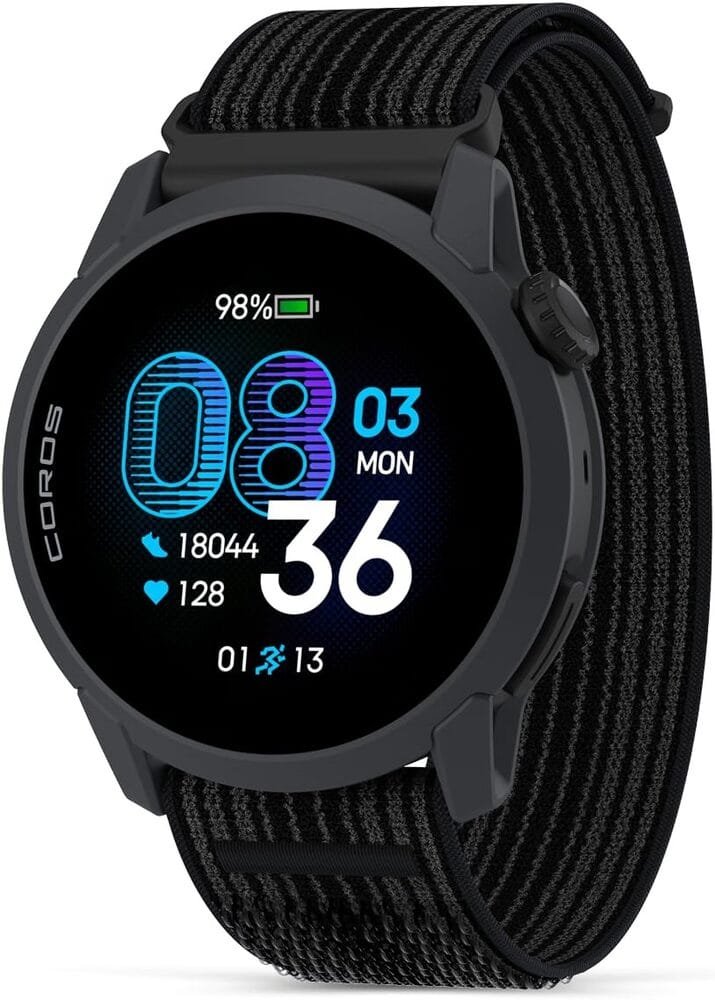
Best for: Runners and multisport athletes who prioritize low weight, long battery life, dual-frequency GPS, and structured training tools over a broad smartwatch app ecosystem.
Bottom line: The COROS PACE 4 delivers an unusually strong combination of a bright AMOLED display, 32 g nylon-band weight, long GPS battery life, and athlete-focused software for $249. It is less compelling for buyers who want contactless payments, streaming services, rich notifications, or a general-purpose smartwatch.
This COROS PACE 4 review assesses the watch’s design, GPS and heart-rate performance, battery life, training tools, limitations, and value. We did not conduct hands-on testing. Specifications and feature claims come from COROS, while performance observations are clearly attributed to independent reviewers. The Amazon rating, sales activity, and price were supplied for this review and may change.
COROS PACE 4 at a Glance
| Feature | Details |
|---|---|
| Display | 1.2-inch AMOLED touchscreen, 390 × 390 |
| Weight | Approximately 32 g with nylon band; about 40 g with silicone |
| Case | 43.4 × 43.4 × 11.8 mm |
| Battery claim | Up to 19 days daily use; up to 41 hours high GPS mode, with shorter life using always-on display, music, or dual frequency |
| Positioning | Multi-satellite GNSS with dual-frequency mode |
| Sensors | Optical heart rate, pulse oximeter, barometric altimeter, compass, thermometer and motion sensors |
| Supplied Amazon data | $249; 4.5/5 from 225 ratings; 500+ bought in the past month |
Pros and Cons
Pros
- Extremely light and comfortable with nylon band
- Bright, sharp AMOLED display
- Strong battery specifications for the size
- Dual-frequency GPS at a midrange price
- Deep running, recovery, workout and race-planning tools
- Useful physical crown plus touchscreen controls
Cons
- Limited third-party apps and lifestyle features
- No NFC payments
- No native Spotify or Apple Music streaming
- Optical heart rate can still drift during abrupt intensity changes
- Small display is less comfortable for detailed mapping
- Nylon band absorbs sweat and needs routine washing
Best For
- Road runners, track runners, marathon trainees and triathletes.
- Athletes who want advanced training data without a heavy watch.
- Buyers moving from a basic tracker to a performance-focused GPS watch.
- People who prefer long battery life to extensive smartwatch functions.
Who Should Choose Something Else
- People who want calls, a mature app store, contactless payments, or streaming-music integration.
- Hikers who need a larger screen and the richest possible map experience.
- Athletes who require medical-grade heart monitoring; this is a consumer training device, not a diagnostic device.
- Users who dislike washing and drying a fabric strap.
Design, Comfort, and Display
The nylon version’s approximately 32 g weight is a major strength. A lighter watch is less distracting during long runs and can maintain better wrist contact than a bulky model. The 43.4 mm case remains compact, while the digital crown provides reliable navigation when sweat or rain makes touch controls inconvenient.
The 1.2-inch AMOLED panel is sharper and more colorful than the memory-in-pixel display used by the PACE 3. The tradeoff is battery consumption: always-on mode and frequent display activation shorten runtime. The supplied black nylon strap is breathable and adjustable, but it retains moisture more readily than silicone.
GPS, Heart Rate, and Training Data
Manufacturer Claims
COROS promotes precision GPS, an updated optical heart-rate sensor, EvoLab performance analysis, training load, recovery guidance, race predictions, structured workouts, and voice tools. Battery figures are laboratory estimates and vary with satellite mode, screen behavior, temperature, music, alerts, and sensor use.
Independent Evidence
Independent reviewers generally found dual-frequency GPS accurate on roads and in more difficult environments. OutdoorGearLab recorded 2.02 miles on a measured two-mile course and described the plotted track as strong, including under tree cover and near cliffs. The Run Testers found the optical heart-rate sensor usually stayed within a few beats of a chest strap, although it was not infallible. These observations support the watch as a useful training tool but do not guarantee identical results for every wrist, activity, or environment.
Wrist optical sensors can be affected by fit, skin contact, cold, tattoos, rapid arm motion and interval intensity. Athletes who base sessions on precise heart-rate zones should consider pairing a compatible chest strap or arm sensor.
Battery Life
COROS lists up to 19 days of daily use and up to 41 hours in its high GPS mode. The official battery table shows lower figures when always-on display, music, or dual-frequency positioning is active. For practical planning, treat headline figures as best-case estimates and charge before a race or long event rather than relying on the percentage alone.
Voice, Navigation, Music, and Smart Features
The microphone supports voice notes, Voice Pins and supported voice-control functions. It is not a full voice assistant. Onboard MP3 storage is useful for local files, but native streaming-service integration remains limited. Navigation and mapping capabilities can change through firmware updates, so owners should confirm the current feature set in the COROS app and install stable updates before relying on maps in an unfamiliar area.
Health and Safety Limitations
Heart rate, SpO2, sleep, stress, recovery and fitness estimates are wellness and training metrics, not medical diagnoses. Do not use the watch to rule out arrhythmia, sleep apnea, oxygen problems, overtraining, or other medical conditions. Seek professional care for chest pain, fainting, unexplained breathlessness, persistent palpitations, or concerning exercise symptoms.
GPS can be disrupted by buildings, cliffs, trees and satellite geometry. Always carry appropriate navigation and emergency equipment in remote terrain. Clean and dry the watch and nylon strap regularly, loosen it if irritation develops, and avoid wearing it over broken skin.
Alternatives
- Garmin Forerunner 165: stronger lifestyle ecosystem and easier onboarding, but generally weaker battery value and no dual-frequency GPS.
- COROS PACE 3: lighter-cost option with a less vivid MIP display.
- Garmin Forerunner 265: richer training and smartwatch experience at a higher price.
- Apple Watch: better apps and daily smart features, but substantially shorter endurance battery life.
Bottom Line
The COROS PACE 4 is one of the strongest $249 choices for runners who want performance tools, accurate-looking GPS tracks, a crisp AMOLED display and low weight. Its compromises are deliberate: fewer lifestyle features, no payments, limited streaming integrations and a smaller mapping canvas. For training-first buyers, those tradeoffs are reasonable.
Frequently Asked Questions
Is the COROS PACE 4 good for running?
Yes. Its low weight, dual-frequency GPS, structured workouts, recovery data and long GPS battery life are designed primarily around running and endurance training.
How long does the COROS PACE 4 battery last?
COROS claims up to 19 days of daily use and up to 41 hours in high GPS mode. Always-on display, dual frequency, music and frequent alerts reduce runtime.
Does the COROS PACE 4 have an AMOLED screen?
Yes. It has a 1.2-inch, 390 × 390 AMOLED touchscreen.
Does it have dual-frequency GPS?
Yes. Dual-frequency mode is available for improved positioning in difficult environments, with a battery-life tradeoff.
Can the COROS PACE 4 play music?
It supports local MP3 storage, but it does not provide the same native streaming-service ecosystem as some competitors.
Does it have maps?
Mapping and navigation features have evolved through software updates. Confirm the current firmware and downloaded map coverage before a trip.
Can it measure heart rate accurately?
Independent reviewers reported generally strong results, but wrist optical monitoring can be less reliable during abrupt intensity changes. Use a compatible external sensor when precision matters.
Is the COROS PACE 4 a medical device?
No. Its health and recovery readings are consumer wellness and training estimates, not diagnostic measurements.
Is it comfortable for sleep tracking?
The 32 g nylon-band configuration is unusually light, which may improve overnight comfort, although fabric straps need regular cleaning.
Is the COROS PACE 4 better than the Garmin Forerunner 165?
COROS offers stronger battery life and dual-frequency GPS, while Garmin provides a broader smartwatch ecosystem and often simpler day-to-day navigation. The better choice depends on priorities.
Reliable References
- COROS PACE 4 official specifications
- COROS battery specifications
- DC Rainmaker: COROS PACE 4 in-depth review
- The Run Testers: COROS PACE 4 review
- OutdoorGearLab: COROS PACE 4 tested review
Related PVL Reviews
Reviews
There are no reviews yet.