
Quick Verdict
The Garmin Index Sleep Monitor is most compelling for Garmin users who want overnight trend data without wearing a watch, but its sleep stages, recovery interpretations, and other algorithmic outputs should not be treated as clinical measurements. PVL did not identify peer-reviewed validation of the finished Index Sleep Monitor against polysomnography for all reported sleep metrics.
PVL Rating: 4.0/5
- Wearability concept: 4.5/5
- Garmin ecosystem integration: 4.6/5
- Longitudinal tracking utility: 4.2/5
- Device-specific sleep evidence: 3.1/5
- Value: 3.8/5
Best for: Existing Garmin users who dislike sleeping in a watch and want passive overnight trends integrated into Garmin Connect.
Not ideal for: Anyone seeking a diagnostic sleep study, medical-grade oxygen monitoring, EEG sleep staging, or proof that tracking itself improves sleep or recovery.
What Is the Garmin Index Sleep Monitor?
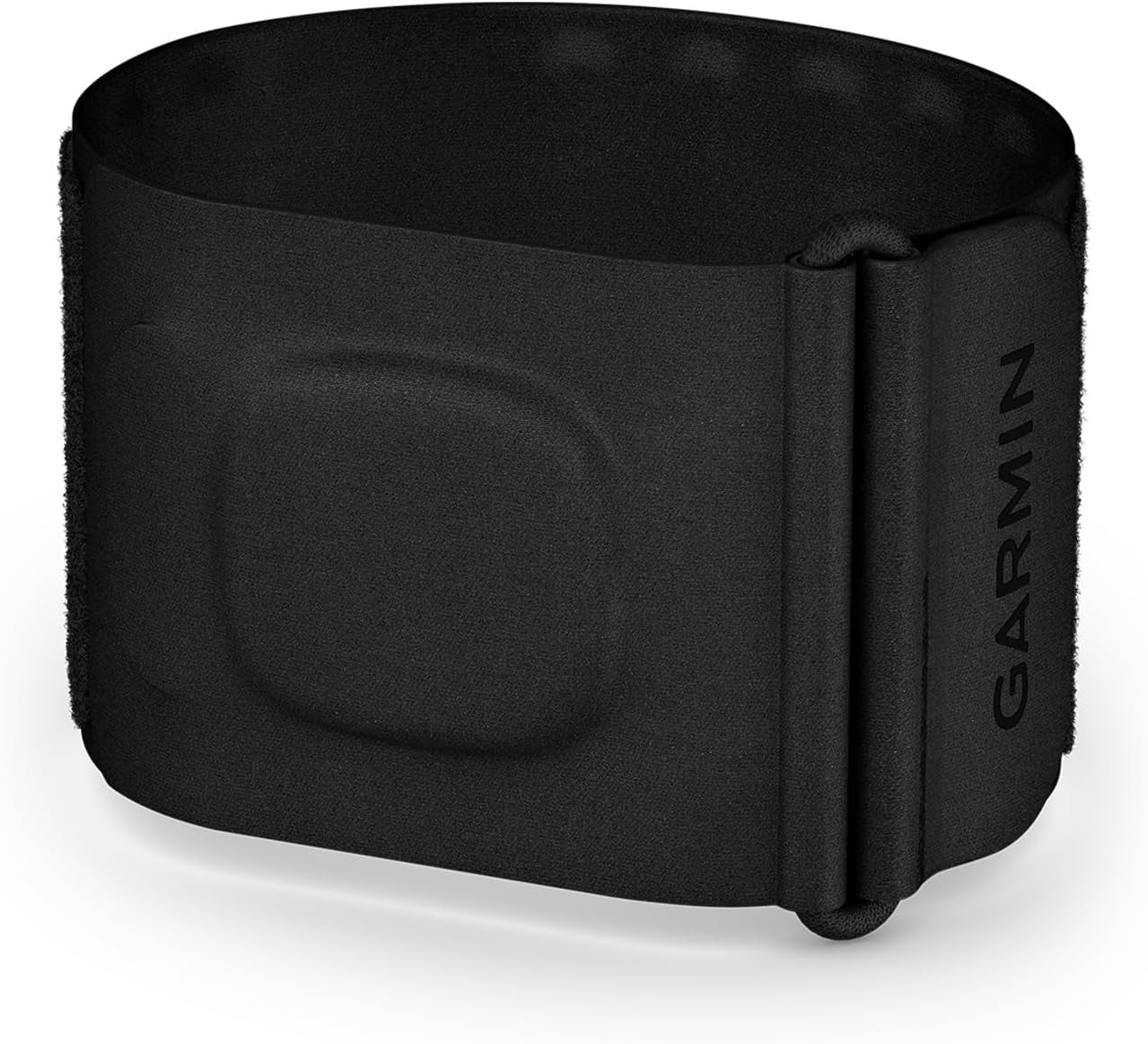
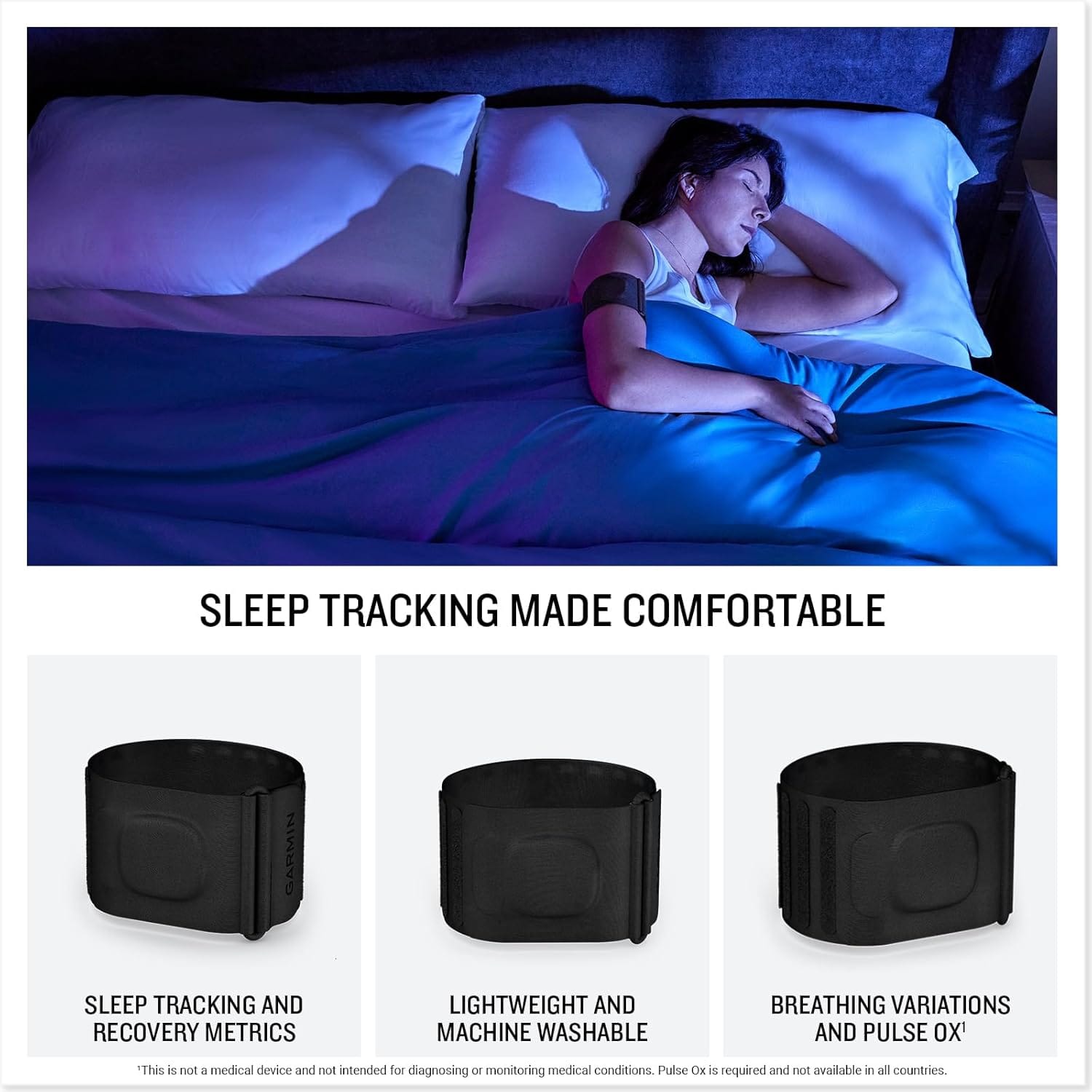
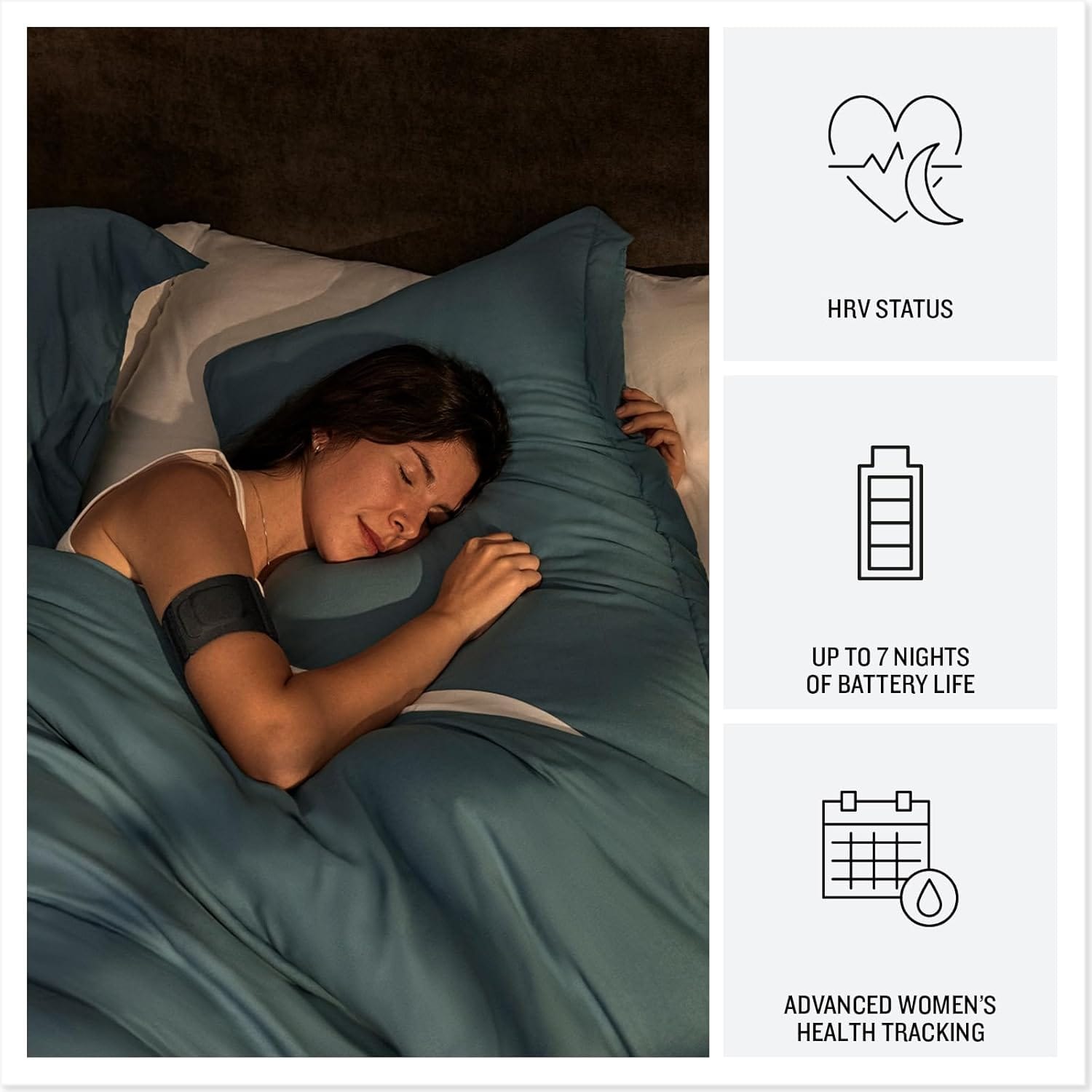
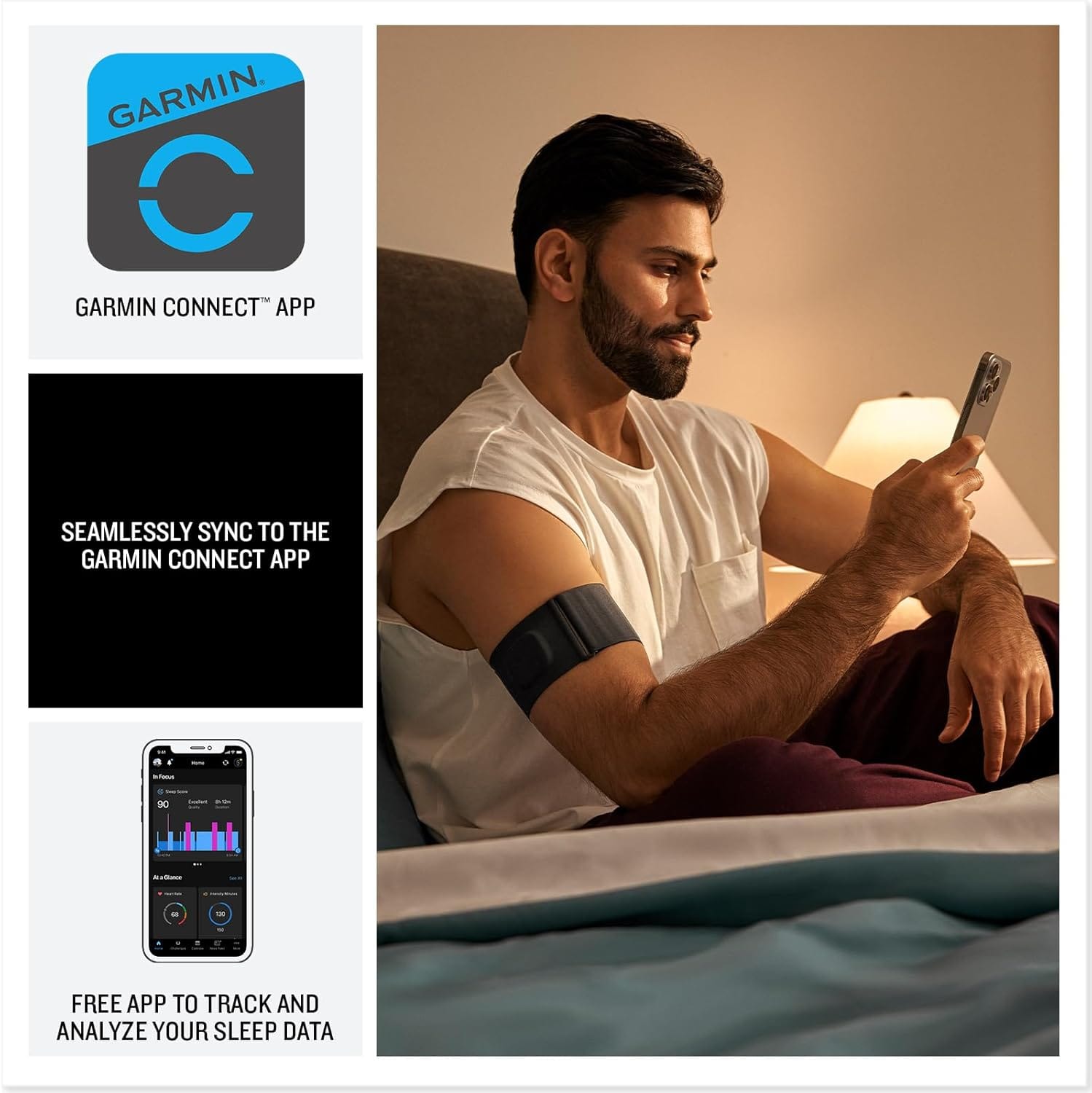
The Index Sleep Monitor is an upper-arm wearable designed primarily for overnight use. Garmin describes sleep-related and physiological outputs including sleep duration and stages, Sleep Score, heart rate, heart rate variability (HRV), breathing information, skin-temperature trends, and Pulse Ox where supported. It also integrates with Garmin Connect and the wider Garmin ecosystem.
Manufacturer specifications, supported metrics, regional features, battery claims, app functions, and algorithms can change with hardware or software updates. Verify the current Garmin documentation for the exact device and region.
How Accurate Is the Garmin Index Sleep Monitor?
Accuracy should be judged metric by metric, and PVL did not identify peer-reviewed evidence validating every Index Sleep Monitor output against the relevant clinical reference standard. A wearable can perform reasonably for one signal while performing less well for sleep stages or a proprietary composite score.
Evidence from Garmin watches can help explain the broader strengths and limitations of consumer wearables, but it cannot simply be transferred to the Index Sleep Monitor. Different sensor placement, hardware, firmware, algorithms, and study conditions matter.
Are the Sleep Stages the Same as a Sleep Lab?
No. Clinical sleep staging is ordinarily based on polysomnography (PSG), which uses signals including brain activity, eye movements, and muscle activity. A consumer armband infers sleep and stages from a different set of sensor inputs and algorithms.
Therefore, an Index estimate of light, deep, or REM sleep should be treated as a consumer estimate rather than an interchangeable substitute for laboratory staging.
What Does HRV Tell You?
HRV describes variation in time between heartbeats and can be influenced by autonomic nervous-system activity, exercise, illness, alcohol, sleep, stress, hydration, and other factors. Overnight trends may be useful when compared with your own baseline.
HRV is not a direct measurement of “recovery.” A proprietary readiness or recovery interpretation combines signals according to an algorithm; it does not directly measure muscle repair, nervous-system recovery, or readiness to perform.
How Should You Interpret Pulse Ox?
Consumer Pulse Ox can provide an estimated oxygen-saturation trend, but it should not be treated as a medical pulse oximeter or used alone to diagnose or rule out sleep apnea or another breathing disorder.
Fit, movement, circulation, skin characteristics, sensor contact, and other conditions can affect optical measurements. Concerning symptoms or repeated abnormal readings deserve appropriate clinical evaluation rather than self-diagnosis from a wearable.
Does Skin Temperature Diagnose Illness?
No. A wearable skin-temperature trend is not the same as a clinical core-body-temperature measurement and should not be used by itself to diagnose fever, infection, hormonal conditions, or another medical problem.
Its more defensible role is longitudinal: noticing changes relative to your own baseline while recognizing that environment, bedding, exercise, illness, and other variables can influence the signal.
Does the Garmin Index Sleep Monitor Improve Sleep?
Tracking and treatment are different. PVL did not identify a peer-reviewed randomized trial of the finished Index Sleep Monitor demonstrating that using it improves chronic insomnia, total sleep time, sleep efficiency, deep sleep, REM sleep, or daytime functioning.
Data can still be useful if it leads to a productive behavior change—for example, noticing that late alcohol, inconsistent bedtimes, or inadequate sleep opportunity repeatedly coincides with worse trends. The benefit comes from what the user does with the information, not from measurement alone.
Can It Diagnose Sleep Apnea?
No consumer sleep score or Pulse Ox trend should be used alone to diagnose or exclude obstructive sleep apnea. Loud habitual snoring, witnessed breathing pauses, gasping, morning headaches, or excessive daytime sleepiness warrant appropriate medical evaluation.
A clinical sleep assessment may use home sleep apnea testing or laboratory polysomnography depending on the individual and clinical question.
How Useful Is the Upper-Arm Design?
The strongest product-specific proposition is practical rather than medical: some people dislike wearing a watch or ring in bed. A dedicated upper-arm device may improve adherence if it is comfortable enough to wear consistently.
Consistent use matters for longitudinal trends. However, comfort is individual, and an armband that shifts, feels tight, or disrupts sleep defeats the purpose regardless of how many metrics it reports.
What the Garmin Index Sleep Monitor Has Not Been Shown to Do
- Replace polysomnography or a diagnostic sleep study
- Measure sleep stages with EEG-equivalent precision
- Diagnose or rule out sleep apnea from Pulse Ox or sleep scores alone
- Directly measure physiological recovery as a single clinical variable
- Treat insomnia or another sleep disorder
- Improve deep sleep, REM sleep, or daytime functioning simply through tracking
Pros and Cons
Pros
- Dedicated overnight format for users who dislike sleeping in a watch
- Strong integration for people already using Garmin Connect
- Multiple overnight trends in one ecosystem
- Potentially useful for observing personal patterns over time
- Less emphasis on daytime smartwatch features may suit sleep-focused users
Cons
- Limited device-specific peer-reviewed validation identified
- Sleep stages remain algorithmic estimates rather than PSG staging
- Recovery interpretations can be overread as direct physiology
- Pulse Ox is not a diagnostic sleep-apnea test
- More data can increase sleep-related preoccupation in some users
Who Should Consider It?
The best fit is an existing Garmin user who values trend data but dislikes wearing a watch overnight. It also makes sense for someone who understands the difference between consumer estimates and clinical measurements and wants to compare patterns over weeks rather than obsess over a single night.
Who Should Choose Something Else?
Choose clinical evaluation if your goal is diagnosing a sleep disorder. A conventional Garmin watch may be sufficient if you already tolerate it overnight. People who become anxious or overly focused on sleep scores may benefit more from simplifying tracking than adding another metric source.
Frequently Asked Questions
How accurate is the Garmin Index Sleep Monitor?
Accuracy depends on the specific metric, and independent device-specific validation remains limited. PVL did not identify peer-reviewed evidence showing that every Index Sleep Monitor output matches its relevant clinical reference standard. Garmin watch studies provide useful context, but different sensors, placement, firmware, and algorithms mean those results cannot automatically validate this upper-arm device.
Are Garmin Index sleep stages as accurate as a sleep study?
No, Garmin Index sleep stages should not be considered equivalent to laboratory polysomnography. PSG uses brain activity, eye movements, muscle activity, and other signals to classify sleep. The Index uses consumer sensors and algorithms to estimate stages. Light, deep, and REM values are therefore best interpreted as trends rather than clinical sleep-stage measurements.
Can the Garmin Index Sleep Monitor detect sleep apnea?
No, the Garmin Index Sleep Monitor should not be used by itself to diagnose or rule out sleep apnea. Consumer sleep, breathing, and Pulse Ox trends can provide context but are not a substitute for appropriate testing. Loud snoring, witnessed breathing pauses, gasping, morning headaches, or excessive daytime sleepiness warrant medical evaluation.
Does the Garmin Index Sleep Monitor improve sleep?
Tracking sleep does not itself improve sleep, and product-specific treatment evidence is lacking. The monitor may help users notice patterns that support useful behavior changes, but PVL did not identify a randomized trial showing that the finished device improves insomnia, total sleep time, sleep efficiency, deep sleep, REM sleep, or daytime functioning.
Is Garmin HRV the same as recovery?
No, HRV is not a direct measurement of recovery. It reflects beat-to-beat variation and is influenced by autonomic activity plus factors such as exercise, illness, alcohol, sleep, and stress. Personal trends can be informative, but a recovery or readiness interpretation is an algorithmic summary rather than a direct measurement of tissue repair or performance readiness.
Is the Garmin Index Pulse Ox medical grade?
Do not treat the Index Sleep Monitor’s Pulse Ox estimate as a medical-grade oxygen measurement unless Garmin specifically documents a regulated medical indication for your region. Consumer optical readings can be affected by fit, movement, circulation, and sensor contact. Concerning symptoms or repeated abnormal values should be discussed with an appropriate healthcare professional.
Final Verdict
PVL Rating: 4.0/5. The Garmin Index Sleep Monitor has a sensible niche: overnight Garmin tracking without wearing a watch. Its strongest value is convenient longitudinal data inside an established ecosystem. Its weakest point is the temptation to interpret algorithmic sleep stages, Pulse Ox, HRV, and recovery outputs as clinical measurements or proof of better sleep.
Reviews
There are no reviews yet.