
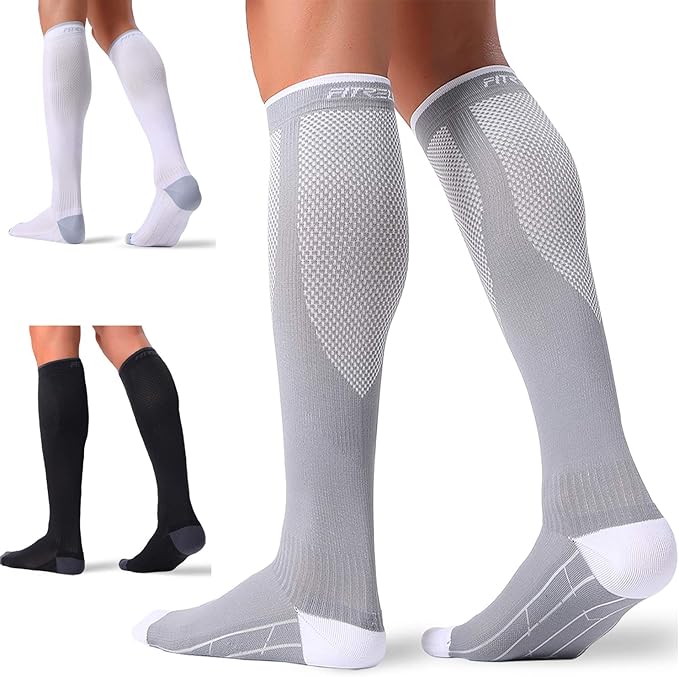
Quick Verdict
FITRELL 20–30 mmHg compression socks can be a practical graduated-compression option for selected users, especially when prolonged standing, travel, or lower-leg swelling is the problem, but they should not be treated as a universal circulation or athletic-recovery product. Compression has legitimate clinical and symptom-management uses, yet the appropriate pressure and indication depend on the individual.
PVL Rating: 4.0/5
- Graduated-compression concept: 4.4/5
- Everyday/travel practicality: 4.3/5
- Evidence rationale: 4.0/5
- Athletic-recovery evidence: 3.4/5
- Value: 4.1/5
Best for: Adults who already know that graduated compression is appropriate for them and want knee-high support for travel, prolonged standing, or selected swelling/comfort situations.
Not ideal for: Anyone with suspected arterial circulation problems, significant neuropathy or loss of sensation, active skin injury/infection, unexplained one-sided swelling, or symptoms suggesting a blood clot without medical assessment.
What Are FITRELL Compression Socks?
FITRELL sells knee-high graduated compression socks marketed at 20–30 mmHg. Graduated compression means pressure is intended to be greatest near the ankle and decrease farther up the leg, supporting venous return when the garment fits and functions as intended.
Materials, sizing, pressure specifications, pack quantities, and construction can change. Check the current product label and sizing chart. Compression effectiveness and comfort depend heavily on correct size and fit.
What Does 20–30 mmHg Mean?
Millimeters of mercury (mmHg) describes a pressure range. A 20–30 mmHg garment is commonly considered a firmer level of graduated compression than light over-the-counter support socks.
More compression is not automatically better. The appropriate pressure depends on why compression is being used, vascular status, fit, tolerance, and sometimes clinician guidance. A marketplace pressure claim also does not by itself prove that every pair delivers the stated graduated pressure under standardized testing.
Do Compression Socks Improve Circulation?
“Improve circulation” is too broad unless the type of circulation is specified. Graduated compression is primarily intended to support venous blood return from the lower legs by applying external pressure. It should not be interpreted as improving arterial blood flow in every user.
This distinction matters because significant peripheral arterial disease can make compression inappropriate or require specialist assessment.
Can Compression Socks Reduce Leg Swelling?
Compression can help manage lower-leg edema in selected situations, particularly when venous pooling contributes to swelling. Evidence and clinical guidelines support compression for several venous and edema-related indications.
However, swelling has many causes. New, unexplained, painful, rapidly worsening, or one-sided swelling should not simply be compressed without understanding the cause.
Do FITRELL Socks Reduce Leg Fatigue?
Some people report greater comfort or less heaviness during prolonged standing or sitting when wearing compression. That can be a meaningful practical outcome.
PVL did not identify a peer-reviewed trial of this finished FITRELL model demonstrating a specific reduction in leg fatigue. General evidence for compression garments provides context but cannot establish the performance of this exact sock.
Do Compression Socks Improve Athletic Recovery?
Compression garments may modestly influence some perceived recovery outcomes, but they are not proven to accelerate tissue repair. Reviews of exercise studies have reported variable effects on soreness, performance recovery, and physiological markers depending on sport, garment, pressure, timing, and outcome.
Reduced soreness or perceived fatigue should not automatically be translated into faster muscle healing. PVL did not identify product-specific evidence showing that FITRELL improves post-workout recovery.
Do Compression Socks Prevent Blood Clots During Travel?
Graduated compression stockings have evidence for reducing symptomless deep-vein thrombosis in airline passengers on longer flights, but travel-clot risk is individualized and the evidence does not mean any consumer sock guarantees prevention.
People at elevated clot risk may need individualized advice about travel precautions. Compression should not be used to self-treat symptoms that could already represent a DVT.
What Are Possible Signs of a DVT?
Seek prompt medical assessment for new unexplained one-sided leg swelling, pain or tenderness, warmth, or discoloration, particularly when risk factors are present. Sudden shortness of breath, chest pain, coughing blood, fainting, or other symptoms suggesting pulmonary embolism require urgent medical attention.
Do not massage or simply cover potentially serious symptoms with compression socks and continue normal activity without appropriate evaluation.
Who Should Be Careful With 20–30 mmHg Compression?
People with known or suspected peripheral arterial disease, significant loss of sensation or neuropathy, fragile or injured skin, active infection, severe uncontrolled swelling, or certain heart-related conditions may require individualized assessment before using firm compression.
Compression should not cause numbness, increasing pain, marked color change, cold toes, skin injury, or worsening symptoms. Remove the garment and seek appropriate advice if concerning symptoms develop.
How Should Compression Socks Fit?
They should feel snug and supportive without rolling into a tight band, bunching, causing focal pain, or producing numbness. Follow the current sizing chart using the measurements requested by the manufacturer rather than choosing only by shoe size.
Wrinkles and folded cuffs can create concentrated pressure. Inspect the skin after wear, particularly if you are new to compression or have reduced sensation.
Are FITRELL Socks Good for Standing All Day?
They may be useful for people who experience lower-leg heaviness or swelling with prolonged standing and for whom compression is appropriate. Comfort is individual, and 20–30 mmHg may feel unnecessarily firm for someone who only wants a light everyday sock.
The correct compression level should match the purpose rather than assuming firmer pressure produces a better wellness outcome.
What FITRELL Compression Socks Have Not Been Shown to Do
- Improve every type of “circulation”
- Guarantee prevention of DVT or pulmonary embolism
- Treat an existing blood clot
- Accelerate muscle or tissue healing after exercise
- Resolve unexplained leg swelling without identifying its cause
- Be appropriate for every person with vascular disease, neuropathy, or swelling
- Deliver verified 20–30 mmHg graduated pressure solely because a marketplace listing states that range
Pros and Cons
Pros
- Graduated-compression format has legitimate evidence-based uses
- Potentially useful for prolonged sitting, standing, and selected swelling situations
- Knee-high design is practical for everyday wear
- May improve subjective leg comfort for some users
- Multi-pair packs can be economical for regular users
Cons
- 20–30 mmHg is not appropriate for every user
- No product-specific clinical trial identified
- Athletic-recovery claims are easier to overstate than the evidence supports
- Incorrect sizing or bunching can create uncomfortable focal pressure
- Unexplained unilateral swelling requires assessment rather than self-treatment
Who Should Consider Them?
FITRELL makes the most sense for someone who already has a reason to use graduated compression and knows that 20–30 mmHg is an appropriate range for them. Travel, prolonged standing, and selected venous-swelling situations are more defensible use cases than generic “wellness circulation.”
Who Should Choose Something Else?
Someone seeking only light everyday support may prefer a lower-pressure garment. People with possible arterial disease, significant neuropathy, skin injury, unexplained swelling, or symptoms concerning for DVT should obtain appropriate assessment before relying on firm compression.
Frequently Asked Questions
Do FITRELL compression socks improve circulation?
They are designed to support venous return, but “improve circulation” is too broad. Graduated compression applies external pressure to the lower leg and can reduce venous pooling in appropriate users. It does not mean the socks improve arterial blood flow in everyone, and significant peripheral arterial disease can require assessment before firm compression is used.
Are 20–30 mmHg compression socks safe for everyone?
No, 20–30 mmHg compression is not appropriate for every person. People with known or suspected peripheral arterial disease, significant neuropathy or reduced sensation, active skin injury or infection, or certain cardiovascular conditions may need individualized guidance. Remove the socks if they cause increasing pain, numbness, marked color change, cold toes, or skin injury.
Do FITRELL compression socks help muscle recovery?
Compression garments may modestly affect soreness or perceived recovery, but they are not proven to accelerate muscle healing. Exercise studies vary by garment, pressure, sport, timing, and outcome, and PVL did not identify a finished-product trial showing that FITRELL specifically improves recovery. Reduced soreness should not automatically be interpreted as faster tissue repair.
Can compression socks prevent blood clots on flights?
Graduated compression stockings can reduce symptomless DVT on longer flights, but they do not guarantee protection from blood clots. Individual risk varies, and higher-risk travelers may need personalized medical advice about prevention. New one-sided swelling, pain, warmth, or discoloration should be medically assessed rather than self-treated by simply putting on compression socks.
Can I wear FITRELL compression socks all day?
Many appropriate users wear compression socks for extended daytime periods, but comfort and indication matter. The socks should remain snug without causing pain, numbness, skin damage, cold toes, or marked color changes. Follow the current sizing instructions, avoid rolled or bunched fabric, and seek guidance if you have relevant vascular, neurological, or skin conditions.
Are FITRELL compression socks good for leg swelling?
Compression can help selected forms of lower-leg swelling, particularly when venous pooling contributes, but swelling should not automatically be self-treated. New, unexplained, painful, rapidly worsening, or one-sided swelling can have important causes. If those features are present, obtain appropriate assessment before relying on compression socks to manage the symptom.
Final Verdict
PVL Rating: 4.0/5. FITRELL offers an accessible graduated-compression option, but the 20–30 mmHg range deserves more respect than generic “recovery socks” marketing suggests. The strongest use cases involve appropriate venous support, travel, standing, and selected swelling situations. Athletic recovery benefits are less certain, and vascular or unexplained symptoms require individualized judgment.
Reviews
There are no reviews yet.