
Quick Verdict
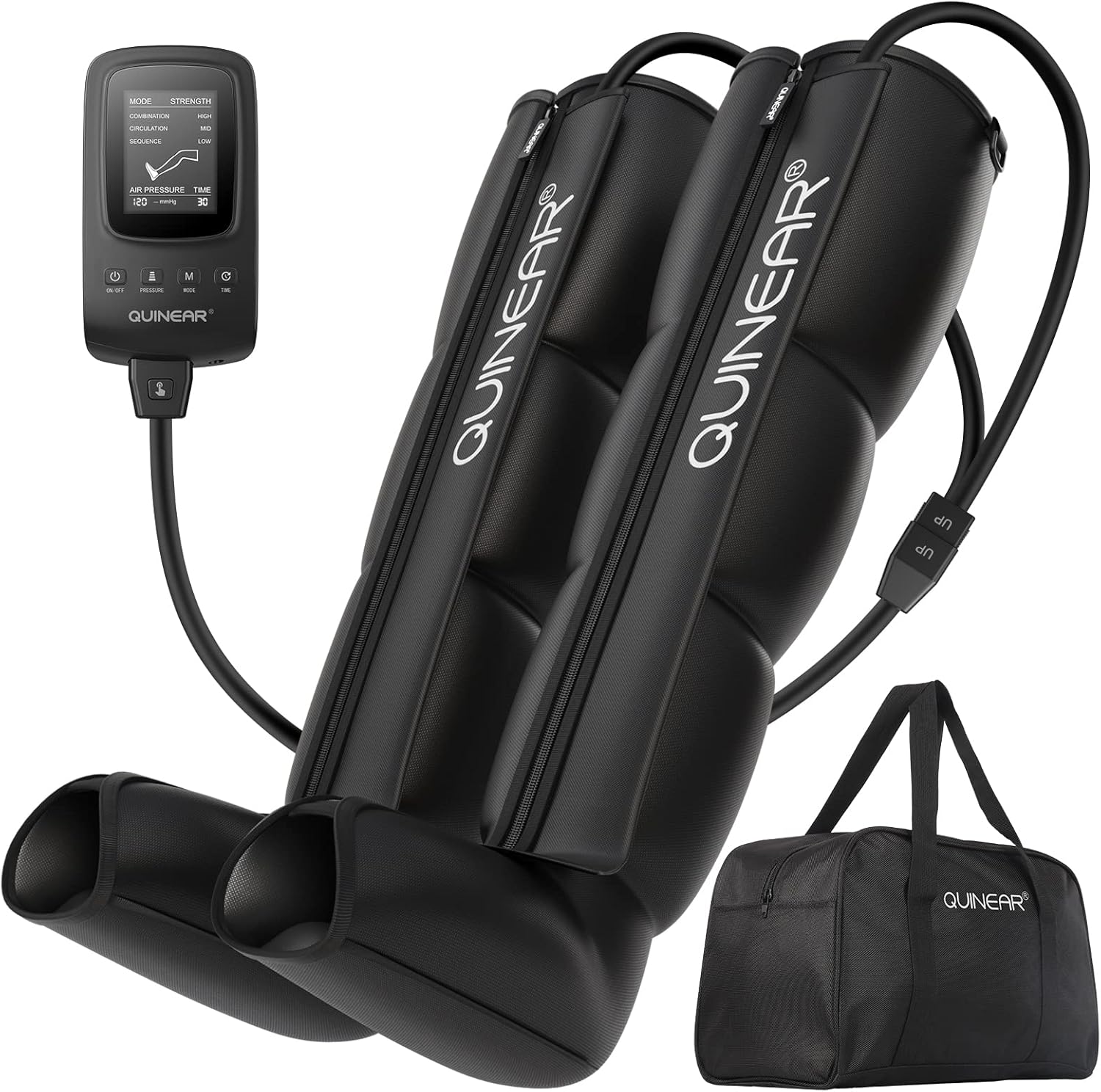
QUINEAR Air Compression Recovery Boots offer adjustable sequential pneumatic compression for a leg-massage experience after activity. Some research on intermittent pneumatic compression suggests possible short-term improvements in perceived soreness or comfort, but findings vary. That does not establish faster muscle repair, better performance, or a medical circulation benefit from this specific QUINEAR system.
PVL Rating: 3.9/5 (provisional)
- Adjustable compression and comfort features: 4.4/5
- At-home usability: 4.3/5
- General post-exercise compression evidence: 3.6/5
- Finished-product clinical outcome evidence: 2.7/5
- Value: 4.0/5
What Are QUINEAR Air Compression Boots?
The listing describes a large-size, leg-covering system with inflatable chambers, adjustable pressure, modes, and session duration. The boots inflate and deflate in a sequence to apply intermittent pressure. Exact chamber count, pressure range, fit dimensions, included accessories, and power requirements should be confirmed against the specific current model before purchase.
How Does Sequential Pneumatic Compression Work?
Air chambers periodically inflate around the legs and release. This produces external pressure that may temporarily influence venous blood movement and fluid distribution while the system is operating. A sensation of lighter legs is not proof of improved long-term vascular health or accelerated tissue repair.
Do QUINEAR Boots Speed Muscle Recovery?
There is not enough independent finished-product evidence to conclude that QUINEAR boots speed muscle healing. Research on pneumatic compression devices and protocols sometimes reports changes in perceived soreness or selected recovery measures, but results are inconsistent and may not transfer between devices. Improved comfort does not necessarily mean repaired muscle fibers or restored athletic performance.
Can They Reduce Post-Workout Soreness?
Some users may experience temporary relief or relaxation after a session. Studies of compression-based recovery methods show mixed results for delayed-onset muscle soreness, and benefits depend on timing, pressure, population, and comparison condition. The evidence does not justify promising that soreness will disappear or that training can safely resume sooner.
Do They Improve Circulation?
Intermittent pneumatic compression can affect blood flow and venous return during use. However, consumer recovery boots should not be marketed as a treatment for poor circulation, chronic venous disease, or swelling without a diagnosis. Clinical compression systems used for specific medical indications are not automatically interchangeable with consumer sports-recovery products.
Are QUINEAR Boots Useful After Running or Standing?
For an otherwise healthy adult, a comfortable compression session may be a pleasant recovery ritual after a long run or day on their feet. The value is mainly convenience and subjective comfort; it should not displace walking, rest, nutrition, appropriate training progression, or evaluation of persistent swelling.
How Much Pressure and Session Time Should You Use?
Follow the exact device instructions and begin with a comfortable setting. More pressure or longer sessions are not necessarily more effective and may cause discomfort, numbness, or skin irritation. Stop if symptoms occur. PVL has not verified a QUINEAR-specific pressure protocol that produces superior recovery outcomes.
Who Should Avoid Compression Boots?
Do not use these boots when deep vein thrombosis (DVT) is suspected. Sudden one-sided leg swelling, pain, warmth, or redness requires urgent medical evaluation. People with peripheral arterial disease, significant heart failure, active infection, serious skin injury, or other circulatory conditions should seek clinical guidance before use. Chest pain or sudden shortness of breath may signal a medical emergency.
Can Compression Boots Prevent Blood Clots?
Do not use consumer QUINEAR boots as a substitute for prescribed clot prevention. Hospital-grade intermittent pneumatic compression may be used under medical protocols for selected patients, but that does not validate this consumer device for DVT prevention or treatment. Follow a clinician’s individualized plan after surgery, illness, or prolonged immobility.
Are They Suitable for Leg Swelling?
Swelling has many causes, including injury, venous problems, medication effects, and serious conditions. Compression may be inappropriate depending on the cause. New, unexplained, painful, or one-sided swelling should be assessed before using a home recovery system to try to reduce it.
What About FSA/HSA Eligibility?
The original listing advertises FSA/HSA eligibility, but eligibility depends on current seller documentation, plan rules, and sometimes medical necessity. Do not assume reimbursement is guaranteed. Verify with the administrator and seller before purchasing for this purpose.
What QUINEAR Recovery Boots Have Not Been Shown to Do
- Repair muscle fibers, tendons, or ligaments faster
- Guarantee reduced recovery time or improved next-day performance
- Treat poor circulation, chronic edema, or vascular disease
- Prevent or treat DVT outside prescribed medical care
- Remove toxins or lactate as a clinically proven recovery mechanism
- Replace rest, training management, or rehabilitation
Pros and Cons
Pros
- Adjustable sequential leg-compression experience
- May provide short-term comfort or relaxation
- Home-use convenience
- Large-size option may suit some users if measurements fit
Cons
- Independent evidence for this exact model is limited
- Comfort improvements do not establish faster muscle repair
- Not appropriate for some vascular and cardiac conditions
- Fit, pressure settings, and reimbursement details require verification
Who Should Consider It?
Healthy, active adults who enjoy compression massage and understand its limitations may consider QUINEAR as an optional comfort tool. Anyone with unexplained swelling, clot symptoms, or significant vascular disease should seek medical advice rather than experimenting with compression.
Frequently Asked Questions
Do QUINEAR compression boots actually speed muscle recovery?
Faster muscle repair has not been established for this specific QUINEAR system. Research on pneumatic compression sometimes finds improvements in perceived soreness or comfort, but results vary by device and protocol. Feeling better after a session does not prove damaged tissue healed faster or that your next workout will be safer.
Can QUINEAR boots improve blood circulation?
Sequential pneumatic compression can temporarily influence venous blood movement during use. That physiological effect does not mean these consumer boots treat vascular disease or permanently improve circulation. People with diagnosed circulatory problems, significant swelling, or heart conditions should seek professional guidance before use rather than assuming sports-recovery equipment is medically appropriate.
Are compression recovery boots safe if you have a blood clot?
No. Do not use compression boots if deep vein thrombosis is suspected. Sudden swelling, warmth, pain, or redness in one leg needs urgent medical assessment. Chest pain or sudden breathlessness can be an emergency. Consumer recovery boots should never replace prescribed treatment or medically supervised clot-prevention devices.
How long should you wear QUINEAR compression boots?
Follow the instructions for the exact QUINEAR model and start at a comfortable pressure. Longer or more intense sessions have not been proven to produce better recovery. Stop if you experience pain, numbness, tingling, or skin changes. PVL has not verified a product-specific treatment duration that reliably improves performance.
Can QUINEAR boots prevent soreness after running?
They may provide temporary comfort, but preventing post-run soreness is not guaranteed. Studies of compression-based recovery approaches have mixed findings, and a relaxed sensation is not the same as faster tissue repair. Manage training load, sleep, nutrition, and recovery time rather than depending on boots to offset excessive exercise.
Are QUINEAR compression boots eligible for HSA or FSA payment?
Eligibility is not guaranteed simply because a product listing mentions HSA or FSA. Reimbursement may depend on your plan, current seller documentation, and medical-necessity rules. Check with your benefits administrator before purchasing. Eligibility for payment also does not establish that the device is clinically proven to treat a medical condition.
Final Verdict
PVL Rating: 3.9/5 (provisional). QUINEAR boots offer a customizable compression-massage experience and may be useful for short-term comfort after activity. Claims of accelerated healing, superior performance, or treatment of circulation disorders go beyond the evidence established for this particular device.
Reviews
There are no reviews yet.