
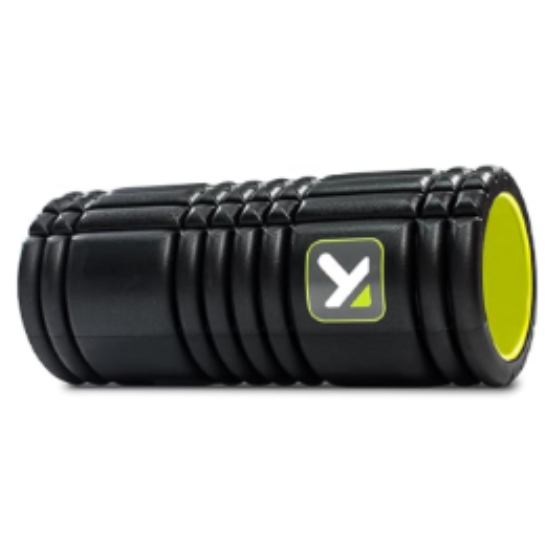
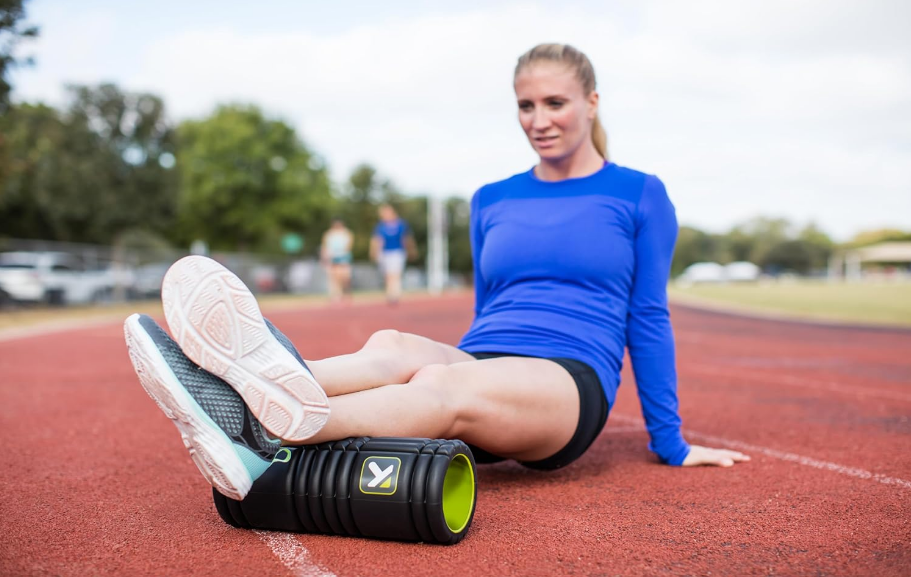
Quick verdict: The TriggerPoint GRID 1.0 is a compact, firm foam roller with a durable hollow core and textured EVA surface. Its 13-inch size works well for legs, glutes, lats, and upper-back mobility, while the raised zones provide more localized pressure than a smooth roller. Beginners or highly sensitive users may find it too firm.
PVL editorial rating: 4.5/5
It is a strong all-purpose choice for warm-ups and post-exercise recovery, but its textured surface does not replicate a therapist’s assessment or treat an injury.
TriggerPoint GRID Foam Roller at a glance
| Product | TriggerPoint GRID 1.0 Foam Roller |
|---|---|
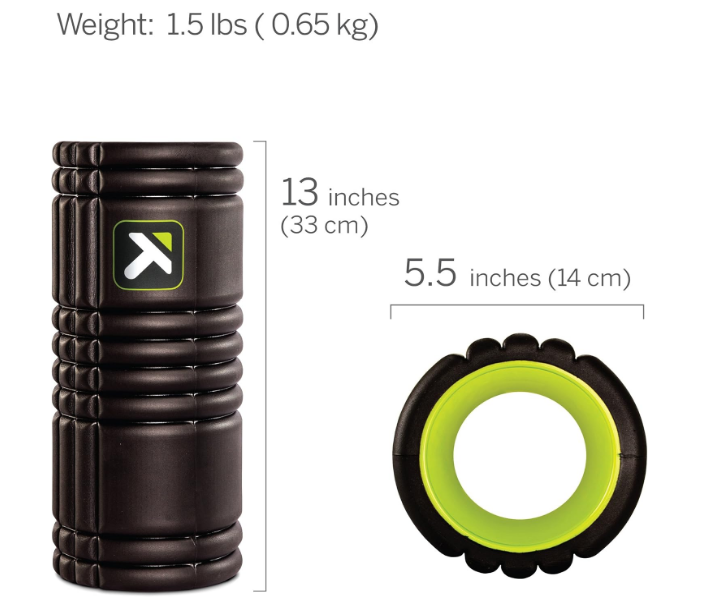
| Dimensions | 13 × 5.5 × 5.5 inches |
| Construction | EVA foam over a rigid hollow core |
| Surface | Three-dimensional GRID pattern with flat, tubular, and denser pressure zones |
| Firmness | Firm; more intense than a soft or medium-density solid roller |
| Manufacturer-listed capacity | Up to 300 pounds |
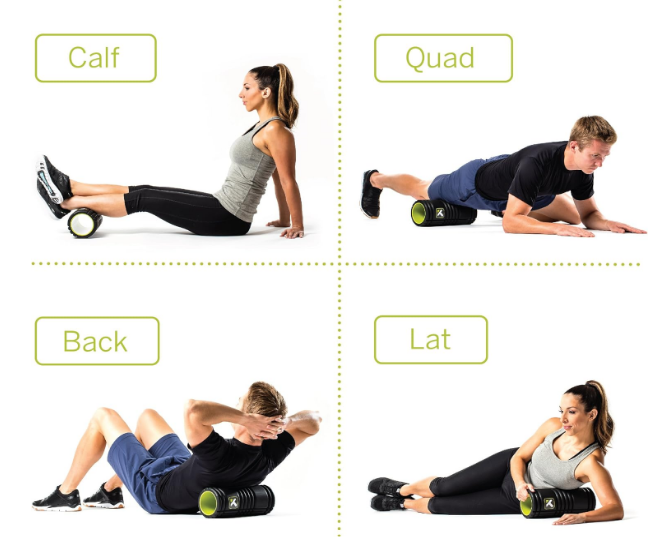
| Best uses | Calves, quadriceps, hamstrings, glutes, lats, and controlled upper-back rolling |
| Current PVL price | $39.89; retailer pricing and availability can change |
Pros and cons
Pros
- Rigid hollow core maintains a consistent shape
- Textured surface offers both broad and targeted pressure
- Compact enough for gym bags and travel
- Water- and sweat-resistant EVA surface is easy to clean
- Useful before training without the performance losses associated with prolonged static stretching
- Supports large muscle groups while remaining maneuverable
Cons
- Firm texture may feel excessive for beginners or very sore tissue
- Thirteen-inch length is less stable for rolling both sides of the upper back simultaneously
- Raised zones do not provide the precision of a massage ball
- Costs more than basic smooth high-density rollers
- Cannot diagnose or treat the cause of persistent pain
Best for
- Active adults who want one compact roller for warm-ups and recovery
- Runners and lifters rolling calves, thighs, glutes, and lats
- Users who prefer firm pressure and a textured surface
- Home or gym users who value a core that resists deformation
Who should avoid it?
Do not foam-roll directly over an open wound, fracture, acute traumatic injury, active bleeding, skin infection, or a suspected blood clot. Expert consensus also recommends caution with local tissue inflammation, deep-vein thrombosis risk, severe varicose veins, osteoporosis, impaired sensation, bleeding disorders, anticoagulant use, recent surgery, and significant cardiovascular or neurological conditions.
Anyone with unexplained pain, marked swelling, redness, warmth, numbness, weakness, fever, recent trauma, or a diagnosed musculoskeletal condition should obtain appropriate clinical guidance. Pregnant users and people following a rehabilitation plan should ask their clinician which areas, positions, and pressure levels are suitable.
Design and build quality
The GRID 1.0 differs from an inexpensive solid-foam cylinder by wrapping EVA foam around a rigid hollow core. The structure gives it a firm feel and helps it retain its shape after repeated loading. TriggerPoint lists the roller for users up to 300 pounds.
Its outer pattern combines flatter sections, tubular ridges, and denser nodules. TriggerPoint describes these as approximating a therapist’s palm, fingers, and fingertips. In practice, the pattern changes how pressure is distributed, but it cannot reproduce a clinician’s palpation, judgment, or ability to adjust treatment in real time.
The 13-inch length is portable and works well on one limb at a time. A longer roller is easier for beginners who want more lateral stability or need to support the full width of the upper back.
Firmness and comfort
This is a firm roller rather than a soft introductory model. The hollow core limits compression, while the EVA surface provides a small amount of cushioning. Users can regulate intensity by supporting more body weight through their hands or opposite foot instead of dropping their full weight onto a tender area.
Rolling should create tolerable pressure, not sharp, burning, electric, or escalating pain. Excessive discomfort usually causes guarding and poor control rather than a better result. A softer TriggerPoint CORE roller or smooth medium-density roller is more appropriate when the GRID feels too aggressive.
How it performs by body area
Calves and lower legs
The compact width makes it easy to roll one calf while the other leg controls pressure. Avoid direct pressure over the Achilles tendon, shin bone, ankle, or an area with unexplained swelling or clot risk.
Quadriceps and hamstrings
The roller is well sized for slow passes along the large thigh muscles. Divide the muscle into sections rather than rushing from hip to knee. Avoid rolling directly over the kneecap, groin, or recently injured tissue.
Glutes and lateral hip
A seated position can target the gluteal muscles, but balance demands increase when body weight shifts onto one side. Persistent lateral hip pain may involve structures that should not be repeatedly compressed without an assessment.
Upper back and lats
The GRID can support controlled upper-back extension and lat rolling. Keep the movement over muscular areas and avoid loading the front or side of the neck. Direct rolling over the lower back is difficult to control and may create unwanted spinal extension or pressure.
Manufacturer claims vs. independent evidence
What TriggerPoint says
TriggerPoint describes the patented GRID pattern as replicating a massage therapist’s hands and says the three-dimensional surface helps address tight muscles, promote circulation, improve mobility, and support recovery. The company also emphasizes its durable hollow core and easy-to-clean EVA exterior.
What independent research supports
Systematic reviews and meta-analyses indicate that foam rolling can produce short-term increases in joint range of motion and may modestly reduce perceived muscle soreness after demanding exercise. Reviews generally do not show meaningful harm to subsequent strength, power, or athletic performance when foam rolling is used appropriately.
The research is heterogeneous: protocols differ in rolling time, pressure, muscles, training status, and outcome measurement. There is no universally established ideal foam-rolling prescription, and the evidence applies to foam rolling broadly—not proof that TriggerPoint’s surface pattern is clinically superior to a smooth roller.
Foam rolling does not physically “break up” scar tissue, flush toxins, permanently lengthen fascia, correct an injury, or replace progressive strength and mobility training. The most realistic benefits are temporary changes in comfort, perceived soreness, and range of motion.
How to use the TriggerPoint GRID safely
- Place the roller under a large muscle rather than directly under a joint or bone.
- Support part of your weight with your hands or opposite limb.
- Use slow, controlled passes and breathe normally.
- Pause briefly on a tolerably sensitive area instead of grinding aggressively.
- Begin with 30–60 seconds per region and assess how the tissue responds.
- Stop for sharp pain, numbness, tingling, dizziness, unusual swelling, or worsening symptoms.
A harder roller, longer session, or more painful technique is not automatically more effective. Clean the EVA surface with mild soap and water, then let it dry fully before storage.
Value and alternatives
At $39.89, the GRID 1.0 costs more than a basic high-density roller. The premium pays for its rigid core, recognizable textured surface, compact construction, and established product support. Its value is strongest for people who will use it regularly and prefer firm pressure.
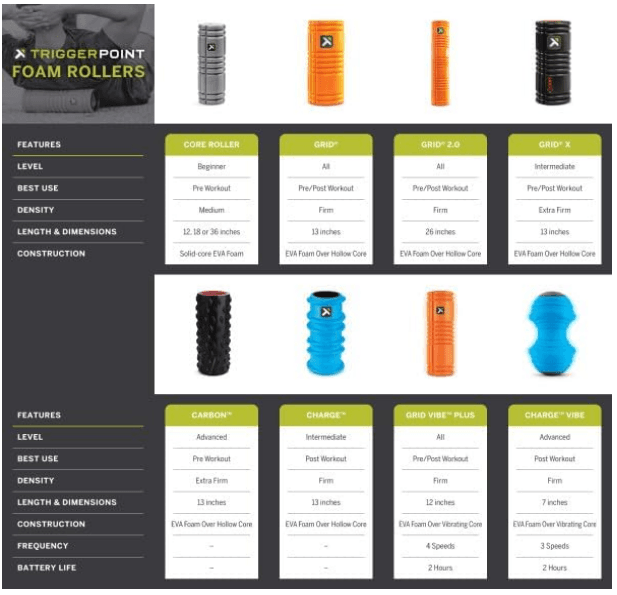
- TriggerPoint CORE: a more forgiving medium-density option for beginners or sensitive users.
- TriggerPoint GRID X: firmer and more intense for experienced rollers who deliberately want greater pressure.
- TriggerPoint GRID 2.0: longer and more stable for the back and bilateral exercises.
- Smooth high-density roller: cheaper and distributes pressure more evenly, though it lacks targeted texture.
- Massage ball: better for small, precise areas but less suitable for broad muscle groups.
- Hyperice Hypervolt Go 2: a powered, more expensive alternative that requires less body-weight positioning.
Bottom line
The TriggerPoint GRID 1.0 earns its reputation through a durable design, practical size, and versatile firm surface. It is particularly useful for calves, thighs, glutes, lats, and brief upper-back mobility work. The biggest limitation is comfort: its rigidity and texture are not ideal for every beginner or painful area.
Buy it if you want a compact roller that should retain its shape and you already know that firm pressure suits you. Choose a softer or longer roller if comfort, balance, or full-back support matters more than portability and targeted pressure.
Frequently asked questions
Is the TriggerPoint GRID Foam Roller good for beginners?
Yes, beginners can use the TriggerPoint GRID, but its rigid hollow core and textured surface feel firmer than many introductory rollers. Start by supporting much of your weight through your hands or opposite leg and use short sessions. Choose the softer TriggerPoint CORE if even lightly controlled pressure feels painful.
What is special about the TriggerPoint GRID Foam Roller?
The TriggerPoint GRID combines a rigid hollow core with an EVA surface containing flat zones, tubular ridges, and denser nodules. This creates several pressure sensations within one compact roller and helps it retain its shape. The pattern changes pressure distribution but does not literally reproduce a therapist’s assessment or treatment.
How firm is the TriggerPoint GRID 1.0?
The GRID 1.0 is a firm foam roller because its EVA exterior wraps a rigid hollow core that compresses less than soft solid foam. Pressure can be adjusted by shifting body weight into the hands or opposite limb. People with highly sensitive tissue may prefer a medium-density smooth roller or TriggerPoint CORE.
How long should you foam-roll each muscle?
Begin with approximately 30–60 seconds on one muscle region, using slow controlled passes and tolerable pressure. Research protocols vary, so there is no universally proven optimal duration. Longer is not necessarily better; stop if pressure causes sharp pain, numbness, tingling, dizziness, swelling, or worsening symptoms after the session.
Does foam rolling help muscle soreness?
Yes, research suggests foam rolling can modestly reduce perceived soreness after demanding exercise and may support recovery of some performance measures. The effect is generally short term and varies between people. Foam rolling does not repair an injury or replace sleep, nutrition, progressive training, and an appropriate recovery period.
Can foam rolling increase flexibility?
Foam rolling can temporarily increase joint range of motion without clearly reducing subsequent strength or power. That makes it a useful addition to a dynamic warm-up. The effect is not the same as permanently lengthening fascia, and lasting mobility improvements still require repeated movement practice, strength, and appropriate flexibility training.
Can you use the TriggerPoint GRID on your lower back?
Directly rolling the lower back is usually difficult to control because the lumbar area lacks the broad bony protection of the upper back. It can also encourage excessive spinal extension. Target surrounding muscles with safer positions or seek professional guidance, especially when back pain is persistent, radiating, traumatic, or accompanied by weakness or numbness.
How do you clean a TriggerPoint GRID Foam Roller?
Clean the EVA surface with mild soap and water, following TriggerPoint’s current care instructions. Wipe away sweat and residue, avoid harsh solvents and prolonged soaking, and let the roller dry fully before storing it. Inspect the foam and hollow core regularly and discontinue use if either becomes cracked, loose, or structurally damaged.
Reliable references
- TriggerPoint — GRID 1.0 Foam Roller specifications and care
- Skinner B, et al. Systematic review and meta-analysis of foam rolling, range of motion, recovery, and performance
- Wiewelhove T, et al. Meta-analysis of foam rolling effects on performance and recovery
- Cheatham SW, et al. Systematic review of self-myofascial release using foam rolling
- Bartsch KM, et al. Expert consensus on contraindications and cautions of foam rolling
Related PVL guides
Editorial note: This review is based on manufacturer specifications, independent research, and established safety guidance. Purely Vital Living did not claim hands-on testing of this product. Prices and availability may change.
Reviews
There are no reviews yet.