
Quick Verdict
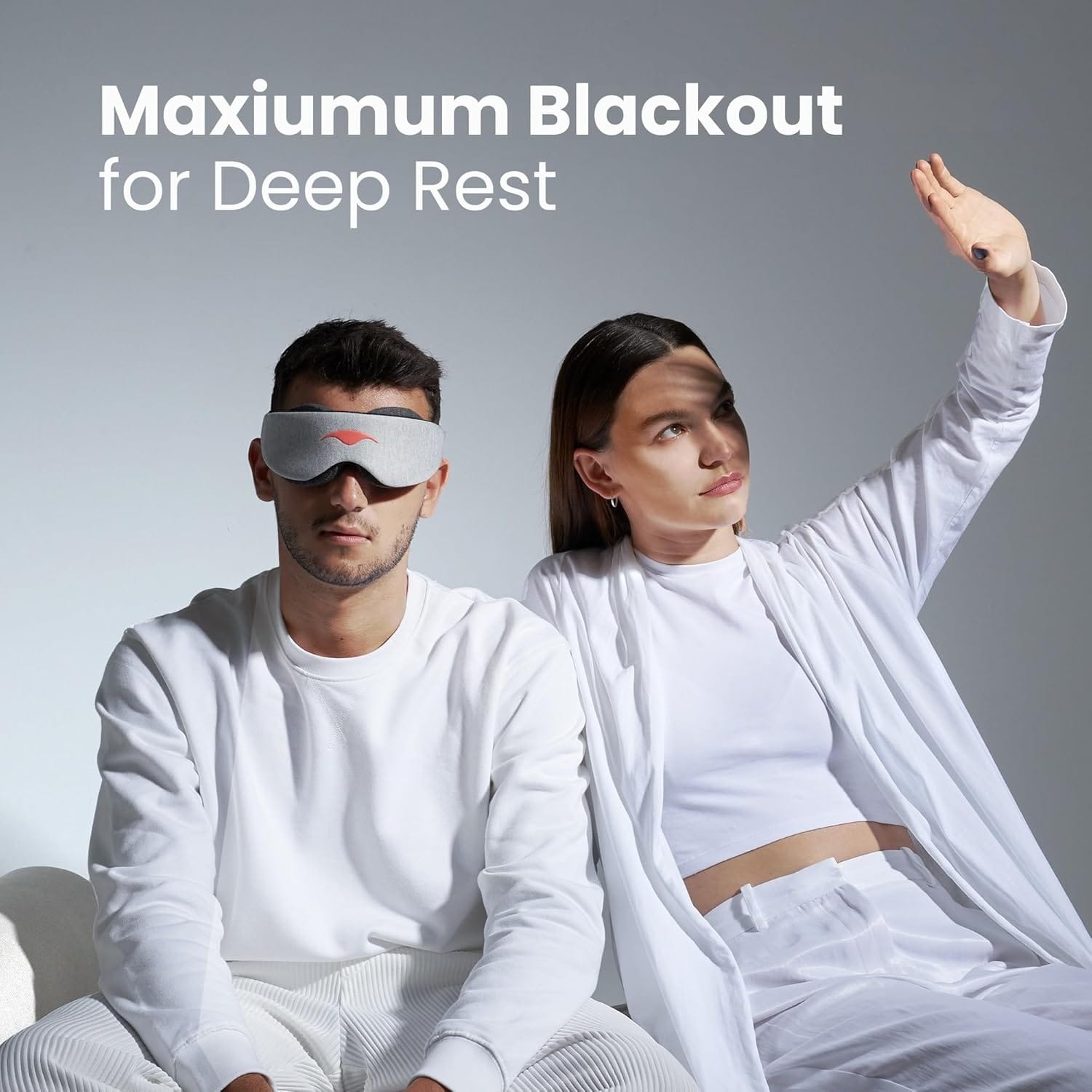
The Manta Sleep Mask is best viewed as a highly adjustable tool for creating darkness when you cannot fully control the room—not as a device proven to increase deep sleep or “optimize” recovery. Its molded eye cups and adjustable fit may be especially useful for travelers, shift workers, daytime sleepers, and people bothered by early-morning or ambient light.
PVL Rating: 4.3/5
- Blackout design: 4.7/5
- Comfort and adjustability: 4.5/5
- Sleep evidence: 3.5/5
- Ease of use: 4.5/5
- Value: 4.2/5
Best for: Light-sensitive sleepers, travelers, shift workers, daytime sleepers, and bedrooms where curtains or blinds cannot provide adequate darkness.
Not ideal for: Anyone expecting a mask to treat chronic insomnia, increase deep sleep directly, correct jet lag by itself, or solve sleep disruption unrelated to light.
What Is the Manta Sleep Mask?
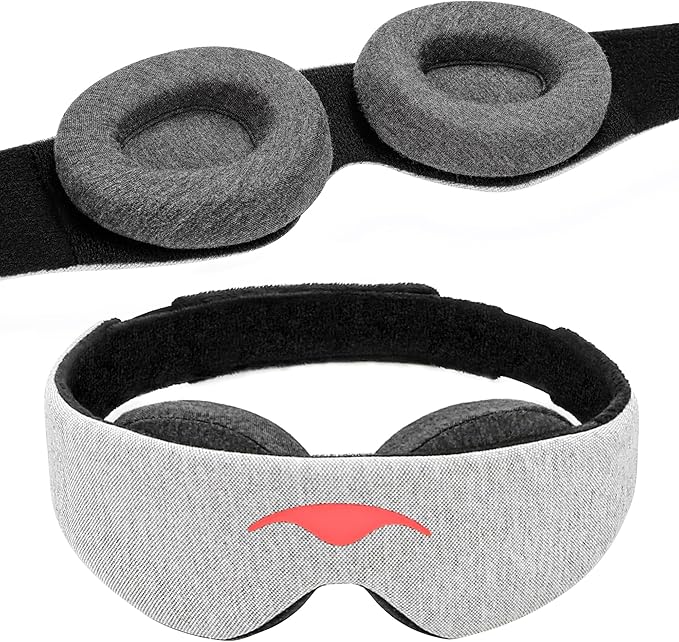
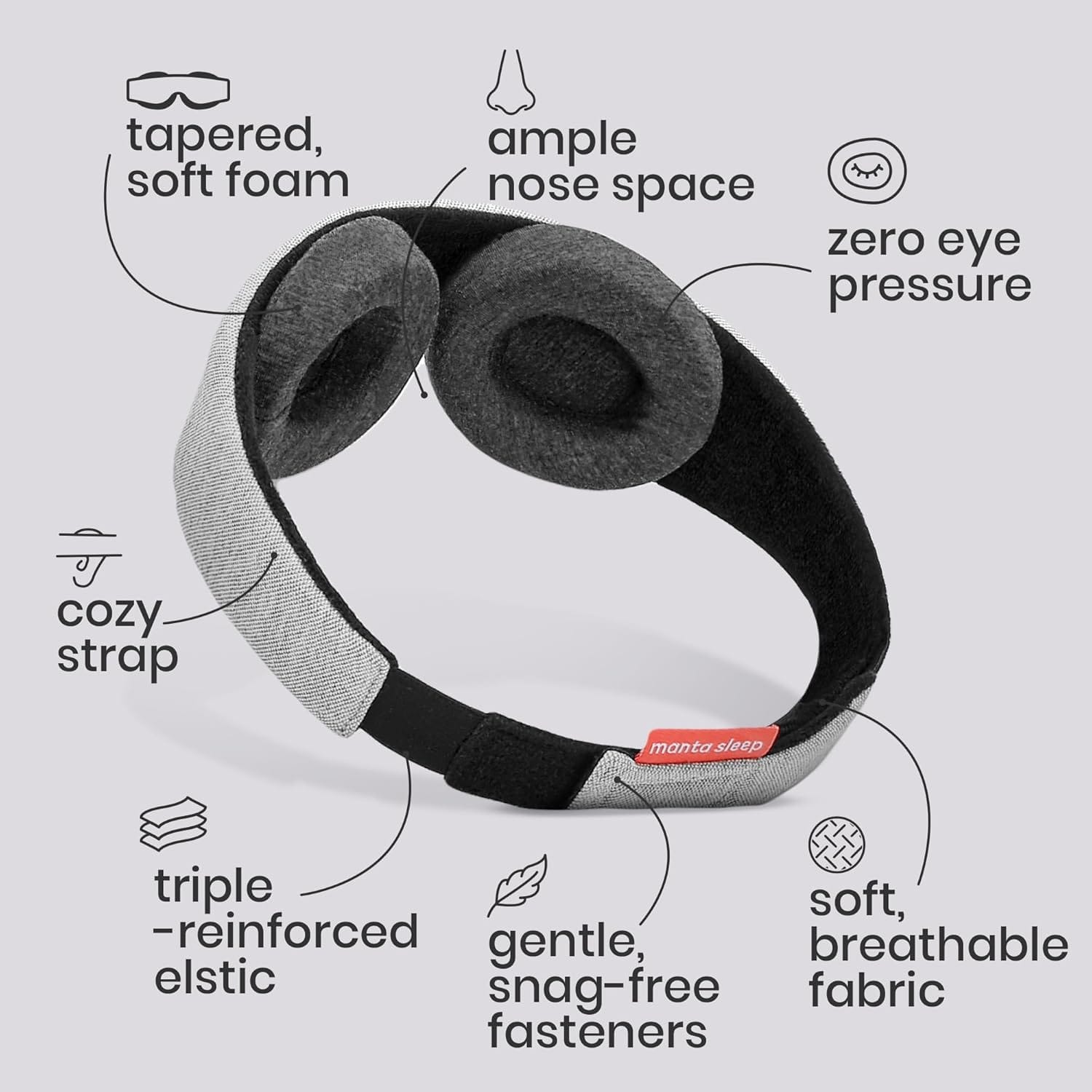
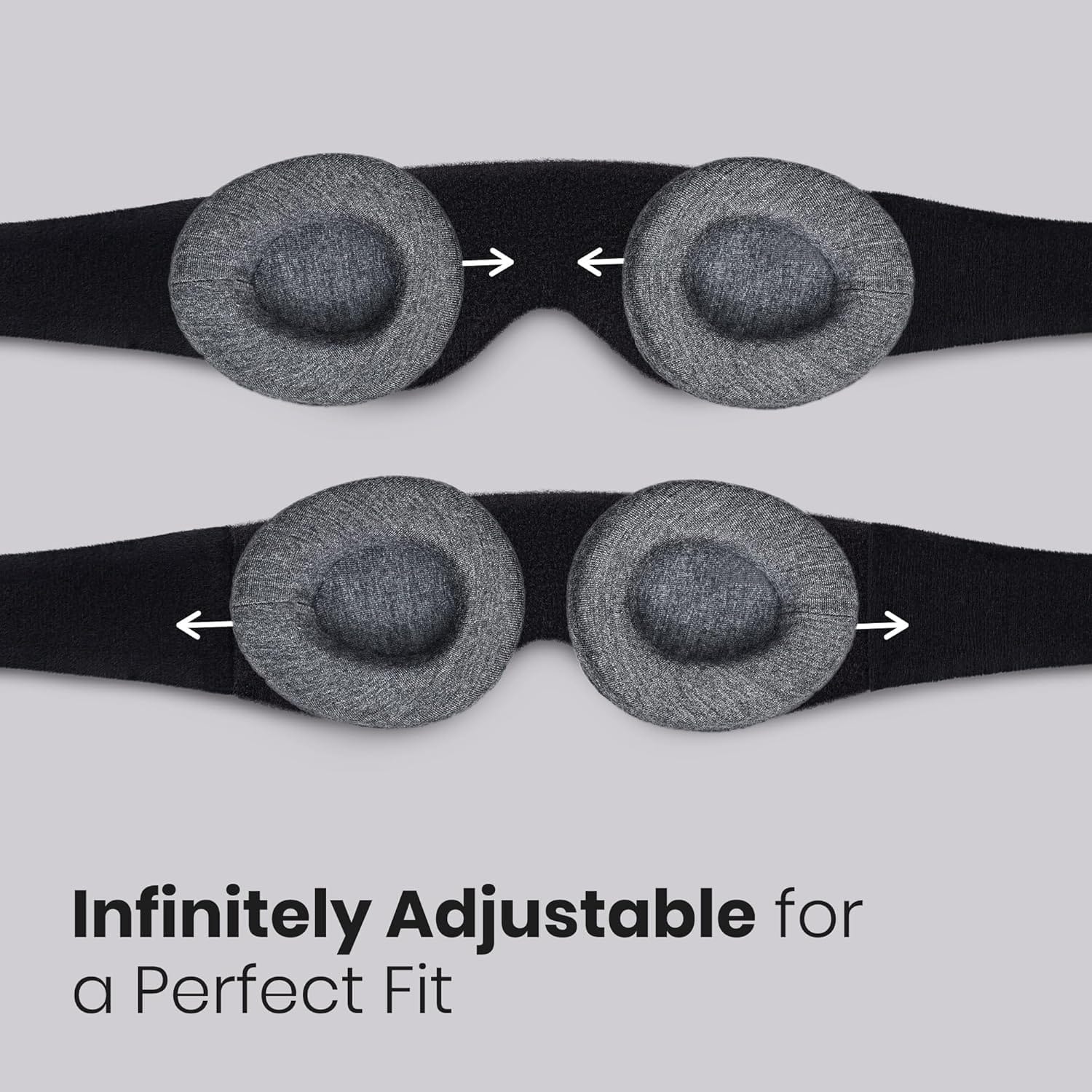
The Manta Sleep Mask uses adjustable cushioned eye cups rather than a conventional flat piece of fabric pressed across the eyelids. The cups can be repositioned to fit the user’s face and are intended to block ambient light while leaving space around the eyes and eyelashes.
That design addresses two common sleep-mask problems: light leaking around the nose and discomfort from fabric pressing against the eyelids. Whether it achieves complete blackout for an individual still depends on face shape, strap tension, cup placement, sleeping position, and movement during the night.
Can a Sleep Mask Improve Sleep?
Reducing unwanted nighttime light is biologically sensible, and small clinical studies suggest eye masks can improve some sleep outcomes in specific environments. Light is an important input to the circadian system, and nighttime light exposure can affect sleep and circadian physiology.
However, research on eye masks often examines hospital or intensive-care environments, sometimes combines eye masks with earplugs, and generally does not test the Manta product itself. Results from those interventions therefore cannot establish that a premium consumer mask will increase deep sleep or improve sleep in every user.
PVL did not identify a peer-reviewed randomized controlled trial of the finished Manta Sleep Mask demonstrating improvements in chronic insomnia, total sleep time, sleep efficiency, deep sleep, REM sleep, or recovery.
What Benefit Is Most Defensible?
The strongest practical benefit is simple: less light reaches the eyes when the sleeping environment is brighter than you want. That can be valuable during daytime sleep, early sunrise, flights, hotel stays, or in rooms with unavoidable LEDs and outside lighting.
If your bedroom is already genuinely dark and light is not disturbing you, a blackout mask may add little. Likewise, if noise, pain, breathing problems, restless legs, anxiety, or chronic insomnia is the main problem, darkness alone may not solve it.
Does “100% Blackout” Mean Everyone Gets Complete Darkness?
No universal fit claim should be interpreted literally for every face. Manta’s adjustable eye-cup system is specifically designed to minimize light leakage, but real-world blackout depends on positioning and anatomy. A small gap around the nose or a cup shifting during sleep can let light through.
For buyers, fit is therefore more important than a headline percentage. The ability to reposition the cups is a meaningful advantage because it lets users tune the seal rather than relying on one fixed mask shape.
Does Manta Increase Deep Sleep?
There is no good product-specific evidence that Manta directly increases physiologic deep sleep. Creating darkness can support an appropriate sleep environment, but that is different from demonstrating changes in N3 sleep on polysomnography.
The same limitation applies to claims about “recovery.” Better sleep conditions may indirectly support normal recovery, but the mask itself has not been shown to accelerate physical recovery or produce a specific recovery benefit.
Is It Useful for Shift Work?
A blackout mask can be particularly practical for people trying to sleep during daylight hours. It controls one environmental variable—light—without requiring permanent changes to a bedroom.
Shift-work sleep and circadian adaptation are more complex than darkness alone, however. Timing of light exposure, work schedule, sleep timing, caffeine, naps, and individual circadian biology also matter. A mask should therefore be considered an environmental aid, not a treatment for shift work disorder.
What About Travel and Jet Lag?
Manta can make a bright airplane cabin or hotel room darker, which may make attempted sleep more comfortable. It does not by itself reset the circadian clock or treat jet lag. Strategic timing of light exposure and sleep is more relevant to circadian adjustment than simply wearing a mask.
Comfort and Safety
The eye-cup design avoids direct pressure on the eyelids when fitted correctly, but “zero pressure” should not be treated as universal. An overtight strap or poorly positioned cup can still create pressure around the face, temples, or nose.
Keep the mask and eye cups clean according to the manufacturer’s current care instructions, particularly if you have sensitive or acne-prone skin. Stop using it if you develop persistent irritation, eye discomfort, or headaches related to the fit.
Anyone recovering from eye surgery or managing an eye condition where external pressure matters should ask their clinician whether a sleep mask is appropriate.
Pros and Cons
Pros
- Adjustable eye cups can help reduce light leakage
- Useful when room-darkening curtains are unavailable
- Eye cups provide space around eyelids and lashes
- Practical for travel, daytime sleep, and shift work
- No electronics, app, subscription, or supplement required
Cons
- No finished-product RCT identified for meaningful sleep outcomes
- Complete blackout depends on individual fit
- More expensive than basic sleep masks
- May shift during sleep depending on position and movement
- Does not treat insomnia, jet lag, or circadian disorders
Who Should Consider the Manta Sleep Mask?
Manta makes the most sense for someone who is genuinely sensitive to light and has struggled with gaps or eyelid pressure from conventional flat masks. Travelers and daytime sleepers may particularly value the ability to create darkness without changing the room.
Who May Not Need It?
If you already sleep in a dark room and ordinary masks fit comfortably, the premium design may not add enough value. If persistent sleep difficulty occurs despite an adequate sleep environment, investigate the underlying sleep problem rather than continually adding accessories.
Is the Manta Sleep Mask Worth It?
For light-sensitive sleepers who value adjustability and eye clearance, Manta offers a thoughtful solution to a straightforward environmental problem. Its premium price is easiest to justify when ordinary masks leak light or press uncomfortably on the eyes.
PVL rates it for blackout design, adjustability, comfort, and practical usefulness—not because it has been proven to increase deep sleep or recovery.
Frequently Asked Questions
Does the Manta Sleep Mask improve sleep?
It can create a darker sleep environment, which may help when unwanted light is disturbing sleep. PVL did not identify a finished-product randomized trial showing that Manta reliably improves chronic insomnia or objective sleep outcomes.
Does Manta increase deep sleep?
There is no good product-specific evidence that Manta directly increases physiologic deep sleep. Darkness supports an appropriate sleep environment, but that is not the same as proving an increase in N3 sleep.
Is Manta really 100% blackout?
The adjustable cups are designed for blackout, but the real result depends on facial anatomy, positioning, strap tension, and movement. No sleep mask can guarantee an identical seal for every user.
Is it useful for shift workers?
Yes, it can help make daytime sleep darker. It does not by itself correct circadian misalignment or treat shift work disorder.
Does a sleep mask cure jet lag?
No. A mask can make a bright environment easier to sleep in, but circadian adjustment depends heavily on the timing of light exposure and sleep.
Final Verdict
PVL Rating: 4.3/5. The Manta Sleep Mask is a well-designed premium option for people who need better control of unwanted light and dislike pressure from conventional flat masks. Its value comes from adjustable blackout and comfort—not from unproven claims about deep sleep, recovery, or sleep optimization.
References
- Blume C, et al. Effects of light on human circadian rhythms, sleep and mood. Somnologie. 2019. PMID 30311830.
- Le Guen M, et al. Earplugs and eye masks vs routine care prevent sleep impairment in post-anaesthesia care unit. Br J Anaesth. 2014. PMID 23844359.
- National Heart, Lung, and Blood Institute: Healthy Sleep Habits
Reviews
There are no reviews yet.