
Quick Verdict
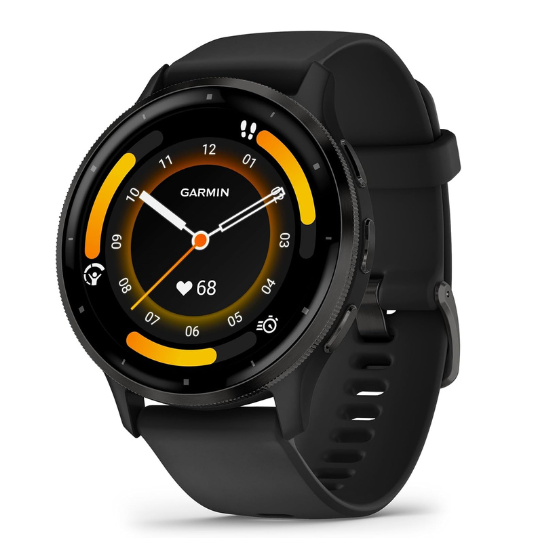
The Garmin Venu 3 combines useful fitness tracking, a bright AMOLED display, and app-based wellness trends. Its heart-rate and movement sensors can help monitor activity, but Body Battery, sleep stages, stress, and recovery-related outputs are algorithmic estimates. They do not directly measure energy, cortisol, muscle repair, or disease risk.
PVL Rating: 4.3/5 (provisional)
- Smartwatch design and daily usability: 4.6/5
- Activity and exercise tracking: 4.5/5
- General optical heart-rate evidence: 4.0/5
- Venu 3-specific clinical validation and outcomes: 3.1/5
- Value: 4.2/5
What Is the Garmin Venu 3?
The Venu 3 is a fitness-oriented smartwatch with a 45 mm case, an AMOLED display, activity tracking, and Garmin Connect integration. Its feature set includes Body Battery, sleep-related insights, stress estimates, and exercise tools. Check Garmin’s current specifications for software availability, compatibility, battery performance, and regional features before buying.
What Does the Venu 3 Measure?
Optical sensors estimate pulse from blood-volume changes at the wrist; motion sensors record movement. The watch combines sensor signals with algorithms to estimate steps, exercise metrics, sleep, stress, and other wellness scores. A polished graph does not turn an estimate into a direct laboratory measurement.
How Accurate Is Heart-Rate Tracking?
Wrist optical heart-rate monitoring can be useful for general exercise trends, but accuracy varies. Rapid intensity changes, wrist motion, fit, skin contact, and activity type can affect readings. A compatible chest strap may provide more dependable data for certain workouts. The Venu 3 is not a diagnostic heart monitor.
What Does Garmin Body Battery Mean?
Body Battery is Garmin’s proprietary estimate of available energy based on physiological and activity-related inputs. It does not measure cellular ATP, glycogen, fatigue hormones, or muscle recovery directly. Changes may reflect sleep and activity patterns, but the score should be interpreted as a personal trend rather than a clinical measure of readiness.
Can Body Battery Tell You When to Train?
It may encourage reflection on rest and workload, but a high number cannot guarantee safe exercise and a low number does not diagnose overtraining. Consider symptoms, actual performance, training history, illness, and recovery needs alongside the score. Do not push through pain or injury because the watch suggests readiness.
How Accurate Is Garmin Sleep Tracking?
Wearables can estimate sleep timing and duration, but distinguishing sleep stages and awakenings is more difficult. Garmin sleep stages are not equivalent to polysomnography, which uses brain and other physiological signals. Night-to-night stage percentages should not be treated as exact measurements of deep or REM sleep.
Can the Venu 3 Diagnose Sleep Apnea?
No. A consumer smartwatch does not replace sleep-apnea testing. Snoring with witnessed breathing pauses, persistent daytime sleepiness, or other concerning symptoms warrants medical evaluation. A reassuring sleep score or oxygen-related reading cannot reliably rule out a sleep disorder.
What Does the Stress Score Measure?
Garmin’s stress-related features infer physiological patterns from signals such as heart-rate variability. They do not directly measure cortisol, emotional distress, or a psychiatric condition. Exercise, caffeine, illness, medications, and sleep can influence the underlying signals, so the score should not be interpreted as a diagnosis.
Can It Track Recovery Accurately?
Recovery insights are estimates, not measurements of repaired muscle or connective tissue. A smartwatch cannot confirm that soreness, fatigue, or an injury has resolved. Use its trends to complement established training principles, adequate nutrition, sleep, and appropriate rehabilitation rather than to replace them.
Does Garmin Fitness Age Predict Longevity?
Fitness Age is a proprietary wellness estimate informed by selected user and activity data. It is not a biological-age test and does not predict an individual’s lifespan with clinical precision. Improving a displayed score should not be confused with proven disease prevention or reversal of aging.
How Useful Is the Venu 3 for Everyday Fitness?
The watch can help log activity, encourage regular movement, and make exercise patterns visible. Its display, notifications, and Garmin ecosystem may be convenient for users who want both smartwatch and fitness functions. Behavioral benefits depend on how the user responds to feedback, not simply wearing the device.
What About Battery Life and Comfort?
Battery endurance depends on settings such as display mode, GPS use, connected features, and notifications. Fit also affects optical sensor contact and comfort during sleep. Confirm current manufacturer estimates and band options for the exact Venu 3 variant rather than assuming advertised maximum battery life in all conditions.
Privacy and Medical Limitations
Review Garmin Connect’s current privacy and sharing controls because continuous tracking creates sensitive personal data. Seek medical care for chest pain, fainting, severe breathlessness, or other urgent symptoms regardless of the watch’s readings. Do not adjust medication or diagnose disease from wellness scores.
What Garmin Venu 3 Has Not Been Shown to Do
- Directly measure cellular energy, cortisol, or muscle repair
- Diagnose sleep apnea, insomnia, arrhythmias, or overtraining
- Provide laboratory-grade sleep-stage measurement
- Guarantee injury prevention or improved athletic performance
- Predict lifespan from Fitness Age or Body Battery
- Replace clinical tests or professional evaluation
Pros and Cons
Pros
- Bright AMOLED display and versatile smartwatch functions
- Convenient exercise and activity trends
- Body Battery and sleep insights may support habit awareness
- Integration with Garmin’s broader fitness ecosystem
Cons
- Recovery and stress scores can be overinterpreted
- Optical heart-rate accuracy varies by activity and fit
- Sleep-stage estimates are not clinical measurements
- Product-specific clinical outcome evidence remains limited
Who Should Consider It?
Adults who want a versatile fitness smartwatch with long-term trend tracking may find the Venu 3 useful. It is less appropriate for anyone seeking definitive recovery measurements, diagnostic sleep data, or clinical monitoring.
Frequently Asked Questions
Does Garmin Body Battery measure actual energy levels?
No. Body Battery is a proprietary estimate, not a direct measurement of physical energy stores. Garmin combines physiological and activity-related inputs to display a personal trend. The number does not measure cellular ATP, glycogen, or muscle recovery. Interpret it alongside sleep, symptoms, and performance rather than treating it as a clinical readiness test.
How accurate is the Garmin Venu 3 heart-rate sensor?
Wrist optical heart-rate tracking can be useful, but readings are not always precise. Motion, fit, skin contact, and rapid exercise-intensity changes may affect accuracy. A compatible chest strap can be preferable for certain workouts. The Venu 3 is a fitness device, not a substitute for diagnostic cardiac monitoring.
Can Garmin Venu 3 accurately measure deep sleep?
The Venu 3 estimates sleep stages rather than directly measuring brain activity. Consumer algorithms may identify broad patterns, but deep-sleep and REM percentages can differ from clinical polysomnography. Avoid reacting to one night’s stage breakdown. Persistent sleep problems or excessive daytime sleepiness deserve clinical assessment regardless of the displayed score.
Does the Garmin stress score measure cortisol?
No. Garmin’s stress indicator does not directly measure cortisol or emotional distress. It interprets physiological signals that can also change with exercise, illness, caffeine, and medications. A high score cannot diagnose anxiety, and a low score does not guarantee psychological well-being. Consider the broader context and how you actually feel.
Can Garmin Venu 3 tell when muscles are recovered?
No. Recovery-related scores cannot directly verify muscle or tendon healing. They may help you reflect on sleep and training load, but they do not establish whether another workout is safe. Consider soreness, fatigue, performance, and injury symptoms. Seek professional guidance for persistent pain or unexplained changes in exercise tolerance.
Can Garmin Venu 3 detect sleep apnea or heart disease?
No. Consumer wellness readings should not be used to diagnose or rule out sleep apnea or heart disease. Snoring with witnessed breathing pauses, fainting, chest pain, or severe breathlessness requires appropriate medical attention. Even a reassuring wearable score cannot replace clinical testing or evaluation of concerning symptoms.
Final Verdict
PVL Rating: 4.3/5 (provisional). The Garmin Venu 3 offers a compelling mix of activity tracking and everyday smartwatch convenience. Body Battery, sleep, stress, and recovery scores can provide context, but should remain estimates rather than medical conclusions or proof of physiological recovery.
Reviews
There are no reviews yet.