

Quick Verdict
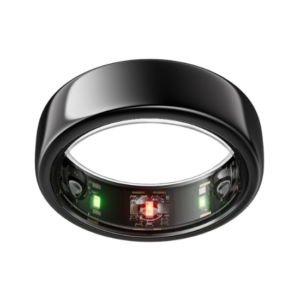
The Samsung Galaxy Ring is a compelling low-profile wellness tracker, especially for people who prefer a ring to a watch and already use Samsung Health, but its sleep stages, Energy Score, and “recovery” insights should be treated as algorithmic estimates rather than clinical measurements. Its strongest value is passive longitudinal tracking with no required subscription—not diagnosis or precision sleep staging.
PVL Rating: 4.2/5
- Wearability and design: 4.6/5
- Longitudinal wellness tracking: 4.4/5
- Sleep evidence: 3.6/5
- Recovery/readiness interpretation: 3.4/5
- Value: 4.1/5
Best for: Samsung Health users who want passive overnight and all-day trends without wearing a smartwatch to bed.
Not ideal for: Anyone who needs medical-grade sleep staging, diagnosis of a sleep disorder, or a clinically validated measurement of “recovery” or readiness.
What Does the Samsung Galaxy Ring Measure?
The Galaxy Ring combines optical and other wearable sensors with Samsung’s algorithms to generate heart-rate, activity, sleep, and wellness metrics. Some outputs are relatively close to the underlying sensor signal; others are higher-level estimates created by combining multiple inputs.
That distinction is essential. A ring may detect pulse-related signals and movement, but labels such as sleep stage, sleep score, Energy Score, readiness, or recovery require algorithmic interpretation. Those labels should not be treated as direct measurements of the brain or of a single physiological state called recovery.
How Accurate Is Galaxy Ring Sleep Tracking?
Consumer-ring sleep data can be useful for trends, but individual sleep stages should not be treated as equivalent to polysomnography. Clinical PSG identifies sleep stages using EEG brain activity, eye movements, muscle tone, and other physiological channels. The Galaxy Ring does not record the same full diagnostic signal set.
PVL did not identify evidence establishing that every Galaxy Ring sleep-stage output is interchangeable with PSG across healthy adults, older adults, and people with sleep disorders. As with other consumer trackers, quiet wakefulness and transitions between stages can be particularly difficult to classify.
The most sensible use is to look for repeated patterns—such as changes in sleep timing or estimated duration—rather than reacting strongly to a single night’s deep-sleep or REM percentage.
What Is Samsung Energy Score?
Energy Score is a proprietary wellness output that combines several tracked factors to provide a simplified daily indicator. It may be convenient for summarizing trends, but it is not a direct measurement of cellular energy, physiological recovery, athletic readiness, or medical health.
A score can change because its input metrics or algorithm change, and the same numerical value does not necessarily mean the same thing as a validated clinical endpoint. Users should examine the underlying behaviors and trends rather than allowing one composite number to determine how healthy or “recovered” they believe they are.
Can Galaxy Ring Measure Recovery?
“Recovery” is a broad consumer-wearable concept rather than one universally standardized physiological measurement. Resting heart rate, heart-rate variability, sleep estimates, recent activity, temperature-related signals, and other inputs can all provide useful context, but combining them into a recovery-style score does not create a diagnostic test.
The ring may help users notice how their metrics change after travel, late nights, illness, alcohol, heavy exercise, or schedule changes. Those associations can be useful for self-observation without proving that the score precisely measures recovery.
Does Galaxy Ring Improve Sleep?
Tracking sleep is not the same as improving it. Seeing bedtime consistency, estimated duration, or overnight patterns may prompt useful behavior changes, but the ring itself does not treat insomnia or directly improve sleep architecture.
PVL did not identify a peer-reviewed randomized controlled trial demonstrating that wearing the finished Galaxy Ring reliably improves chronic insomnia, total sleep time, sleep efficiency, deep sleep, REM sleep, or daytime functioning.
What About Heart-Rate Data?
Optical heart-rate sensing can provide useful resting and overnight trends when signal quality and fit are good. Performance can vary with movement, contact, physiology, and activity type, so success during quiet sleep should not automatically be extrapolated to every exercise condition.
Heart-rate trends from a wellness wearable should also not substitute for an ECG or medical cardiac evaluation when symptoms, suspected arrhythmia, or other clinical concerns are present.
Why Fit Matters
Smart-ring sensing depends on consistent skin contact, so sizing is more than a comfort issue. A ring that is too loose can move and degrade signal quality, while an excessively tight ring can become uncomfortable as fingers naturally change size with temperature, activity, and time of day.
Using the sizing process before choosing the final ring is therefore sensible. Comfort during both daytime activity and overnight wear matters more than selecting a size from another jewelry ring by assumption.
Does AI Make the Health Data More Accurate?
“AI-powered” describes how software may process or interpret data; it is not evidence of accuracy by itself. Accuracy has to be demonstrated for each metric against an appropriate reference standard.
An AI-generated suggestion may be useful for highlighting patterns, but it should not be treated as a medical conclusion simply because multiple sensor streams were analyzed together.
Can Galaxy Ring Diagnose Sleep Apnea?
A consumer ring should not be used by itself to diagnose or rule out obstructive sleep apnea unless a specific regulated feature has been cleared for that purpose in the user’s region and is used exactly as intended.
Loud habitual snoring, witnessed breathing pauses, gasping, unexplained daytime sleepiness, or other concerning symptoms warrant appropriate clinical evaluation even when a wearable’s sleep score looks normal.
What the Galaxy Ring Has Not Been Shown to Do
- Replace polysomnography for clinical sleep staging
- Measure deep or REM sleep with laboratory-level precision in every user
- Provide a universal clinical measurement of recovery or readiness
- Treat chronic insomnia
- Diagnose sleep apnea from general sleep scores alone
- Make health conclusions medically reliable simply because they are AI-generated
Pros and Cons
Pros
- Compact form factor can be easier to wear overnight than a watch
- Passive multi-night trend collection
- Strong integration for users already in Samsung Health
- No required monthly subscription for core tracking
- Useful for observing changes in personal patterns over time
Cons
- Sleep stages remain algorithmic estimates rather than PSG measurements
- Energy and recovery-style scores are proprietary composite outputs
- Fit can materially affect comfort and signal quality
- Tracking does not itself improve sleep or recovery
- Some ecosystem features may depend on compatible Samsung devices, software, or region
Who Should Consider the Galaxy Ring?
It is particularly appealing to people who dislike wearing a smartwatch overnight but still want long-term sleep and wellness trends. Existing Samsung Health users are positioned to get the most value from the ecosystem.
Who Should Choose Another Approach?
If your priority is diagnosing a sleep disorder, evaluating unexplained cardiac symptoms, or obtaining precise sleep architecture, use appropriate clinical testing rather than a consumer ring. If you mainly want workout-screen feedback or GPS during exercise, a sports watch may also be more practical.
Is the Samsung Galaxy Ring Worth It?
For passive, subscription-free wellness tracking in a compact form, the Galaxy Ring has a strong practical proposition. Its value is highest when users treat scores as trend tools and use them to ask better questions about habits rather than as definitive judgments about health.
PVL rates it for wearability, longitudinal tracking, and ecosystem utility—not because proprietary sleep or recovery scores are equivalent to clinical measurements.
Frequently Asked Questions
Is Samsung Galaxy Ring sleep tracking accurate?
Samsung Galaxy Ring can be useful for tracking sleep trends, but its sleep stages are estimates rather than clinical measurements. The ring infers sleep from wearable sensor signals and algorithms instead of the EEG, eye-movement, and muscle signals used in polysomnography. Use repeated patterns across nights rather than treating one night’s stage breakdown as exact.
Does Galaxy Ring measure deep sleep?
Galaxy Ring estimates deep sleep; it does not directly measure it with clinical polysomnography. Its algorithms classify periods of the night using signals available from the ring, while a sleep laboratory stages N3 sleep using EEG alongside eye-movement and muscle data. Deep-sleep minutes are therefore best interpreted as approximate trends, not precise measurements.
What does Samsung Energy Score really measure?
Samsung Energy Score is a proprietary composite wellness score, not a direct measurement of physical energy or recovery. It combines multiple tracked inputs into a simplified daily indicator intended to help users interpret patterns. The number can be useful for self-monitoring, but it is not a validated clinical endpoint for readiness, recovery, or overall health.
Can Samsung Galaxy Ring improve sleep?
Galaxy Ring may help you recognize sleep patterns, but tracking alone does not improve sleep. Bedtime consistency, estimated duration, and other trends can encourage useful behavior changes; however, PVL did not identify a finished-product randomized trial showing that wearing Galaxy Ring treats chronic insomnia or reliably improves objective sleep outcomes.
Can Samsung Galaxy Ring diagnose sleep apnea?
Do not use Galaxy Ring’s general sleep scores alone to diagnose or rule out sleep apnea. Specific regulated health features can differ by country, compatible device, and software version. Loud habitual snoring, witnessed breathing pauses, gasping, or marked daytime sleepiness warrant appropriate clinical evaluation even when consumer sleep data appear reassuring.
Final Verdict
PVL Rating: 4.2/5. Samsung Galaxy Ring is a strong option for comfortable, passive wellness tracking—especially inside the Samsung ecosystem. Its data are most useful as repeated personal trends. Sleep stages, Energy Score, and recovery-style insights should remain decision-support signals, not substitutes for clinical measurement or diagnosis.



Reviews
There are no reviews yet.