
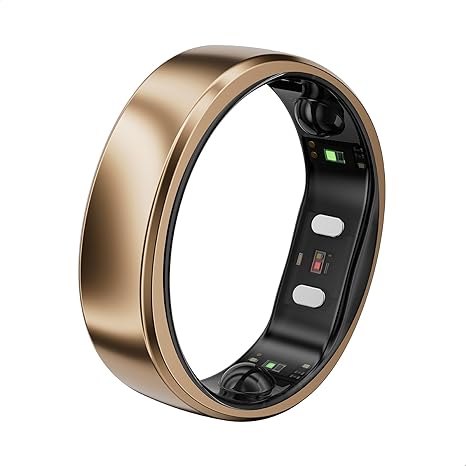
Quick Verdict
RingConn Gen 2 Air is a lightweight, subscription-free smart ring that makes long-term wellness tracking convenient, but its sleep stages, stress metrics, and recovery-style insights remain algorithmic estimates rather than clinical measurements. Its strongest case is comfort, battery life, and passive trend collection—not proven sleep improvement or medical-grade health assessment.
PVL Rating: 4.1/5
- Wearability and design: 4.6/5
- Longitudinal tracking utility: 4.3/5
- Sleep evidence: 3.4/5
- Stress/recovery interpretation: 3.2/5
- Value: 4.3/5
Best for: People who want a lightweight, subscription-free ring for observing personal sleep and wellness trends over time.
Not ideal for: Anyone expecting laboratory-grade sleep staging, diagnosis, or a clinically validated measurement of stress, recovery, or readiness.
What Does RingConn Gen 2 Air Track?
Gen 2 Air uses wearable sensors and software to generate metrics related to heart rate, heart-rate variability (HRV), blood oxygen, activity, sleep, and other wellness patterns. The exact feature set can change with app and firmware updates, so buyers should verify current specifications for their region.
Some outputs are relatively close to measured sensor signals, while sleep stages, stress scores, and recovery-style insights require algorithmic interpretation. Those higher-level outputs should not be treated as direct measurements of the brain, psychological stress, or a single physiological state called recovery.
How Accurate Is RingConn Gen 2 Air for Sleep?
PVL did not identify peer-reviewed validation showing that every Gen 2 Air sleep metric is interchangeable with polysomnography. Clinical PSG stages sleep using EEG brain activity, eye movements, muscle tone, and additional physiological signals that a finger-worn consumer ring does not reproduce in full.
That does not make the ring useless. Estimated sleep duration, timing, and repeated overnight patterns can be helpful for self-monitoring. The important boundary is to treat stage percentages and nightly scores as estimates rather than exact measurements.
Does RingConn Gen 2 Air Measure Deep and REM Sleep?
It estimates sleep stages algorithmically from signals available to the ring. Deep and REM labels therefore represent classifications produced by the device’s software rather than direct EEG-based sleep staging.
Consumer sleep technologies can perform differently across metrics, users, and nights. A change in estimated deep sleep should not automatically be interpreted as a true physiological change of the same magnitude.
What Does HRV Tell You?
HRV describes variation in the timing between heartbeats. It is influenced by autonomic regulation and can change with sleep, exercise, illness, alcohol, psychological strain, measurement conditions, and many other factors.
One HRV value is not a direct measurement of recovery or stress. Personal trends collected under similar conditions are generally more interpretable than comparing your number with another person’s or treating a single low reading as evidence that something is wrong.
Can RingConn Measure Stress?
A wearable can use physiological inputs such as heart rate and HRV to generate a proprietary stress-related estimate, but it does not directly measure a person’s psychological experience of stress.
Physical activity, illness, caffeine, alcohol, temperature, sleep loss, and other factors can influence the same physiological signals. A stress score is therefore best used as contextual wellness information rather than as a diagnosis of anxiety or chronic stress.
Can RingConn Measure Recovery?
“Recovery” is not one universally standardized physiological variable. Wearable platforms may combine sleep estimates, resting heart rate, HRV, activity, and other signals to summarize how the body appears to be responding over time.
That can be useful for noticing personal patterns after hard training, travel, illness, or poor sleep. It does not establish that a proprietary score precisely measures tissue recovery, nervous-system recovery, athletic readiness, or overall health.
Does RingConn Gen 2 Air Improve Sleep?
Tracking sleep does not itself improve sleep. Seeing repeated patterns may encourage earlier bedtimes, more consistent schedules, or other useful behavior changes, but the ring is a measurement and feedback tool rather than an insomnia treatment.
PVL did not identify a peer-reviewed randomized controlled trial demonstrating that wearing the finished Gen 2 Air reliably improves chronic insomnia, total sleep time, sleep efficiency, deep sleep, REM sleep, or daytime functioning.
What About Heart Rate and SpO2?
Optical wearable sensors can provide useful resting and overnight trends when contact and signal quality are good. Accuracy can change with motion, fit, skin contact, physiology, and the metric being estimated.
Consumer heart-rate and oxygen trends should not replace an ECG, medical pulse oximeter, or clinical evaluation when symptoms or important health concerns are present. A normal-looking app dashboard does not rule out disease.
Why Ring Fit Matters
Consistent sensor-to-skin contact matters for optical measurements. A loose ring may shift and degrade signal quality, while an overly tight ring can become uncomfortable as finger size changes with activity, temperature, and time of day.
Use the manufacturer’s sizing process and evaluate overnight comfort before assuming your usual jewelry size is appropriate.
Does AI Make RingConn More Accurate?
No—AI does not establish accuracy by itself. Algorithms can combine large amounts of sensor data and identify patterns, but each health or wellness metric still needs validation against an appropriate reference standard.
“AI-powered” should therefore describe a processing method, not serve as evidence that sleep, stress, recovery, or health conclusions are clinically correct.
What Gen 2 Air Has Not Been Shown to Do
- Replace polysomnography for clinical sleep staging
- Measure deep or REM sleep with laboratory-level precision in every user
- Directly measure psychological stress
- Provide a universal clinical measurement of recovery or readiness
- Treat chronic insomnia
- Make wellness conclusions medically reliable simply because AI generated them
Pros and Cons
Pros
- Lightweight form factor suited to overnight wear
- Passive multi-night trend collection
- No required subscription for standard tracking
- Long battery-life positioning reduces charging interruptions
- Works across iOS and Android ecosystems
Cons
- Gen 2 Air-specific clinical validation is limited compared with laboratory sleep testing
- Sleep stages remain algorithmic estimates
- Stress and recovery-style metrics can be overinterpreted
- Fit affects both comfort and signal quality
- Tracking does not itself treat sleep or stress problems
Who Should Consider RingConn Gen 2 Air?
Gen 2 Air makes the most sense for someone who values a lightweight ring, long-term trends, and avoiding a recurring subscription. It is particularly attractive when the goal is self-observation rather than medical interpretation.
Who Should Choose Clinical Testing Instead?
Persistent insomnia, suspected sleep apnea, unexplained daytime sleepiness, concerning oxygen readings, palpitations, or other significant symptoms warrant appropriate clinical evaluation. A consumer ring can provide context, but it should not determine whether a medical condition is present or absent.
Is RingConn Gen 2 Air Worth It?
For users who want comfortable, subscription-free trend tracking, Gen 2 Air has a strong practical proposition. Its value comes from collecting data consistently with relatively little effort.
PVL rates it for wearability, longitudinal monitoring, and value while keeping a firm boundary around sleep-stage precision, stress interpretation, recovery scores, and medical use.
Frequently Asked Questions
Is RingConn Gen 2 Air sleep tracking accurate?
RingConn Gen 2 Air can be useful for tracking sleep trends, but its sleep stages should not be treated as clinical measurements. PVL did not identify evidence showing every Gen 2 Air sleep metric is interchangeable with polysomnography. Use repeated patterns in timing and estimated duration rather than treating one night’s stage breakdown as exact.
Does RingConn Gen 2 Air measure deep sleep?
Gen 2 Air estimates deep sleep; it does not directly stage sleep using clinical EEG. Its algorithms classify sleep from signals available to the finger-worn ring, while polysomnography uses brain activity, eye movements, muscle tone, and other channels. Deep-sleep minutes are therefore better interpreted as approximate trends rather than precise measurements.
Can RingConn measure stress accurately?
RingConn can estimate physiological patterns associated with stress, but it does not directly measure psychological stress. Heart rate and HRV can also change with exercise, illness, caffeine, alcohol, temperature, and sleep loss. A stress score is best treated as contextual wellness information, not a diagnosis of anxiety or chronic stress.
Does RingConn Gen 2 Air improve sleep?
Gen 2 Air may help you recognize sleep patterns, but tracking alone does not improve sleep. The data can encourage useful changes in timing or consistency; however, PVL did not identify a finished-product randomized trial showing that wearing Gen 2 Air treats chronic insomnia or reliably improves objective sleep outcomes.
Is RingConn recovery data a clinical measurement?
No. RingConn recovery-style insights are wellness interpretations, not a universal clinical measurement of recovery. Sleep estimates, HRV, resting heart rate, activity, and other inputs can provide useful context, but a composite score cannot by itself establish tissue recovery, nervous-system recovery, athletic readiness, or overall medical health.
Final Verdict
PVL Rating: 4.1/5. RingConn Gen 2 Air is a strong lightweight option for passive, subscription-free wellness tracking. Its best use is following personal trends over time. Sleep stages, stress metrics, and recovery-style outputs should remain decision-support signals rather than substitutes for clinical measurement, diagnosis, or treatment.
References
- Kainec KA, et al. Accuracy of commercial sleep-tracking devices compared with actigraphy and polysomnography. Sensors. 2024. PMID 38276327.
- Consumer sleep technology and clinical sleep assessment: considerations for interpretation. PMID 33926625.
- National Heart, Lung, and Blood Institute: Sleep Studies
Reviews
There are no reviews yet.