
Quick Verdict
The Loftie Smart Alarm Clock is best viewed as a well-designed bedside routine tool, not a proven sleep treatment. Its strongest proposition is behavioral: it can move the alarm, sleep audio, and basic bedside controls away from your phone, potentially making it easier to create a less distracting bedtime environment.
PVL Rating: 4.1/5
- Bedtime-routine design: 4.6/5
- Phone-replacement utility: 4.5/5
- Sleep evidence: 3.1/5
- Ease and bedside usability: 4.3/5
- Value: 3.8/5
Best for: People who repeatedly pick up their phone in bed and want one bedside device for alarms, calming audio, and a simple nighttime routine.
Not ideal for: Anyone expecting an alarm clock to treat insomnia, reliably increase deep sleep, correct a circadian disorder, or make white noise clinically effective.
What Is the Loftie Smart Alarm Clock?
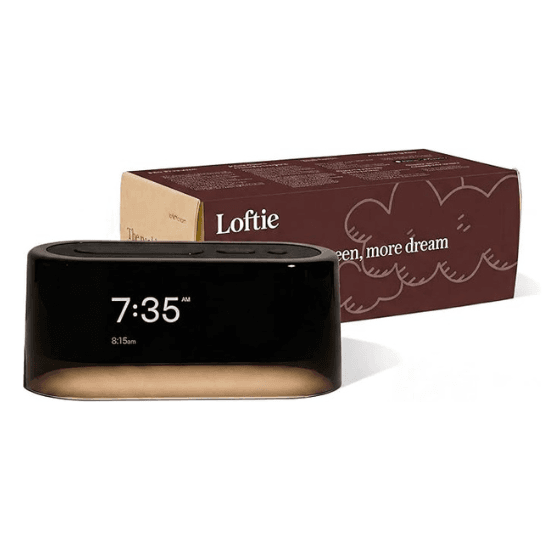
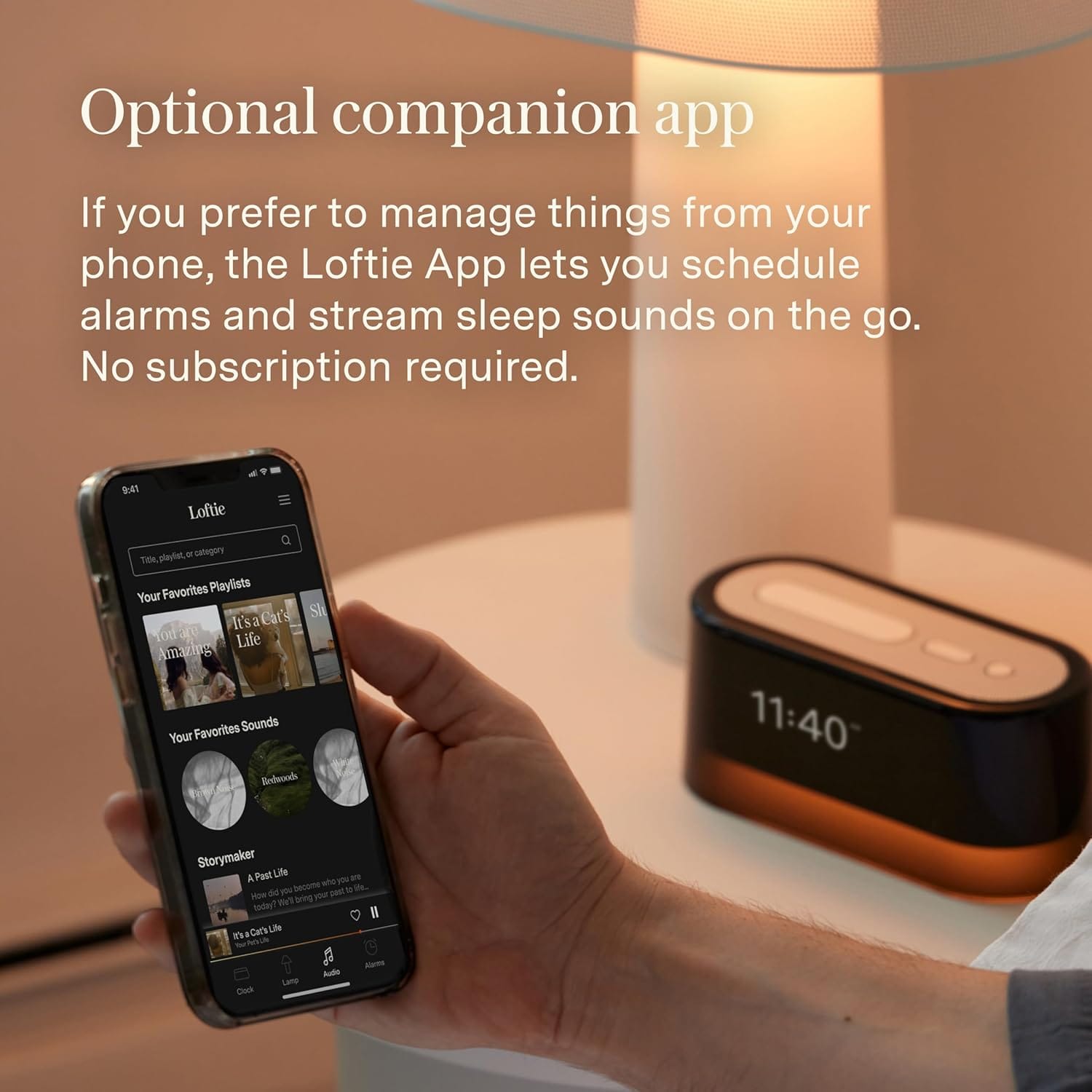
Loftie combines an alarm clock with bedside audio, lighting, and guided wind-down content. Its practical appeal is consolidation: instead of using a phone for alarms, audio, meditation, and bedtime content, those functions can live on a dedicated bedside device.
That distinction matters because the most plausible sleep benefit does not come from the clock hardware itself. It comes from how the device may change behavior—especially if it helps a user stop scrolling, checking messages, or interacting with stimulating content after getting into bed.
Loftie’s software, content library, connectivity requirements, subscription offerings, and exact features can change. Buyers should verify the current product and service terms rather than assuming an older feature list remains unchanged.
Does Loftie Actually Improve Sleep?
PVL did not identify a peer-reviewed randomized controlled trial of the finished Loftie clock demonstrating improvements in chronic insomnia, total sleep time, sleep efficiency, deep sleep, REM sleep, or daytime functioning.
A calmer routine, less stimulating nighttime behavior, and a consistent sleep schedule are reasonable sleep-hygiene goals. But evidence supporting those behaviors cannot automatically be converted into evidence that Loftie itself improves sleep.
The correct question is therefore: Will this device help you follow a better routine than the one you currently follow?
Can Replacing Your Phone at Bedtime Help?
Using a dedicated alarm clock can remove one reason to keep a smartphone within immediate reach. That can be useful if phone use is regularly delaying bedtime or keeping you engaged after you intended to sleep.
However, simply placing a Loftie beside the bed does not reduce screen use automatically. If the phone remains in your hand, the behavioral problem has not changed. The product works best when paired with an intentional rule such as charging the phone away from the bed after the evening routine is complete.
What About Blue Light and Screens?
Nighttime light can influence circadian physiology, but reducing phone use before bed should not be reduced to “blue light” alone. Content, emotional arousal, notifications, time displacement, brightness, and habitual checking can all matter.
A phone-free routine may therefore be useful even without claiming that one particular wavelength is the sole reason screens affect sleep.
Does Loftie’s White Noise Improve Sleep?
Evidence for continuous noise as a general sleep aid is mixed and low certainty. A 2021 systematic review found substantial heterogeneity among white-noise and continuous-auditory-stimulation studies and rated the overall quality of evidence for sleep outcomes as very low.
Masking sound can still be practically useful when intermittent environmental noise—traffic, neighbors, doors, or other disturbances—is the problem. Loftie provides a convenient delivery method, but the presence of a white-noise feature does not prove that the clock itself improves sleep.
Are Guided Meditations and Breathwork Proven Loftie Benefits?
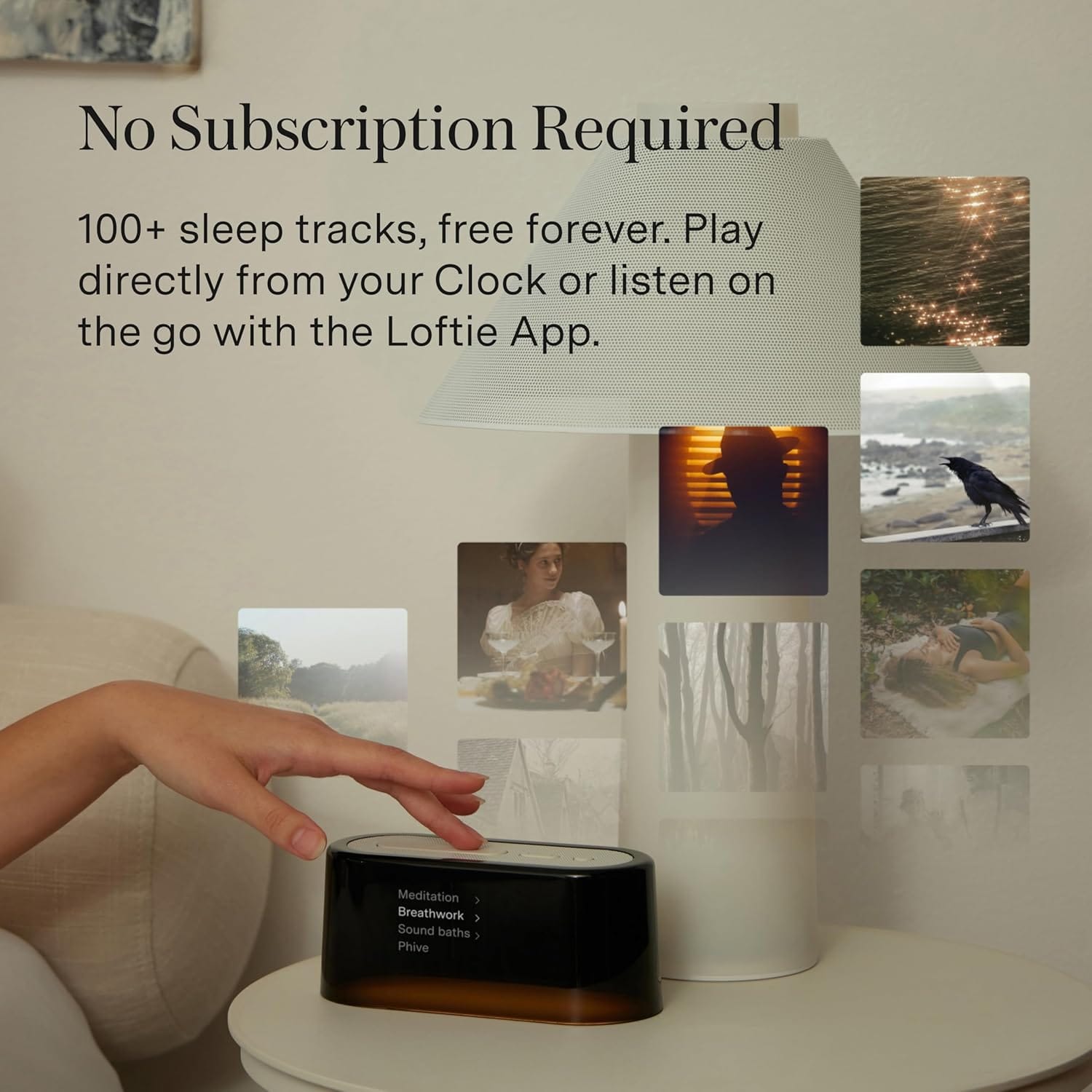
Some people find guided relaxation, meditation, or paced breathing useful for winding down. Those practices have evidence bases of their own, but their presence in Loftie’s content library does not establish product-specific clinical efficacy.
The device may make a routine easier to access and repeat. That is a usability benefit rather than proof that Loftie treats insomnia, anxiety, or chronic stress.
Can an Alarm Clock Improve Circadian Rhythm?
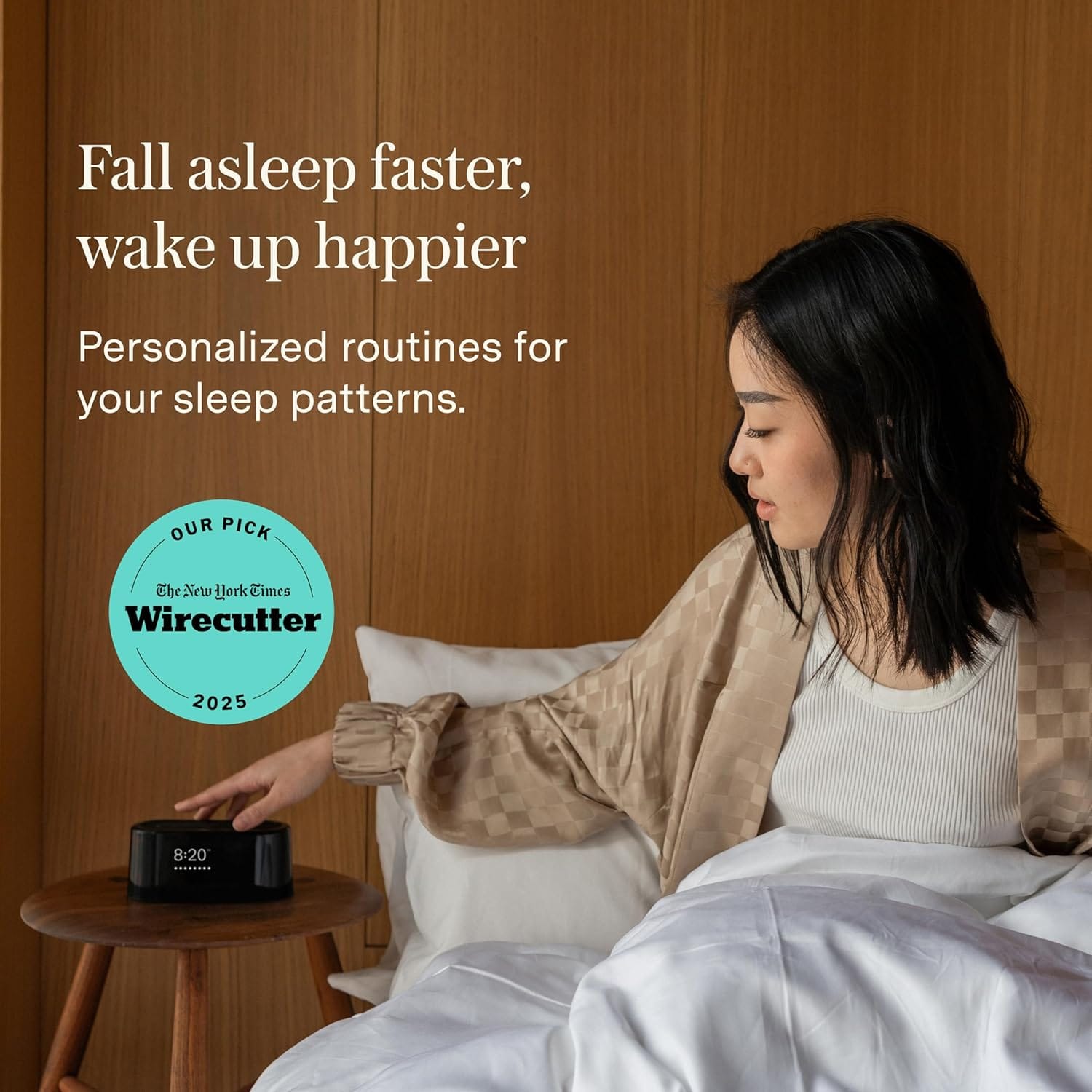
A consistent wake time can support a stable sleep schedule and is commonly included in behavioral sleep recommendations. Loftie can provide the alarm that anchors that routine, but the clock does not independently “reset” the circadian system.
Morning light exposure, sleep timing, evening light, activity, individual chronotype, and other factors contribute to circadian timing. People with suspected circadian-rhythm sleep disorders may need more specific assessment and treatment than a smart alarm clock can provide.
What About Blackout Mode and the Night Light?
Keeping a bedroom dark is generally sensible for sleep. A display that can be minimized or darkened can therefore reduce unnecessary bedside light compared with a bright always-on clock.
A night light is primarily a convenience feature. Use the lowest comfortable brightness when you need it, and avoid interpreting a particular color or setting as a treatment for sleep problems unless supported by appropriate evidence.
Does Loftie Track Sleep?
Loftie’s core value is not clinical sleep measurement. A bedside alarm and audio device should not be confused with polysomnography or with validated physiological sleep tracking simply because it is marketed in the sleep-technology category.
If objective measurement is your goal, evaluate a tracker based on validation of its specific metrics rather than choosing an alarm clock for that purpose.
What Loftie Has Not Been Shown to Do
- Treat chronic insomnia
- Increase deep sleep or REM sleep
- Correct a circadian-rhythm disorder by itself
- Prove that white noise improves sleep for everyone
- Treat anxiety or chronic stress through guided content
- Improve recovery as a defined physiological outcome
Pros and Cons
Pros
- Can replace several phone-based bedtime functions
- Dedicated alarm may make keeping the phone away from bed easier
- Audio and routine content are consolidated into one bedside device
- Darkened-display options fit a low-light bedroom strategy
- Useful for people who benefit from a structured wind-down routine
Cons
- No finished-product RCT identified for meaningful sleep outcomes
- Behavior only changes if the user actually changes the phone habit
- White-noise evidence is mixed and low certainty
- Premium price compared with a basic alarm clock
- Connected features and content availability can change over time
Who Should Consider Loftie?
Loftie makes the most sense for someone whose smartphone has become part of the bedtime problem. If a dedicated bedside device helps you put the phone elsewhere while retaining an alarm, calming audio, and a predictable routine, the product has a clear practical role.
Who May Not Need It?
If you already keep your phone away from bed, maintain a consistent schedule, and do not need audio or guided content, a basic alarm clock may accomplish the essential job for much less money. Loftie’s value comes from the integrated experience, not from a unique clinical effect.
Is the Loftie Smart Alarm Clock Worth It?
For users who want to deliberately redesign their bedtime environment around less phone interaction, Loftie is a polished and coherent tool. Its premium price is harder to justify if it becomes simply another connected gadget sitting beside a smartphone.
PVL rates Loftie for routine design, phone-replacement utility, and bedside usability—not because it has been proven to improve sleep architecture or treat a sleep disorder.
Frequently Asked Questions
Does Loftie improve sleep?
It may help some people create a calmer and less phone-dependent bedtime routine, but PVL did not identify a finished-product randomized trial showing that Loftie improves insomnia or objective sleep outcomes.
Is Loftie better than using a phone alarm?
It can be if using a phone alarm is one reason you keep the phone within reach and then continue scrolling or checking notifications. The benefit depends on actually changing that behavior.
Does Loftie white noise help you sleep?
Masking sound can make intermittent environmental noise less noticeable, but research on white noise as a general sleep aid is mixed and low certainty.
Can Loftie fix your circadian rhythm?
No. A consistent wake alarm can support a regular schedule, but circadian timing depends on factors including light exposure and sleep timing. A clock alone does not treat circadian-rhythm disorders.
Does Loftie increase deep sleep?
There is no good product-specific evidence that Loftie directly increases physiologic deep sleep.
Final Verdict
PVL Rating: 4.1/5. Loftie’s strongest argument is behavioral rather than biomedical: it can make a phone-free, structured bedtime routine easier to execute. That can be genuinely useful, but it should not be marketed as proof of better sleep, deeper sleep, circadian correction, or recovery optimization.

Reviews
There are no reviews yet.