


Quick Verdict
The MZOO Sleep Mask is a simple, affordable way to reduce unwanted light, but it should not be marketed as a proven way to increase deep sleep or treat insomnia. Its 3D eye-cup design may improve comfort for people who dislike pressure on the eyelids. The practical benefit is darkness and fit—not a demonstrated change in sleep architecture.
PVL Rating: 4.1/5
- Light-blocking concept: 4.5/5
- Eye-area comfort: 4.3/5
- Travel practicality: 4.5/5
- Sleep evidence: 3.3/5
- Value: 4.3/5
Best for: Light-sensitive sleepers, travelers, shift workers, and people whose bedroom cannot be made adequately dark with curtains alone.
Not ideal for: People who dislike anything touching the face, need specialized post-eye-surgery protection, or expect an eye mask to treat chronic insomnia or increase deep sleep.
What Is the MZOO Sleep Mask?
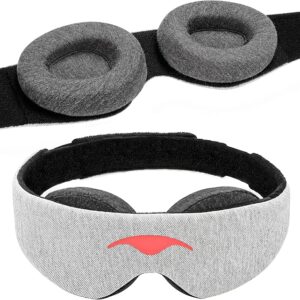
MZOO is a contoured sleep mask designed to cover the eyes and reduce ambient light. The product information reviewed by PVL describes molded eye cups, memory-foam-style cushioning, and an adjustable strap intended to limit direct eyelid pressure.
Exact materials, dimensions, strap design, care instructions, and model details can change. Check the current manufacturer or retailer listing before ordering, especially because similarly named MZOO masks may differ in construction.
Does the MZOO Sleep Mask Actually Block All Light?
A well-fitting mask can substantially reduce light, but “total blackout” depends on facial fit. The most common leakage point is around the nose, with additional gaps possible near the cheeks or temples.
Head shape, nose bridge, strap tension, sleeping position, and movement all affect performance. A mask that blocks light perfectly while awake may shift during side sleeping or overnight movement.
Can an Eye Mask Improve Sleep?
Reducing unwanted nighttime light is biologically sensible, but evidence about darkness does not prove that MZOO itself improves sleep. Light is an important circadian signal, and nighttime light exposure can affect sleep-related physiology.
Small studies of eye masks or light-reduction interventions have reported benefits in certain settings, including simulated or clinical environments. Those findings are context-specific and cannot automatically establish the effectiveness of this commercial mask for every home sleeper.
Does the MZOO Mask Increase Deep Sleep?
PVL did not identify product-specific evidence showing that MZOO increases N3 deep sleep. The phrase “deep sleep” in a product title or marketing description should not be interpreted as a measured physiological outcome.
If unwanted light is disrupting someone, blocking it may improve the sleep environment. That is different from demonstrating through polysomnography that a particular mask increases the proportion or duration of N3 sleep.
Does Darkness Matter for Circadian Rhythm?
Yes. Light and darkness help synchronize circadian timing, with evening and nighttime light capable of affecting melatonin and biological timing depending on intensity, spectrum, duration, and timing.
An eye mask can reduce light reaching the eyes while worn, but it does not correct every circadian problem. Morning light exposure, sleep timing, shift work, travel schedules, and daytime behavior also matter.
Is the 3D Contoured Design Better?
The main potential advantage is mechanical comfort. Recessed eye cups can reduce direct fabric contact with the eyelids and eyelashes compared with a flat mask.
That does not make a 3D mask universally superior. Some users may find the molded structure bulky, warm, or prone to shifting. Comfort depends on facial anatomy, strap tension, pillow interaction, and sleep position.
Is MZOO Good for Side Sleepers?
It can be, but side-sleeper comfort is individual. A contoured mask may avoid eyelid pressure, while the edge or strap can still press into the face against a pillow.
People who sleep almost exclusively on one side should pay particular attention to strap hardware, mask thickness, and whether the eye cups shift when the face contacts the pillow.
Is a Sleep Mask Useful for Travel?
Yes, travel is one of the clearest use cases because cabin lighting, hotel curtains, and unfamiliar environments are not always controllable. A compact mask provides portable light reduction without changing the room.
However, an eye mask does not prevent jet lag by itself. Circadian adjustment across time zones also depends on the timing of light exposure, sleep, meals, and other behavioral cues.
Can Shift Workers Benefit?
A sleep mask may help a shift worker make daytime sleep darker, particularly when blackout curtains are incomplete. That is a practical environmental intervention.
Shift-work sleep problems can involve circadian misalignment as well as light exposure, so a mask should not be framed as a complete treatment for shift work disorder or persistent daytime-sleep difficulty.
Eye Safety and Skin Considerations
A sleep mask should feel secure without excessive pressure. Stop using it if it causes eye pain, skin irritation, headache, numbness, or persistent pressure marks.
People recovering from eye surgery, with an eye injury, infection, or a condition requiring protection from pressure should follow their eye-care professional’s instructions rather than assuming a consumer sleep mask is appropriate.
What MZOO Has Not Been Shown to Do
- Treat chronic insomnia
- Increase N3 deep sleep or REM sleep
- Correct circadian rhythm disorders by itself
- Prevent jet lag on its own
- Treat shift work disorder
- Guarantee complete blackout for every face shape or sleep position
Pros and Cons
Pros
- Simple way to reduce ambient light
- Contoured eye cups may reduce eyelid and eyelash contact
- Portable and convenient for travel
- No battery, app, subscription, or audio required
- Potentially strong value when light is the actual sleep-environment problem
Cons
- No product-specific clinical sleep evidence identified
- “Deep sleep” language can overstate what a mask can demonstrate
- Blackout quality depends on fit, especially around the nose
- Can shift or create pressure during side sleeping
- Does not address non-light causes of insomnia or circadian disruption
Who Should Consider It?
MZOO makes the most sense when unwanted light is a clear problem: early sunrise, streetlights, a partner’s lighting, travel, or daytime sleep. In those situations, the mask addresses a specific environmental input rather than adding unnecessary sleep technology.
Who Should Choose Something Else?
Blackout curtains may be preferable if you dislike wearing a mask. Persistent insomnia despite a dark, adequate sleep environment deserves a broader assessment. People with recent eye procedures or relevant eye conditions should follow individualized professional guidance.
Frequently Asked Questions
Does the MZOO Sleep Mask improve sleep quality?
MZOO may improve the sleep environment by reducing unwanted light, but product-specific evidence for better sleep quality is lacking. Darkness is relevant to normal sleep and circadian physiology, and some light-reduction studies report benefits in specific settings. Those findings do not prove that this particular mask improves insomnia, total sleep time, sleep efficiency, or daytime functioning.
Does the MZOO Sleep Mask increase deep sleep?
There is no good product-specific evidence that MZOO increases N3 deep sleep. Blocking unwanted light can create a darker sleep environment, but “deep sleep” in a product description is not a measured physiological result. Demonstrating an increase in N3 would require appropriate sleep-stage measurement, typically including polysomnography rather than marketing claims.
Does the MZOO mask provide total blackout?
It may provide very strong light blocking when it fits well, but total blackout cannot be guaranteed for every face. Light commonly leaks around the nose, cheeks, or temples, and the mask may shift overnight. Nose shape, head size, strap tension, pillow contact, and sleeping position all influence real-world blackout performance.
Is the MZOO Sleep Mask good for side sleepers?
It can work for side sleepers, but comfort depends on facial fit, mask thickness, and pillow pressure. The recessed eye cups may reduce direct contact with the eyelids, while the mask edge or strap can still press against the face. Overnight movement may also change both comfort and the amount of light leakage.
Can the MZOO Sleep Mask help with jet lag?
The mask can provide darkness when you want to sleep, but it does not prevent or treat jet lag by itself. Jet lag reflects circadian misalignment after crossing time zones. Properly timed light exposure, sleep scheduling, and other behavioral cues influence adjustment, while a mask is simply a portable tool for controlling unwanted light.
Is it safe to wear a sleep mask every night?
For many adults, a comfortable sleep mask can be used regularly, but it should not create excessive pressure or irritation. Stop using it if you develop eye pain, skin reactions, headache, numbness, or persistent pressure marks. After eye surgery, injury, or with relevant eye conditions, follow your eye-care professional’s guidance.
Final Verdict
PVL Rating: 4.1/5. MZOO is a sensible low-tech accessory when ambient light is the actual problem. Its contoured design may improve comfort compared with a flat mask, and it is particularly practical for travel. The evidence supports darkness as an environmental consideration—not claims that this specific mask reliably increases deep sleep or treats insomnia.

Reviews
There are no reviews yet.