
Quick Verdict
SNOOZ is best understood as a configurable sound-masking device, not a treatment for insomnia. Its real internal fan produces continuous broadband sound without relying on a looping audio track, which can be useful when traffic, neighbors, household activity, or other intermittent noises disturb sleep. Whether that translates into better sleep depends largely on whether environmental noise is actually part of the problem.
PVL Rating: 4.1/5
- Sound-masking design: 4.6/5
- Sleep evidence: 3.2/5
- Ease and controls: 4.4/5
- Safety and transparency: 4.0/5
- Value: 4.0/5
Best for: Sleepers whose bedroom contains unpredictable external or household noise and who prefer continuous fan-generated sound.
Not ideal for: People with a quiet bedroom whose sleep difficulty is driven by insomnia, sleep apnea, pain, restless legs, circadian problems, or another underlying cause.
What Is the SNOOZ White Noise Machine?
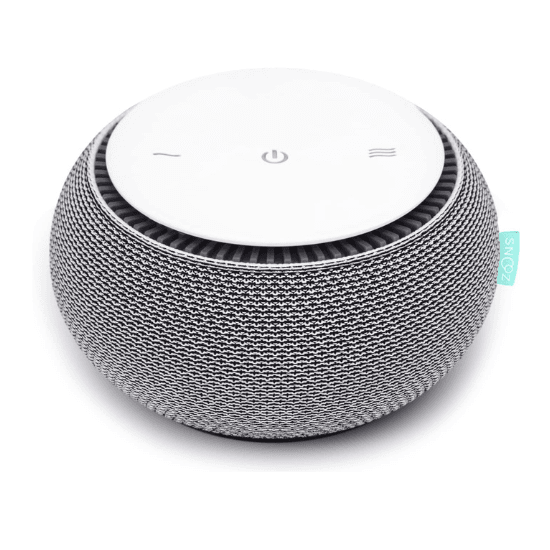
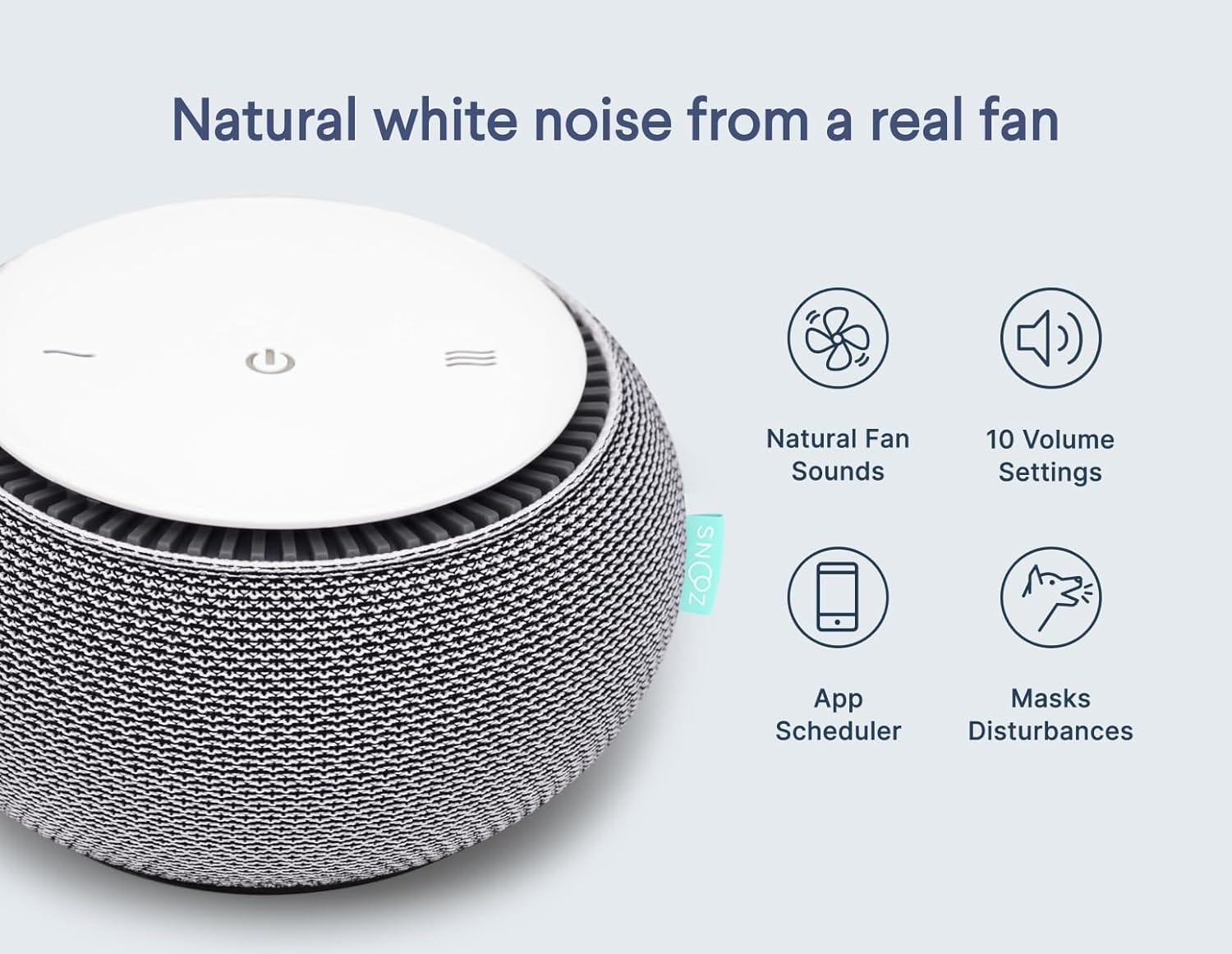
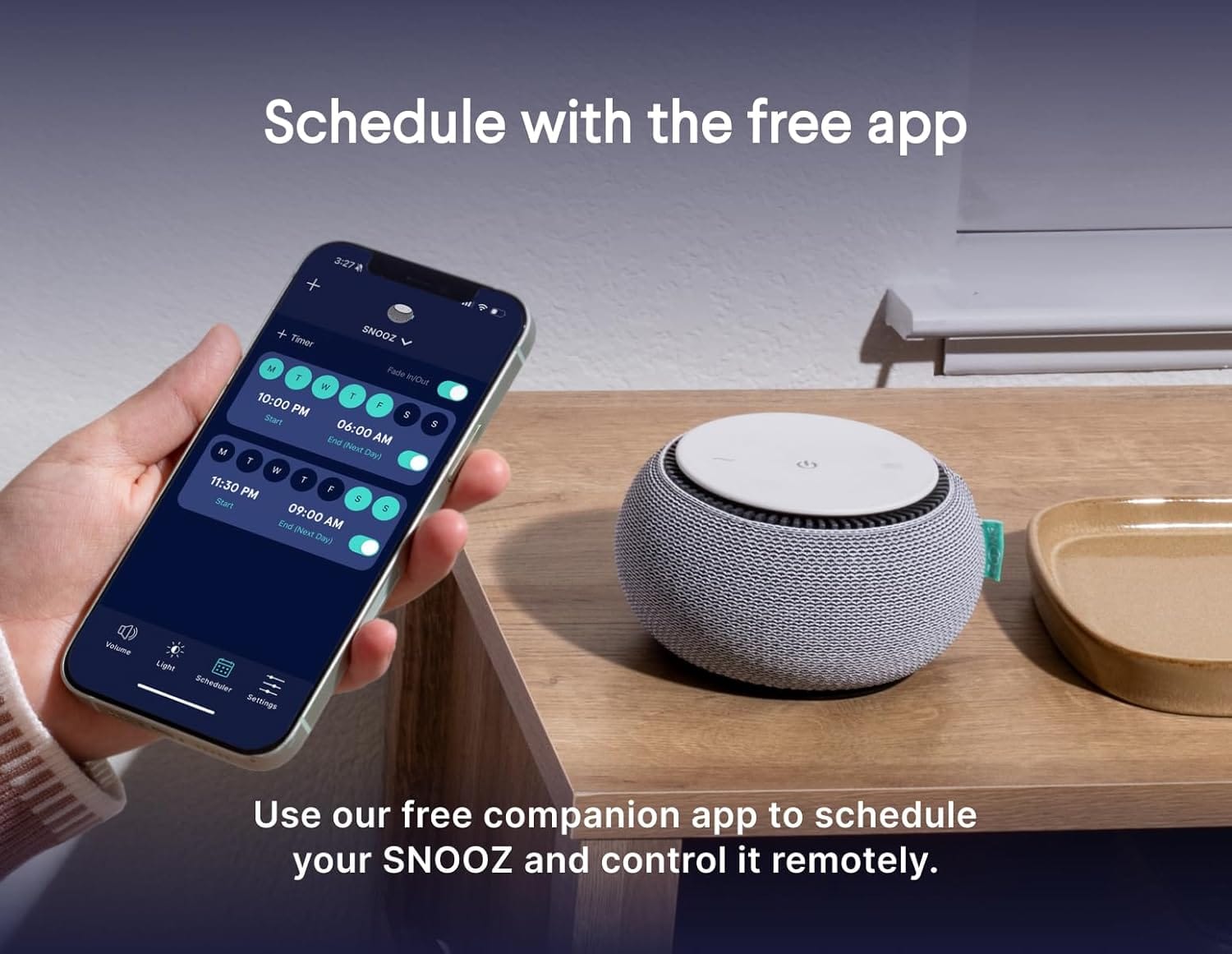
SNOOZ is a bedside sound machine built around an internal fan. Instead of playing a recorded white-noise file through a conventional speaker, the device mechanically generates continuous broadband sound. Users can adjust the tone and volume, and compatible app controls add scheduling and remote adjustment.
The real-fan design is a meaningful product distinction for people who dislike obvious audio loops. It does not, however, make the device clinically superior to digital sound machines. The relevant question is whether its sound effectively masks disruptive noise at a comfortable listening level.
Does SNOOZ Improve Sleep?
It may help when environmental noise is disturbing sleep, but evidence for continuous noise as a general sleep aid is mixed. Sound masking can reduce the contrast between a stable acoustic background and sudden noises such as doors, voices, traffic, or a partner moving around. A less noticeable sound change may reduce disturbance for some sleepers.
A 2021 systematic review examining white noise and other continuous auditory stimulation found highly heterogeneous studies and judged the overall quality of evidence for sleep outcomes to be very low. Some studies reported benefit, while others reported no improvement or possible sleep disruption.
PVL did not identify a peer-reviewed randomized controlled trial of the finished SNOOZ device demonstrating improvements in chronic insomnia, total sleep time, sleep efficiency, deep sleep, or overall sleep quality. Evidence from generic white-noise interventions should not be presented as product-specific proof.
When Is Sound Masking Most Likely to Help?
SNOOZ has the clearest rationale when the sleeping environment contains variable noise. A steady background sound can make peaks in environmental noise less prominent. This is different from claiming that white noise directly causes sleep.
If a bedroom is already quiet, adding continuous sound may offer little benefit. Some people also find any ongoing noise distracting. The best setting is therefore the lowest comfortable level that masks the disruptive sound rather than the loudest setting available.
Real Fan vs Digital White Noise
SNOOZ’s internal fan produces physical airflow inside the device to generate sound rather than using a short repeating recording. That can make the acoustic texture feel more natural to some listeners.
There is no good evidence that mechanically generated fan noise produces better clinical sleep outcomes than well-designed digital broadband noise. Choose between them based on sound preference, controls, portability, and price rather than assuming “real fan” means medically more effective.
Does SNOOZ Actually Produce White Noise?
“White noise” is commonly used as a consumer category for steady masking sounds, but technically white noise has equal power per unit frequency. Fan-generated sound has its own frequency profile and can be adjusted in tone. The practical benefit is broadband masking, not whether the output perfectly matches the engineering definition of white noise.
Volume and Hearing Safety
A sleep sound machine should not need to be loud to be useful. Place it between the sleeper and the main noise source when practical, and use the lowest volume that provides adequate masking.
Long-duration exposure to excessive sound can contribute to hearing damage. This matters especially when sound machines are used close to the head or in children’s rooms. Avoid treating maximum volume as a target.
For infants and children, placement and output level deserve extra caution. Pediatric research has shown that some infant sleep machines can produce potentially excessive sound levels when used at maximum output close to a crib. That finding is not specific to SNOOZ, but it supports conservative volume and distance practices for any sleep sound machine.
What SNOOZ Has Not Been Shown to Do
- Treat chronic insomnia
- Increase deep sleep or REM sleep
- Treat sleep apnea or snoring
- Reduce stress or anxiety as a clinical treatment
- Improve focus or productivity reliably
- Produce better sleep outcomes than all digital white-noise machines
Pros and Cons
Pros
- Real fan creates continuous, non-looping sound
- Adjustable volume and tone
- Useful rationale for masking intermittent environmental noise
- App-based scheduling and remote controls can reduce bedtime friction
- No medication or supplement required
Cons
- No finished-product RCT identified for meaningful sleep outcomes
- Continuous-noise evidence is mixed and low certainty
- May add unnecessary noise to an already quiet bedroom
- Requires sensible volume management
- Costs more than a basic fan or simple digital sound source
Who Should Consider SNOOZ?
SNOOZ makes the most sense for light sleepers dealing with variable environmental noise who already know that steady fan-like sound is comfortable for them. It may also suit travelers who want a more consistent acoustic environment between locations, provided the device’s current travel and connectivity requirements fit their needs.
Who Should Choose Another Approach?
If the room itself is quiet but you regularly struggle to fall asleep or stay asleep, adding masking noise may not address the cause. Persistent insomnia, loud snoring with breathing pauses, gasping, severe daytime sleepiness, restless legs, or other concerning symptoms deserve appropriate assessment rather than simply increasing background sound.
Is SNOOZ Worth It?
For someone repeatedly awakened by environmental noise and who prefers fan-generated sound, SNOOZ offers a polished and convenient implementation of a straightforward masking strategy. Its value is less compelling if a basic fan already provides the sound you like or if noise is not contributing to your sleep problem.
PVL therefore rates SNOOZ primarily on its acoustic design, controls, usability, and ability to create a consistent sound environment—not on unproven claims that white noise inherently improves sleep.
Frequently Asked Questions
Does SNOOZ help you sleep better?
It may help if unpredictable environmental noise is disrupting your sleep. PVL did not identify a finished-product randomized trial showing that SNOOZ reliably improves insomnia or objective sleep outcomes.
Is SNOOZ better than a digital white-noise machine?
Its real-fan sound may be more pleasant to some people, but there is no good evidence that fan-generated noise produces superior clinical sleep outcomes.
Should I run SNOOZ all night?
Some users prefer continuous masking while others only need it around sleep onset. If you use it for long periods, keep the sound at the lowest comfortable masking level rather than maximizing volume.
Can white noise damage hearing?
Excessive sound exposure can damage hearing. Distance, volume, and duration all matter, so avoid placing a loud sound machine close to the head.
Does SNOOZ treat insomnia?
No. It is an environmental sound-masking device, not an insomnia treatment. Persistent insomnia is better addressed with evidence-based evaluation and care.
Final Verdict
PVL Rating: 4.1/5. SNOOZ is a well-designed option for people who want continuous fan-generated sound to make disruptive environmental noise less noticeable. That is a legitimate use case, but it should not be confused with evidence that the device itself treats insomnia or universally improves sleep quality.
Reviews
There are no reviews yet.