
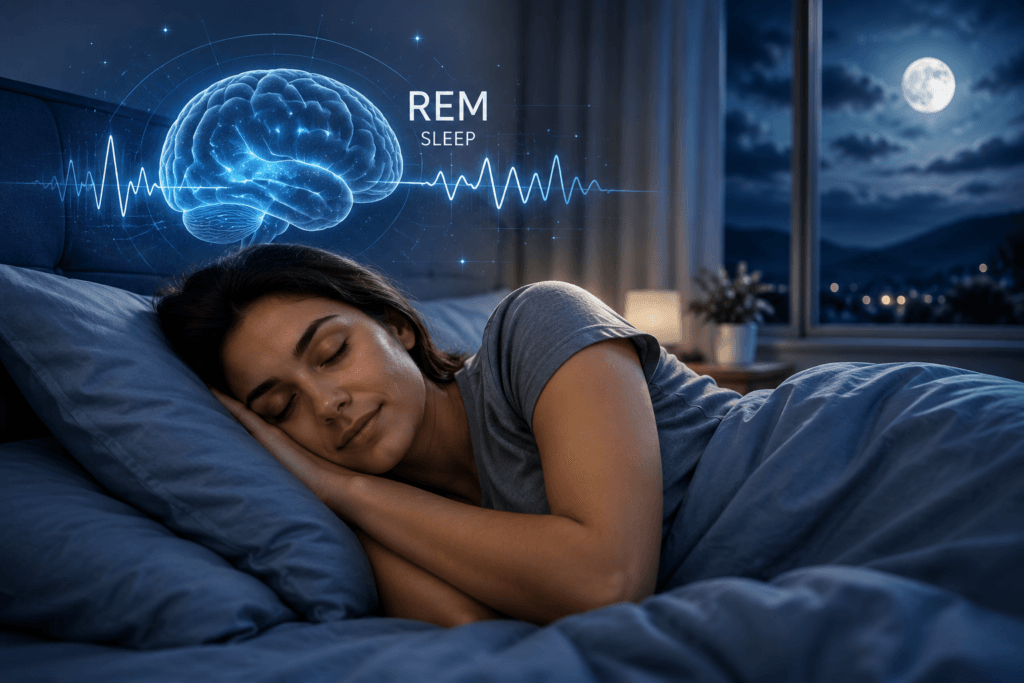
Quick Answer
REM (Rapid Eye Movement) sleep is a normal stage involved in dreaming, memory, learning, and emotional processing. To support healthy REM sleep, prioritize enough total sleep, keep a consistent sleep-wake schedule, limit alcohol, manage stress, exercise regularly, reduce bright evening light, and keep the bedroom dark, quiet, and comfortable. These habits support healthy sleep architecture rather than guaranteeing a higher REM percentage.
Key Takeaways
- REM sleep supports brain recovery. It plays an important role in memory, learning, emotional processing, and creativity.
- Adults typically spend about 20–25% of sleep in REM. Exact amounts vary, and consumer trackers provide estimates rather than medical measurements.
- REM periods become longer later in the night. Cutting sleep short may reduce the amount of REM sleep you receive.
- Stress, alcohol, inconsistent schedules, and sleep disorders may reduce REM sleep. Addressing these factors can support healthier sleep cycles.
- Focus on overall sleep quality—not one nightly score. Consistent routines and long-term trends are more useful than chasing a perfect tracker number.
- Quick Answer
- Inconsistent Sleep Schedule
- Chronic Stress
- Alcohol Before Bed
- Sleep Disorders
- Certain Medications
- Get Enough Sleep and Keep a Consistent Schedule
- Limit Alcohol Before Bed
- Manage Stress Before Sleeping
- Get Morning Sunlight
- Exercise Regularly
- Reduce Evening Screen Time
- Create a Cool, Dark Sleep Environment
- Avoid Late Caffeine
- Eat for Better Sleep
- Treat Underlying Sleep Disorders
Introduction
Several years ago, I went through a period where I was technically getting enough sleep but still felt mentally exhausted every morning.
I wasn’t just physically tired. I struggled to concentrate during project meetings, forgot small details, and found it harder to make decisions throughout the day. At first, I blamed work pressure. After all, construction projects rarely slow down.
Looking back, I realized the problem wasn’t simply the number of hours I slept—it was the quality of my sleep.
That experience taught me an important lesson: restorative sleep is made up of different stages, and each one has a unique purpose. One of the most important is REM sleep, the stage that helps your brain recover, process emotions, and strengthen memories.
If you’ve been wondering how to improve REM sleep or how to increase REM sleep naturally, the good news is that many daily habits can influence it. Small, consistent changes often make a bigger difference than searching for a quick fix.
What Is REM Sleep and Why Does It Matter?
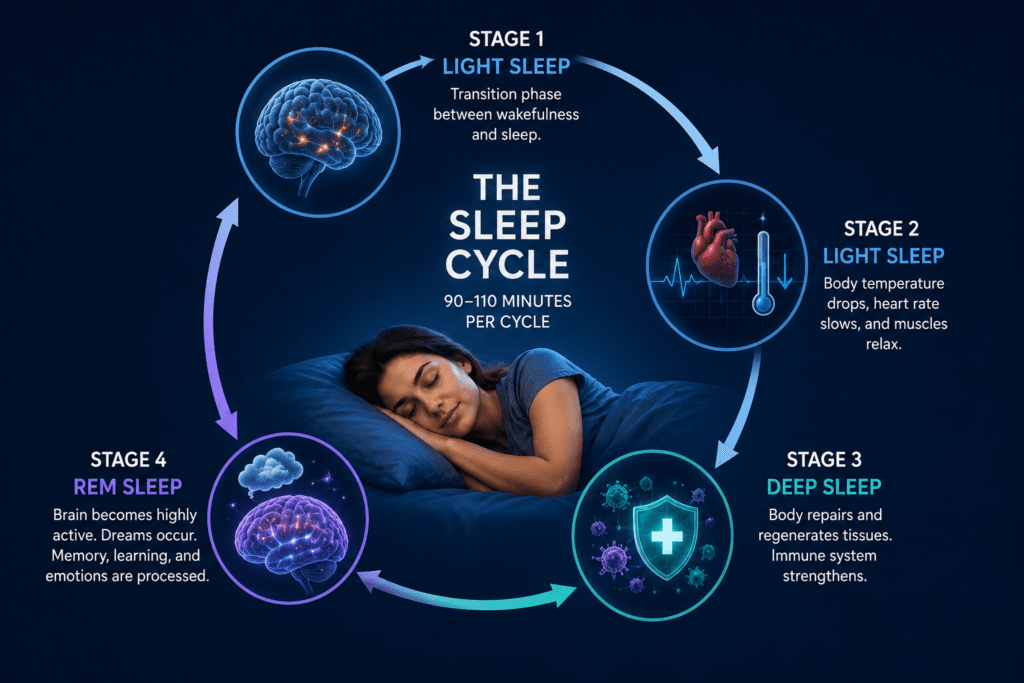
Sleep isn’t one continuous state. Instead, your brain moves through several stages multiple times each night.
A typical sleep cycle includes:
- Light sleep
- Deep sleep
- REM (Rapid Eye Movement) sleep
REM sleep usually becomes longer as the night progresses, with the longest REM periods often occurring during the final few hours before waking. For a broader view of how these stages work together, see our guide to core sleep and the natural sleep cycle.
During this stage:
- Your brain becomes highly active.
- Most vivid dreaming occurs.
- Memories are organized and strengthened.
- Emotional experiences are processed.
- Learning and creativity are supported.
While deep sleep is often associated with physical recovery, REM sleep plays a particularly important role in mental recovery.
Researchers continue to study exactly how REM sleep affects long-term brain health, but evidence suggests it contributes to learning, emotional regulation, and cognitive performance.
That’s one reason why people who regularly cut their sleep short often notice problems with concentration, mood, and memory.
How Much REM Sleep Do You Really Need?
One of the most common questions people ask is whether there’s an ideal amount of REM sleep.
Unlike total sleep time, there isn’t a specific number of hours everyone should aim for.
Instead, REM sleep typically represents about 20–25% of total sleep in healthy adults.
For someone sleeping eight hours, that generally equals around 90 to 120 minutes of REM sleep.
However, these numbers naturally vary depending on:
- Age
- Overall health
- Sleep duration
- Lifestyle habits
- Certain medications
It’s also important to remember that consumer sleep trackers provide estimates rather than exact measurements.
Instead of focusing on achieving a perfect REM score every night, it’s more useful to look for long-term trends and pay attention to how rested you feel during the day. Understanding your sleep patterns is often the first step if you’re trying to increase REM sleep naturally.
What Causes Low REM Sleep?
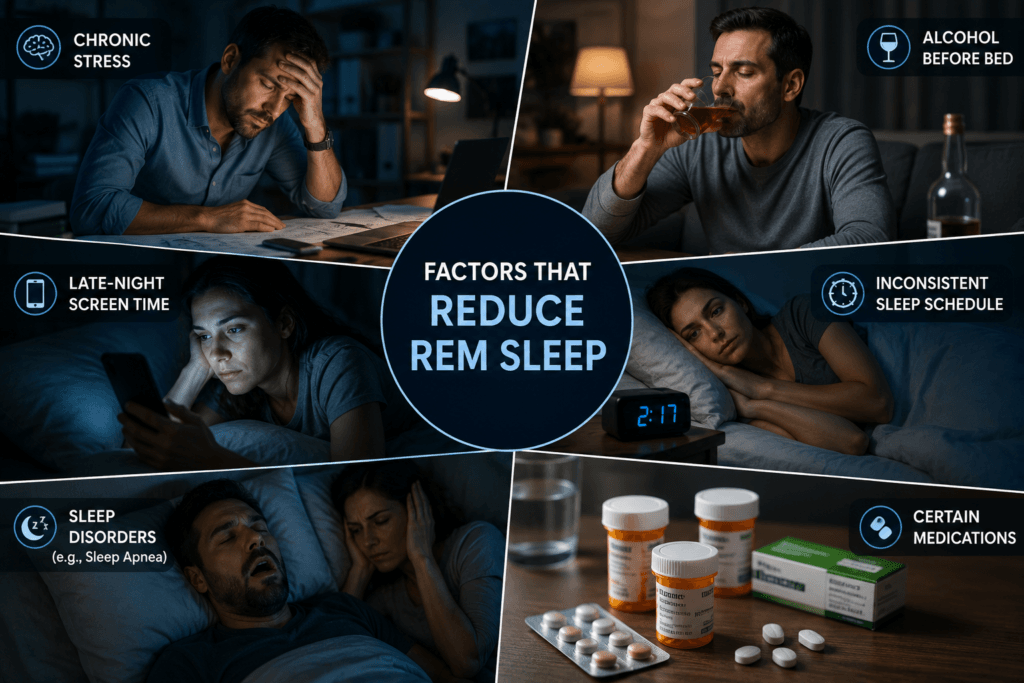
Several factors may reduce the amount of REM sleep your body gets during the night.
Understanding these causes is often the first step toward improving sleep quality naturally.
Inconsistent Sleep Schedule
Your brain follows an internal clock known as the circadian rhythm.
Going to bed at different times every night can disrupt this rhythm, making it more difficult for your body to move smoothly through normal sleep cycles.
Consistency matters more than perfection.
Even keeping your bedtime within the same 30- to 60-minute window each day may help support healthier sleep patterns.
Chronic Stress
Stress can interfere with sleep by increasing mental and physical arousal, making it harder to fall asleep or stay asleep.
Cortisol is part of the body’s stress-response system, but a poor night of sleep or a low REM estimate does not by itself show that cortisol is abnormally high.
This is something I experienced myself during demanding construction projects. Even when I felt physically exhausted, my mind continued planning tomorrow’s meetings, reviewing schedules, and thinking about unresolved issues.
Eventually, I realized that relaxing before bed wasn’t a luxury—it was part of preparing my brain for quality sleep.
Alcohol Before Bed
Many people believe alcohol helps them sleep because it can make them feel drowsy.
However, alcohol may actually reduce sleep quality by disrupting the normal structure of sleep later in the night.
Some people experience more fragmented sleep, shorter REM periods, and increased awakenings after drinking alcohol close to bedtime.
Sleep Disorders
Certain medical conditions may interfere with healthy REM sleep.
Examples include:
- Obstructive sleep apnea
- Chronic insomnia
- Restless legs syndrome
- Periodic limb movement disorder
Sleep apnea deserves particular attention because repeated breathing interruptions may prevent the brain from completing normal sleep cycles.
People often assume they’re sleeping for eight hours, when in reality their sleep is being interrupted dozens of times without them remembering it.
Certain Medications
Some medications may influence REM sleep.
Examples include certain:
- Antidepressants
- Stimulants
- Beta blockers
- Sleep medications
If you suspect a medication is affecting your sleep, don’t stop taking it on your own. Instead, discuss your concerns with your healthcare provider.
How Can You Improve or Increase REM Sleep Naturally?
Fortunately, many of the habits that improve overall sleep quality also support healthier REM sleep.
Rather than focusing on one “magic” solution, aim to create an environment that allows your body to move naturally through every stage of sleep.
If you’re looking for how to increase REM sleep, focus on habits that support adequate total sleep and healthy sleep architecture rather than trying to force a specific REM percentage.
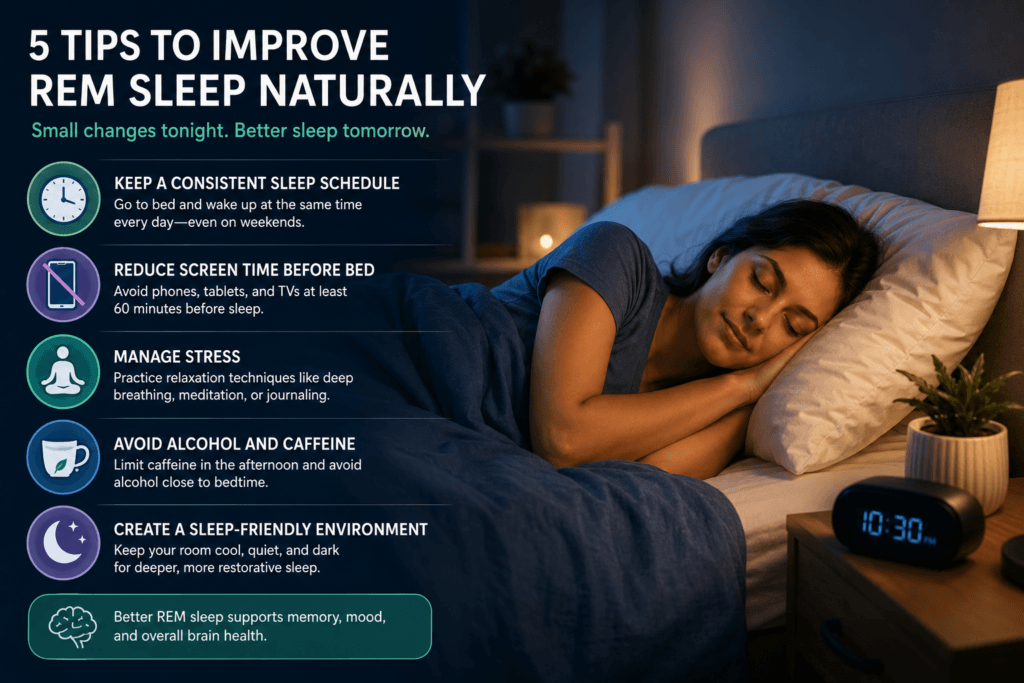
Get Enough Sleep and Keep a Consistent Schedule
Getting enough total sleep is one of the most important ways to protect your opportunity for REM sleep. Most adults generally need about 7–9 hours per night, although individual needs vary. Because REM periods tend to become longer later in the night, consistently cutting sleep short can reduce the amount of REM sleep you have time to reach.
Regular sleep and wake times also help reinforce circadian timing. Try to go to bed and wake up at approximately the same time each day so your body has a consistent window for completing normal sleep cycles.
This consistency may improve the efficiency of your sleep cycles, including REM sleep.
Try to maintain similar sleep and wake times—even on weekends.
Sleeping in for several extra hours every Saturday and Sunday can create a type of “social jet lag” that makes Monday mornings more difficult.
Limit Alcohol Before Bed
If you choose to drink alcohol, try avoiding it within several hours of bedtime whenever possible.
Although alcohol may help some people fall asleep faster, research suggests it can reduce sleep quality during the second half of the night, when REM sleep naturally becomes longer.
Reducing evening alcohol intake may help preserve healthier sleep architecture and improve how refreshed you feel the next morning.
Manage Stress Before Sleeping
One of the most effective ways to support REM sleep is by calming your mind before bed.
This doesn’t require elaborate routines.
Simple practices may include:
- Reading a book
- Gentle stretching
- Slow breathing exercises
- Journaling tomorrow’s tasks
- Listening to calming music
- Practicing mindfulness
The goal isn’t to force sleep.
The goal is to reduce mental stimulation so your brain can transition naturally into healthy sleep cycles. These strategies overlap with the practical steps in our guide to managing stress for better sleep.
Over time, these small habits often become easier and more effective.
Get Morning Sunlight
One of the simplest ways to support healthy REM sleep starts shortly after you wake up.
Morning sunlight helps regulate your circadian rhythm—the internal clock that tells your body when to feel alert and when to prepare for sleep.
Even 15 to 30 minutes of natural daylight, especially within the first hour after waking, may help reinforce this daily rhythm. A well-regulated body clock can make it easier to fall asleep at night and move through your natural sleep cycles more efficiently.
If getting outside isn’t always possible, sitting near a bright window is still better than remaining in artificial indoor lighting all morning.
Exercise Regularly
Regular physical activity is associated with better overall sleep quality.
Exercise may help you:
- Fall asleep more easily
- Sleep more soundly
- Reduce stress
- Improve mood
- Support healthier sleep cycles
Moderate activities such as brisk walking, cycling, swimming, or strength training are excellent choices for most adults.
Timing also matters.
Some people find vigorous exercise immediately before bed leaves them feeling too alert, while exercising earlier in the day helps them sleep more comfortably at night.
The key is consistency rather than intensity.
Reduce Evening Screen Time
Phones, tablets, computers, and televisions expose your eyes to blue light while also keeping your brain mentally engaged.
Late-night scrolling, gaming, or checking emails may delay your body’s natural production of melatonin—the hormone that signals it’s time to sleep.
Instead of using screens during the last hour before bed, consider replacing them with relaxing activities such as:
- Reading a printed book
- Gentle stretching
- Meditation
- Listening to calming music
- Journaling
Reducing stimulation before bedtime gives your brain a better opportunity to transition into restorative sleep. A consistent set of sleep hygiene habits can make this easier to maintain.
Create a Cool, Dark Sleep Environment
Your bedroom should support sleep rather than compete with it.
Simple adjustments can make a noticeable difference, including:
- Keeping the room cool
- Using blackout curtains
- Minimizing outside noise
- Choosing a comfortable mattress and pillow
- Removing unnecessary light sources
Many people underestimate how much environmental factors influence sleep quality.
Small improvements often lead to better sleep over time.

Avoid Late Caffeine
Caffeine doesn’t affect everyone equally, but it can remain in your body for several hours.
For some people, even an afternoon coffee may still influence sleep later that night.
If you’re trying to improve REM sleep, consider limiting caffeine during the late afternoon and evening.
Replacing coffee with herbal tea or water later in the day may help support healthier sleep patterns.
Eat for Better Sleep
There’s no single “REM sleep diet,” but your overall eating habits can influence sleep quality.
A balanced diet that includes:
- Lean protein
- Fruits
- Vegetables
- Whole grains
- Healthy fats
supports overall health, including sleep.
Large meals immediately before bedtime may increase discomfort or indigestion, making restful sleep more difficult.
Instead, try finishing dinner a few hours before going to bed whenever possible.
Do Supplements, Light Therapy, or Blue-Light Glasses Increase REM Sleep?
No common supplement, light-therapy product, or pair of blue-light-blocking glasses is proven to selectively increase REM sleep in healthy adults. These tools may support sleep in specific circumstances, but improving overall sleep timing and continuity is different from directly boosting one sleep stage.
Morning bright light can help reinforce circadian timing, while reducing bright light in the evening may make it easier to feel sleepy at the intended bedtime. Blue-light-blocking glasses can reduce short-wavelength light exposure, but they should not be presented as a direct REM enhancer.
Supplements such as magnesium may help some people with general sleep-related concerns, particularly when a deficiency or another specific issue is present, but that does not mean they reliably increase REM sleep. Discuss supplements with a healthcare professional when you take medications, have a medical condition, or have persistent sleep problems.
Treat Underlying Sleep Disorders
Sometimes healthy habits alone aren’t enough.
Conditions such as:
- Sleep apnea
- Chronic insomnia
- Restless legs syndrome
may significantly reduce sleep quality, including REM sleep.
If you regularly wake feeling exhausted despite sleeping seven to nine hours, snore loudly, experience breathing pauses during sleep, or struggle with persistent insomnia, it’s important to discuss these symptoms with a healthcare professional.
Treating an underlying sleep disorder can improve sleep quality when that condition is contributing to disrupted sleep.
When Low REM Readings Need Professional Evaluation
A low REM estimate from a consumer wearable is not a diagnosis by itself. Consider professional evaluation when low readings occur alongside persistent daytime sleepiness, loud snoring, gasping or breathing pauses, chronic insomnia, unusual dream-enactment behavior, or repeated sleep disruption that affects daily functioning.
A clinical sleep study, or polysomnography, can record brain waves, eye movements, breathing, oxygen levels, heart rate, and muscle activity. That gives clinicians a much more direct view of sleep stages and possible sleep disorders than a consumer tracker, which estimates stages indirectly.
A healthcare professional can decide whether a sleep study, medication review, or other evaluation is appropriate based on your symptoms rather than a single REM percentage.

What Happens If You Don’t Get Enough REM Sleep?
Occasionally getting less REM sleep than usual isn’t typically a cause for concern.
However, consistently poor REM sleep may affect how you feel and function during the day.
Research suggests inadequate REM sleep may contribute to:
- Difficulty concentrating
- Poor memory
- Reduced learning ability
- Mood changes
- Increased irritability
- Reduced creativity
- Daytime fatigue
Because REM sleep is closely linked with brain function, protecting this stage of sleep is an important part of long-term health.
REM Sleep vs. Deep Sleep: What’s the Difference?
Many people assume REM sleep and deep sleep serve the same purpose.
In reality, they complement one another.
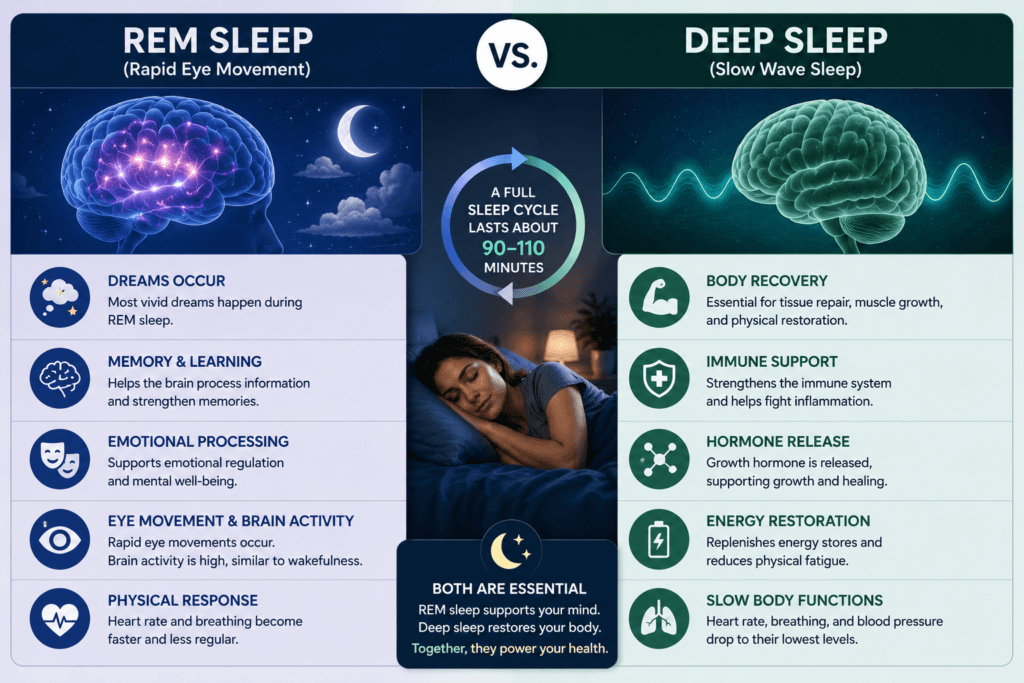
Deep sleep is primarily associated with physical recovery.
During deep sleep, your body repairs tissues, supports immune function, releases growth hormone, and restores physical energy.
REM sleep, on the other hand, is often called the brain’s recovery stage.
It plays a major role in:
- Memory consolidation
- Learning
- Emotional processing
- Creativity
- Cognitive performance
Both stages are essential.
Rather than trying to maximize one at the expense of the other, focus on building habits that support healthy sleep overall.
How to Use Sleep Trackers and Apps Without Chasing REM Scores
Use sleep trackers and apps to identify patterns in sleep duration, timing, awakenings, and recovery—not to chase a perfect REM percentage. Smartwatches, rings, bedside monitors, and phone apps can help you compare trends across several nights, especially when you make changes to your routine.
These devices estimate sleep stages using information such as:
- Heart rate
- Movement
- Heart rate variability
- Breathing patterns
While they provide useful insights, they cannot directly measure brain activity like a clinical sleep study.
That means REM sleep estimates should be viewed as helpful approximations rather than precise medical measurements.
Instead of worrying about nightly fluctuations, use sleep trackers to identify long-term trends and determine whether lifestyle changes appear to improve your sleep over time.
Tools That May Support a Better Sleep Environment
Sleep tools can make the bedroom more consistent and comfortable, but they do not directly increase REM sleep. A blackout sleep mask or curtains can reduce light, a sound machine can mask intermittent noise, and a sunrise alarm may support a steadier wake routine. Guided meditation apps can also make a wind-down practice easier to follow.
If noise is a recurring problem, see our guide to the best white noise machines for sleep. Use these tools to support the fundamentals—adequate sleep time, regular timing, lower evening stimulation, and treatment of any underlying sleep disorder.
Frequently Asked Questions
What is REM sleep?
REM sleep is a normal sleep stage marked by rapid eye movements, active brain activity, and vivid dreaming. It is involved in memory consolidation, learning, and emotional processing. REM periods usually become longer later in the night, which is one reason getting enough total sleep matters.
How can I increase REM sleep naturally?
Support healthy REM sleep by getting enough total sleep and keeping a consistent sleep-wake schedule. Limiting alcohol, managing stress, exercising regularly, reducing bright evening light, and keeping the bedroom dark, quiet, and comfortable can support normal sleep architecture. No single habit can guarantee a higher REM percentage.
How much REM sleep should adults get?
REM sleep often makes up about 20–25% of total sleep in healthy adults, but there is no single target that fits everyone. The amount varies with age, total sleep time, health, medications, and nightly conditions. Focus on adequate overall sleep and daytime functioning rather than a perfect tracker percentage.
Can sleep trackers accurately measure REM sleep?
Consumer sleep trackers can estimate REM sleep, but they cannot measure it as directly as a clinical sleep study. Watches, rings, and apps infer stages from signals such as movement, heart rate, and breathing. Use their REM data for long-term trends rather than treating a single nightly score as a diagnosis.
Is 30 minutes of REM sleep enough?
Thirty minutes of REM sleep may be lower than average for many adults, but one wearable reading is not enough to show a problem. REM sleep naturally varies from night to night, and consumer trackers only estimate sleep stages. Look at trends across multiple nights, total sleep time, and how you function during the day.
Does alcohol reduce REM sleep?
Alcohol can disrupt normal sleep architecture and may reduce or delay REM sleep, especially earlier in the night. It can also contribute to more fragmented sleep and awakenings later. If you are trying to improve sleep quality, limiting alcohol close to bedtime is more useful than relying on it to become drowsy.
Can supplements or magnesium increase REM sleep?
No common supplement, including magnesium, is proven to reliably and selectively increase REM sleep in healthy adults. A supplement may help general sleep concerns when a deficiency or specific condition is present, but that is different from directly boosting REM. Discuss supplements with a healthcare professional when symptoms persist or medications are involved.
When should I see a sleep specialist about low REM sleep?
See a healthcare professional when low REM estimates occur with persistent daytime sleepiness, loud snoring, gasping, breathing pauses, chronic insomnia, unusual dream-enactment behavior, or repeated sleep disruption. A clinician can decide whether a formal sleep study or other evaluation is appropriate. A low wearable score alone usually is not enough to diagnose a problem.
Want free practical tips for better sleep, energy, gut health, and healthy aging?
Join the Purely Vital Living newsletter and get science-backed wellness tips delivered to your inbox.
Final Summary
Learning how to improve REM sleep isn’t about finding a miracle solution—it’s about creating the right conditions for your brain and body to recover naturally.
Likewise, if your goal is to increase REM sleep, remember that consistency is more important than perfection. Maintaining a regular sleep schedule, managing stress, exercising regularly, limiting alcohol, reducing evening screen time, and creating a comfortable sleep environment all work together to support healthier sleep cycles.
REM sleep is only one part of restorative sleep, but it plays an essential role in memory, learning, emotional well-being, and cognitive performance.
Small, sustainable improvements can support healthier sleep over time, although REM sleep naturally varies from night to night and consumer tracker estimates are imperfect.
Related Reads
- How to Improve Sleep Quality Naturally: Complete Sleep Guide
- What Is Core Sleep? Why It Matters and How to Improve It
- How to Fall Asleep Faster Naturally Tonight
- Sleep Hygiene Tips: 7 Bedtime Habits for Better Sleep
- Stress and Sleep: How Stress Affects Sleep Quality
- Why Am I Still Tired After 8 Hours of Sleep?
References
- National Institute of Neurological Disorders and Stroke. Brain Basics: Understanding Sleep .
- Centers for Disease Control and Prevention. About Sleep .
- Goldstein AN, Walker MP. The Role of Sleep in Emotional Brain Function . Annual Review of Clinical Psychology.
- van der Helm E, Walker MP. Sleep and Emotional Memory Processing . Sleep Medicine Clinics.
- Groch S, Wilhelm I, Diekelmann S, Sayk F, Gais S, Born J. The Role of REM Sleep in the Processing of Emotional Memories . Neurobiology of Learning and Memory.
- National Institutes of Health. Sleep On It: How Snoozing Strengthens Memories .
- Centers for Disease Control and Prevention, National Institute for Occupational Safety and Health. Tips to Improve Your Sleep When Times Are Tough .
- National Heart, Lung, and Blood Institute. Sleep Studies .
This article is intended for general educational purposes and does not replace professional medical advice, diagnosis, or treatment.