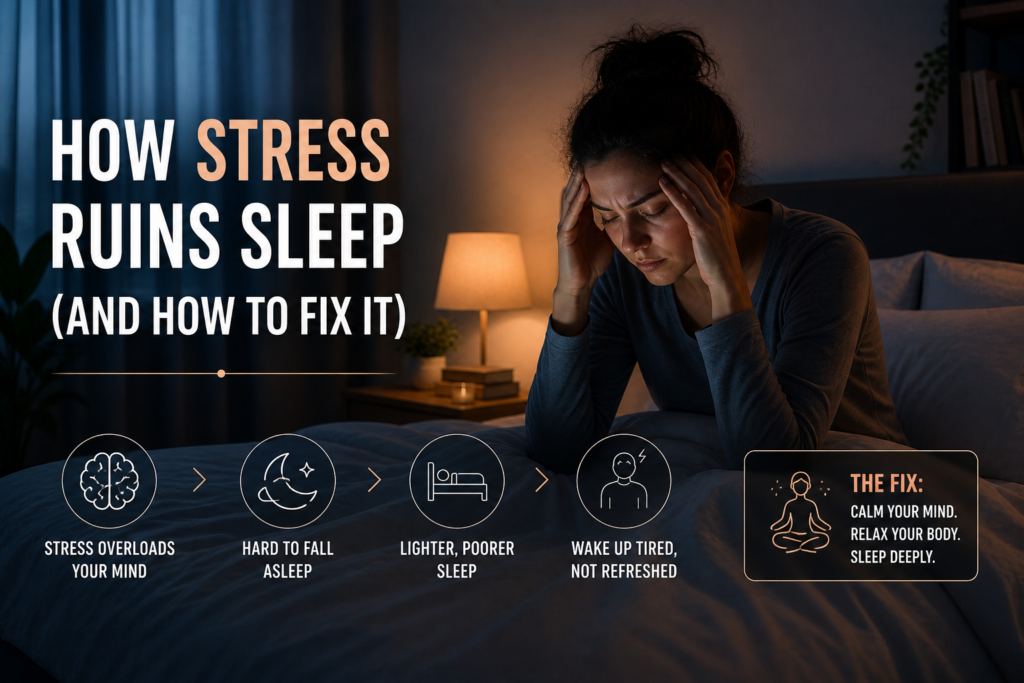

Quick Answer
The most effective bedtime habits for deeper sleep tonight include reducing screen exposure, keeping a consistent sleep schedule, dimming lights, managing stress, eating balanced meals, avoiding late caffeine, and creating a calming evening routine. These simple habits help your body transition into sleep mode naturally, improve sleep quality, and reduce night-time wake-ups.
Introduction
If you struggle to fall asleep or stay asleep, your bedtime habits may be the missing piece.
Many people focus on sleep itself, but the quality of your sleep is heavily influenced by what you do in the hours before bed. Even small actions—like scrolling your phone or drinking coffee late—can make a big difference.
The good news is that improving your sleep doesn’t require drastic changes.
By building a few consistent habits, you can create the conditions your body needs for deeper, more restorative sleep.
In this guide, you’ll learn 7 bedtime habits for deeper sleep tonight, along with practical ways to apply them immediately.
What Are Bedtime Habits?
Bedtime habits are the actions you repeat before going to sleep.
They signal to your body that it’s time to wind down and prepare for rest.
Good habits support:
- relaxation
- hormone balance
- mental calmness
- sleep consistency
Poor habits, on the other hand, can keep your body alert and make sleep more difficult.
Why Bedtime Habits Matter More Than You Think
Sleep doesn’t start the moment you lie down—it begins hours before.
Your body needs time to transition from an active state into a resting state. This transition is controlled by signals like light exposure, stress levels, and daily activity.
If you go from high stimulation—like work, screens, or stress—directly into bed, your brain stays alert even if your body feels tired.
This is why many people feel exhausted but still struggle to fall asleep.
Bedtime habits act as a “bridge” between your day and your sleep. They gradually tell your brain that it’s safe to relax.
Without this transition, your body has a harder time entering deep, restorative sleep.
Why It Happens
Sleep is controlled by your body’s internal clock.
This system responds to signals like:
- light exposure
- stress levels
- food intake
- activity patterns
When these signals are inconsistent, your body struggles to enter deep sleep.
That’s why improving bedtime habits is one of the most effective ways to improve sleep quality.
Evening Habits That Ruin Sleep Quality
Many people unknowingly follow habits that make sleep worse.
Common examples include:
- checking your phone in bed
- working late into the night
- drinking caffeine late
- eating heavy or sugary meals
- staying in bright lighting
- going to bed at inconsistent times
These behaviors keep your nervous system active and delay the natural sleep process.
Over time, they can lead to difficulty falling asleep, lighter sleep, and frequent wake-ups.
Improving sleep often means removing these habits—not just adding new ones.
7 Bedtime Habits for Deeper Sleep Tonight
1. Reduce Screen Exposure Before Bed
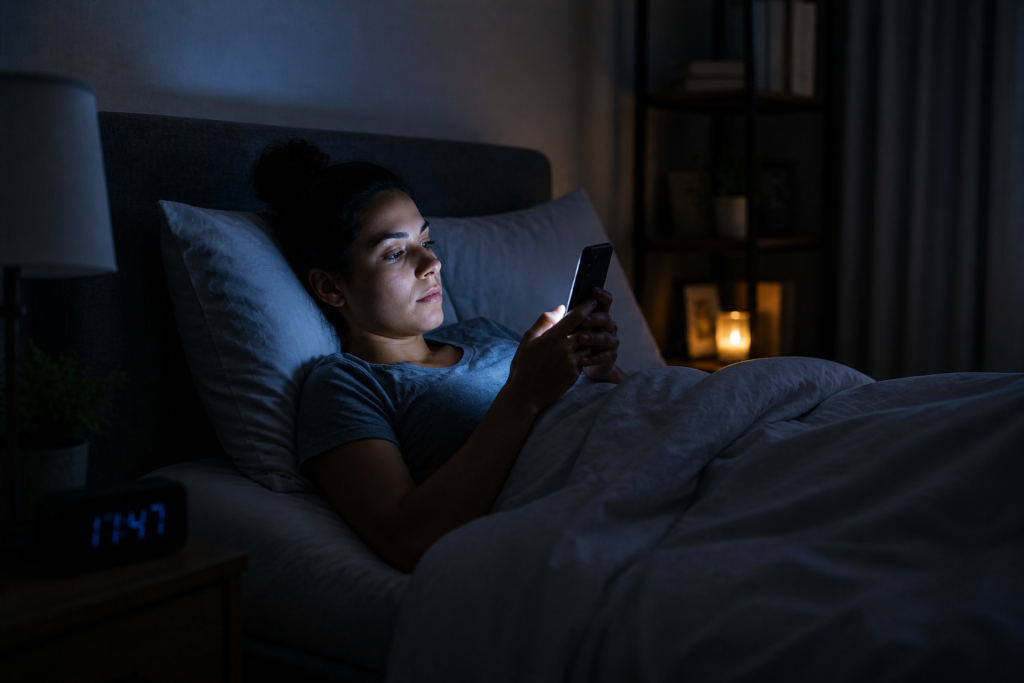
Many people scroll their phones or watch videos right before bed. This habit feels relaxing, but it actually keeps your brain active.
Screens expose you to constant information—messages, news, social media—which keeps your mind engaged instead of relaxed.
In addition, blue light from screens signals your brain to stay awake.
This combination makes it harder to fall asleep and reduces sleep depth.
A simple improvement is to create a “screen cutoff” time. Even stopping screen use 30–60 minutes before bed can significantly improve sleep quality.
Screens emit blue light that signals your brain to stay awake.
Many people scroll their phones late into the night without realizing how much it affects sleep.
Signs:
- difficulty falling asleep
- restless mind
- delayed sleep
Fix:
Stop screen use at least 30–60 minutes before bed.
2. Keep a Consistent Sleep Schedule
Many people go to bed at different times each night depending on their schedule, mood, or workload. While this feels flexible, it actually confuses your body’s internal clock.
Your body relies on consistency to regulate sleep hormones. When your bedtime changes frequently, your brain struggles to predict when to release melatonin.
This often leads to difficulty falling asleep or waking up during the night.
Over time, irregular sleep patterns can reduce overall sleep quality and leave you feeling tired even after a full night in bed.
A simple improvement is to choose a consistent sleep window—even if it’s not perfect—and stick to it daily, including weekends.
Irregular sleep times confuse your body clock.
Going to bed at different times each night can reduce sleep quality.
Signs:
- inconsistent sleep
- waking during the night
Fix:
Go to bed and wake up at the same time daily.
3. Dim the Lights in the Evening
Many people stay in bright lighting late into the evening without realizing how it affects their sleep.
Bright lights signal your brain that it’s still daytime, which delays the natural release of sleep hormones.
This makes it harder for your body to transition into a relaxed state.
Even if you feel tired, your brain may stay alert because it hasn’t received the signal to wind down.
Over time, this can shift your sleep cycle later and reduce sleep depth.
A simple fix is to gradually dim your lights after sunset. Using warm, softer lighting helps your body prepare for sleep naturally.
Bright light delays sleep signals.
Many people stay in bright environments late at night.
Signs:
- feeling alert at night
- delayed sleep
Fix:
Use softer lighting in the evening.

4. Avoid Late Caffeine
Caffeine is often underestimated when it comes to sleep.
Many people believe that as long as they don’t drink coffee at night, it won’t affect them. However, caffeine can stay in your system for several hours.
This means even afternoon consumption may still impact your ability to fall asleep or stay asleep.
You might not feel alert, but your sleep can become lighter and more easily disrupted.
Over time, this can lead to frequent wake-ups and reduced sleep quality.
A simple improvement is to limit caffeine intake to the morning or early afternoon and observe how your sleep responds.
Caffeine can stay in your system for hours.
Even afternoon coffee can affect sleep.
Signs:
- light sleep
- waking at night
Fix:
Avoid caffeine after early afternoon.
5. Eat a Balanced Evening Meal
What you eat in the evening plays a direct role in your sleep quality.
Many people either skip dinner, eat too late, or consume meals high in sugar or processed foods.
These habits can lead to unstable energy levels during the night, causing restlessness or wake-ups.
On the other hand, going to bed hungry can also make it harder to stay asleep.
Your body needs stable energy to maintain restful sleep.
A simple improvement is to eat a balanced dinner that includes protein, healthy fats, and complex carbohydrates. This helps support steady energy levels throughout the night.
What you eat affects your sleep.
Heavy or sugary meals can disrupt sleep cycles.
Signs:
- restlessness
- waking up hungry
Fix:
Eat balanced meals with protein and healthy fats.
6. Create a Relaxation Routine
After a busy day, many people expect their body to instantly switch off and fall asleep.
However, your brain needs time to transition from activity to rest.
Without a proper wind-down period, your mind may stay active, leading to racing thoughts or difficulty relaxing.
This is especially common for people who work late or use screens right before bed.
A relaxation routine helps signal to your body that it’s time to slow down.
Simple activities like reading, stretching, or deep breathing can make a noticeable difference in how quickly you fall asleep.
Stress keeps your body alert.
Without relaxation, your brain stays active.
Signs:
- racing thoughts
- difficulty relaxing
Fix:
Read, stretch, or meditate before bed.

7. Keep Your Bedroom Calm and Dark
Your sleep environment has a stronger impact than most people realize.
Small factors like light, noise, or temperature can prevent your body from reaching deep sleep.
For example, even low levels of light can interfere with melatonin production, while noise can trigger brief wake-ups during the night.
Over time, these disruptions reduce overall sleep quality.
Many people overlook these details because they seem minor, but they can have a cumulative effect.
A simple improvement is to create a sleep-friendly environment—keep your room dark, quiet, and slightly cool for optimal rest.
Your environment directly affects sleep.
Noise, light, and temperature can disrupt rest.
Signs:
- frequent wake-ups
- poor sleep quality
Fix:
Keep your bedroom dark, quiet, and cool.
Hidden Mistakes That Ruin Sleep
- checking phone in bed
- irregular routines
- late meals
- high stress
- too much stimulation
What to Do If You Still Can’t Sleep
Even with good habits, there may be nights when sleep doesn’t come easily.
In these situations, what you do next is important.
Avoid:
- checking your phone
- turning on bright lights
- stressing about not sleeping
Instead:
- keep lights dim
- take slow, deep breaths
- get out of bed briefly if needed
- do something calming like reading
The goal is to stay relaxed and avoid triggering your brain into “awake mode.”
How to Fix It Without Overwhelm
Trying to change your entire routine at once can feel overwhelming and unrealistic.
Instead, focus on building your bedtime routine step by step.
Start with one or two simple habits, such as reducing screen time or dimming lights. Once those feel natural, add another habit like relaxation or improving your sleep schedule.
This gradual approach makes it easier to stay consistent and prevents burnout.
Remember, better sleep is built through repetition, not perfection.
7-Day Reset Plan
Day 1: reduce screens
Day 2: fix bedtime
Day 3: dim lights
Day 4: improve meals
Day 5: reduce caffeine
Day 6: relax
Day 7: combine habits
How Long Results Take
Some changes—like reducing screen time or caffeine—can improve sleep within a few days.
However, deeper improvements often take 2–3 weeks of consistent habits.
Your body needs time to adjust its internal clock and rebuild healthy sleep patterns.
Staying consistent, even when results are slow, is key.
What to Expect After 30 Days
- deeper sleep
- fewer wake-ups
- better energy
- improved mood
Best Products to Consider
Magnesium Supplement
Recommended Brands:
- Doctor’s Best High Absorption Magnesium Glycinate
- Nature Made Magnesium Glycinate
- NOW Foods Magnesium Glycinate Capsules
Why It’s Useful:
Magnesium glycinate is one of the most recommended forms for sleep because it supports relaxation and helps regulate calming neurotransmitters like GABA. It may also support muscle relaxation and stress reduction, which are key for deeper sleep.
👉 Struggling to relax at night? Try magnesium glycinate for a calmer, deeper sleep routine.
Sleep Mask
Recommended Brands:
- MZOO Contoured Sleep Mask
- Blissy Silk Sleep Mask
- Alaska Bear Natural Silk Sleep Mask
Why It’s Useful:
Light exposure—even small amounts—can disrupt melatonin production and reduce sleep quality. A good sleep mask blocks light completely and helps your body stay in deep sleep longer. Some models also improve comfort for side sleepers.
👉 Upgrade your sleep environment instantly—block light and sleep deeper tonight.
White Noise Machine
Recommended Brands:
- LectroFan White Noise Machine
- Hatch Restore Sound Machine
- FamiSym White Noise Machine
Why It’s Useful:
White noise machines create consistent background sound that masks sudden noises like traffic, doors, or voices. This helps prevent night awakenings and supports uninterrupted sleep cycles.
👉 Eliminate night-time disruptions—create a calm, consistent sleep environment.
FAQ
How can I sleep deeper tonight?
To improve sleep tonight, focus on reducing stimulation before bed and creating a calm environment. Avoid screens for at least 30–60 minutes, dim your lights, and give your body time to relax. Simple habits like reading, stretching, or deep breathing can help your mind slow down. Even small changes can signal to your body that it’s time to rest, making it easier to fall into deeper, more restorative sleep.
What habit improves sleep the most?
Consistency is often the most powerful factor for better sleep. Going to bed and waking up at the same time every day helps regulate your internal clock and improves sleep quality over time. While other habits like reducing screens or managing stress are important, consistency creates the foundation that allows all other habits to work effectively.
Does caffeine affect sleep quality?
Yes, caffeine can significantly impact sleep quality, even if you don’t feel its effects right away. It can stay in your system for several hours and make your sleep lighter and more easily disrupted. Many people underestimate how afternoon or evening caffeine affects their ability to stay asleep. Reducing caffeine intake earlier in the day can often lead to noticeable improvements in sleep.
How long before bed should I relax?
Most people benefit from starting a wind-down routine 30 to 60 minutes before bed. This gives your body enough time to shift from an active state into a relaxed one. During this time, it’s helpful to avoid screens, bright lights, and stressful activities. Instead, focus on calming habits like reading, journaling, or gentle stretching to prepare your mind and body for sleep.
When to Seek Help
If sleep problems persist, consult a professional.
Want better sleep, energy, and wellness tips?
Join Purely Vital Living for expert advice.
Final Summary
The best bedtime habits for deeper sleep tonight are simple and consistent.
Focus on:
- routine
- relaxation
- environment
Small changes lead to better sleep.