
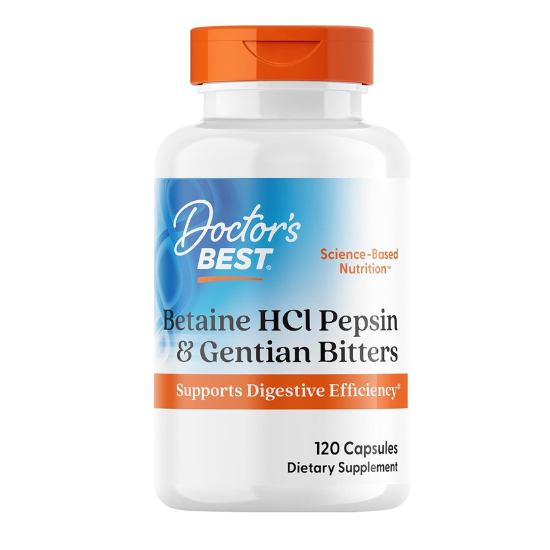

Product photo: Doctor’s Best Betaine HCl Pepsin & Gentian Bitters, 120 capsules.
Quick answer: Doctor’s Best Betaine HCl Pepsin & Gentian Bitters combines 650 mg betaine hydrochloride, pepsin (250,000 FCC Pepsin Units), and 20 mg gentian root per capsule. It is marketed to support digestive efficiency and protein digestion. Betaine HCl can temporarily change stomach acidity, but there is insufficient clinical evidence that this specific supplement reliably improves bloating, reflux, nutrient absorption, or confirmed hypochlorhydria. It is not a diagnostic test or a substitute for medical evaluation.
Editorial disclosure: Purely Vital Living may earn a commission from qualifying purchases. This is an evidence-informed product analysis based on published information, not a hands-on clinical trial or personal-use test. We have not independently laboratory-tested this product.
Our Verdict
Best considered: A specialized acid-and-enzyme formula to discuss with a clinician if impaired gastric acidity is a documented concern. Not recommended: As a self-directed fix for unexplained bloating, heartburn, reflux, or presumed “low stomach acid.” Its formulation is clear, but evidence for meaningful symptom relief is limited.
At a Glance
| Brand | Doctor’s Best |
|---|---|
| Product | Betaine HCl Pepsin & Gentian Bitters |
| Format | 120 capsules; 120 one-capsule servings |
| Betaine HCl | 650 mg per capsule |
| Pepsin | 250,000 FCC Pepsin Units per capsule |
| Gentian root | 20 mg per capsule |
| Dietary notes | Manufacturer describes it as non-GMO and gluten-free; gelatin capsule means it is not vegetarian |
| Retail reference | Manufacturer listed $15.99 when checked; verify current price at checkout |
What Is in Doctor’s Best Betaine HCl Pepsin?
Betaine hydrochloride — 650 mg
Betaine HCl supplies acid in the stomach and may transiently lower gastric pH. This is different from proving that a person has low acid or that supplementation treats the cause of digestive symptoms. Betaine HCl is also distinct from betaine (trimethylglycine), which is studied for other purposes.
Pepsin — 250,000 FCC Pepsin Units
Pepsin is a protein-digesting enzyme that normally works in an acidic gastric environment. The label gives enzyme activity units, not a simple milligram amount. Adding pepsin does not establish a clinical benefit for people without diagnosed digestive impairment.
Gentian (Gentiana lutea) root — 20 mg
Gentian is a traditional bitter botanical. Claims that bitters stimulate digestive secretions should not be mistaken for strong clinical evidence that this dose treats hypochlorhydria or persistent digestive symptoms.
Potential Benefits: What Does the Evidence Say?
Temporary gastric acidification: Small human physiology studies demonstrate that betaine HCl can lower gastric pH under certain conditions. One randomized crossover study involved only nine participants and tested substantially larger doses than the 650 mg in one capsule of this product. It measured gastric acidity, not relief of everyday digestive symptoms. Results cannot establish that this product improves bloating, reflux, or long-term health.
Protein digestion: Gastric acid and pepsin participate in normal protein digestion. That physiological role alone does not show that taking this combination improves digestion in healthy adults.
Low stomach acid: Symptoms such as bloating, belching, or fullness are nonspecific. Self-administered “HCl challenge” protocols are not validated ways to diagnose low stomach acid.
Pros and Cons
| Potential advantages | Limitations |
|---|---|
| Clearly stated active ingredients and capsule count | Limited direct clinical outcome evidence for the finished formula |
| Combines an acid source with a protein-digesting enzyme | Can cause discomfort or irritation; unsuitable for some people |
| Manufacturer lists gluten-free and non-GMO claims | Not vegetarian; no proof of efficacy for common reflux or bloating |
Safety, Contraindications and Interactions
Do not self-treat heartburn or reflux with acid supplements. Adding acid can worsen symptoms or irritate the upper gastrointestinal tract. Consult a clinician before considering this product, particularly if you have reflux, gastritis, ulcers, unexplained abdominal pain, swallowing problems, or use acid-suppressing medicines such as proton pump inhibitors or H2 blockers. Ask a pharmacist about interactions with your medications. The manufacturer specifically advises medical consultation during pregnancy or breastfeeding and with a history of peptic ulcer or high blood pressure, and advises avoiding the product with diagnosed kidney problems. Stop use and seek medical advice if it causes burning or pain. Seek urgent care for vomiting blood, black stools, severe persistent pain, or trouble swallowing.
How to Use It: Manufacturer Guidance
The current manufacturer listing says adults should take one capsule with food or as recommended by a nutritionally informed physician, and only with a substantial, high-protein meal to avoid discomfort. This is a description of the label, not a personalized recommendation. Do not escalate the dose or perform self-directed acid “titration” tests.
Who Might Consider It — and Who Should Skip It?
Someone with a clinician-confirmed concern about gastric acidity might ask whether an acid-containing supplement has any appropriate role. People with unexplained bloating, recurrent heartburn, suspected ulcers, or those taking acid-reducing drugs should not assume this is an appropriate solution. Proper assessment may identify a different cause, including medication effects, H. pylori, functional dyspepsia, or other conditions.
Is Doctor’s Best Betaine HCl Pepsin Worth Buying?
PVL assessment: The product has transparent labeling and a plausible short-term acidifying mechanism, but the gap between changing stomach pH and delivering meaningful symptom improvement remains substantial. We would not recommend purchasing it solely because an online symptom list suggests “low stomach acid.” Discuss persistent symptoms with a qualified healthcare professional first.
Frequently Asked Questions
Does betaine HCl with pepsin increase stomach acid?
Betaine hydrochloride can temporarily increase stomach acidity by lowering gastric pH. Pepsin is a protein-digesting enzyme that normally functions in an acidic environment. However, evidence that taking betaine HCl with pepsin improves digestive symptoms or corrects an underlying stomach acid disorder remains limited.
Can Doctor’s Best Betaine HCl Pepsin help acid reflux?
Doctor’s Best Betaine HCl Pepsin is not an established treatment for acid reflux or gastroesophageal reflux disease (GERD). Adding acid may worsen burning or irritation in some people. Reflux has several possible causes, so persistent symptoms warrant appropriate medical evaluation rather than self-treatment with acid supplements.
Can it help bloating after meals?
There is insufficient clinical evidence that Doctor’s Best Betaine HCl Pepsin reliably reduces bloating after meals. Bloating may result from food intolerances, constipation, functional digestive disorders, or other conditions. Identifying the underlying cause is more useful than assuming that low stomach acid is responsible.
Is betaine HCl with pepsin the same as digestive enzymes?
No. Betaine HCl with pepsin combines an acid source with a protein-digesting enzyme. Broad-spectrum digestive enzyme supplements may contain amylase, lipase, protease, or other enzymes targeting different nutrients. These formulations are not interchangeable, and their usefulness depends on the specific digestive condition being addressed.
Is Doctor’s Best Betaine HCl Pepsin vegetarian or vegan?
No. Doctor’s Best Betaine HCl Pepsin & Gentian Bitters contains a gelatin capsule shell, making it unsuitable for vegetarian and vegan diets. People following dietary restrictions should review the current ingredient label before purchasing, because supplement formulations and capsule materials may change over time.
Can I use betaine HCl to test for low stomach acid?
No. Taking betaine HCl and watching for warmth, burning, or discomfort is not a validated diagnostic test for low stomach acid. These sensations cannot reliably establish gastric acidity. If hypochlorhydria is suspected, a healthcare professional can assess symptoms, medications, medical history, and whether further testing is appropriate.
References and Product Sources
- Doctor’s Best: official product label, supplement facts, and warnings.
- Food, Acid Supplementation and Drug Absorption — randomized crossover gastric pH study.
- Vitacost: product identification and supplement facts.
Medical note: This review is informational and does not replace professional diagnosis or treatment. Ingredient formulations and warnings may change; check the package you receive.


Reviews
There are no reviews yet.