
Dodow Sleep Aid Device Quick Verdict
Best for: The Dodow sleep aid device is best for adults who struggle to settle racing thoughts at bedtime and want a simple, screen-free breathing guide rather than medication, audio, or a feature-heavy sleep app.
PVL Rating: 4.2/5
Editorial score by Purely Vital Living. We evaluated this sleep device across five factors: design and usability, supporting evidence, ease of use, transparency and safety, and overall value.
- Design and usability: 4.5/5
- Supporting evidence: 3.8/5
- Ease of use: 4.5/5
- Transparency and safety: 4.3/5
- Value: 4.0/5
Overall: 4.2/5 — The Dodow sleep aid device is a thoughtfully designed light metronome that turns slow breathing into an easy bedtime ritual. The underlying relaxation method is plausible and supported by paced-breathing research, but Dodow is not a treatment for chronic insomnia or sleep disorders, and strong independent trials of the product itself are limited.
Bottom line: Dodow is most useful for people whose main barrier to sleep is mental or physical arousal. It is compact, quiet, screen-free, and simple to operate. It is less suitable for people who dislike ceiling light, cannot comfortably lie on their back, or need treatment for sleep apnea, restless legs, chronic insomnia, pain, or another medical cause of poor sleep.
Dodow Sleep Aid Device Review
Trying to fall asleep can become harder the more you actively chase sleep. Racing thoughts, work stress, late-night screen use, and worry about the next day can keep the nervous system alert even when the body feels tired. The Dodow sleep aid device takes a deliberately simple approach: it projects a slowly expanding and contracting light onto the ceiling and asks you to synchronize your breathing with it.
Dodow is not a sound machine, sleep tracker, or sedative. It is best understood as a visual breathing pacer designed to occupy attention and gradually slow respiration before sleep. This editorial review examines how the device works, the evidence behind slow-paced breathing, its practical limitations, and whether it offers enough value compared with free breathing apps and more complete bedside sleep devices.
What Is the Dodow Sleep Aid Device?
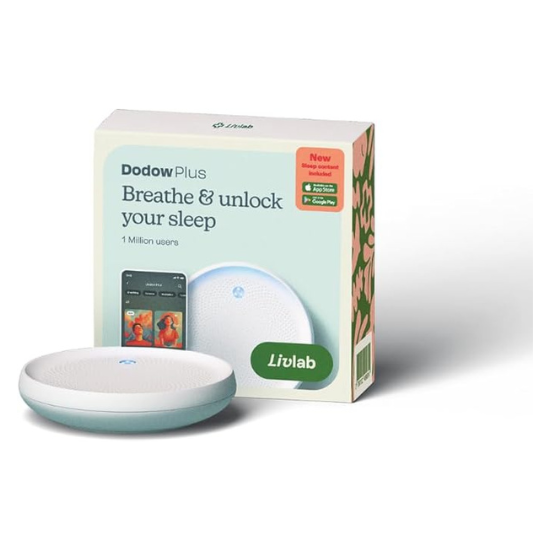
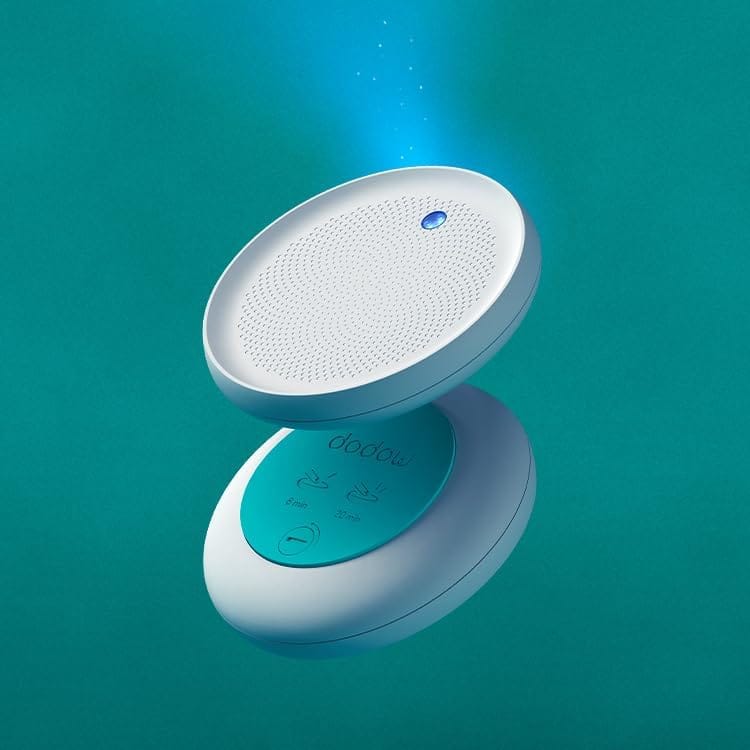
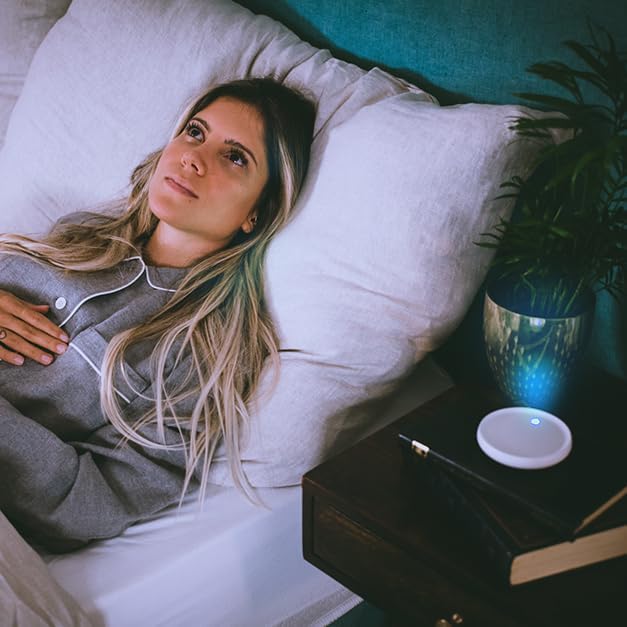
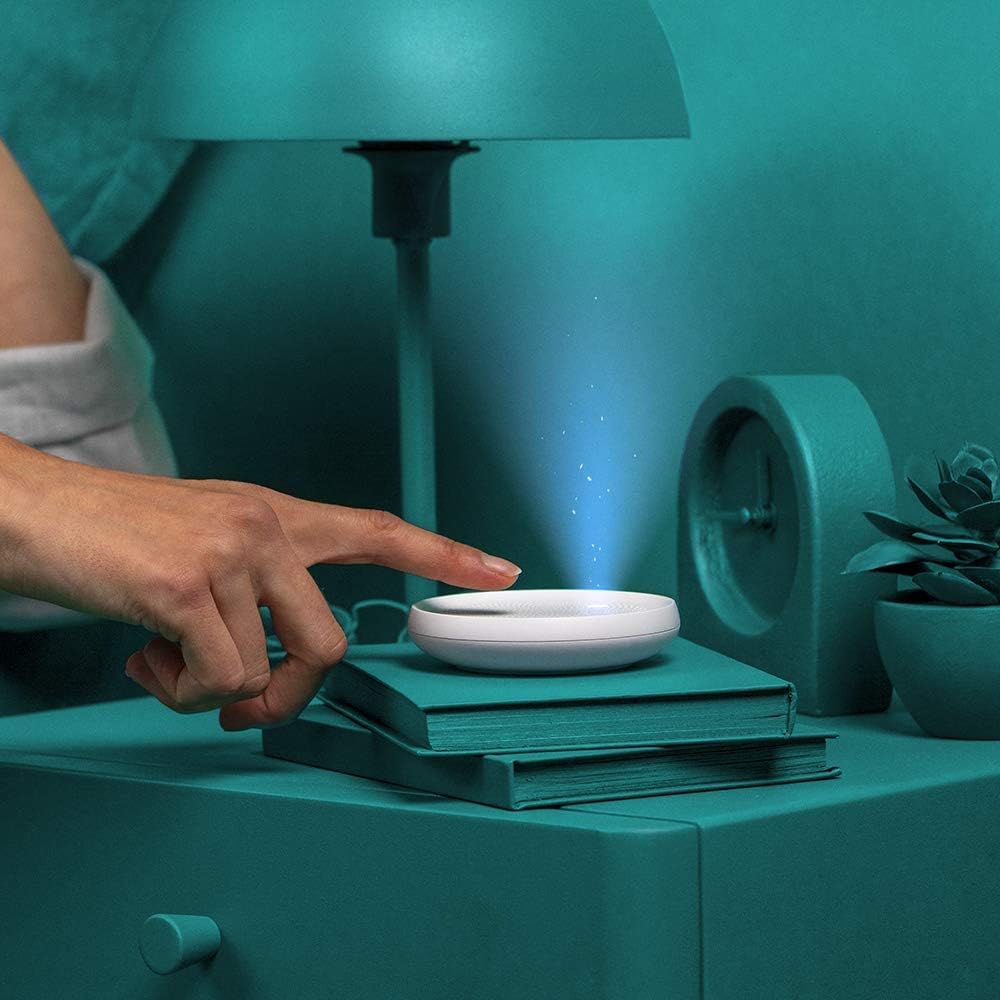
Dodow is a compact bedside light metronome made by LIVLAB. Place it on a flat surface beside the bed, start a session, and look at the soft blue light projected on the ceiling. You inhale as the light expands and exhale as it contracts. The rhythm progressively slows, helping guide breathing toward approximately six cycles per minute.
The standard Dodow method provides an 8-minute session and a longer 20-minute option, after which the light switches off automatically. The manufacturer also describes three brightness levels. The product is intentionally screen-free and does not need to track personal health data to perform its core function.
Important model note: Dodow listings have changed over time. Older versions are commonly described as AAA-battery powered, while some newer Dodow Plus listings mention USB-C charging and app-supported options. Buyers should verify the power source, included accessories, and modes on the current retailer page before ordering.
Key Features and Specifications
| Feature | Details |
|---|---|
| Product type | Light-guided breathing and relaxation device |
| Core method | Expanding and contracting ceiling light guides inhalation and exhalation |
| Session options | 8-minute and 20-minute sessions on the established Dodow model |
| Target breathing rate | Gradually approaches about six breaths per minute |
| Brightness | Three light-intensity settings according to LIVLAB |
| Audio | None required for the core light-guided routine |
| Connectivity | Core operation is screen-free; Plus features may vary by listing |
| Best use | Bedtime stress, racing thoughts, and relaxation practice |
| Not designed to treat | Sleep apnea, medical insomnia, circadian disorders, or other diagnosed sleep conditions |
How Does Dodow Work?
The device combines two familiar relaxation strategies: focused attention and paced breathing. Watching the light gives the mind a neutral task, which may interrupt repetitive thoughts. Matching the light’s tempo encourages a slower respiratory pattern with a relatively long exhalation.
LIVLAB says the rhythm begins near a normal waking rate and gradually slows to around six breaths per minute. At the end of the selected session, the projector turns itself off so users do not need to reach for a phone or bright bedside lamp.
This mechanism is reasonable, but it is important to separate evidence for slow breathing generally from evidence for Dodow specifically. Research using paced-breathing protocols has reported improvements in some sleep or relaxation outcomes in selected populations, but the protocols, populations, and comparators differ from this commercial device. PVL did not identify a peer-reviewed randomized controlled trial of the finished Dodow device demonstrating shorter sleep-onset latency, fewer awakenings, higher sleep efficiency, or improved objective sleep quality. The manufacturer’s “up to 2.5 times faster” statement is therefore best treated as a user-reported marketing claim rather than a demonstrated clinical effect.
How to Use Dodow
- Place the device on a stable bedside surface where its light can reach the ceiling.
- Make the room dark enough to see the projected light without straining.
- Start the 8-minute routine for a shorter session or select the longer session when you need more time.
- Lie comfortably and watch the light. Inhale as it expands and exhale as it contracts.
- Keep the breathing gentle. Do not force an unusually deep breath or continue if you feel dizzy.
- Use it consistently for several nights before deciding whether the ritual suits you.
Back sleepers will usually have the clearest view. Side sleepers may need to reposition the device or turn their head toward the projection. Users who find the light stimulating should choose the lowest brightness or use a nonvisual breathing method instead.
Dodow Sleep Aid Device Pros
- Screen-free routine: The core exercise does not require scrolling, notifications, or looking at a phone.
- Very simple purpose: Dodow focuses on one behavior rather than burying relaxation inside menus and subscriptions.
- Automatic shutoff: The light ends without requiring another action after the session.
- Silent operation: It can suit people who dislike guided voices, meditation audio, or white noise.
- Portable design: The small format is easier to travel with than many sound machines or sunrise clocks.
- Useful attentional anchor: Following the projection may help redirect attention away from clock-watching and repetitive thoughts.
Dodow Sleep Aid Device Cons
- No identified finished-product RCT: Paced-breathing research supports the underlying method, but PVL did not identify a peer-reviewed randomized trial demonstrating sleep benefits from Dodow itself.
- Light is not relaxing for everyone: Some users prefer complete darkness or sleep with an eye mask.
- Position matters: The ceiling projection is generally easier to follow while lying on your back.
- Expensive for a single-purpose tool: Free breathing apps, audio tracks, or a simple timer can guide a similar breathing rhythm.
- Not a diagnostic or treatment device: It does not address sleep apnea, severe insomnia, pain, medication effects, or other underlying causes.
- Version confusion: Power, charging, and Plus features can differ among current and older listings.
Who Is Dodow Best For?
The Dodow sleep aid device is best suited to adults who:
- feel physically tired but mentally alert at bedtime;
- want a structured slow-breathing exercise without using a phone;
- prefer silence to meditation voices or sleep sounds;
- benefit from a visual focus point during relaxation;
- want a compact bedside or travel routine;
- understand that improvement may require repeated practice rather than one session.
Who Should Avoid It?
Dodow may be a poor fit for people who:
- need total darkness, use a sleep mask, or find blue light distracting;
- cannot comfortably see the ceiling projection from their sleeping position;
- become light-headed during slow or controlled breathing;
- expect a guaranteed or immediate cure for insomnia;
- need sound masking for traffic, neighbors, or a snoring partner;
- have symptoms suggesting sleep apnea or another sleep disorder.
Loud snoring, witnessed breathing pauses, gasping, persistent daytime sleepiness, morning headaches, or insomnia that affects daily functioning deserve professional evaluation. Dodow should not delay appropriate medical care.
Side Effects, Safety, and Limitations
Dodow is noninvasive, but controlled breathing can occasionally cause discomfort, air hunger, tingling, or dizziness—especially if a person breathes too deeply instead of simply breathing more slowly. Stop the exercise and return to normal breathing if this happens.
The projection uses blue light, although at a much lower intensity and with a different purpose than a phone or tablet screen. People who are highly sensitive to light at night may still find it counterproductive. Select the lowest comfortable brightness and avoid staring directly into the device.
The largest limitation is scope. Dodow supports relaxation; it does not diagnose or treat obstructive sleep apnea, restless legs syndrome, circadian rhythm disorders, depression, chronic pain, or medication-related sleep problems. Cognitive behavioral therapy for insomnia (CBT-I) remains a first-line evidence-based treatment for chronic insomnia.
Dodow vs. Alternatives
| Option | Best for | Main trade-off |
|---|---|---|
| Dodow | Screen-free visual breathing practice | Single-purpose and requires viewing ceiling light |
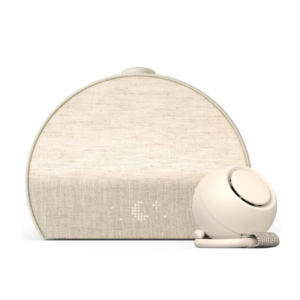
| Hatch Restore 3 | Bedtime routines, sunrise alarm, light, and sleep sounds | Costs more and relies on app-connected features |
| LectroFan EVO | Masking disruptive bedroom noise | Does not guide breathing or address racing thoughts directly |
| Free paced-breathing app or audio | Trying the method before purchasing hardware | Uses a phone and may introduce notifications or screen exposure |
| CBT-I program | Persistent or chronic insomnia | Requires more time and structured behavioral work |
Choose Dodow when the visual breathing ritual is the feature you specifically want. Choose LectroFan when environmental noise is the main problem, Hatch Restore when you want a complete bedtime-and-wake routine, and professional CBT-I support when insomnia is persistent.
Is the Dodow Sleep Aid Device Worth It?
Dodow is worth considering if you already know that paced breathing helps you relax but struggle to practice consistently without guidance. Its value is not that it invents a unique physiological technique; its value is that it packages the exercise into a frictionless bedside ritual with no phone required.
The price is harder to justify for someone who can follow a free breathing timer, prefers audio guidance, or needs broader sleep features. We would treat Dodow as a behavioral cue and relaxation aid—not as a medical solution or a guaranteed shortcut to sleep.
Before buying, try breathing gently at roughly six cycles per minute for several evenings using a free timer. If the method feels calming but the phone itself becomes a distraction, Dodow offers a cleaner implementation.
Frequently Asked Questions
Does the Dodow sleep aid device really work?
It may help some people relax and fall asleep more easily by guiding slow breathing and focusing attention. Paced-breathing research supports the underlying relaxation method, but PVL did not identify a peer-reviewed randomized controlled trial of the finished Dodow device showing that it improves sleep. Results from other breathing protocols should not be treated as Dodow-specific proof.
How long does Dodow take to work?
The established device offers 8-minute and 20-minute sessions. Some users may feel calmer during one session, while others need repeated nightly practice. There is no guaranteed time to fall asleep.
Can Dodow help with anxiety?
Slow breathing may reduce short-term physiological arousal, and the visual rhythm can provide a neutral focus during bedtime worry. Dodow is not a treatment for an anxiety disorder; persistent or severe anxiety should be discussed with a qualified professional.
Is Dodow safe to use every night?
For most adults, gentle paced breathing is low risk. Avoid forcing deep breaths, stop if you feel dizzy or uncomfortable, and seek individual medical advice if you have a respiratory or cardiovascular condition that could affect breathing exercises.
Does Dodow use blue light?
Yes. It projects a dim blue light onto the ceiling as the breathing cue. It is not equivalent to staring into a bright phone screen, but light-sensitive sleepers may still prefer the lowest setting or a nonvisual relaxation method.
Does Dodow treat insomnia or sleep apnea?
No. It is a relaxation aid, not a diagnostic tool or treatment for insomnia, sleep apnea, or another medical sleep disorder. Persistent insomnia, snoring with breathing pauses, gasping, or significant daytime sleepiness warrants professional assessment.
Is Dodow battery powered or rechargeable?
Older Dodow versions are commonly listed as AAA-battery powered, while some newer Dodow Plus listings advertise USB-C charging. Confirm the exact model and power source on the retailer page before purchasing.
Related Reads
- Hatch Restore 3 Review: Is the Smart Sleep Assistant Worth It?
- LectroFan EVO Review: Is It Worth Buying?
- How to Improve Sleep Quality Naturally
- PVL Sleep Resources
References
- LIVLAB: Dodow product information and operating method
- Tsai HJ et al. Efficacy of paced breathing for insomnia
- Laborde S et al. Thirty-day slow-paced breathing intervention and subjective sleep quality
- Self-regulation of breathing as an adjunctive treatment of insomnia
- Zaccaro A et al. Systematic review of slow breathing psychophysiological effects
Editorial note: This review is based on manufacturer specifications, published research on paced breathing, and an assessment of usability, limitations, and value. It does not claim a hands-on clinical test. Product features, pricing, and availability may change.

Reviews
There are no reviews yet.