
Quick Verdict
The LC-dolida Sleep Headphones & Bluetooth Mask is a convenient two-in-one accessory for people who want darkness and private bedtime audio, but it should not be treated as a proven sleep treatment. Its strongest case is practical: combining a contoured eye mask with low-profile speakers. PVL did not identify product-specific clinical evidence showing improved insomnia, sleep duration, sleep stages, or recovery.
PVL Rating: 3.9/5
- Two-in-one design: 4.4/5
- Light-blocking concept: 4.2/5
- Audio convenience: 4.2/5
- Sleep evidence: 3.1/5
- Safety/practicality: 3.8/5
Best for: Travelers and sleepers who like audio at bedtime and want one wearable combining a sleep mask with Bluetooth speakers.
Not ideal for: People who dislike headwear in bed, need to hear alarms or caregiving cues clearly, are sensitive to speaker pressure, or expect headphones to treat insomnia.
What Are LC-dolida Sleep Headphones?
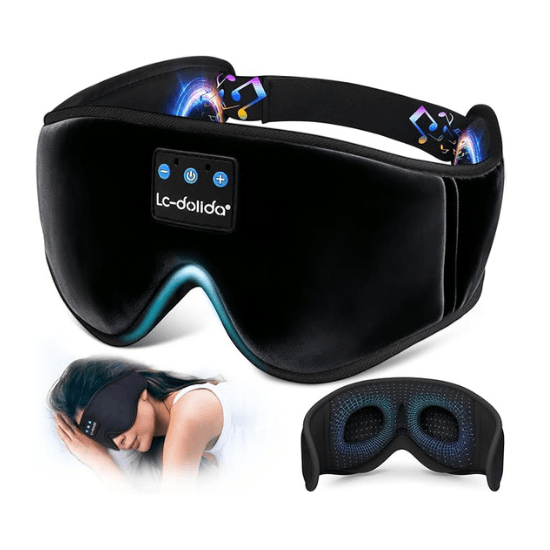
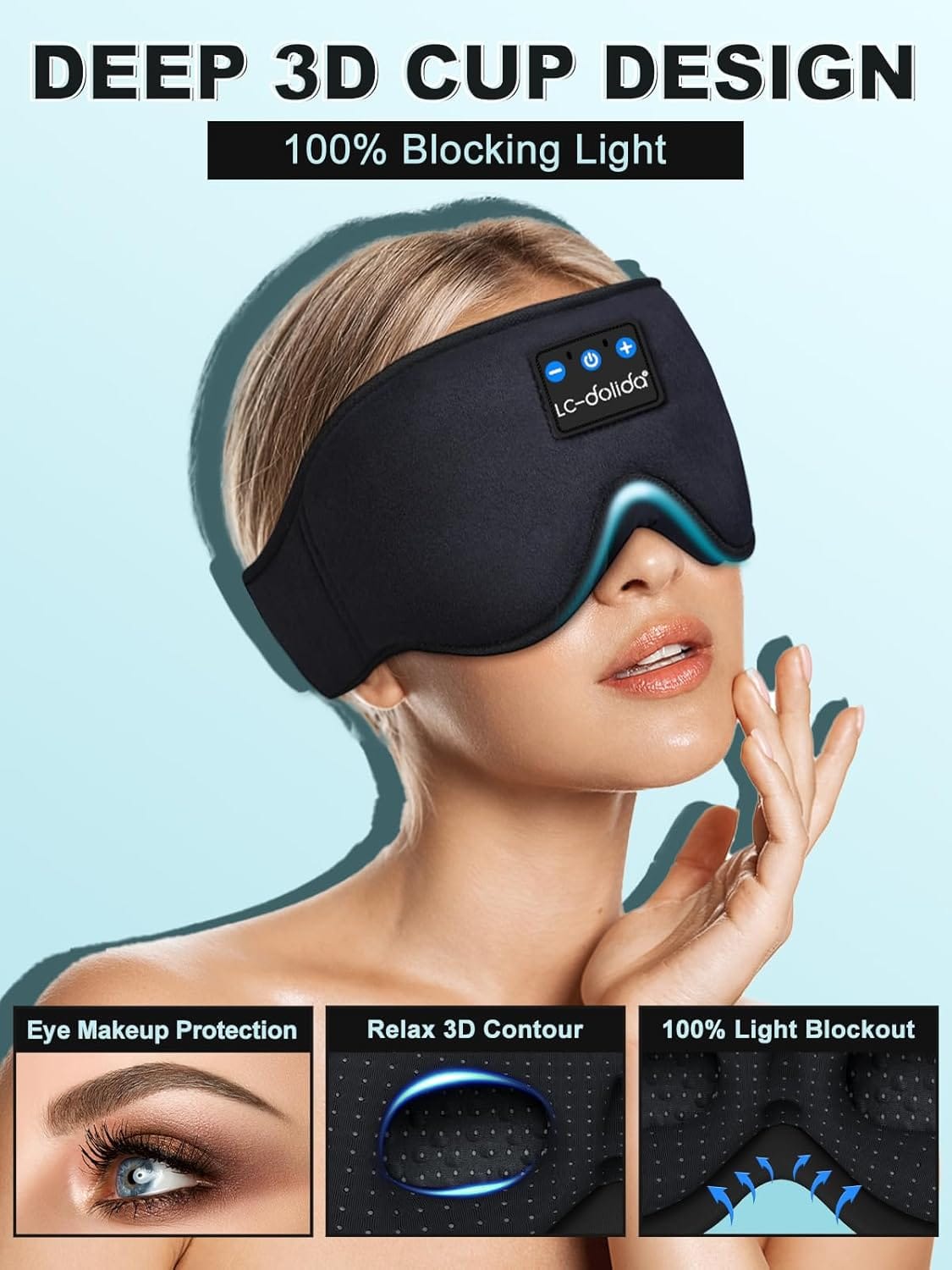
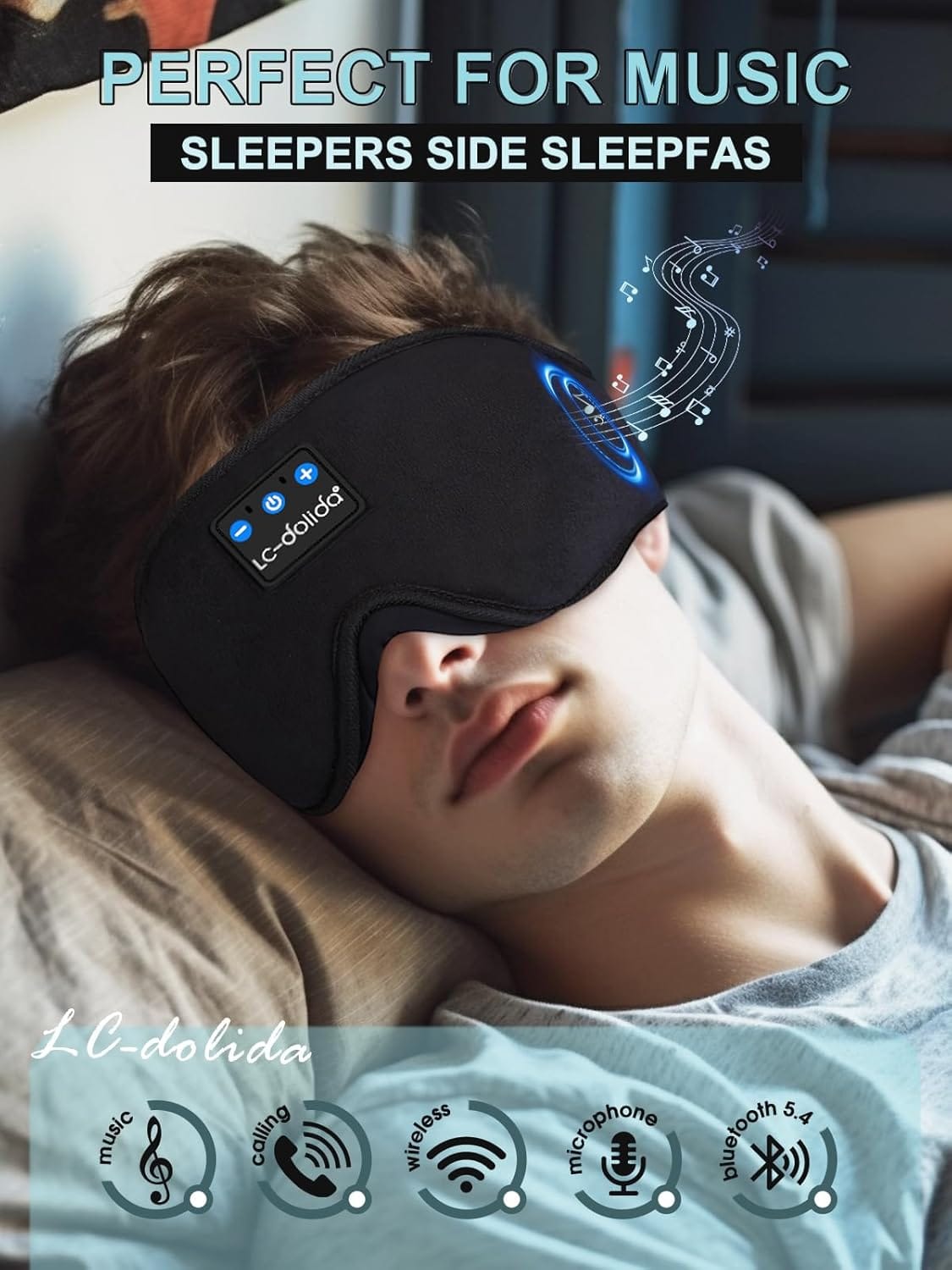
The LC-dolida product combines a contoured eye mask with embedded Bluetooth speakers. The concept is straightforward: reduce visible ambient light while allowing the user to play music, spoken audio, meditation, or masking sounds without conventional earbuds.
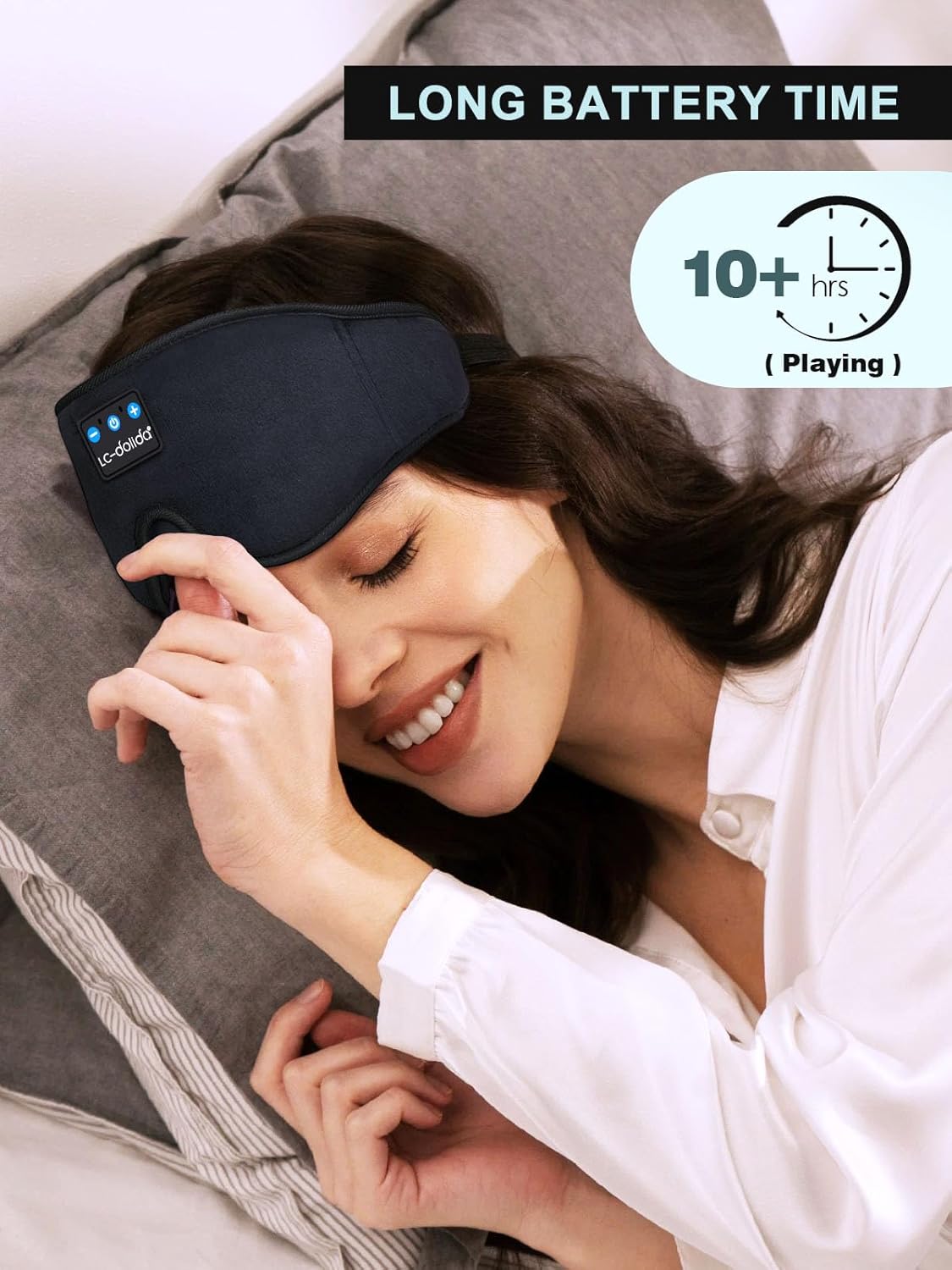
Exact Bluetooth version, battery runtime, charging details, speaker dimensions, fabric composition, wash instructions, and included accessories can vary by model or listing. Verify the current seller/manufacturer specifications before purchase rather than relying on older marketplace copy.
Can the LC-dolida Mask Improve Sleep?
PVL did not identify a peer-reviewed clinical trial of the finished LC-dolida mask showing that it improves insomnia, total sleep time, sleep efficiency, deep sleep, REM sleep, or next-day functioning.
The product combines two plausible environmental tools—light reduction and audio—but evidence for those interventions does not automatically establish effectiveness for this specific device. Whether it helps depends on what is disrupting the individual sleeper and whether the mask remains comfortable throughout the night.
Does Blocking Light Help Sleep?
Darkness is relevant to normal circadian and sleep physiology, and reducing unwanted nighttime light can be a sensible environmental measure. An eye mask can help when curtains or room conditions do not provide adequate darkness.
However, the practical effect depends on fit. Light can leak around the nose or sides, and a mask that presses, shifts, traps heat, or causes discomfort may create a new source of sleep disruption.
Do Sleep Headphones or Music Improve Sleep?
Music has some evidence for improving subjective sleep quality in adults with insomnia symptoms, but that does not validate LC-dolida itself. A Cochrane review found that listening to music may improve subjective sleep quality, while evidence for several objective sleep outcomes was limited or uncertain.
The content matters too. Calming familiar audio may help one person wind down, while stimulating podcasts, changing tracks, notifications, or prolonged phone interaction can keep another person alert.
What About White Noise and Other Masking Sounds?
Continuous noise can mask intermittent environmental sounds, but the sleep evidence is mixed. A systematic review found substantial heterogeneity and characterized the quality of evidence for continuous noise as very low.
Therefore, white noise should be framed as an optional sound-masking strategy rather than something proven to improve sleep for everyone. LC-dolida is an audio-delivery device; it does not make a particular sound clinically effective.
Is It Comfortable for Side Sleepers?
Potentially, but “side-sleeper friendly” is not universal. Thin embedded speakers can avoid the in-ear pressure of earbuds, yet speaker position, pillow firmness, head shape, strap tension, and how much the user moves all affect comfort.
If a speaker sits directly between the ear and a firm pillow, even a low-profile module may become noticeable. The ability to reposition the speakers can therefore matter more than a general side-sleeper claim.
Can You Safely Wear Bluetooth Headphones All Night?
The practical hearing issue is sound level and exposure duration rather than Bluetooth itself. Keep volume low enough that the audio remains comfortable and avoid using high levels to overpower a noisy environment.
Overnight audio can also reduce awareness of smoke alarms, children, caregiving needs, security alerts, or other important sounds. Users who need to remain responsive to their environment should consider whether continuous headphone audio is appropriate.
Does Bluetooth Radiation Make Sleep Headphones Unsafe?
PVL would not characterize normal Bluetooth use as a demonstrated sleep-health hazard based simply on the presence of wireless radiofrequency transmission. The more immediate practical issues are volume, prolonged sound exposure, pressure, heat, battery/device condition, and reduced awareness of external alerts.
What About Battery and Charging Safety?
Use the supplied or manufacturer-recommended charging method and inspect the device for damage, swelling, unusual heat, or charging problems. Do not use a damaged rechargeable device against the face or head.
Follow the current product instructions regarding charging and washing. Electronics and removable speaker modules should be handled exactly as the manufacturer directs before any fabric component is cleaned.
What LC-dolida Has Not Been Shown to Do
- Treat chronic insomnia
- Increase deep sleep or REM sleep
- Improve physiological recovery
- Make white noise effective for every sleeper
- Produce the same outcomes as music interventions used in clinical studies
- Guarantee comfort for every side sleeper
Pros and Cons
Pros
- Combines light blocking and private audio in one wearable
- Avoids placing conventional earbuds inside the ear canal
- Potentially useful for travel and shared bedrooms
- Can play music, meditation, spoken audio, or masking sounds
- Contoured mask concept may reduce direct pressure on the eyes
Cons
- No finished-product clinical sleep evidence identified
- Speaker pressure can still bother some side sleepers
- Audio can mask important alarms and environmental sounds
- High or prolonged volume creates unnecessary hearing risk
- Fit, heat, light leakage, and shifting can undermine comfort
Who Should Consider It?
It makes the most sense for someone who already knows that an eye mask and quiet bedtime audio help them relax and wants those functions combined. Travelers and people sharing a room may find the private-audio format particularly convenient.
Who Should Choose Something Else?
Choose a simple eye mask if you do not need audio. Use a bedside speaker if environmental awareness is important. People with persistent insomnia should not assume that adding more sleep technology will address the underlying problem; evidence-based assessment and treatment may be more appropriate.
Frequently Asked Questions
Do LC-dolida sleep headphones actually improve sleep?
There is no good product-specific evidence that LC-dolida sleep headphones directly improve sleep. The mask may reduce unwanted light, while audio may help some users relax or mask environmental sounds. Those mechanisms are plausible, but PVL did not identify a finished-product trial showing improvements in insomnia, sleep duration, sleep efficiency, deep sleep, or REM sleep.
Are LC-dolida sleep headphones comfortable for side sleepers?
They may be comfortable for some side sleepers, but comfort depends on fit and speaker position. Low-profile speakers can be less intrusive than conventional earbuds, yet a speaker pressed between the ear and a firm pillow may still cause discomfort. Head shape, pillow firmness, strap tension, movement, and speaker adjustability all matter.
Is it safe to listen to sleep headphones all night?
Overnight listening can be reasonable at low, comfortable volume, but continuous audio adds practical safety considerations. Avoid high volume and remember that headphones can reduce awareness of smoke alarms, children, caregiving needs, security alerts, or other important sounds. Stop using the device if it causes ear discomfort, pressure, heat, or sleep disruption.
Does white noise through LC-dolida help you sleep?
White noise may mask intermittent environmental sounds, but evidence that continuous noise improves sleep is mixed and low certainty. LC-dolida simply delivers the audio; it does not make white noise clinically effective. Some sleepers find masking sounds helpful, while others sleep better with quiet or a different sound environment.
Does the eye mask increase deep sleep?
There is no product-specific evidence that the LC-dolida eye mask increases deep sleep. Blocking unwanted light can create a darker sleep environment, which is a sensible sleep-hygiene measure, but that does not prove a measurable increase in N3 sleep. Fit, comfort, room conditions, and the user’s underlying sleep pattern remain important.
Can LC-dolida sleep headphones treat insomnia?
No, LC-dolida sleep headphones should not be presented as a treatment for chronic insomnia. Music, darkness, or masking sounds may make bedtime more comfortable for some people, but persistent insomnia can have behavioral, circadian, medical, or psychological contributors. Evidence-based insomnia care, including CBT-I when appropriate, addresses the disorder more directly.
Final Verdict
PVL Rating: 3.9/5. LC-dolida offers a useful convenience for people who already want both darkness and private bedtime audio. Its value comes from combining two functions, not from evidence that the product optimizes sleep. Keep volume conservative, maintain awareness of safety cues, and treat sleep-stage or insomnia claims skeptically.
Reviews
There are no reviews yet.