
Quick Verdict
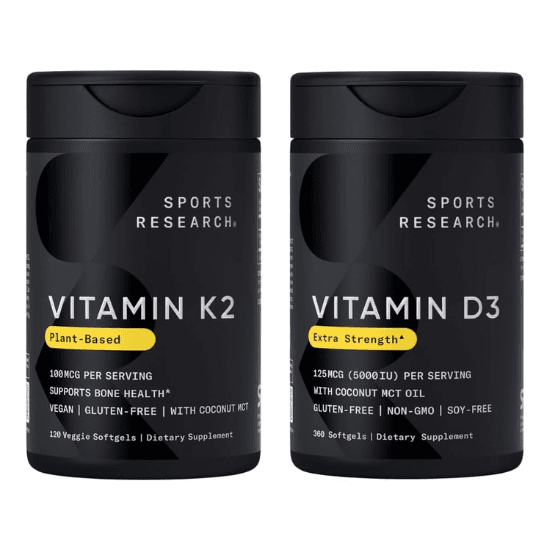
Sports Research Vitamin D3 + K2 is a well-labeled, vegan combination supplement, but its 5,000 IU vitamin D3 dose is higher than the adult tolerable upper intake level for routine unsupervised daily use. It makes more sense for adults with an individualized reason for higher-dose vitamin D than as a default daily wellness supplement.
PVL editorial rating: 4.0/5
Best for: adults whose vitamin D intake or blood status has been assessed and who specifically want a vegan D3 plus MK-7 formula.
This Sports Research D3 + K2 review evaluates the current label, dose, evidence, safety, interactions, and who may—or may not—be a good fit for this high-potency formula.
Sports Research D3 + K2 at a Glance
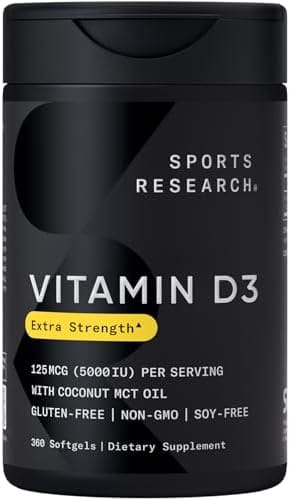
| Vitamin D3 | 125 mcg (5,000 IU) cholecalciferol per softgel |
|---|---|
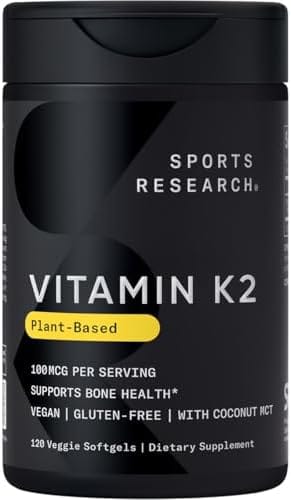
| Vitamin K2 | 100 mcg menaquinone-7 (MK-7) per softgel |
| Sources | Vegan D3 from lichen; MK-7 from chickpea |
| Other notable ingredient | Organic virgin coconut oil |
| Dietary features | Certified vegan, gluten-free, Non-GMO Project Verified according to the label |
What Do Vitamin D3 and K2 Actually Do?
Vitamin D is essential for calcium absorption and normal bone mineralization and also has roles in muscle and immune function. Vitamin K is required for activation of vitamin-K-dependent proteins involved in blood clotting and bone metabolism. Those physiological roles establish that both nutrients are important, but they do not prove that taking extra D3 + K2 improves energy, immunity, cardiovascular health, or longevity in an adult who already has adequate nutritional status.
Does Sports Research D3 + K2 Improve Bone Health?
Evidence should be separated into nutrient adequacy and supplementation in already-adequate adults. Correcting vitamin D deficiency is clinically important, but routine supplementation does not necessarily improve outcomes in vitamin-D-replete people. In the large VITAL randomized trial, 2,000 IU/day of vitamin D3 did not reduce total, nonvertebral, or hip fractures in generally healthy midlife and older adults who were not selected for vitamin D deficiency, low bone mass, or osteoporosis.
A 2020 meta-analysis of eight randomized trials found that combined vitamin K and D supplementation improved some bone-mineral-density and osteocalcin outcomes. However, the studies used different populations, doses, and formulations, so those findings do not establish that this Sports Research 5,000-IU D3 + 100-mcg MK-7 product prevents fractures or osteoporosis.
More recent evidence also cautions against assuming an automatic D3/K2 “synergy.” A 2026 analysis of a randomized vitamin-D trial found no evidence that baseline vitamin K status enhanced vitamin D effects on the measured bone-turnover or cardiovascular markers. The authors noted that current guidelines do not routinely recommend combined K and D treatment for osteoporosis.
Is 5,000 IU of Vitamin D3 Too Much?
For U.S. adults, the NIH/Food and Nutrition Board tolerable upper intake level is 4,000 IU (100 mcg) of vitamin D per day from all sources. One Sports Research softgel supplies 5,000 IU (125 mcg), so it exceeds that UL.
The UL is not a toxicity threshold and does not mean that one 5,000-IU dose is dangerous. Higher doses can be appropriate when a clinician is treating deficiency or monitoring an individual need. But 5,000 IU should not be presented as an automatically appropriate everyday dose for every healthy adult. Excessive vitamin D over time can cause hypercalcemia and hypercalciuria and, in severe cases, kidney and cardiovascular complications.
Does Adding K2 Make High-Dose Vitamin D Automatically Safer?
No. Vitamin K2 has important biological roles, but adding MK-7 does not cancel the vitamin D upper intake level or make an unnecessarily high vitamin D dose automatically appropriate. Dose decisions should still consider total vitamin D intake, diet, other supplements, medical conditions, and—when clinically indicated—25-hydroxyvitamin D testing.
Who Should Be Especially Careful?
- People taking warfarin or similar vitamin-K-antagonist anticoagulants should not make unplanned changes in vitamin K intake. Consistency is important because vitamin K can alter anticoagulant effect.
- People with hypercalcemia, kidney disease, kidney-stone risk, sarcoidosis or other granulomatous disorders, or conditions affecting vitamin D/calcium metabolism should obtain medical guidance.
- Anyone already taking vitamin D from a multivitamin, calcium product, cod-liver oil, or another supplement should calculate total daily intake.
- Pregnant or breastfeeding people and children should use age- and situation-appropriate dosing rather than assuming this adult high-potency product is suitable.
Pros and Cons
Pros
- Clearly labeled D3 and MK-7 amounts
- Vegan D3 from lichen
- 100 mcg MK-7 per softgel
- Convenient one-softgel format
- Useful option when a higher vitamin D dose is specifically appropriate
Cons
- 5,000 IU D3 exceeds the adult daily UL
- Not an ideal default dose for every healthy adult
- No evidence that this finished product prevents fractures or cardiovascular disease
- K2 can interact importantly with warfarin-type anticoagulants
- Broad “heart,” “immune,” or “healthy aging” claims can overstate the clinical evidence
Is Sports Research D3 + K2 Worth It?
It can be a good formula for an adult who has a reason to use higher-dose vitamin D and specifically wants vegan D3 paired with MK-7. The formulation and labeling are stronger than the evidence for broad wellness claims.
For a generally healthy adult without a known need for 5,000 IU/day, PVL would not choose this dose automatically. A lower-dose vitamin D product—or individualized advice based on diet, risk factors, and testing where appropriate—may be a better fit.
Frequently Asked Questions
How much vitamin D is in Sports Research D3 + K2?
One softgel provides 125 mcg, equivalent to 5,000 IU, of vitamin D3 plus 100 mcg of vitamin K2 as MK-7.
Can I take 5,000 IU of vitamin D every day?
Some people are advised to use that amount, but 5,000 IU exceeds the U.S. adult tolerable upper intake level of 4,000 IU/day. Long-term use should be individualized rather than assumed appropriate for everyone.
Does vitamin K2 prevent vitamin D toxicity?
No. K2 does not eliminate the vitamin D upper intake limit or guarantee safety from excessive vitamin D intake.
Does D3 + K2 prevent osteoporosis or fractures?
Both nutrients are involved in bone biology, and some combination trials have improved bone-related markers or bone mineral density. That does not establish that this particular product prevents osteoporosis or fractures. Large vitamin D trials in generally healthy adults have not shown routine fracture prevention.
Can I take D3 + K2 with warfarin?
Vitamin K can interact seriously with warfarin and similar anticoagulants. Do not start, stop, or substantially change vitamin K supplementation without guidance from the clinician managing your anticoagulation.
References
- NIH Dietary Supplement Label Database: Sports Research K2 + D3 label.
- NIH Office of Dietary Supplements: Vitamin D Fact Sheet for Health Professionals.
- NIH Office of Dietary Supplements: Vitamin K Fact Sheet for Health Professionals.
- LeBoff MS, et al. Supplemental Vitamin D and Incident Fractures in Midlife and Older Adults. 2022.
- Kuang X, et al. Vitamin K plus vitamin D and bone quality: systematic review and meta-analysis. 2020.
- Vitamin K status and response to vitamin D supplementation: randomized-trial analysis. 2026.
Final Verdict
Sports Research D3 + K2 is a transparent, convenient vegan formula, but its high vitamin D dose changes the recommendation. The 5,000-IU softgel is better suited to an individualized supplementation plan than to blanket daily wellness use. Vitamin D and K are essential nutrients; that does not mean more is always better or that this combination has been proven to prevent heart disease, fractures, or other age-related outcomes.

Reviews
There are no reviews yet.