

Quick Verdict
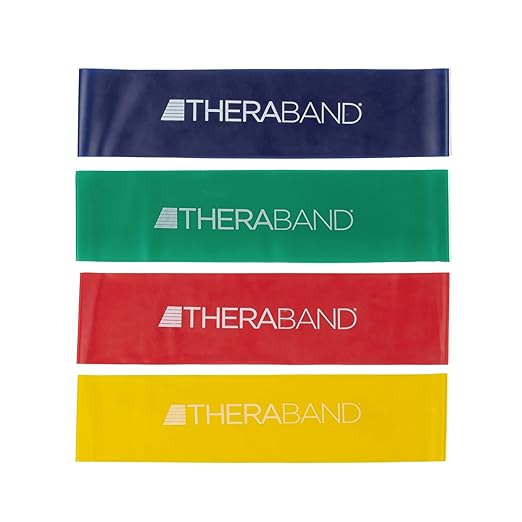
The THERABAND 12-inch Resistance Band Loop 4-Set is a compact elastic-resistance option for lower-body exercises, warm-ups, and selected mobility routines. Different resistance levels may make exercise progression more convenient, but the bands do not independently improve knee stability, correct movement patterns, or accelerate injury recovery. PVL has not independently tested the linked set or verified its precise color-to-resistance chart, material, or package contents.
PVL Rating: 4.1/5 (provisional)
- Portable training convenience: 4.7/5
- Exercise variety: 4.4/5
- Progressive resistance potential: 4.4/5
- Verified exact-set specifications: 2.8/5
- Value pending price and durability: 4.0/5
What Is the THERABAND 12-Inch Loop Set?
The product title identifies a four-band set of continuous elastic loops with a nominal 12-inch size. The original listing describes color-coded resistance levels for exercises involving hips, glutes, and legs. Confirm whether the 12-inch measurement refers to flat length or another dimension, and verify the precise included colors and resistance specifications.
How Do Resistance Loops Work?
Elastic loops create tension as they stretch. Resistance generally changes through the movement, depending on elongation, band properties, and how the loop is positioned. The load is not equivalent to a fixed dumbbell weight. Select a band that allows controlled repetitions without twisting, snapping, or compensating.
Which Exercises Can You Do?
Depending on band size and comfort, loops can be used for lateral steps, standing hip abduction, glute bridges, controlled squat variations, and other resistance drills. The specific movement should suit the band and the user’s abilities. Use an appropriate range of motion and stop if the band shifts unpredictably.
Are They Good for Glute Training?
They can add resistance to certain hip and glute exercises. Strength and muscle development depend on the total exercise program, progressive challenge, and consistency. Feeling muscle activation during a drill does not prove superior long-term results. A loop can complement, but not replace, broader strength training.
Can They Improve Knee Stability?
Hip and leg strengthening may be included in exercise programs that support movement control, but a resistance loop does not automatically stabilize the knee or treat knee pain. Technique and exercise selection matter. People with ongoing knee symptoms should seek an individualized plan rather than assuming one band drill is corrective.
Are They Suitable for Rehabilitation?
Elastic resistance is used in many rehabilitation settings, but appropriate exercises depend on the injury, stage of healing, and clinical goals. Do not use the set to self-treat a recent injury or post-surgical condition without guidance. A physical therapist can help choose resistance and movement safely.
Do They Improve Flexibility?
Resistance loops are primarily tools for adding exercise load. They may be used in certain mobility drills, but the bands themselves do not guarantee flexibility gains. Range-of-motion improvements depend on exercise selection, dosage, and individual factors. Avoid pulling joints into painful positions.
What Do the Colors Mean?
THERABAND commonly uses color coding to distinguish resistance, but the sequence and measured tension can differ across product lines. Do not assume a color from one THERABAND format matches the exact force of another. Verify the current four-set’s color chart and test the lightest suitable option first.
How Should Beginners Choose a Band?
Start with a resistance that allows slow, comfortable, controlled repetitions without losing form. If you cannot complete the intended movement smoothly, reduce resistance or range of motion. More tension is not automatically better. Progress when the exercise becomes manageable at the prescribed effort.
Are the Bands Made From Latex?
THERABAND sells both latex and latex-free resistance products. The original PVL listing does not establish which material is used in this exact set. People with latex allergy should check the manufacturer’s product labeling and avoid use until the composition is confirmed.
Can the Loops Roll or Slip?
Some elastic loops can roll, pinch, or shift during movement, particularly on clothing or when stretched unevenly. Proper placement and a suitable resistance level can help. Do not use a band that is cracked, tacky, torn, or showing permanent deformation.
Can You Use Them for Pilates?
Loops can add resistance to selected Pilates-inspired movements, but the band should not be used in ways that require excessive stretch or unsupported anchoring. Choose exercises that match your ability and the manufacturer’s intended use. An instructor may help adapt positioning safely.
Are They Good for Travel?
Elastic loops are lightweight and compact compared with weights, making them convenient for workouts in small spaces. Avoid stretching them around sharp furniture or unreliable anchor points in hotel rooms. Inspect the band before each session, especially after storage in hot or cramped conditions.
How Do You Clean and Store Them?
Follow the exact product’s care instructions. Keep bands away from sharp edges, excessive heat, direct sunlight during prolonged storage, and harsh chemicals unless approved. Clean gently and dry fully as directed. Store flat or loosely coiled to reduce unnecessary strain.
How Long Do Resistance Loops Last?
There is no verified lifespan for the linked set. Durability depends on material, stretching intensity, storage, and frequency of use. Inspect before each workout for cuts, thinning, cracks, or other damage. Replace worn bands rather than risking sudden failure.
Can They Replace Dumbbells?
Resistance loops can provide meaningful muscular challenge in selected exercises, but their loading pattern and exercise options differ from dumbbells. They are especially convenient for hip and leg drills, yet may not cover all upper-body or heavy strength-training needs. A balanced program may use both.
Who Should Be Cautious?
People with acute injuries, recent surgery, severe joint pain, or known latex allergy should confirm suitability before use. Avoid exercises that create sharp pain, numbness, or uncontrolled joint movement. For rehabilitation, follow the guidance of the treating clinician.
Pros and Cons
Pros
- Compact and easy to transport
- Several resistance levels may support progression
- Useful for selected hip, glute, and lower-body drills
- No batteries or bulky storage required
Cons
- Exact material and tension values need verification
- Can roll, pinch, or snap if damaged
- Not a substitute for individualized rehabilitation
- Less versatile for heavy full-body loading than free weights
Frequently Asked Questions
What are THERABAND 12-inch resistance loops used for?
They add elastic resistance to selected lower-body exercises, warm-ups, and mobility drills. Common applications include lateral steps, hip abduction, and glute bridges when performed with suitable technique. They are not a guaranteed treatment for pain or instability. Choose an appropriate resistance and avoid overstretching the band.
Are THERABAND resistance loops good for beginners?
They can suit beginners because different resistance levels allow gradual exercise progression. Start with the lightest band that provides a manageable challenge, then increase resistance only when movement remains controlled. Check the product’s color chart rather than assuming every THERABAND color corresponds to the same force across product lines.
Do THERABAND loops help strengthen glutes and hips?
They can challenge hip and glute muscles during appropriate exercises. Strength gains depend on consistent training, sufficient effort, and progressive loading, not simply wearing a band. Exercises such as lateral steps or controlled bridges may be useful, but they should complement a balanced strength program tailored to your needs.
Are THERABAND 12-inch loops latex-free?
Latex content is not confirmed for this exact four-band set. THERABAND sells both latex and latex-free resistance products, so material cannot be inferred from the brand name alone. If you have a latex allergy, verify the current manufacturer’s label and retailer listing before purchasing or handling the bands.
Can resistance loops help with knee rehabilitation?
Elastic resistance can be part of a clinician-designed knee rehabilitation program, but the loops do not independently treat knee injuries. The appropriate exercise and resistance depend on the diagnosis and stage of recovery. Consult a physical therapist for persistent pain, instability, or post-surgical care rather than improvising corrective exercises.
How do I prevent THERABAND loops from snapping?
Inspect each loop for cracks, thinning, tears, or other wear before use. Avoid sharp edges, excessive stretching, and unstable anchor points. Follow the manufacturer’s handling and storage instructions, and replace damaged bands promptly. Maintain controlled tension during exercise and keep the band away from your face and eyes.
Final Verdict
PVL Rating: 4.1/5 (provisional). The THERABAND 12-inch Resistance Band Loop 4-Set is a convenient accessory for portable resistance training, especially for selected hip and glute exercises. Its value depends on the exact resistance levels, material, and durability. Confirm the four-band configuration and latex status before purchase.

Reviews
There are no reviews yet.