
Quick Verdict
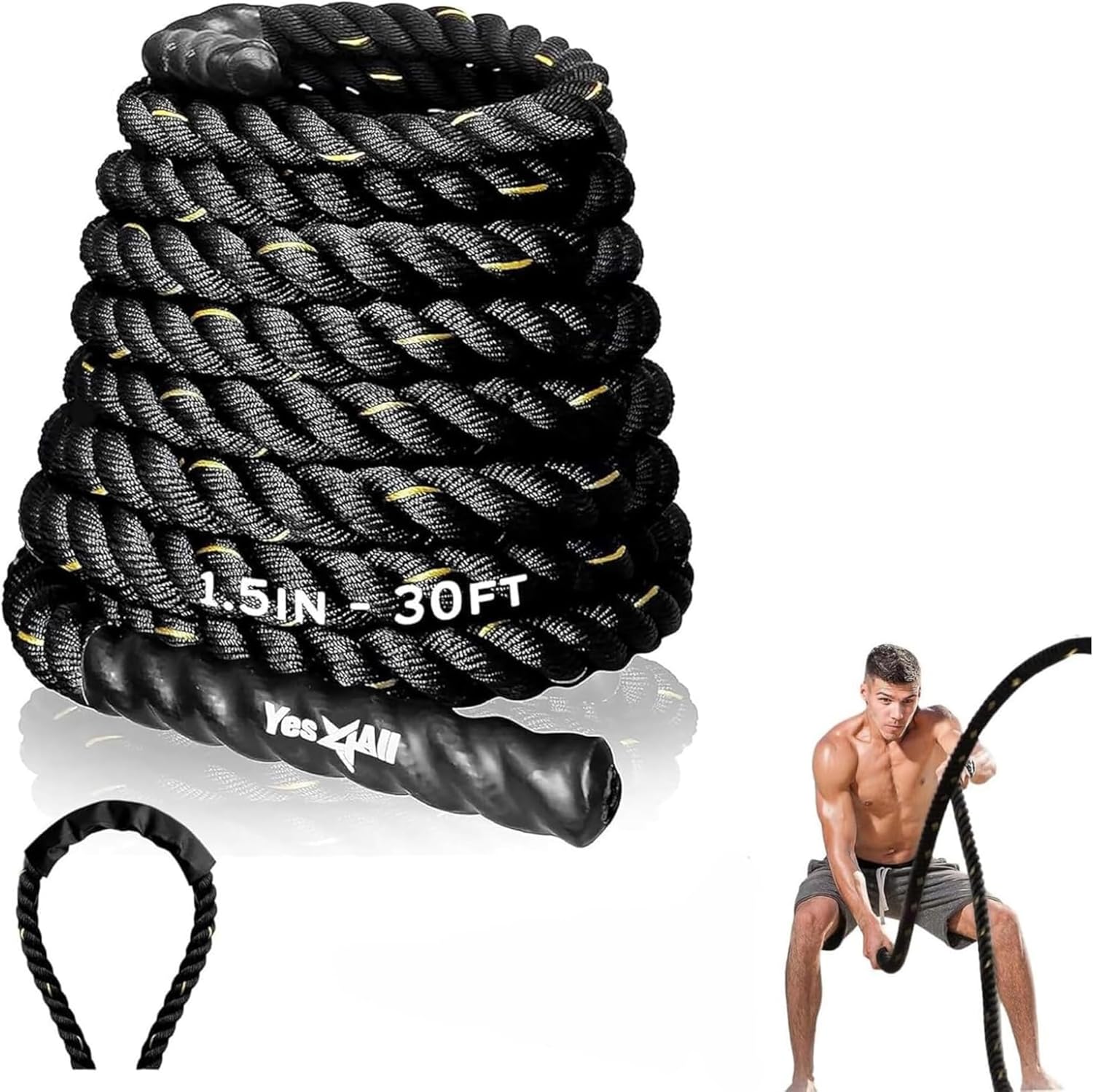
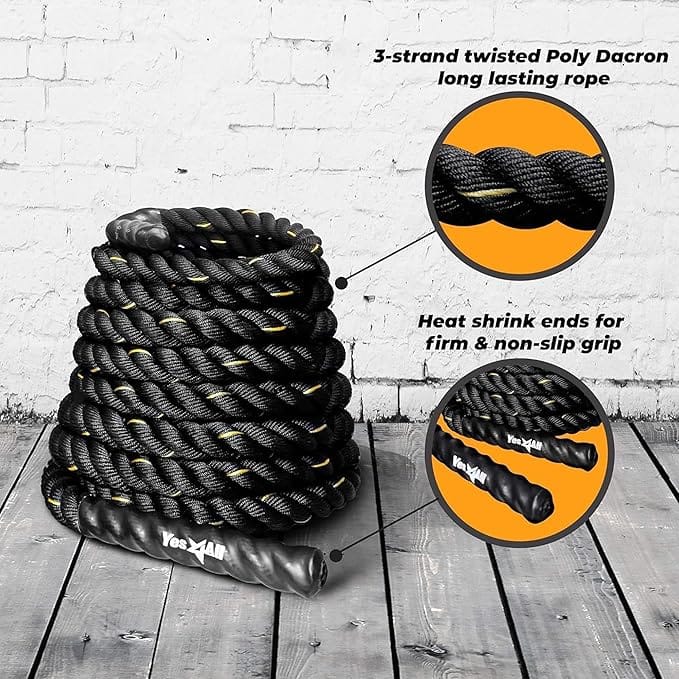
The Yes4All Battle Rope is a conditioning tool for waves, alternating-arm movements, circles, and other controlled rope drills. The original PVL listing describes 30-, 40-, and 50-foot options, 1.5- and 2-inch diameters, braided polyester construction, a protective sleeve, and heat-shrink handles. These specifications have not been independently verified for the currently selected retailer variant. Battle-rope sessions can be physically demanding, but this specific rope is not proven to improve strength, endurance, or athletic performance more than other suitable training equipment.
PVL Rating: 4.0/5 (provisional)
- Conditioning exercise variety: 4.5/5
- Scalable training intensity: 4.3/5
- Grip and upper-body challenge: 4.3/5
- Space and anchoring convenience: 3.0/5
- Verified model-specific durability: 2.8/5
What Is the Yes4All Battle Rope?
It is a long, heavy exercise rope typically folded around a secure anchor so the user holds an end in each hand. Repeated waves and related movements challenge coordination and muscular endurance. The exact size, mass, attachment requirements, and included accessories depend on the selected variant and should be checked before purchase.
How Does Battle-Rope Training Work?
Moving the rope produces traveling waves that require repeated arm movements and trunk control. Intensity changes with rope size, wave amplitude, movement speed, interval duration, and rest. A bigger rope or faster pace is not always better, particularly when technique deteriorates.
Can Battle Ropes Improve Cardiovascular Fitness?
Repeated battle-rope intervals can elevate heart rate and contribute to conditioning when performed consistently at an appropriate intensity. The training effect depends on effort, duration, and progression. Battle ropes are one option among many for aerobic or interval training; they are not essential for heart health.
Do Battle Ropes Build Muscle?
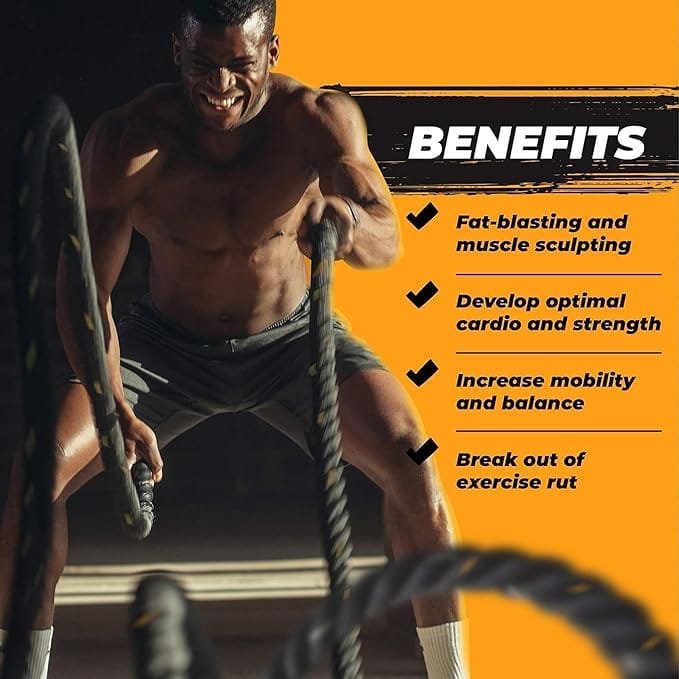
Battle-rope exercises involve the shoulders, arms, forearms, and trunk, with the legs contributing to a stable stance. They can challenge muscular endurance, but they are generally less suited to precise progressive overload for maximal muscle growth than dumbbells, barbells, or machines.
What Is the Difference Between 30, 40, and 50 Feet?
The original listing identifies three possible lengths. Longer ropes usually require more floor space and can feel more demanding to move, depending on diameter and technique. Remember that a rope folded around an anchor extends approximately half its full length toward the user, plus room to move. Verify exact usable length and clearance.
Should You Choose a 1.5-Inch or 2-Inch Rope?
Diameter influences grip demand and overall rope mass. A thicker rope may be harder to hold and move, especially for smaller hands or beginners. Choose based on your conditioning, grip comfort, and available space rather than assuming the thickest option produces the best results.
Which Size Is Best for Beginners?
A shorter, thinner rope may be more approachable, but suitability depends on the product’s actual weight and the user’s fitness. Start with short, controlled intervals and a moderate wave size. Check the manufacturer guidance for recommended space and anchor setup before deciding on a variant.
How Do You Anchor a Battle Rope Safely?
Use a stable anchor specifically suitable for battle-rope loads and follow both the rope and anchor manufacturers’ instructions. Do not attach a rope to an unsecured railing, furniture leg, door handle, or improvised fixture. Inspect attachment points before every session and keep other people out of the rope’s path.
Does the Yes4All Rope Include an Anchor?
The original product description does not confirm an anchor strap or mounting hardware in the package. Do not assume one is included. Check the retailer’s current variant and accessory list. If purchasing a separate anchor, verify that it is compatible with the rope and installation surface.
How Much Space Do You Need?
Battle ropes require enough floor length for the folded rope and a clear standing area. Allow extra side clearance for circles and lateral movements. A 50-foot rope may be impractical in smaller rooms. Measure your space and confirm the manufacturer’s setup recommendations before ordering.
What Are Alternating Waves?
Alternating waves involve moving the hands up and down in opposite directions while maintaining a stable stance. Begin with small waves, relaxed shoulders, and a controlled pace. Keep knees slightly bent and avoid arching the back to force larger movements. Stop when you can no longer maintain form.
Are Double-Arm Waves Effective?
Double-arm waves move both hands together and may feel more demanding than alternating waves. The difficulty depends on amplitude, speed, and rope weight. Start with short intervals and adequate recovery. Avoid jerking the shoulders or holding your breath during repeated efforts.
Can You Do Battle-Rope Slams?
Some workouts use forceful downward rope movements commonly called slams. These can be strenuous and require a stable anchor, appropriate floor surface, and sufficient clearance. Begin with lower-amplitude waves before progressing. Do not strike nearby objects or perform movements that pull the anchor loose.
How Long Should a Beginner Workout Last?
Beginners may start with a few short work intervals separated by generous rest, increasing total time as technique and tolerance improve. There is no universally correct interval length. Prioritize consistency and safe movement over exhausting yourself in the first session.
Can Battle Ropes Be Used for HIIT?
Yes. Battle ropes can be incorporated into high-intensity intervals, but maximal-effort sessions are not required for fitness benefits. Choose work and rest periods suited to your experience. If you are new to exercise, moderate-intensity training may be a better starting point.
Does the Protective Sleeve Prevent Wear?
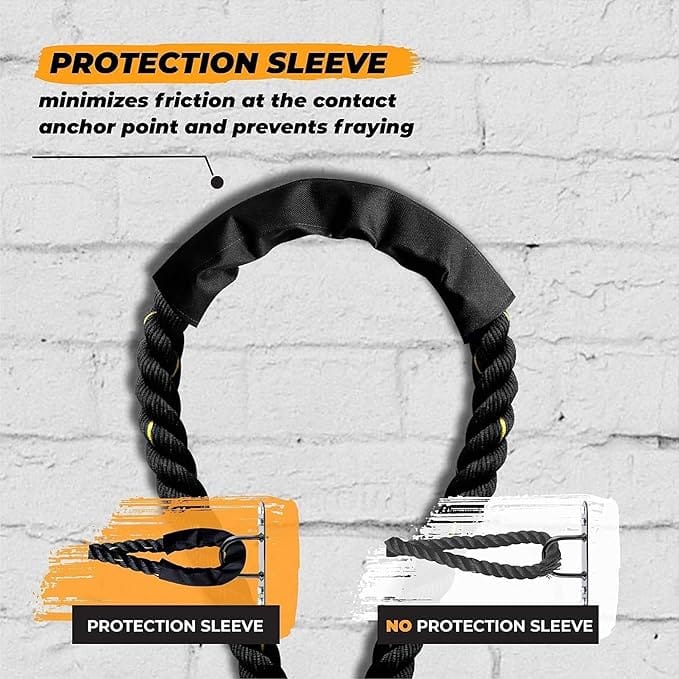
The listing describes an additional protective sleeve, but PVL has not verified its length, placement, or abrasion resistance. A sleeve may help protect high-contact areas, but it does not make the rope damage-proof. Avoid sharp edges and rough surfaces, and inspect the rope regularly for fraying.
Are Heat-Shrink Handles Comfortable?
The original listing mentions heat-shrink handle coverings. Grip comfort depends on handle diameter, texture, hand size, and sweat. PVL has not independently tested the handles. Use a weight and interval duration that allow a secure hold, and stop if your grip becomes unreliable.
Can You Use Battle Ropes Outdoors?
Outdoor use may be possible on a suitable surface with a secure anchor, but abrasive pavement and exposure to moisture or sunlight can accelerate wear. Check the manufacturer’s care instructions. Store the rope clean and dry, and inspect the protective sleeve and handles after outdoor sessions.
Are Battle Ropes Good for Weight Loss?
Battle-rope workouts can contribute to overall physical activity and energy expenditure. Body-weight change depends on many factors, including total activity, diet, and individual circumstances. There is no verified evidence that the Yes4All rope produces a specific calorie burn or guarantees weight loss.
Who Should Use Extra Caution?
People with active shoulder, elbow, wrist, or back symptoms may need modifications or professional guidance. Battle-rope intervals can be intense, so build effort gradually if returning from inactivity. Stop for chest pain, dizziness, unusual breathlessness, or sharp musculoskeletal pain.
Is the Yes4All Battle Rope Worth Buying?
It may be a useful addition to a gym with enough space and a secure anchor, especially for people who enjoy interval conditioning. It is less practical in cramped apartments or where anchor installation is impossible. Compare rope size, total weight, accessories, warranty, and price with alternatives.
Pros and Cons
Pros
- Supports several wave and conditioning variations
- Listed length and diameter choices offer different challenges
- Can train coordination and muscular endurance
- Does not require a motorized cardio machine
Cons
- Needs substantial floor space and a suitable anchor
- Exact rope mass and accessory contents unverified
- Can be demanding on grip and shoulders
- Rough surfaces may accelerate wear
Frequently Asked Questions
What is the Yes4All Battle Rope used for?
It is used for repeated rope waves, controlled slams, and other conditioning movements. These exercises can challenge the arms, shoulders, trunk, and cardiovascular system when performed at a suitable intensity. Results depend on workout design and consistency. A secure anchor and enough clear floor space are essential.
Which Yes4All Battle Rope length should I choose?
Choose a length that fits your available floor space and current conditioning level. The original listing describes 30-, 40-, and 50-foot variants, but current options need confirmation. Longer ropes may feel more demanding and require greater clearance. Measure the area from the anchor to your exercise position before purchasing.
Is a 1.5-inch or 2-inch battle rope better for beginners?
A 1.5-inch rope may be easier to grip and move for many beginners, although individual strength and rope length matter. Thicker ropes often increase grip demands. Select a version that allows controlled waves without shoulder strain. Confirm the actual dimensions and weight of the retailer’s chosen variant.
Does the Yes4All Battle Rope come with an anchor?
The existing product description does not verify whether an anchor strap or mounting hardware is included. Check the selected package contents before ordering. If an anchor must be purchased separately, choose a compatible product and install it according to its instructions. Never use unsecured furniture or improvised attachment points.
Can battle-rope workouts build muscle and burn calories?
Battle-rope exercise can challenge muscular endurance and contribute to energy expenditure, but outcomes depend on intensity, duration, and overall training. It is not a replacement for progressively loaded strength exercises when muscle growth is the goal. No reliable product-specific calorie-burn figure has been verified for this rope.
Can I use the Yes4All Battle Rope at home?
Yes, if your home has adequate floor space, a suitable surface, and a securely installed anchor. Longer ropes may not fit small rooms, and vigorous waves require side clearance. Avoid fragile fixtures and keep bystanders away. Inspect the rope and attachment before each workout to reduce preventable risks.
Final Verdict
PVL Rating: 4.0/5 (provisional). The Yes4All Battle Rope is a potentially useful conditioning accessory for users with sufficient space and a reliable anchor. Its main advantages are exercise variety and adjustable workout intensity, not guaranteed muscle or weight-loss results. Confirm the selected rope size, anchor accessories, and material specifications before purchase.
Reviews
There are no reviews yet.