
Quick Verdict
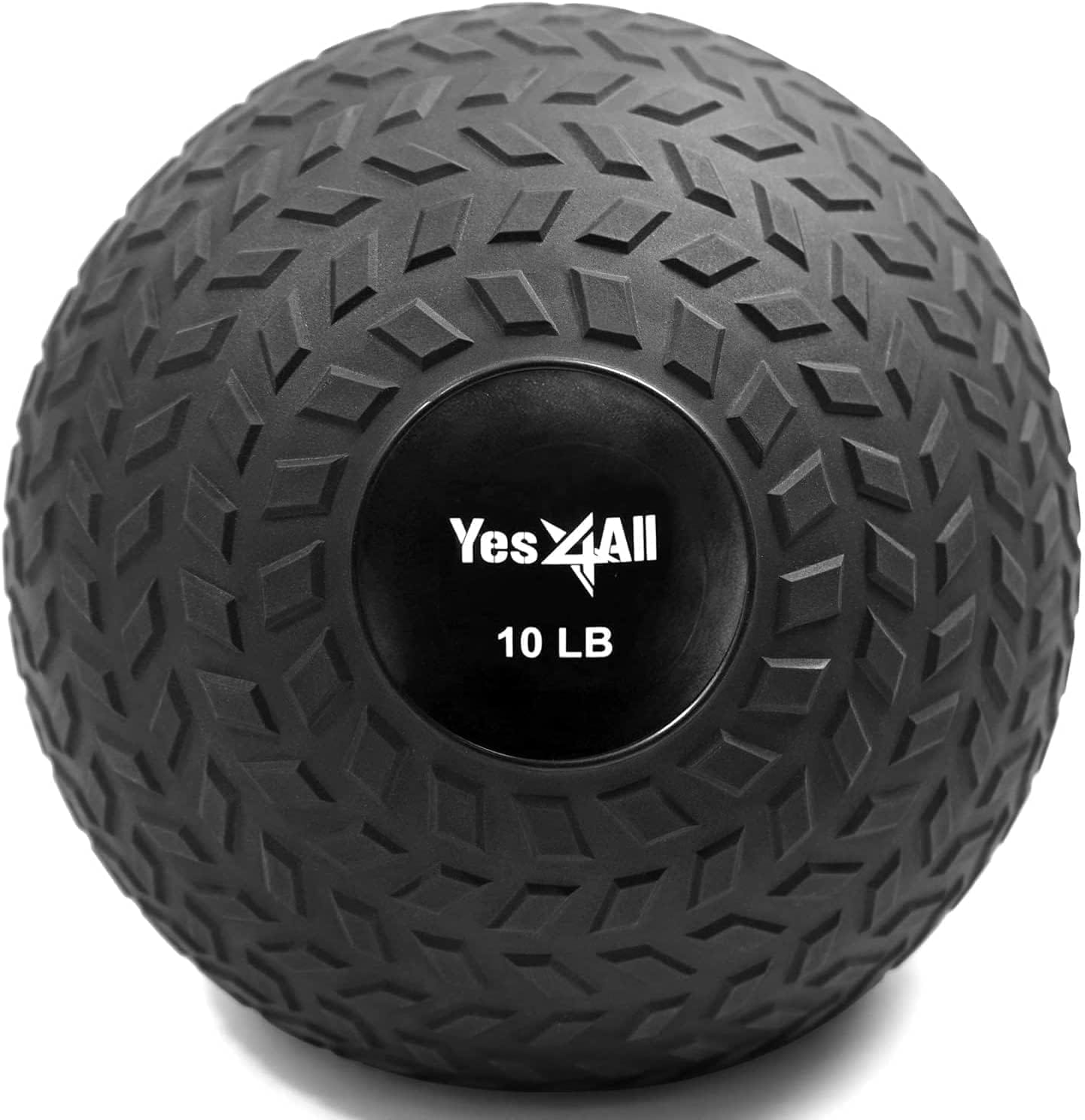
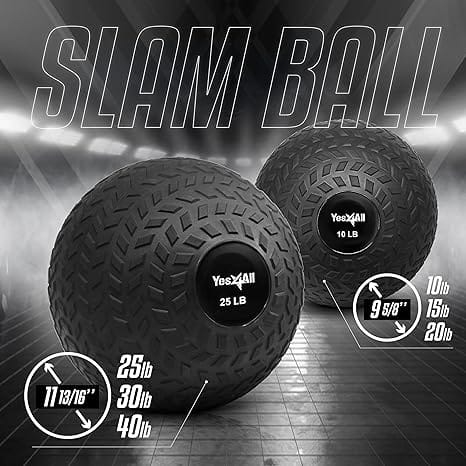
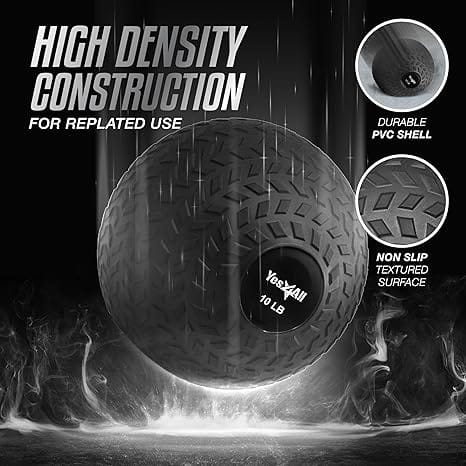
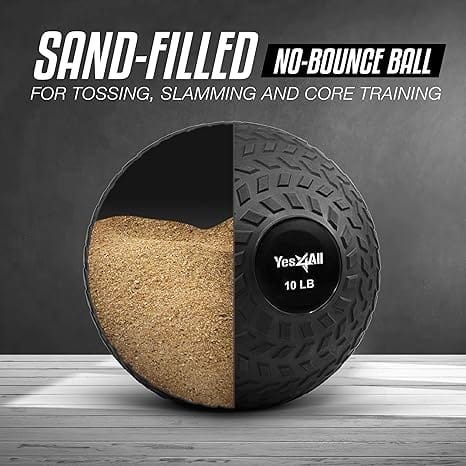
The Yes4All Slam Ball is a weighted training ball intended for controlled floor slams, carries, and selected strength-conditioning exercises. The existing listing describes a PVC shell, sand filling, a textured surface, low-bounce behavior, and weight options from 10 to 40 lb. PVL has not independently verified the selected variant’s construction, load, or impact durability. Slam-ball training can contribute to conditioning, but this specific product is not proven to produce superior power, core strength, or weight-loss outcomes.
PVL Rating: 4.0/5 (provisional)
- Conditioning versatility: 4.5/5
- Suitability for controlled floor slams: 4.3/5
- Weight-selection potential: 4.3/5
- Verified model-specific durability: 2.7/5
- Value pending weight and price: 4.0/5
What Is the Yes4All Slam Ball?
It is a weighted exercise ball marketed for forceful downward slams and functional training. Unlike many traditional medicine balls or wall balls, a slam ball is designed to have limited rebound after striking the floor. The current listing mentions several weights, but buyers should verify whether the retailer offers one selected ball rather than a multi-weight package.
How Does a Slam Ball Work?
The user lifts the ball into a controlled starting position and drives it downward toward a suitable floor, then resets for another repetition. The movement involves coordination between the legs, trunk, shoulders, and arms. Proper technique matters more than using the heaviest ball possible.
What Is the Difference Between a Slam Ball and a Wall Ball?
Slam balls are generally intended for repeated downward impacts, while wall balls are commonly used for controlled throws and catches. Construction and rebound behavior differ. A low-bounce slam ball should not automatically be used for partner catches or wall-ball drills. Follow the manufacturer’s instructions for the exact product.
Does a No-Bounce Design Make It Safer?
Limited rebound may reduce some unpredictable bouncing, but it does not eliminate injury risk. The ball can still slip, roll, or strike feet, hands, or nearby objects. Keep the exercise area clear, choose a manageable weight, and maintain control throughout each repetition.
Which Weight Should You Choose?
The listing mentions 10–40 lb options, but exact current availability is unverified. Beginners should choose a weight they can raise and slam with stable technique without excessive back extension or shoulder strain. Heavier balls may be more suitable for controlled carries or squats than rapid overhead movements.
Is the 10 lb Slam Ball Good for Beginners?
A lighter ball may be easier to manage, but 10 lb is not automatically appropriate for everyone. Start by learning the movement pattern without a ball if necessary. People with shoulder or back limitations may need alternative exercises or individualized instruction.
Can a Slam Ball Improve Power?
Explosive medicine-ball exercises can be part of power training when programmed appropriately, but outcomes depend on technique, speed, load, and overall training. An excessively heavy ball may slow movement and reduce its suitability for power work. PVL has not verified performance gains attributable to this exact Yes4All model.
Can It Improve Cardio Fitness?
Repeated slam-ball drills can raise heart rate and contribute to conditioning, particularly in intervals. Fitness changes depend on workout intensity, duration, and progression. High-intensity slams are not necessary for everyone; controlled squats, carries, or other lower-impact exercises may be more appropriate.
Does It Build Core Strength?
Slams and loaded carries challenge trunk muscles, but the ball does not automatically create superior abdominal strength. Core training can also include conventional resistance exercises, planks, and carries. Avoid exaggerated twisting or arching of the lower back during fast movements.
How Do You Perform a Floor Slam Safely?
Stand on a stable surface with room around you. Lift the ball using controlled movement, brace comfortably, and drive it toward the floor in front of you rather than near your toes. Follow through without collapsing the spine or losing balance. Reset carefully instead of rushing repetitions.
Can You Slam It on Any Floor?
No. Repeated impacts can damage flooring and create noise. Use a suitable training surface approved by the manufacturer, with adequate clearance and no fragile objects nearby. Avoid slick tile, unstable platforms, or areas where the ball could roll into a walkway.
Can You Throw It Against a Wall?
The original listing describes throws generally, but PVL has not verified that this exact model is approved for wall impacts or partner catches. Low-bounce slam balls can behave differently from wall balls. Check the manufacturer instructions before attempting any exercise beyond floor slams and controlled resistance work.
Can You Use It for Squats and Lunges?
Holding a slam ball can add resistance to squats, lunges, and carries. Choose a weight that allows a stable posture and controlled movement. The ball’s shape may make it less convenient than dumbbells for some exercises, especially when fatigue affects grip.
What About Russian Twists?
Rotational exercises may challenge trunk control, but fast or heavily loaded twisting is not appropriate for everyone. People with back pain should consider alternative movements. Start with a small range and manageable load, and stop if twisting causes discomfort.
Is the PVC Shell Durable?
The listing describes a PVC shell and sand-filled interior, but PVL has not independently tested seam integrity, puncture resistance, or long-term impact performance. Inspect the surface for cracks, bulges, leaks, or deformation before use. Replace damaged equipment rather than continuing forceful slams.
Does the Textured Surface Improve Grip?
A textured surface may help some users hold the ball, but actual grip depends on hand size, sweat, weight, and movement speed. Dry your hands when needed and reduce the load if control becomes unreliable. Do not assume texture prevents accidental drops.
Can You Use It in a Small Home Gym?
A slam ball takes less storage space than many machines, but slamming requires a clear impact area and sufficient ceiling height for safe lifting. Noise and flooring concerns may make it impractical in apartments. Controlled carries or squats can be quieter alternatives.
How Should You Maintain It?
Follow Yes4All’s care instructions for the exact model. Wipe down the shell with approved cleaning products, store away from sharp objects and extreme heat, and inspect for leakage or damage. Do not attempt high-impact training with a ball that has lost its shape.
Who Should Be Cautious?
People with recent shoulder, wrist, back, or knee injuries should seek individualized exercise guidance. High-intensity slams may be unsuitable when balance or coordination is impaired. Stop if you experience sharp pain, dizziness, or loss of control. Begin with low-volume practice and progress gradually.
Is It Worth Buying?
The Yes4All Slam Ball may be worthwhile for users who specifically want low-bounce floor-slam training alongside carries and other weighted exercises. If your primary goal is wall throws and catches, a wall ball may be a better match. Compare the selected weight, size, price, and permitted uses.
Pros and Cons
Pros
- Designed for selected floor-slam conditioning drills
- Multiple listed weight options
- Can also support controlled loaded carries and squats
- Compact compared with larger conditioning equipment
Cons
- Impact noise and flooring requirements
- Exact shell durability and available weights unverified
- Not necessarily appropriate for wall throws or catches
- Heavy or rapid slams can compromise technique
Frequently Asked Questions
What is the Yes4All Slam Ball used for?
It is intended for controlled downward slams and selected weighted strength-conditioning exercises. Carries, squats, and lunges may also be appropriate depending on the selected weight. Use a stable training surface and keep the area clear. The ball does not guarantee faster muscle growth or improved athletic performance.
Can I use a Yes4All Slam Ball for wall throws?
Do not assume a low-bounce slam ball is suitable for wall throws or partner catches. Slam balls and wall balls can have different construction and rebound behavior. The exact Yes4All model’s approval for wall impacts is unverified. Follow the manufacturer instructions and choose a wall ball for controlled catching drills.
Which Yes4All Slam Ball weight should beginners choose?
Choose a weight that allows controlled lifting, slamming, and resetting without pain or loss of balance. The original listing mentions 10–40 lb options, but current availability needs confirmation. Start conservatively, learn technique before increasing speed, and avoid a weight that forces excessive lower-back extension or shoulder strain.
Does a slam ball improve core strength and power?
Slam-ball exercises can challenge trunk muscles and contribute to power-oriented conditioning when programmed appropriately. Results depend on load, movement speed, technique, and consistency. A heavier ball is not automatically better for explosive training. The linked product has not been independently shown to outperform other suitable training tools.
Will the Yes4All Slam Ball bounce back after a slam?
The existing listing describes a low-bounce or no-bounce design, but the exact rebound characteristics have not been independently tested. Even a low-bounce ball can move unpredictably after impact. Keep feet and bystanders clear, use an appropriate floor, and reset each repetition under control rather than assuming the ball stays stationary.
Can I use the Yes4All Slam Ball at home?
Yes, if you have adequate clearance and a floor suitable for repeated impacts. Slams can create significant noise and may damage delicate surfaces. Check the manufacturer’s use instructions and consider neighbors or building restrictions. For smaller spaces, controlled carries or squats may be more practical than overhead slams.
Final Verdict
PVL Rating: 4.0/5 (provisional). The Yes4All Slam Ball is a useful option for users who want dedicated floor-slam conditioning and selected loaded exercises. Its value depends on appropriate weight selection, a suitable training surface, and safe technique. Confirm the exact variant, shell specifications, and permitted uses before purchasing.
Reviews
There are no reviews yet.