
Quick Verdict
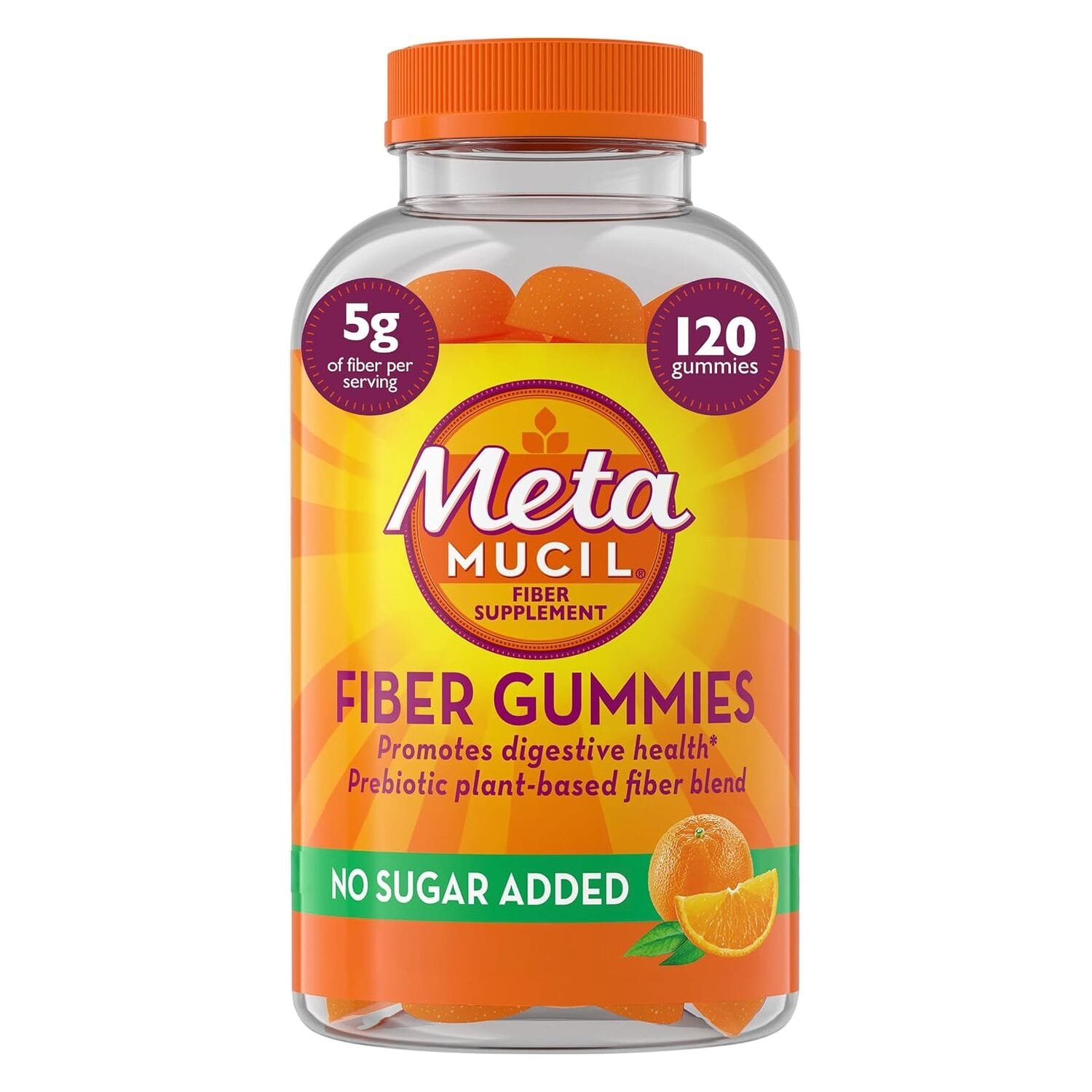
Metamucil Fiber Gummies are a convenient way to add 5 grams of prebiotic fiber without mixing a powder. Their orange flavor and chewable format may make daily use easier, but they are not simply “Metamucil powder in gummy form.” These gummies use inulin and soluble corn fiber (Fibersol), not psyllium husk. That makes them a better fit for convenience and prebiotic fiber support than for shoppers specifically seeking psyllium’s viscous, gel-forming properties.
Best for: Adults and teens 12 and older who want a pleasant, portable way to close a modest fiber gap and can tolerate fermentable fibers.
Consider another option if: You want psyllium for regularity or cholesterol support, need a lower cost per gram of fiber, dislike chewing three gummies per serving, or tend to react strongly to inulin or sugar alcohols.
Metamucil Fiber Gummies at a Glance
| Format | Orange-flavored fiber gummies |
|---|---|
| Fiber sources | Inulin and soluble corn fiber (Fibersol) |
| Labeled serving | 3 gummies |
| Fiber per full serving | 5 g (18% Daily Value) |
| Added sugar | 0 g; the label lists 2 g total sugars |
| Count | 120 gummies |
| Who can use it | Ages 12 and older, according to the label |
| Important distinction | Does not contain psyllium husk |
What Are Metamucil Fiber Gummies?
Metamucil Fiber Gummies are a plant-based prebiotic fiber supplement made for people who prefer chewing gummies to mixing powder or swallowing capsules. A full three-gummy serving provides 5 grams of dietary fiber, equal to 18% of the FDA Daily Value of 28 grams.
The recognizable brand name can cause confusion. Classic Metamucil powder is built around psyllium husk. The gummies instead contain inulin and soluble corn fiber. Both count as dietary fiber, but fiber types are not interchangeable: viscosity, fermentability, tolerance, and the strength of evidence for specific outcomes differ.
That does not make the gummies a poor product. It means the most defensible reason to buy them is convenience and added prebiotic fiber—not an assumption that every benefit associated with psyllium automatically applies.
Ingredients and Supplement Facts
Inulin
Inulin is a fermentable prebiotic fiber commonly derived from plants. Gut bacteria can use it as a substrate, which is why brands position it as support for beneficial bacteria. Fermentation can also produce gas. People with IBS or sensitivity to fermentable carbohydrates may find inulin less comfortable, especially when they start with a full serving.
Soluble corn fiber (Fibersol)
Fibersol is a soluble, digestion-resistant fiber. It adds fiber with relatively little sweetness and complements inulin in the formula. It is not the same as psyllium: it does not form the same thick gel in liquid and should not be expected to reproduce psyllium’s full evidence profile.
Other ingredients
The current orange formula lists water, xylitol, pectin, citric acid, sodium citrate, natural orange flavor, coconut oil with carnauba wax, and annatto color. Pectin supplies the gummy structure. Xylitol helps sweeten the product without added sugar, but larger amounts of sugar alcohols can cause digestive discomfort in some people. Check the bottle you receive because formulas and packaging can change.
Does It Work?
The clearest established effect is simple: a full serving adds 5 grams of dietary fiber. That can help close a fiber gap, but it does not by itself prove that the finished gummies treat constipation, lower cholesterol, improve blood glucose, or produce a clinically meaningful change in the microbiome.
Inulin has human evidence beyond its fiber count. Meta-analyses of inulin and inulin-type fructans have reported increases in stool frequency or other bowel-function measures in some populations, and a 2022 systematic review found bifidogenic effects across trials using roughly 3–20 grams per day of chicory-derived inulin-type fructans. However, those studies used specific inulin preparations and doses; the Metamucil label does not disclose how the gummies’ 5 grams of total fiber are divided between inulin and soluble corn fiber. We therefore cannot assume the finished three-gummy serving reproduces a particular inulin trial.
The word prebiotic also deserves precision. The ISAPP consensus definition requires a substrate to be selectively used by host microorganisms and confer a health benefit. A change in bacterial abundance is not automatically evidence that a consumer will feel better or that a disease has been prevented or treated.
PVL did not identify a randomized controlled trial of the finished Metamucil Fiber Gummies demonstrating improved constipation, cholesterol, blood glucose, or other clinical outcomes. For shoppers seeking psyllium’s better-established viscous-fiber evidence, the classic psyllium formulation remains a different product with a different evidence base.
Metamucil Gummies vs. Metamucil Powder
| Feature | Fiber Gummies | Classic Powder |
|---|---|---|
| Main fiber | Inulin + soluble corn fiber | Psyllium husk |
| Preparation | Chew; no mixing | Mix promptly with liquid |
| Texture | Soft gummy | Thickened drink |
| Best reason to choose | Convenience and prebiotic fiber | Psyllium’s viscous fiber profile |
| Cost efficiency | Usually higher per gram | Usually lower per gram |
| Main tolerance concern | Fermentation, gas, xylitol | Thick texture; requires adequate fluid |
Choose based on fiber type and intended use, not only the logo. Readers seeking more detail can see our complete Metamucil powder review.
How to Take Metamucil Fiber Gummies
The label is for ages 12 and older and identifies three gummies as one full serving. New users are directed to start with one to three gummies daily and increase gradually as desired. The label allows up to three servings per day and says not to exceed the recommended amount.
Starting slowly is sensible. Jumping rapidly from a low-fiber diet to several servings of fermentable fiber may increase gas, bloating, cramps, or changes in bowel habits. Fluids still matter even though the gummies do not thicken like psyllium. Spread fiber across the day and evaluate tolerance before increasing.
Potential Benefits
- Convenient fiber: No shaker, measuring scoop, or thick drink is required.
- Meaningful dose: Five grams is 18% of the current 28-gram Daily Value.
- Prebiotic-fiber rationale: Inulin has evidence for microbiota and bowel-function effects at studied doses, but the finished gummy blend has not been shown to deliver every outcome associated with inulin research.
- No added sugar: The label lists zero grams of added sugar.
- Plant-based gummy structure: Pectin is used instead of gelatin.
- Flexible starting amount: One gummy provides a gentler entry point than immediately taking a full serving.
Limitations and Side Effects
- Not psyllium: The largest potential misunderstanding is assuming the gummies match classic Metamucil powder.
- Possible gas and bloating: Fermentable fibers can cause discomfort, particularly during the adjustment period.
- Three gummies per serving: Frequent use consumes the bottle faster than the 120-count headline may suggest.
- Higher cost per gram: Convenience generally costs more than basic fiber powder.
- Xylitol: It may cause GI symptoms in sensitive users and is highly dangerous to dogs; store the bottle securely.
- Not a complete diet substitute: The product lacks the nutrient diversity of high-fiber foods.
Safety and Who Should Ask a Clinician First
Consult a healthcare professional before use if you are pregnant or breastfeeding, take prescription medication, have persistent abdominal pain, unexplained changes in bowel habits, difficulty swallowing, or a diagnosed gastrointestinal condition. Fiber can change how quickly some medicines are absorbed, so ask a pharmacist about appropriate spacing rather than guessing.
Stop and seek advice if symptoms are severe or persistent. Keep the gummies away from young children and pets. A supplement should not be used to self-treat rectal bleeding, severe pain, vomiting, or a sudden bowel change that does not resolve.
Pros and Cons
Pros
- 5 g fiber per labeled serving
- Easy chewable format
- No added sugar
- Prebiotic plant-based fiber blend
- Pectin-based rather than gelatin-based
- Simple gradual-start directions
Cons
- No psyllium husk
- May trigger gas or bloating
- Contains xylitol
- Three gummies needed for 5 g
- Usually less economical than powder
- Not a replacement for whole-food fiber
Who Should Consider It?
Metamucil Fiber Gummies make the most sense for an adult or teenager who has trouble staying consistent with powders, wants 5 grams of supplemental fiber in a pleasant format, and tolerates inulin. They may also suit travelers or people who want a measured serving without mixing.
They are less compelling for someone targeting a specific psyllium benefit, managing IBS symptoms that worsen with fermentable fibers, or prioritizing the lowest cost per gram. Our guides to the best supplements for gut health and supplements for digestion provide broader options.
Value for Money
At the supplied price of $24.95, a 120-count bottle contains 40 full three-gummy servings. That works out to about $0.62 per full serving, or roughly $0.12 per gram of fiber. The value is reasonable for a branded, convenient gummy, but basic powders can be cheaper. The strongest value argument is adherence: a slightly more expensive supplement can be worthwhile if the format is the one you will actually use.
Final Verdict
Metamucil Fiber Gummies earn a PVL rating of 4.3/5. They deliver a useful 5 grams of fiber in an accessible, no-added-sugar gummy and clearly fit the buyer who avoids mixed drinks. The formula is transparent and practical. However, the gummies are not a substitute for psyllium-based Metamucil, and sensitive users may experience bloating from inulin or xylitol. Buy them for convenience and prebiotic fiber—not because the Metamucil name makes every format equivalent.
Frequently Asked Questions
Do Metamucil Fiber Gummies contain psyllium?
No. The orange Metamucil Fiber Gummies described here use inulin and soluble corn fiber, also identified as Fibersol, rather than psyllium husk. That matters because different fibers have different properties and supporting evidence. Do not assume these gummies deliver the same effects as Metamucil’s psyllium-based powders or capsules; check the exact product label.
How many Metamucil gummies should I take?
The reviewed label lists three gummies as a full serving and recommends a gradual start for new users. Follow the directions on your current bottle, since serving recommendations can change. Starting with a smaller amount may help you assess digestive tolerance. Avoid exceeding the labeled serving to make up for fiber missing from your diet.
How much fiber is in three gummies?
The label reviewed for this article provides 5 grams of dietary fiber in a three-gummy serving, listed as 18% of the Daily Value. Check the current Nutrition Facts panel to confirm. This amount can contribute to daily fiber intake, but gummies should complement rather than replace fiber-rich foods such as beans, vegetables, fruits, and whole grains.
Do the gummies have sugar?
The reviewed Nutrition Facts panel lists 2 grams of total sugar and no added sugar per three-gummy serving. The formula also contains xylitol, a sugar alcohol used for sweetness. Check the current ingredient list if you monitor sugars or sweeteners. Sugar alcohols may cause digestive discomfort in some people, and xylitol is highly toxic to dogs.
Can Metamucil gummies cause bloating?
Yes. Inulin is a fermentable fiber that can increase gas or bloating, especially when someone raises their fiber intake quickly. Individual tolerance varies, and the gummies are not guaranteed to reduce digestive discomfort. Introduce them gradually, drink fluids regularly, and seek medical advice if symptoms are severe, persistent, or accompanied by concerning changes.
Are Metamucil gummies good for constipation?
The gummies provide dietary fiber and may help support bowel regularity for some people, but they do not contain psyllium and should not be assumed to work like psyllium-based laxative products. Effects depend on the type and amount of fiber and individual circumstances. Persistent constipation or new bowel symptoms should be discussed with a healthcare professional.
Can I take Metamucil gummies with medication?
Ask a pharmacist or clinician if you use prescription medicines, because adding fiber can sometimes affect medication absorption or dosing schedules. The appropriate spacing depends on the specific drug, and the product label advises consultation. Do not stop or adjust prescribed treatment on your own; check the current directions and seek individualized advice.
Are they suitable for children?
The product label reviewed here is intended for people aged 12 and older. Do not assume it is appropriate for younger children without guidance from a pediatric healthcare professional. Keep gummies securely stored because their candy-like appearance may encourage accidental overconsumption. Follow the current package directions and consider dietary fiber from food first.
References
- U.S. Food and Drug Administration: Understanding the Nutrition Facts Label
- NIDDK: Fiber and digestive tolerance
- NIH News in Health: Dietary and isolated fiber
- Gibson GR, et al. ISAPP consensus statement on the definition and scope of prebiotics. Nat Rev Gastroenterol Hepatol. 2017.
- Collado Yurrita L, et al. Chicory-derived inulin-type fructans, Bifidobacterium and bowel function: systematic review and meta-analyses. 2022.
- Collado Yurrita L, et al. Inulin and chronic constipation indicators: meta-analysis of randomized trials. 2014.
- Metamucil gummy product information
Reviews
There are no reviews yet.