Quick Answer
The best supplements for digestion match a specific need, not every symptom: psyllium may help constipation and lactase may help lactose intolerance. Probiotics and combination formulas are not universal digestive treatments, and AGA advises against probiotics for abdominal bloating and distention. Persistent pain, bleeding, weight loss or major bowel changes need assessment before supplement experimentation.
What Has Better Evidence—and What Does Not?
Match the option to a defined need: psyllium has evidence for chronic idiopathic constipation, and lactase may help lactose intolerance. These findings do not establish that a broad gut-health blend improves digestion in everyone. Probiotic effects depend on the exact strain, preparation, population and outcome; higher CFUs or more strains do not guarantee more benefit.
For abdominal bloating and distention, AGA best-practice advice advises against probiotics as treatment. Constipation, food intolerance and other causes may need different approaches. AGA–ACG constipation guidance supports a trial of fiber in appropriate adults, with the clearest evidence among evaluated fibers for psyllium; gas can occur. Follow fluid and medicine-spacing instructions, and ask first if you have trouble swallowing or suspected bowel obstruction.
Safety Before Supplements
Persistent or worsening digestive symptoms need assessment. Seek urgent care for severe abdominal pain, repeated vomiting, black or bloody stools, fainting or marked dehydration. Unexplained weight loss, greasy stools or persistent bowel changes also deserve medical attention. Symptoms alone cannot diagnose low enzymes or an unhealthy microbiome.
Ask a clinician or pharmacist before using supplements if you are pregnant, breastfeeding, considering a product for a child, taking medicines or managing a medical condition. Live-microbe supplements require particular caution in people who are seriously ill or immunocompromised; see NCCIH’s probiotic safety guidance.
Key Takeaways
- Match the supplement to the need. Probiotics, enzymes, fiber, and synbiotics work in different ways.
- Probiotic benefits are strain-specific. A higher CFU count does not automatically make a product better.
- Increase fiber and prebiotics gradually. Starting too quickly may worsen gas or bloating.
- Test one product at a time. This makes benefits and side effects easier to identify.
- Persistent or severe symptoms need evaluation. Supplements should not delay appropriate medical care.
- What Has Better Evidence—and What Does Not?
- Safety Before Supplements
- Key Takeaways
- Introduction
- Explore Our In-Depth Supplements for Digestion Reviews
- Why Digestive Health Matters
- Symptoms Do Not Identify a Supplement Need
- Types of Supplements for Digestion
- How to Read These Product Examples
- The Best Supplements for Digestion
- How We Chose the Best Digestive Supplements
- How to Choose the Right Supplement for Digestion
- Natural Ways to Support Digestion
- Common Mistakes to Avoid
- Frequently Asked Questions
- Final Verdict
- Conclusion
Introduction
Digestive issues are incredibly common.
Many people experience occasional bloating, gas, indigestion, constipation, or digestive discomfort at some point. Modern lifestyles often include processed foods, chronic stress, inadequate sleep, and insufficient fiber intake, all of which can negatively affect digestive health.
The digestive system does far more than simply process food. A healthy digestive tract supports nutrient absorption, immune function, energy production, and even mental well-being through the gut-brain connection.
While healthy eating remains the foundation of digestive wellness, supplements can provide additional support when dietary intake or lifestyle habits fall short.
The supplement aisle, however, can be overwhelming. With thousands of probiotics, digestive enzymes, fibers, and gut health products available, choosing the right supplement can be challenging.
This guide reviews the best supplements for digestion in 2026, explains how they work, and helps you determine which option may best support your digestive needs.
Explore Our In-Depth Supplements for Digestion Reviews
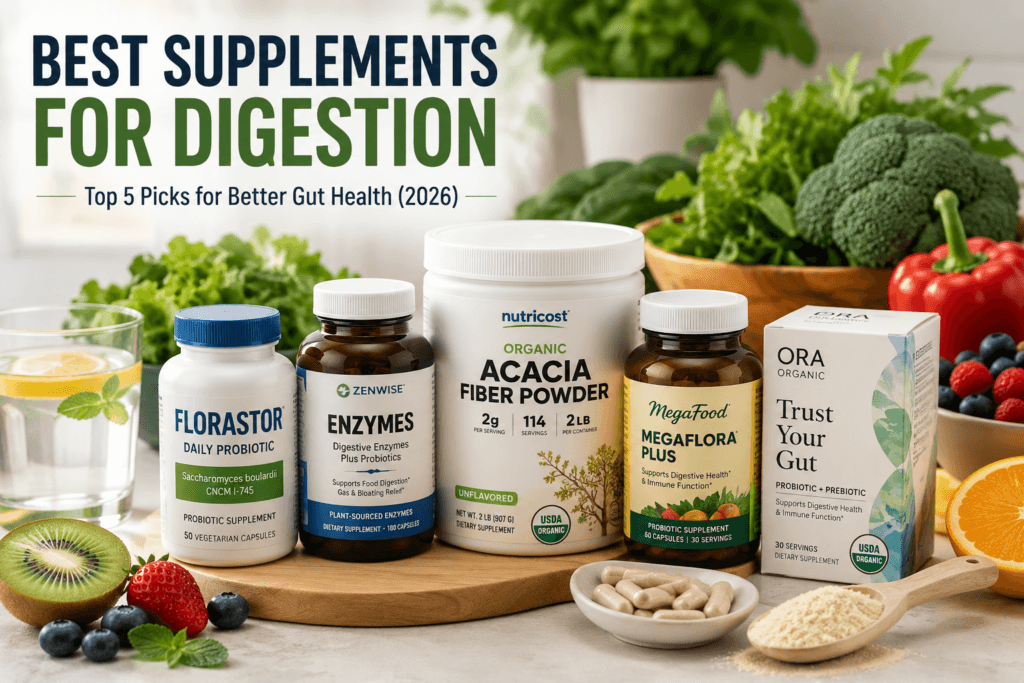
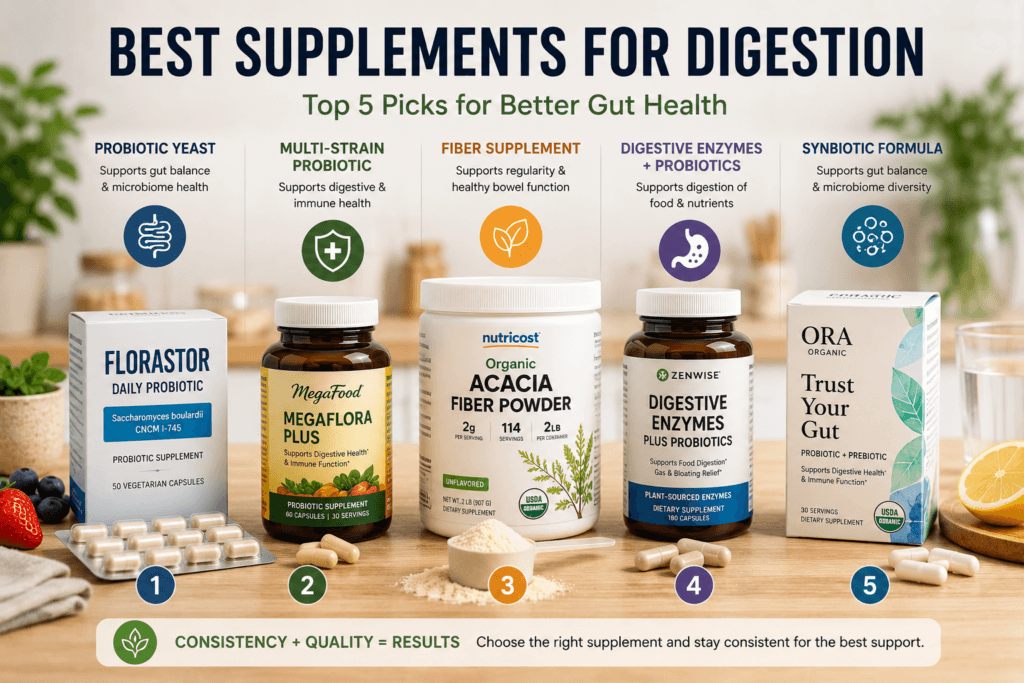
Florastor Probiotic for Digestive and Immune Health — 100 Capsules
Florastor features the well-researched probiotic yeast Saccharomyces boulardii, designed to support digestive balance and overall gut wellness.
MegaFood MegaFlora Plus Daily Probiotic
MegaFood MegaFlora Plus provides a multi-strain probiotic blend intended to support digestive balance and microbiome diversity. The strain mix and storage directions should be checked on the current product label.
Zenwise Digestive Enzymes Plus Probiotics
Zenwise Digestive Enzymes combines enzymes, probiotics, and prebiotics to help support food digestion and digestive comfort after meals.
Nutricost Organic Acacia Fiber Powder
Nutricost Organic Acacia Fiber Powder provides organic acacia fiber designed to support digestive regularity, gut comfort, and healthy bowel function.
Ora Organic Trust Your Gut Probiotic + Prebiotic
Ora Organic Trust Your Gut combines probiotics and prebiotic fiber to support digestive balance, microbiome diversity, and overall gut health.
Why Digestive Health Matters
Good digestion influences nearly every aspect of health.
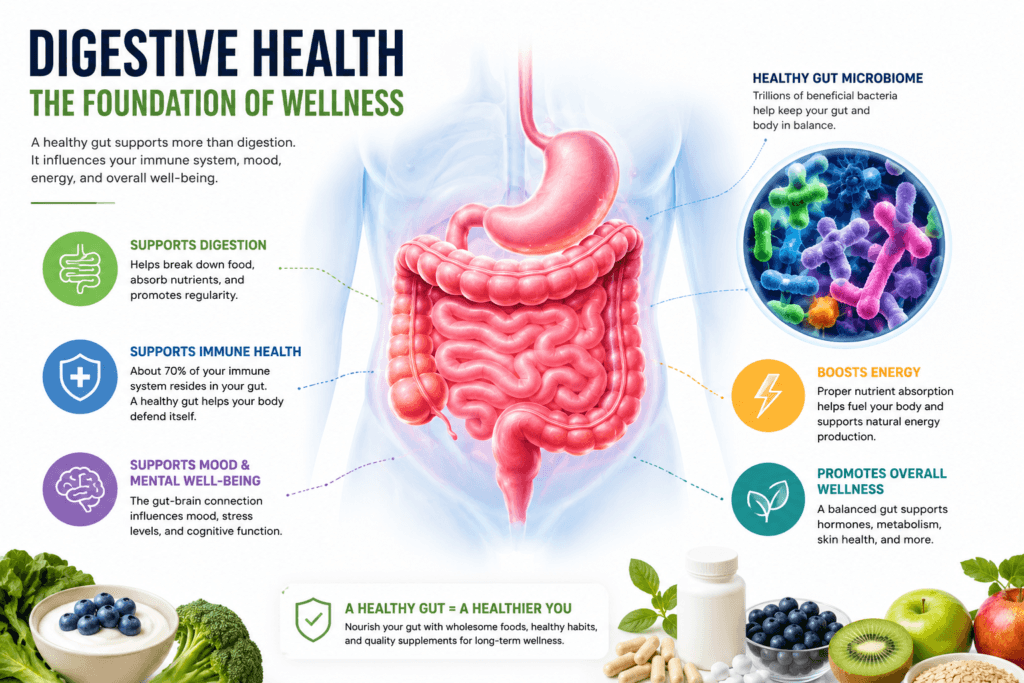
The digestive tract is responsible for breaking down food, absorbing nutrients, supporting immune defenses, and maintaining a balanced gut microbiome.
When digestion isn’t functioning optimally, symptoms such as bloating, gas, abdominal discomfort, constipation, diarrhea, or irregular bowel movements may occur.
Research also continues to highlight the importance of the gut microbiome. Trillions of microorganisms live in the digestive tract and play important roles in:
- Supporting digestion
- Producing certain vitamins
- Supporting immune health
- Influencing metabolism
- Contributing to overall wellness
Poor digestive health may affect energy levels, mood, sleep quality, and daily comfort. Our guide to the mind-gut connection explains how digestive symptoms and stress can influence one another.
Supporting digestive health through nutrition, hydration, movement, stress management, and targeted supplements may help promote long-term wellness.
Symptoms Do Not Identify a Supplement Need
Frequent bloating, indigestion, gas and post-meal discomfort do not prove low digestive enzymes or a need for probiotics. Low fiber intake may justify a food-first review, while persistent symptoms require assessment. After antibiotics, probiotic decisions depend on the exact strain, indication and personal risks—not a general need to restore diversity.
Types of Supplements for Digestion
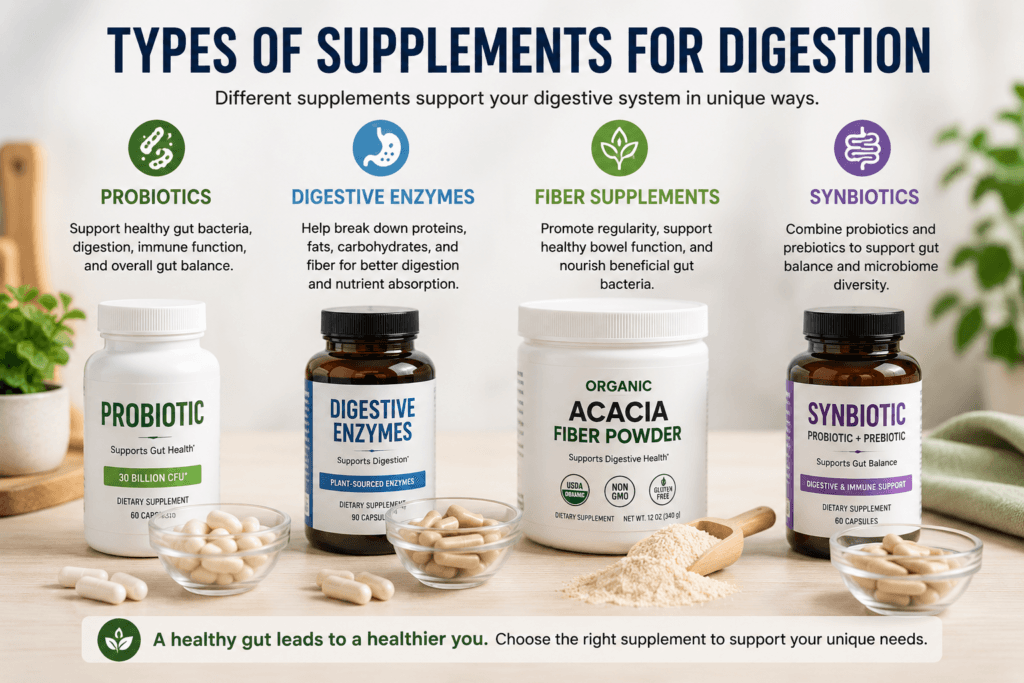
Understanding the major categories of digestive supplements can help you choose the right product.
Probiotics
Probiotics contain beneficial microorganisms that may help support digestive balance and microbiome health.
Different probiotic strains perform different functions. Some strains primarily support digestive comfort, while others focus on regularity, immune health, or microbiome diversity. For a broader food-first strategy, see how to heal your gut microbiome naturally.
Probiotic supplements are among the most popular digestive products because of their broad potential benefits.
Digestive Enzymes
Digestive enzymes help break down proteins, fats, carbohydrates, fiber, and dairy components found in food.
Symptoms alone do not establish enzyme deficiency. Diagnosed pancreatic insufficiency needs prescription enzyme treatment; OTC blends should not substitute for it.
Targeted enzymes can address particular food components. That does not establish better nutrient absorption or relief of nonspecific post-meal discomfort from a broad blend.
Fiber Supplements
Fiber plays an essential role in digestive health.
Fiber supplements may help support:
- Regular bowel movements
- Stool consistency
- Beneficial gut bacteria
- Overall digestive wellness
Psyllium, acacia fiber, and partially hydrolyzed guar gum are common forms of supplemental fiber.
Synbiotics
Synbiotics combine probiotics and prebiotics in a single formula.
Prebiotics serve as food for beneficial gut bacteria, while probiotics introduce beneficial microorganisms into the digestive tract.
Combining a probiotic and prebiotic is not automatically more effective. The exact formulation needs relevant evidence, and added fermentable fiber can worsen gas.
Comprehensive Gut Health Formulas
Some supplements combine probiotics, prebiotics, digestive enzymes, herbs, and other nutrients into a comprehensive digestive support formula.
These products aim to provide broad digestive support through multiple mechanisms.
How to Read These Product Examples
These are research-based editorial examples, not reports of hands-on product testing. Evidence for an ingredient or strain does not prove that every finished formula works. Retailer ratings, popularity and quality seals do not establish clinical benefit. Check the current formula, allergens, serving size, seller, expiry and storage instructions before buying.
The Best Supplements for Digestion
1. Florastor Daily Probiotic — Yeast Probiotic Example
Category: Probiotic Support
Florastor contains the probiotic yeast Saccharomyces boulardii CNCM I-745, one of the most extensively studied probiotic strains available.
Unlike many bacterial probiotics, Saccharomyces boulardii is a beneficial yeast that survives stomach acid effectively and supports digestive balance throughout the intestinal tract.
Pros
- Contains a well-researched probiotic strain
- Supports digestive and microbiome health
- As a probiotic yeast, it is not directly inactivated by antibacterial antibiotics; timing and suitability should still be discussed with a clinician
- Shelf stable
Cons
- More expensive than some probiotics
- Contains only one probiotic strain
Best For
People considering this exact strain for an evidence-supported indication with appropriate safety advice.
2. Zenwise Digestive Enzymes Plus Probiotics — Combination Example
Category: Digestive Enzyme Support
Zenwise Digestive Enzymes combines digestive enzymes, probiotics, and prebiotics in a comprehensive formula designed to support food breakdown and digestive comfort.
The enzyme blend helps digest proteins, fats, carbohydrates, vegetables, and dairy products.
Many users choose digestive enzymes when they experience occasional bloating or heaviness after meals.
Pros
- Multi-enzyme formula
- Includes probiotics and prebiotics
- Supports nutrient breakdown
- Use only when the formulation and need are appropriate
Cons
- Not necessary for everyone
- Results may vary based on diet
Best For
Individuals who frequently experience occasional bloating or digestive discomfort after meals.
3. Nutricost Organic Acacia Fiber Powder — Fiber Example
Category: Fiber & Regularity Support
Nutricost Organic Acacia Fiber Powder contains soluble acacia fiber, a gentle prebiotic fiber that helps support digestive regularity and beneficial gut bacteria.
Acacia fiber tolerance varies; it can also cause gas or bloating. It should not be presented as reliably better tolerated or more effective than psyllium for constipation.
Pros
- USDA Certified Organic
- Tolerance varies; gas or bloating can occur
- Supports digestive regularity
- Non-GMO and gluten-free
- Tasteless and easy to mix
Cons
- Requires consistent use for best results
- May not provide immediate relief for constipation
Best For
Individuals seeking gentle daily fiber support, digestive regularity, and overall gut health.
4. MegaFood MegaFlora Plus — Multi-Strain Example
Category: Multi-Strain Probiotic Support
MegaFood MegaFlora Plus contains multiple probiotic strains designed to support digestive balance, microbiome diversity, and immune health.
More strains do not establish broader or better clinical benefit. Evaluate evidence for the exact mixture and intended use.
The product is formulated to help maintain healthy gut flora and support overall digestive wellness.
Pros
- Multi-strain probiotic blend
- Supports microbiome diversity
- Trusted supplement brand
- Supports digestive and immune health
Cons
- Requires refrigeration after opening
- Premium price point
Best For
People assessing the exact strain mixture and intended outcome; daily use is not required for everyone.
5. Ora Organic Trust Your Gut Probiotic + Prebiotic — Synbiotic Example
Category: Synbiotic Support
Ora Organic Trust Your Gut combines probiotics with prebiotic fiber to support digestive health and microbiome balance.
By combining both probiotics and prebiotics, this formula aims to provide beneficial bacteria while simultaneously supplying nutrients that help those bacteria thrive.
The product is vegan, organic, and formulated to support digestive comfort and regularity.
Pros
- Combines probiotics and prebiotics
- Organic and vegan-friendly
- Supports microbiome balance
- Convenient daily formula
Cons
- More expensive than some standalone probiotics
- Some users may require time to adjust
Best For
Individuals seeking comprehensive microbiome support in a single supplement.
How We Chose the Best Digestive Supplements
Selecting the best supplements for digestion involved evaluating several important factors.
Ingredient Quality
This is a research-based editorial comparison, not hands-on testing or a verified clinical ranking. Ingredient evidence is distinguished from evidence for a finished formula.
Scientific Support
Products containing well-researched probiotic strains, digestive enzymes, and fiber sources received greater consideration.
Brand Reputation
We considered companies with strong reputations for quality, transparency, and manufacturing standards.
Third-Party Testing
Check current independent testing documentation and its scope; no blanket certification or efficacy verification is implied for every product listed.
Customer Reviews
Consumer reviews are anecdotal; they were not treated as controlled evidence of efficacy or safety.
Overall Value
Price, ingredient quality, serving size, and product effectiveness were all considered when evaluating value.
How to Choose the Right Supplement for Digestion
The best digestive supplement depends on your specific symptoms and goals.
Choose Based on Your Symptoms
Different digestive issues often require different approaches.
- Bloating after meals → assess triggers and causes; enzymes only for a relevant food target
- Irregular bowel movements → Fiber supplements
- General digestive support → review diet and symptoms; no default probiotic
- Recent antibiotic use → discuss indication-specific evidence and risks
- Combination formulas → no automatic advantage
Look for Evidence-Based Ingredients
Prioritize products containing well-studied ingredients rather than proprietary blends with limited research.
Prioritize Quality and Testing
Choose reputable brands that provide transparent ingredient lists and quality testing information.
Consider Dietary Preferences
Some products are vegan, organic, gluten-free, or allergen-friendly. Select products that align with your dietary needs.
Natural Ways to Support Digestion
Supplements work best when combined with healthy lifestyle habits.
Eat More Fiber
Consuming fruits, vegetables, legumes, nuts, seeds, and whole grains helps support digestive health and beneficial gut bacteria.
Stay Hydrated
Adequate hydration supports normal digestion and healthy bowel function.
Exercise Regularly
Physical activity helps promote healthy digestion and regular bowel movements.
Manage Stress
Chronic stress can negatively affect digestive function and the gut microbiome.
Stress-management practices such as meditation, walking, breathing exercises, and relaxation techniques may help support digestive wellness.
Improve Sleep Quality
Poor sleep may negatively influence digestion and gut health. Prioritizing quality sleep supports overall wellness.

Common Mistakes to Avoid
Taking Too Many Supplements
More is not always better. Begin with one supplement and assess how your body responds.
Ignoring Diet Quality
Supplements should complement—not replace—a healthy diet rich in whole foods.
Expecting Instant Results
Many digestive supplements require several weeks of consistent use before noticeable improvements occur.
Choosing Products Based Only on Price
The cheapest option is not always the best. Ingredient quality and research matter.
Frequently Asked Questions
What are the best supplements for digestion?
The best supplements for digestion include probiotics, digestive enzymes, fiber supplements, and synbiotics. The right choice depends on individual symptoms and health goals.
Do digestive supplements really work?
Digestive supplements may help support digestive health, regularity, and microbiome balance when used appropriately and combined with healthy lifestyle habits.
Are probiotics or digestive enzymes better?
Neither is universally better. Probiotics primarily support microbiome health, while digestive enzymes help break down food. The best choice depends on your needs.
How long do digestive supplements take to work?
Some people notice changes within days, while others may require several weeks of consistent use to experience benefits.
Can I take probiotics and digestive enzymes together?
They can appear in the same formula, but combining them does not establish added benefit or safety for every person. Check ingredients and use only when there is a clear purpose.
Want more science-backed tips for better digestion, gut health, energy, and overall wellness?
Join the Purely Vital Living newsletter and receive practical wellness strategies, supplement guides, and healthy living tips delivered directly to your inbox.
Final Verdict
The best supplements for digestion vary depending on individual needs, symptoms, and wellness goals.
No product here is best for everyone. Florastor is a yeast-probiotic example with specific studied uses; it is not a default daily digestive supplement. Avoid self-use in high-risk patients, including those with a central venous catheter, critical illness or immunocompromise, without clinician guidance.
Regardless of the supplement you choose, long-term digestive health still depends on nutrition, hydration, movement, stress management, and sleep.
Supplements work best as part of a comprehensive digestive wellness strategy rather than a standalone solution.
Conclusion
Digestive health influences far more than comfort after meals. A healthy digestive system supports nutrient absorption, immune function, energy production, and overall well-being.
Whether you choose probiotics, digestive enzymes, fiber supplements, or synbiotics, selecting high-quality products and maintaining healthy lifestyle habits can help support long-term digestive wellness.
Small daily habits performed consistently often produce the greatest improvements in digestive health over time.