Quick Answer
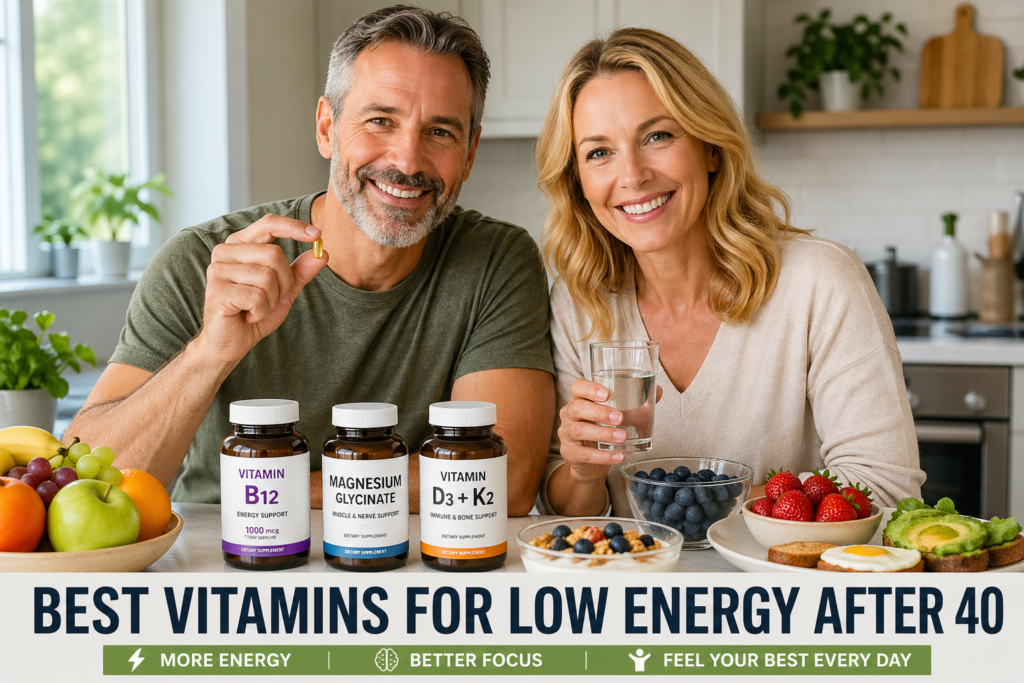
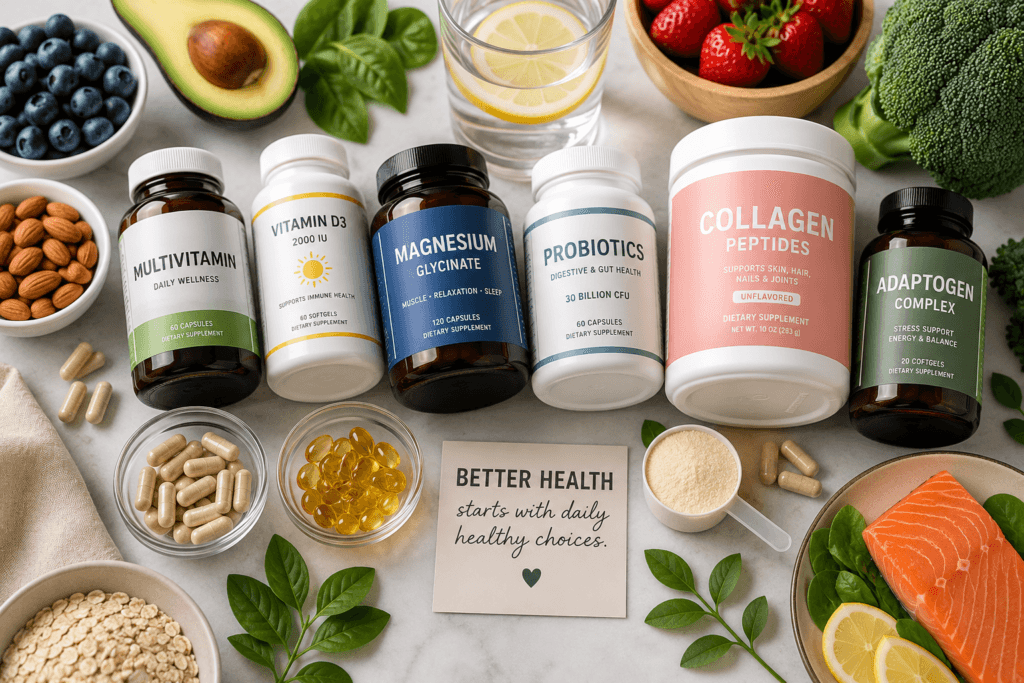
The best wellness supplements depend on your diet, health goals, medications, symptoms, and any confirmed nutrient deficiencies. Common foundational options include vitamin D, magnesium, omega-3 fatty acids, probiotics, and a multivitamin, while collagen, protein powders, or adaptogens may suit more specific goals. Supplements can help fill gaps, but they do not replace nutritious food, sleep, exercise, hydration, or medical care. Choose transparent products with appropriate doses, and check with a healthcare professional when you take medications, have a medical condition, are pregnant, or are considering high-dose supplements.
Key Takeaways
- Supplements work best when they address a real need. Diet, symptoms, medications, age, and lab results should guide your choices.
- Foundational options may include vitamin D, magnesium, omega-3s, probiotics, or a multivitamin. Not every adult needs all of them.
- Quality matters. Look for transparent labels, appropriate doses, reputable manufacturing, and third-party testing when available.
- More is not always better. Excessive doses and overlapping products can increase side-effect and interaction risks.
- Supplements cannot replace nutrition, sleep, movement, hydration, stress management, or medical care.
- Key Takeaways
- Introduction
- What Are Wellness Supplements?
- Why Wellness Supplements Have Become So Popular
- How to Choose the Right Wellness Supplements
- Best Wellness Supplements for Better Health
- Common Supplement Mistakes to Avoid
- Building a Simple Daily Supplement Routine
- 7-Day Wellness Supplement Reset Plan
- How Long Do Supplements Take to Work?
- What to Expect After 30 Days
- Best Products to Consider
- FAQ
- When Supplements May Not Be Enough
- Final Summary
Introduction
Modern life places unique demands on our health.
Many people spend long hours sitting, struggle with chronic stress, get less sleep than they need, and consume highly processed foods more frequently than they realize. Even individuals who make healthy choices can sometimes find it difficult to obtain every nutrient their bodies need from food alone.
As a result, wellness supplements have become increasingly popular among people seeking to support energy levels, digestion, immune health, stress management, sleep quality, and healthy aging.
However, the supplement industry can be overwhelming. Thousands of products promise better health, faster results, and improved performance. Some supplements may provide meaningful support, while others may offer little value for the average person.
The goal of this guide is to simplify the process.
Rather than focusing on trendy products or unrealistic claims, we’ll explore the best wellness supplements that may help support overall health and well-being. You’ll learn how supplements work, which options are most commonly recommended, how to choose products wisely, and how to build a practical supplement routine that fits your lifestyle.
Whether your goal is better sleep, more energy, improved digestion, or healthy aging, understanding the role of wellness supplements can help you make more informed decisions.
What Are Wellness Supplements?
Wellness supplements are products designed to complement a healthy lifestyle by providing vitamins, minerals, amino acids, probiotics, herbs, or other nutrients that may support overall health.
Unlike medications, wellness supplements are not intended to diagnose, treat, cure, or prevent disease. Instead, they are generally used to support normal bodily functions and help individuals address nutritional gaps or specific wellness goals.
Common categories include:
- Vitamins
- Minerals
- Probiotics
- Protein supplements
- Herbal supplements
- Adaptogens
- Digestive support products
- Healthy aging supplements
Each category serves a different purpose.
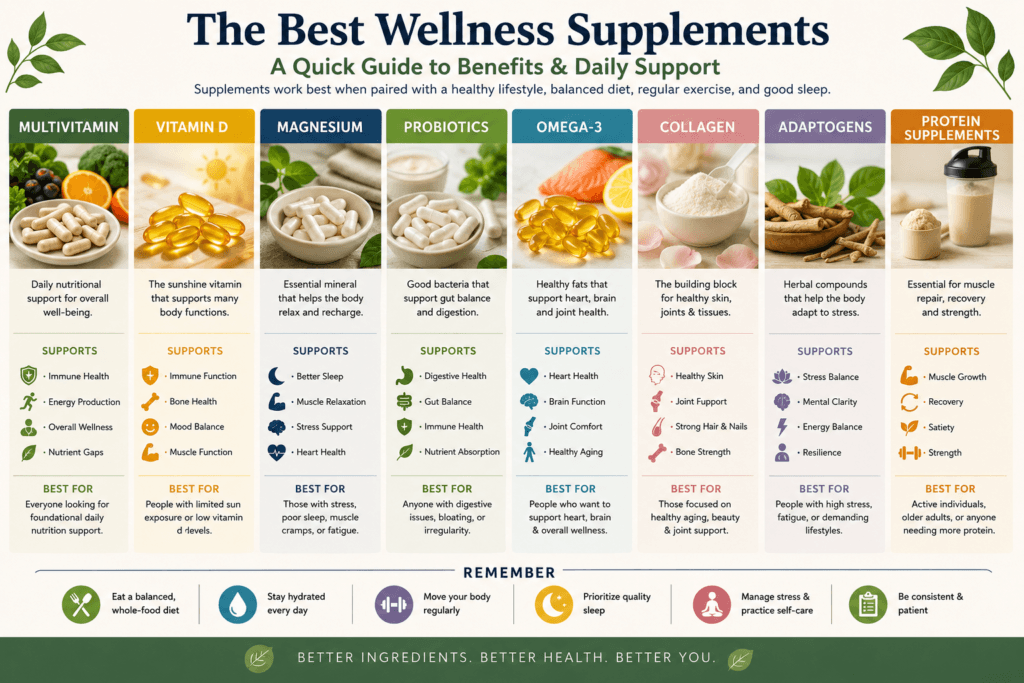
For example, vitamin D may help support immune function and bone health, while probiotics focus on digestive and microbiome support. Magnesium is often used for relaxation and sleep support, whereas collagen peptides are frequently chosen for skin, joint, and healthy aging goals.
The most effective supplement routine is usually one that aligns with an individual’s needs rather than simply following popular trends.
Why Wellness Supplements Have Become So Popular
Interest in wellness supplements has increased dramatically over the past decade.
Part of this growth comes from a greater awareness of preventive health. Many people want to take a proactive approach to supporting their health rather than waiting until problems develop.
Several factors contribute to the popularity of supplements.
Busy Lifestyles
Modern schedules often make it difficult to consistently prepare nutrient-dense meals. Supplements may help fill some nutritional gaps when dietary intake is less than ideal.
Increased Health Awareness
Access to health information has encouraged more people to learn about nutrition, exercise, sleep, and wellness habits. Supplements are often viewed as one component of a broader health strategy.
Healthy Aging Goals
Many adults are interested in maintaining physical function, energy, mobility, and cognitive health as they age. Certain supplements may support these goals when combined with healthy lifestyle habits.
Gut Health and Microbiome Research
Growing research into gut health has increased interest in probiotics, prebiotics, digestive enzymes, and other digestive support supplements.
Energy and Stress Management
Modern stress levels have led many individuals to explore supplements that may support relaxation, recovery, and overall resilience.
While supplements can play a helpful role, it’s important to remember that they work best when paired with healthy eating, exercise, sleep, and stress management.
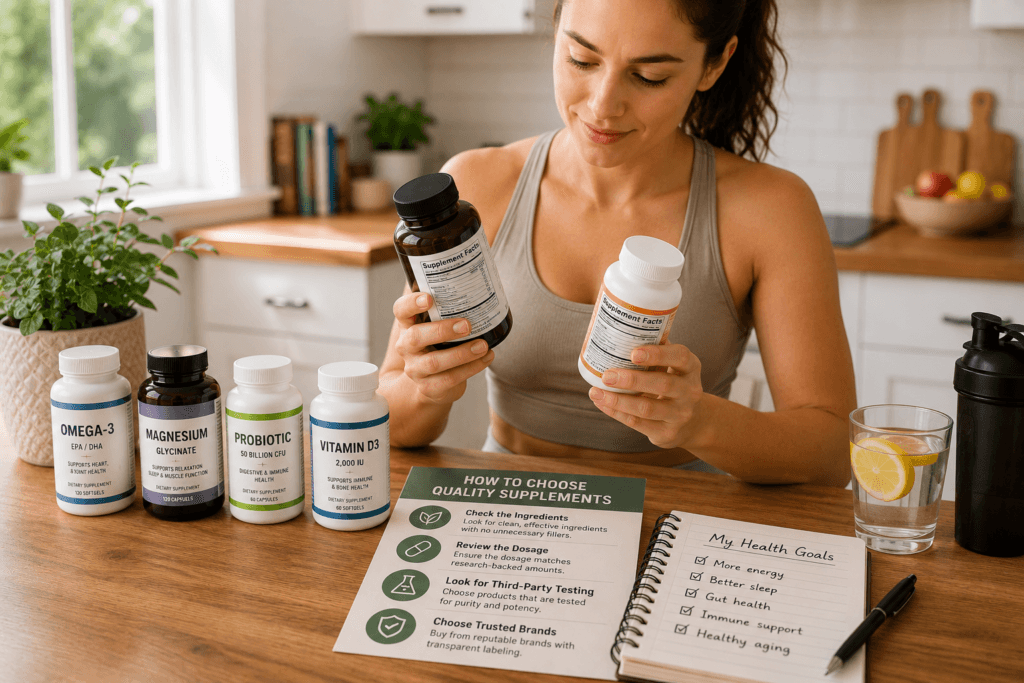
How to Choose the Right Wellness Supplements
Not every supplement is necessary for every person.
Choosing wisely can help you avoid wasting money while focusing on products that align with your goals.
Start With Your Health Goals
Ask yourself what you’re trying to improve.
Examples include:
- Better sleep
- More energy
- Improved digestion
- Healthy aging
- Stress support
- Nutritional coverage
Your goals should guide your supplement choices.
Focus on Quality
Look for reputable brands that prioritize quality testing, transparent labeling, and ingredient sourcing.
Avoid Miracle Claims
Supplements that promise dramatic transformations in a short period often rely more on marketing than realistic outcomes.
Support the Basics First
Many people benefit more from foundational supplements than highly specialized products.
For example:
- Multivitamin
- Vitamin D
- Magnesium
- Probiotics
- Omega-3s
These categories often provide broader support than niche supplements.
Consult Healthcare Professionals When Needed
Individuals with medical conditions, those taking medications, pregnant women, and older adults should consult qualified healthcare professionals before beginning new supplements.
The best supplement strategy is usually personalized rather than one-size-fits-all.
Best Wellness Supplements for Better Health
Multivitamins
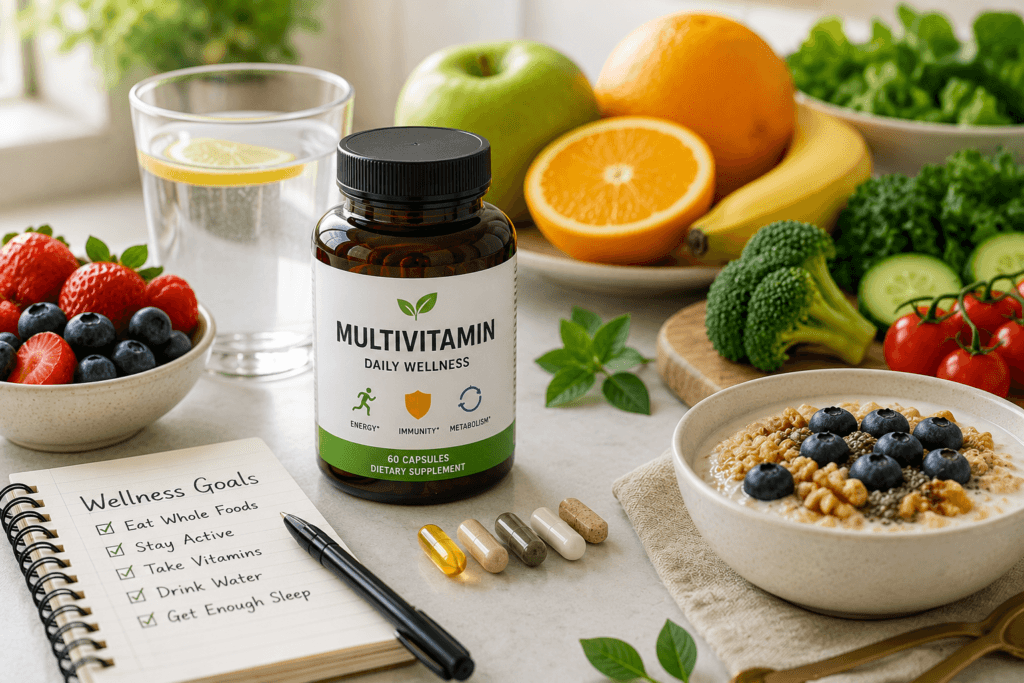
Multivitamins remain among the most widely used wellness supplements worldwide.
A quality multivitamin is designed to provide a range of essential vitamins and minerals that support normal bodily functions. While it cannot replace a healthy diet, it may help fill nutritional gaps that occur when dietary intake is inconsistent.
Potential benefits may include:
- Supporting overall nutrition
- Providing essential vitamins and minerals
- Supporting energy metabolism
- Supporting immune function
- Promoting long-term wellness
One common mistake is assuming that taking a multivitamin eliminates the need for healthy eating habits.
In reality, supplements should complement a nutrient-rich diet rather than replace it.
Individuals who eat irregularly, travel frequently, or struggle to consume a variety of whole foods may find multivitamins particularly useful as part of a broader wellness strategy.
Vitamin D
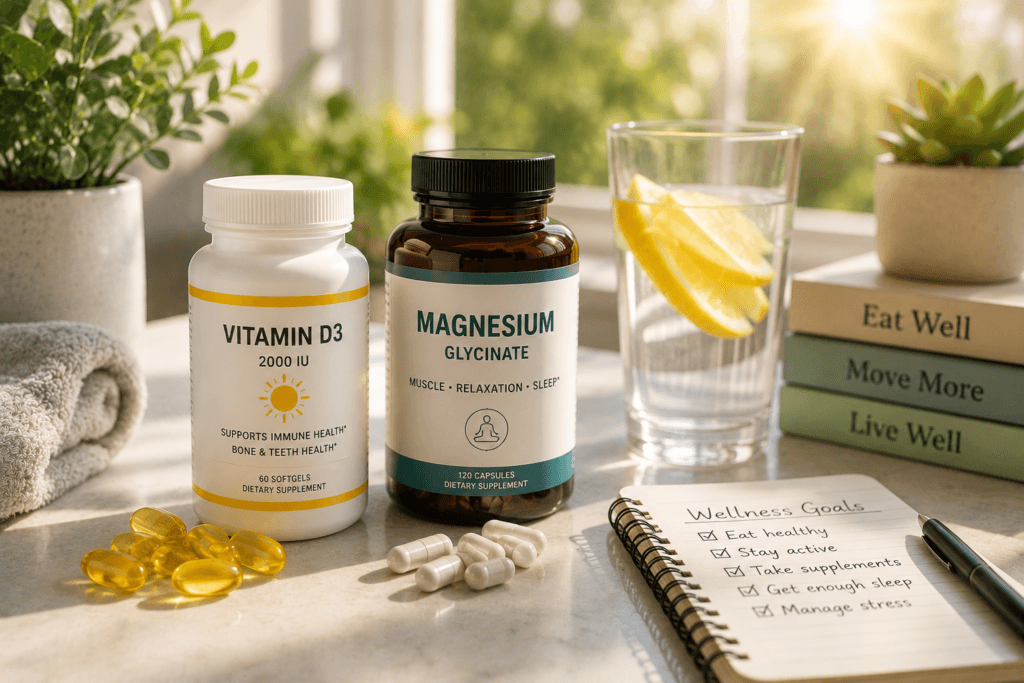
Vitamin D is one of the most discussed nutrients in modern wellness.
Often called the “sunshine vitamin,” vitamin D is produced by the body when skin is exposed to sunlight. However, many people spend much of their time indoors, potentially limiting natural vitamin D production.
Vitamin D plays several important roles, including:
- Supporting immune function
- Supporting bone health
- Supporting muscle function
- Supporting overall wellness
Low vitamin D levels have become increasingly common in many populations.
For individuals with limited sun exposure, supplementation may help maintain healthy vitamin D status. Our guide to the best vitamin D supplements for energy and immunity explains how to compare forms, doses, and product quality.
A common mistake is taking excessive amounts without guidance. More is not always better. The goal is maintaining appropriate levels rather than pursuing extremely high intake.
Vitamin D is often considered one of the foundational wellness supplements because of its broad role in overall health.
Magnesium
Magnesium is involved in hundreds of biochemical processes throughout the body.
Despite its importance, many individuals may not consistently consume enough magnesium-rich foods such as leafy greens, legumes, nuts, and seeds.
Magnesium supports:
- Muscle function
- Nervous system function
- Relaxation
- Sleep quality
- Energy production
Many people become interested in magnesium because of its association with relaxation and sleep support.
For example, someone experiencing occasional difficulty unwinding after a stressful day may explore magnesium as part of a broader sleep-support routine.
One mistake is expecting magnesium alone to solve chronic sleep issues while ignoring stress, caffeine intake, screen exposure, and inconsistent sleep schedules.
Magnesium often works best as part of a comprehensive wellness plan rather than a standalone solution. Learn more in our guide to the best magnesium for sleep and stress.
Probiotics
Probiotics have become one of the most popular categories of wellness supplements.
These products contain beneficial microorganisms that may help support digestive health and microbiome balance.
Research continues to explore the many ways the gut microbiome may influence overall health, including:
- Digestion
- Immune function
- Nutrient absorption
- Energy regulation
- General wellness
Different probiotic strains serve different purposes, which is why products often contain multiple strains.
One common misconception is that all probiotics are identical. In reality, quality, strain diversity, dosage, and storage conditions can vary significantly between products.
Individuals interested in digestive wellness often combine probiotics with other healthy habits such as:
- Increased fiber intake
- Better hydration
- Reduced processed food consumption
- Regular exercise
- Stress management
Because gut health influences so many aspects of wellness, probiotics continue to be among the most widely used daily supplements. See our complete guide to the best supplements for digestive health for probiotics, fiber, enzymes, and other options.
Omega-3 Fatty Acids
Omega-3 fatty acids are among the most researched wellness supplements available today. Found naturally in fatty fish such as salmon, sardines, and mackerel, omega-3s help support multiple aspects of health and are commonly included in comprehensive wellness routines.
The two primary omega-3 fatty acids found in supplements are EPA (eicosapentaenoic acid) and DHA (docosahexaenoic acid). These nutrients play important roles throughout the body and may help support cardiovascular health, brain function, eye health, and healthy aging.
Many people consume far more omega-6 fats than omega-3 fats due to modern dietary patterns. This imbalance has increased interest in omega-3 supplementation as a way to support overall wellness.
Potential benefits may include:
- Supporting heart health
- Supporting cognitive function
- Supporting healthy aging
- Supporting normal inflammatory responses
- Supporting overall wellness
One common mistake is purchasing low-quality fish oil supplements without considering purity, freshness, or third-party testing. High-quality products often provide better transparency regarding sourcing and potency.
Omega-3 supplements work best when paired with a nutrient-rich diet that includes fruits, vegetables, lean proteins, and healthy fats. Rather than viewing omega-3s as a quick solution, they should be considered a long-term wellness investment.
Because omega-3 fatty acids support multiple body systems simultaneously, they remain one of the most commonly recommended foundational wellness supplements.
Collagen Peptides
Collagen has become one of the fastest-growing supplement categories in the health and wellness industry.
Collagen is the most abundant protein in the human body and serves as a structural component of skin, joints, bones, tendons, and connective tissues. Natural collagen production gradually declines with age, which has contributed to growing interest in collagen supplementation.
Collagen peptides are typically hydrolyzed, meaning they have been broken down into smaller amino acids that are easier to absorb.
Potential benefits may include:
- Supporting healthy aging
- Supporting skin health
- Supporting joint comfort
- Supporting connective tissues
- Supporting overall wellness goals
Many people begin taking collagen because of its association with healthy skin, but its potential benefits extend beyond appearance alone. Active individuals often use collagen as part of broader recovery and mobility routines, while others incorporate it into healthy aging strategies.
A common misconception is that collagen works immediately. In reality, collagen supplementation generally requires consistent use over time before meaningful results become noticeable.
Collagen powders are especially popular because they can easily be added to coffee, smoothies, protein shakes, or other beverages without significantly altering flavor.
For individuals seeking comprehensive wellness support, collagen peptides can serve as a valuable addition to a balanced supplement routine focused on long-term health.
Adaptogens
Adaptogens are natural compounds, often derived from herbs and plants, that may help the body adapt to physical and mental stress.
As modern lifestyles become increasingly demanding, adaptogens have gained popularity among individuals seeking support for resilience, focus, recovery, and overall wellness.
Common adaptogens include:
- Ashwagandha
- Rhodiola Rosea
- Holy Basil
- Ginseng
- Schisandra
Many people turn to adaptogens during periods of chronic stress, demanding work schedules, or lifestyle transitions.
Potential benefits may include:
- Supporting stress management
- Supporting mental clarity
- Supporting energy balance
- Supporting recovery
- Supporting overall resilience
One common mistake is expecting adaptogens to function like stimulants. Unlike caffeine, adaptogens typically work gradually and may help support balance rather than provide an immediate boost.
Adaptogens often work best when combined with adequate sleep, regular exercise, proper nutrition, and healthy stress-management practices.
For individuals seeking a more holistic wellness approach, adaptogens may provide valuable support alongside foundational supplements.
Protein Supplements
Protein is one of the most important nutrients for overall health.
While many people associate protein powders exclusively with athletes, protein plays essential roles in muscle maintenance, recovery, immune function, hormone production, and healthy aging.
Common protein supplement options include:
- Whey protein
- Plant-based protein
- Collagen protein
- Casein protein
Protein supplements can be particularly useful for:
- Active individuals
- Older adults
- Busy professionals
- Individuals with higher protein needs
- People struggling to meet daily protein targets
One common mistake is focusing exclusively on vitamins while neglecting protein intake. In reality, adequate protein often has a significant impact on energy, recovery, satiety, and body composition.
Protein supplements should complement a balanced diet rather than replace whole food protein sources.
When used strategically, protein supplementation can help support overall wellness and healthy aging goals.
Common Supplement Mistakes to Avoid
Even the best wellness supplements may produce disappointing results when used incorrectly.
Taking Too Many Supplements
Many people assume that more supplements automatically lead to better results. In reality, taking numerous products simultaneously may increase costs without providing additional benefits.
Ignoring Lifestyle Habits
No supplement can compensate for chronic sleep deprivation, poor nutrition, inactivity, or unmanaged stress.
Chasing Trends
The supplement industry constantly introduces new products. While some innovations may be valuable, many people achieve excellent results by focusing on proven foundational supplements.
Expecting Immediate Results
Most wellness supplements require consistent use before noticeable benefits appear. Patience is often essential.
Buying Low-Quality Products
Price alone does not determine quality, but choosing reputable brands with transparent testing and ingredient sourcing is important.
The most effective approach is usually a simple, evidence-based supplement routine built around individual goals.
Building a Simple Daily Supplement Routine
One of the biggest challenges people face is maintaining consistency.
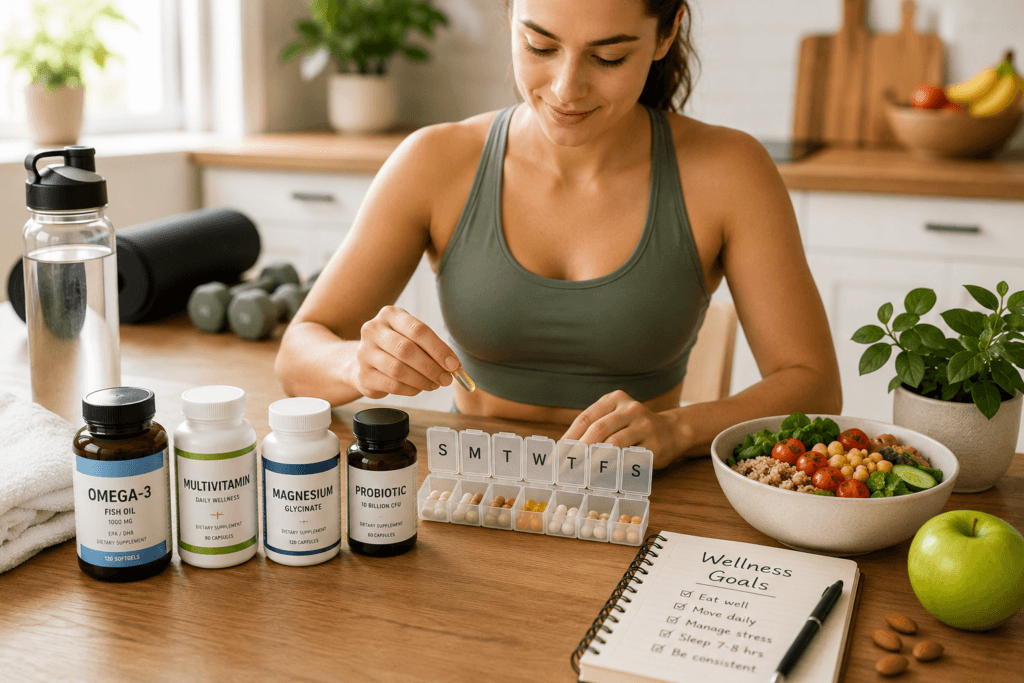
Instead of creating a complicated routine, focus on a few foundational supplements that align with your needs.
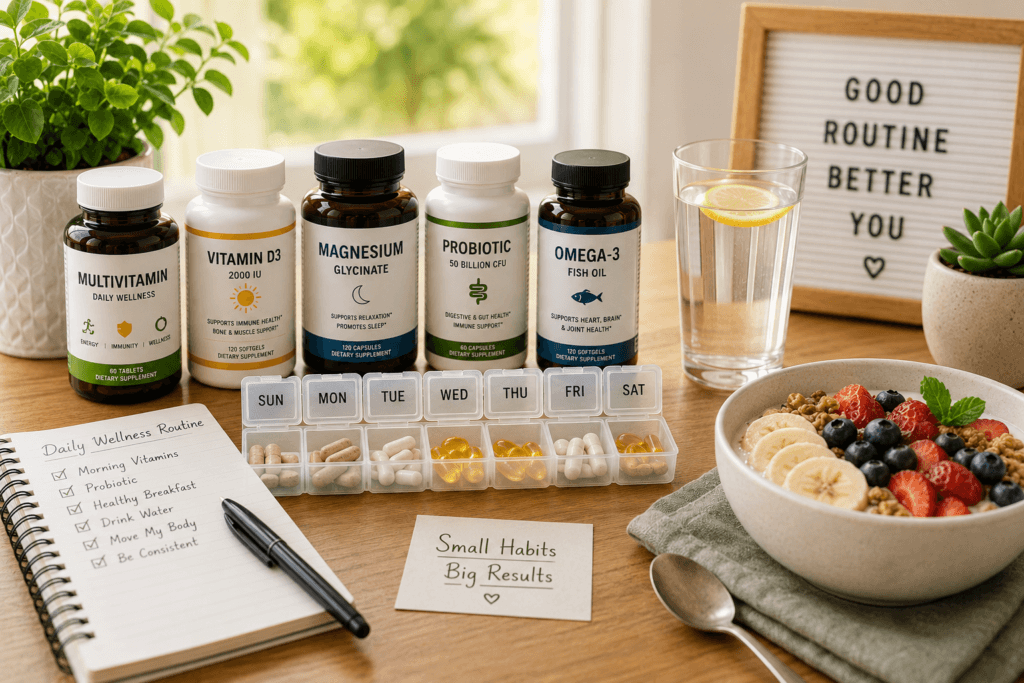
Example Foundation Routine
Morning:
- Multivitamin
- Vitamin D
- Omega-3
Midday:
- Probiotic
Evening:
- Magnesium
This simple structure supports multiple areas of wellness without becoming overwhelming.
As goals evolve, additional supplements may be added strategically.
For example:
- Collagen for healthy aging
- Adaptogens for stress support
- Protein powder for recovery
- Digestive support supplements for gut health
Consistency matters far more than complexity.
7-Day Wellness Supplement Reset Plan
Day 1
Review your current supplements and remove products you no longer use.
Day 2
Identify your primary wellness goal.
Day 3
Focus on hydration and balanced nutrition.
Day 4
Add one foundational supplement.
Day 5
Improve your sleep routine.
Day 6
Increase daily movement through walking or exercise.
Day 7
Evaluate progress and create a sustainable long-term plan.
This reset encourages intentional supplement use rather than impulsive purchases.
How Long Do Supplements Take to Work?
Results vary depending on the supplement, individual health status, consistency, and lifestyle factors.
Some supplements may produce noticeable effects relatively quickly, while others require long-term use.
General timelines may include:
- Magnesium: days to weeks
- Probiotics: several weeks
- Vitamin D: several weeks to months
- Collagen: several weeks to months
- Omega-3s: one to three months
Supplements are most effective when viewed as long-term wellness tools rather than quick fixes.
Consistency often determines success more than the specific supplement itself.
What to Expect After 30 Days
After one month of consistent healthy habits and appropriate supplementation, many people report improvements in several areas.
Potential benefits may include:
- Improved energy consistency
- Better digestive comfort
- Improved hydration habits
- Better sleep quality
- Improved recovery
- Greater nutritional awareness
- More confidence in wellness routines
Results will vary, but the first month often creates positive momentum that encourages long-term consistency.
The goal is sustainable progress rather than perfection.
Best Products to Consider
Oral Health & Whole-Body Wellness
A microbiome-focused wellness supplement designed to support oral health, fresh breath, gum wellness, and beneficial bacteria balance. Provadent promotes a healthier oral environment that may contribute to overall wellness.
⭐ Editor’s Pick
Provadent
Best For: Daily Oral Microbiome & Dental Wellness Support
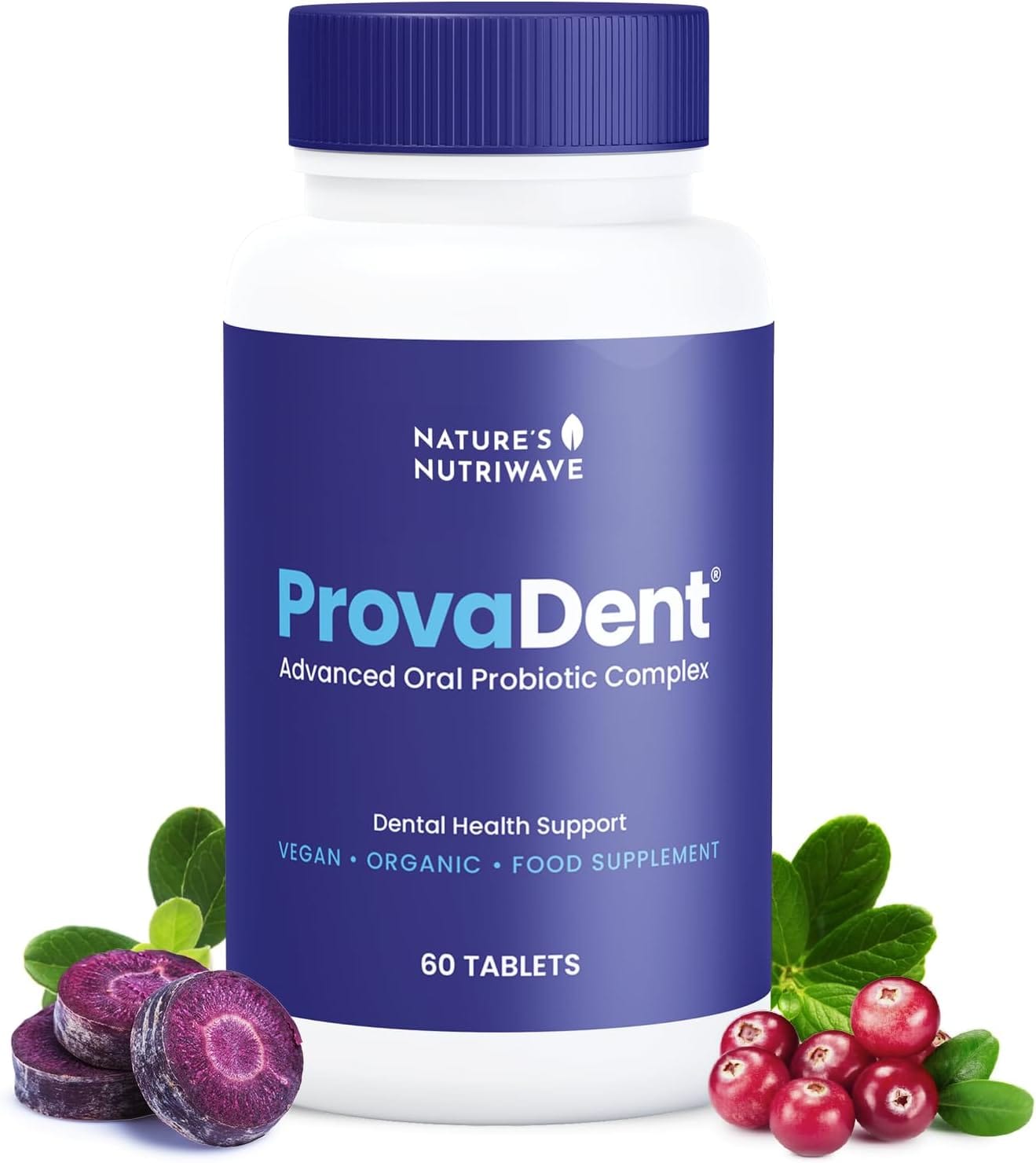
Provadent is a microbiome-support supplement formulated to help maintain healthy teeth, gums, and fresh breath while promoting beneficial bacteria balance throughout the mouth.
✔ Supports oral microbiome balance
✔ Helps promote healthy gums
✔ Supports fresh breath
✔ Daily dental wellness support
👉 Looking for complete oral wellness support?
Metabolic Wellness Support
CelluCare is designed to support healthy metabolism, cellular wellness, and overall vitality. Its blend of natural ingredients helps complement a healthy lifestyle and wellness routine.
⭐ Best Metabolic Wellness Support
CelluCare
Best For: Individuals seeking metabolic and overall wellness support.
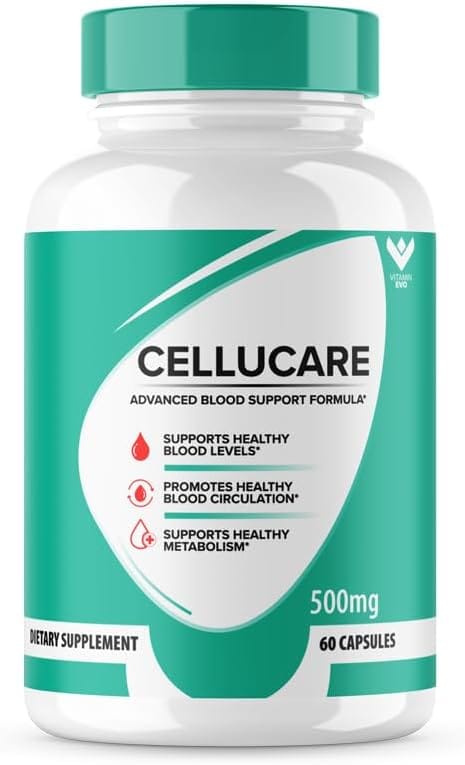
CelluCare contains wellness-focused ingredients designed to support metabolism, energy balance, and long-term cellular health.
✔ Supports metabolic wellness
✔ Promotes daily vitality
✔ Supports healthy energy levels
✔ Complements healthy lifestyle habits
👉 Looking for complete metabolic wellness support?
Skin & Gut Wellness Support
PrimeBiome is formulated to support the connection between gut health and skin wellness. It combines probiotics and natural ingredients designed to promote microbiome balance and healthy skin appearance.
⭐ Best Skin & Gut Wellness Support
Gut Balance & Healthy Skin Support
Best For:Gut Balance & Healthy Skin Support
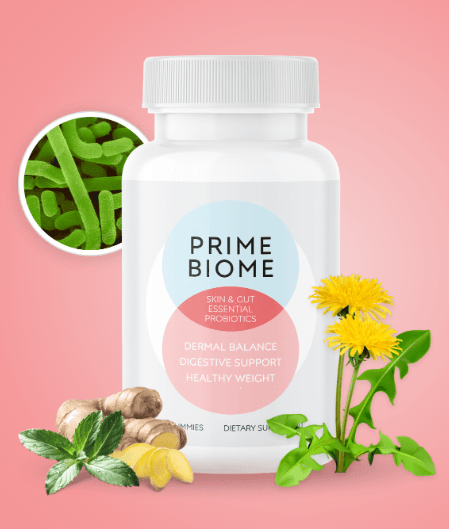
PrimeBiome combines microbiome-supporting ingredients that may help promote digestive wellness while supporting healthy, youthful-looking skin.
✔ Supports gut microbiome balance
✔ Promotes skin wellness
✔ Supports digestive comfort
✔ Daily beauty-from-within support
👉 Looking for gut and skin wellness support?
FAQ
What are the best wellness supplements for most adults?
Many adults benefit from foundational supplements such as multivitamins, vitamin D, magnesium, omega-3 fatty acids, and probiotics. Individual needs may vary based on health status, lifestyle, and wellness goals.
Can supplements replace healthy eating?
No. Supplements are intended to complement a healthy diet, not replace it. Whole foods remain the primary source of nutrients and overall wellness support.
How many supplements should I take?
The ideal number depends on individual goals and nutritional needs. Most people benefit from a focused, simple routine rather than a large collection of products.
Are natural supplements always safe?
Natural does not automatically mean safe. Certain supplements may interact with medications or medical conditions. Professional guidance may be appropriate in some situations.
Which supplement should beginners start with?
Many beginners start with foundational supplements such as a quality multivitamin, vitamin D, magnesium, or omega-3 fatty acids.
When Supplements May Not Be Enough
While wellness supplements can provide valuable support, they are not substitutes for professional medical care.
Individuals should seek medical guidance if they experience:
- Persistent fatigue
- Significant digestive symptoms
- Unexplained weight changes
- Ongoing sleep problems
- Chronic pain
- Symptoms that interfere with daily life
Supplements work best as part of a broader health strategy rather than a replacement for proper evaluation and treatment when needed.
Want help building a smarter supplement routine?
Join the Purely Vital Living newsletter and get trusted wellness advice, supplement guides, and practical tips to support better energy, digestion, sleep, and healthy aging.
Final Summary
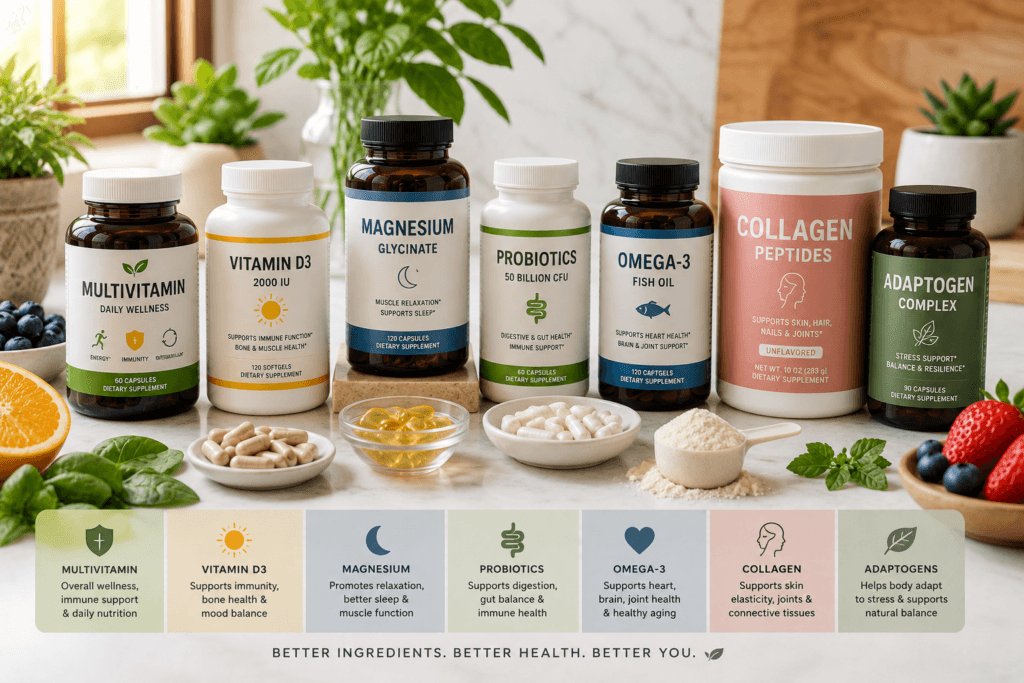
Wellness supplements can play a valuable role in supporting overall health when used strategically and consistently. Foundational supplements such as multivitamins, vitamin D, magnesium, probiotics, omega-3 fatty acids, collagen peptides, adaptogens, and protein supplements each support different aspects of wellness.
The most effective approach is not taking the largest number of supplements. Instead, focus on identifying your goals, choosing high-quality products, and combining supplementation with healthy lifestyle habits.
Nutrition, movement, sleep, stress management, and hydration remain the foundation of long-term wellness. Supplements work best when they support these habits rather than attempt to replace them. For a broader lifestyle framework, see our guide to a balanced lifestyle for healthy aging.
By building a simple and sustainable routine, you can create a wellness strategy that supports better health, more energy, improved digestion, healthy aging, and overall well-being for years to come.
Related Reads
- Best Vitamin D Supplements for Energy & Immunity
- Best Supplements for Gut Health & Digestion
- Best Magnesium Supplements for Sleep & Stress
- Best Melatonin Sleep Supplements
- Best Vitamins for Energy After 40
- How to Get More Energy Naturally: Beat Fatigue and Boost Energy
- Healthy Lifestyle Habits for Healthy Aging and Longevity