

Quick Answer
If you’re wondering how to get more energy naturally, focus on the habits that support your body’s ability to produce and sustain energy. The biggest factors include sleep quality, hydration, nutrition, stress management, physical activity, and recovery. While caffeine can temporarily increase alertness, lasting energy comes from addressing the root causes of fatigue. By improving sleep, eating balanced meals, staying hydrated, managing stress, and moving regularly, many people experience better focus, fewer energy crashes, and improved overall well-being within a few weeks.
Key Takeaways
- Lasting energy comes from foundations, not stimulants. Sleep quality, hydration, balanced meals, movement, stress management, and recovery matter more than relying on caffeine alone.
- Fatigue usually has more than one cause. Poor sleep, dehydration, blood sugar swings, nutrient deficiencies, inactivity, chronic stress, and burnout can overlap.
- Sleep quality matters as much as sleep duration. Fragmented sleep or sleep disorders can leave you tired even after spending enough hours in bed.
- Small habits can improve energy gradually. A consistent bedtime, protein-rich meals, regular hydration, morning light, and daily walking are practical starting points.
- Persistent unexplained fatigue deserves evaluation. Seek professional guidance when exhaustion is severe, continues for weeks, or comes with other concerning symptoms.
- Key Takeaways
- Introduction
- What Is Energy and Why Does It Matter?
- Why You Feel Tired More Often Than You Should
- The Sleep-Energy Connection
- 7 Common Reasons Your Energy Is Low
- Why Your Energy Crashes at 2 PM
- Foods That Give You Energy Naturally
- The Best Vitamins for Energy and Tiredness
- Hidden Signs Your Body Is Running Low on Energy
- How to Get More Energy Without Overwhelm
- 7-Day Energy Reset Plan
- How Long Does It Take to Feel More Energized?
- What to Expect After 30 Days
- Best Products to Consider
- FAQ
- When to Seek Medical Help
- Final Summary
Introduction
If you’re wondering how to get more energy, you’re not alone. Feeling tired has become so common that many people assume it’s simply part of modern life. Busy schedules, long work hours, family responsibilities, screen time, and chronic stress can make fatigue seem unavoidable. Yet persistent low energy isn’t something you should automatically accept.
My interest in energy and fatigue became deeply personal after developing chronic fatigue and sleep-related challenges many years ago. For a long time, I relied on caffeine and pushed through exhaustion, assuming feeling tired was simply something I had to live with. Over time, I learned that lasting energy rarely comes from quick fixes. Instead, improving sleep quality, managing stress, eating nourishing foods, staying physically active, and supporting overall health had a much greater impact on my energy levels.
Millions of adults wake up tired despite spending enough time in bed. Others rely on multiple cups of coffee just to make it through the morning, only to experience an energy crash later in the day. Some struggle with brain fog, poor motivation, irritability, and a general feeling that they’re running on empty.
The truth is that energy isn’t determined by one single factor. Your energy levels are influenced by how well you sleep, what you eat, how hydrated you are, how much stress you’re carrying, how active you are, and how effectively your body recovers.
The encouraging news is that many causes of fatigue are modifiable. Small, consistent lifestyle changes can often produce meaningful improvements in physical energy, mental clarity, and overall well-being.
In this guide, you’ll learn why energy declines, what may be causing your fatigue, and the most effective natural strategies to help restore steady, sustainable energy.
What Is Energy and Why Does It Matter?
Most people think of energy as simply feeling awake. However, energy is much more than alertness.
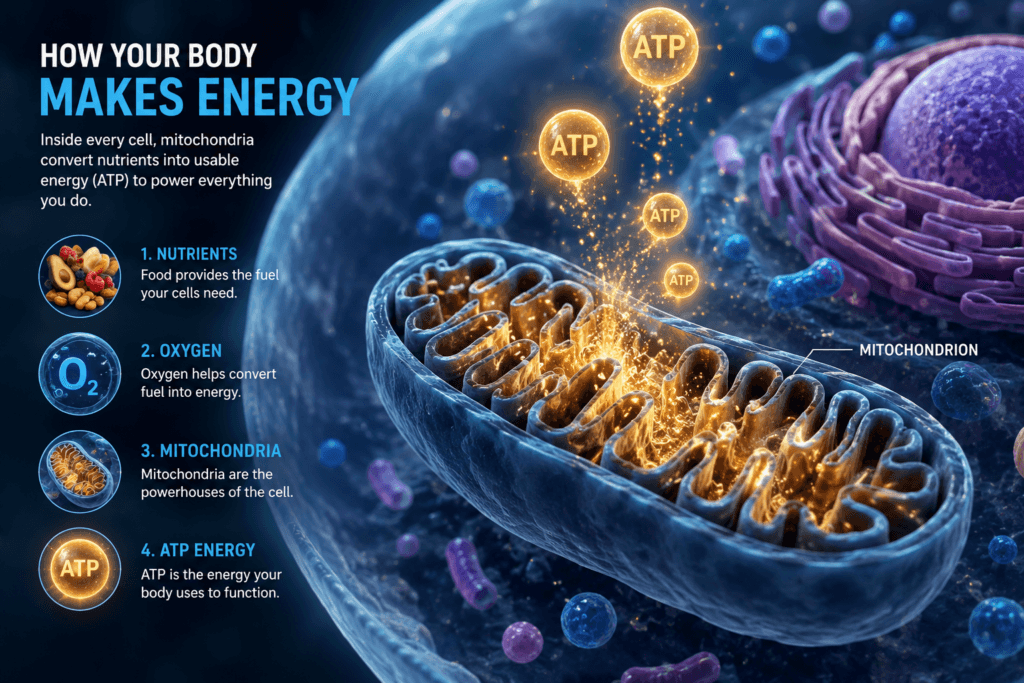
Every second of the day, your body converts nutrients from food into a usable form of fuel called ATP (adenosine triphosphate). ATP powers every process in the body, including muscle contractions, brain activity, hormone production, digestion, and cellular repair.
When energy production functions efficiently, you feel alert, focused, productive, and physically capable. When energy production is impaired, fatigue often follows.
Physical Energy vs Mental Energy
Physical energy refers to your body’s ability to perform activities such as walking, exercising, working, and completing daily tasks.
Mental energy refers to concentration, memory, decision-making, and emotional resilience.
Many people notice that physical and mental energy don’t always decline together. For example, someone may feel physically capable but mentally exhausted after a stressful workday. Others may struggle with physical fatigue while remaining mentally sharp.
Both forms of energy require proper sleep, nutrition, hydration, and recovery.
How Your Body Produces Energy
Inside nearly every cell are structures called mitochondria. Often referred to as the “powerhouses” of the cell, mitochondria convert nutrients and oxygen into ATP.
This process depends on:
- Adequate sleep
- Proper hydration
- Balanced nutrition
- Regular movement
- Healthy stress levels
- Sufficient vitamins and minerals
When one or more of these areas become compromised, energy production can become less efficient.
Why Energy Naturally Changes With Age
Many adults notice that maintaining energy becomes more difficult with age.
Several factors contribute to this change:
- Reduced muscle mass
- Lower physical activity
- Increased stress
- Hormonal shifts
- Sleep disturbances
- Nutritional deficiencies
Fortunately, healthy lifestyle habits can help support energy levels throughout adulthood and healthy aging.
Why You Feel Tired More Often Than You Should
Occasional fatigue is normal. Everyone experiences days when they feel less energetic than usual. However, chronic fatigue often indicates that something deeper is occurring.
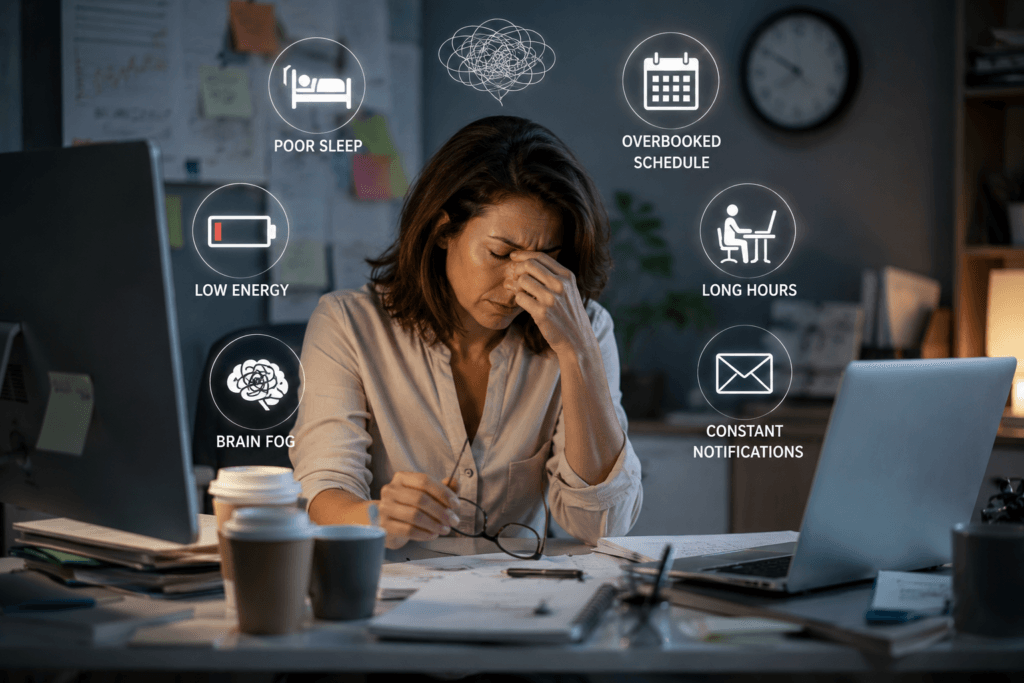
Modern lifestyles create numerous challenges to energy production.
Modern Lifestyle Factors That Drain Energy
Today’s environment is filled with factors that quietly deplete energy.
Many people:
- Spend most of the day sitting
- Sleep fewer hours than needed
- Experience constant digital stimulation
- Consume highly processed foods
- Live with ongoing stress
These habits may seem harmless individually, but together they create a powerful recipe for fatigue.
For example, poor sleep can increase cravings for sugary foods. Those foods can trigger blood sugar swings that contribute to afternoon energy crashes. Stress may then increase reliance on caffeine, which further disrupts sleep.
The cycle continues until fatigue becomes a daily experience.
Hidden Energy Drains Most People Ignore
Some causes of fatigue are surprisingly easy to overlook.
Examples include:
- Mild dehydration
- Inconsistent sleep schedules
- Skipping breakfast
- Excessive alcohol intake
- Poor recovery after exercise
- Spending little time outdoors
Because these habits often develop gradually, many people don’t recognize their impact until energy levels become noticeably worse.
When Fatigue Becomes a Problem
Persistent fatigue should not be ignored.
If you constantly feel exhausted despite making healthy lifestyle choices, it may be worth investigating potential underlying causes such as:
- Sleep disorders
- Nutrient deficiencies
- Hormonal imbalances
- Chronic stress
- Medical conditions
The earlier fatigue is addressed, the easier it often becomes to restore healthy energy levels.
The Sleep-Energy Connection
If there is one area that deserves the most attention when discussing energy, it’s sleep.
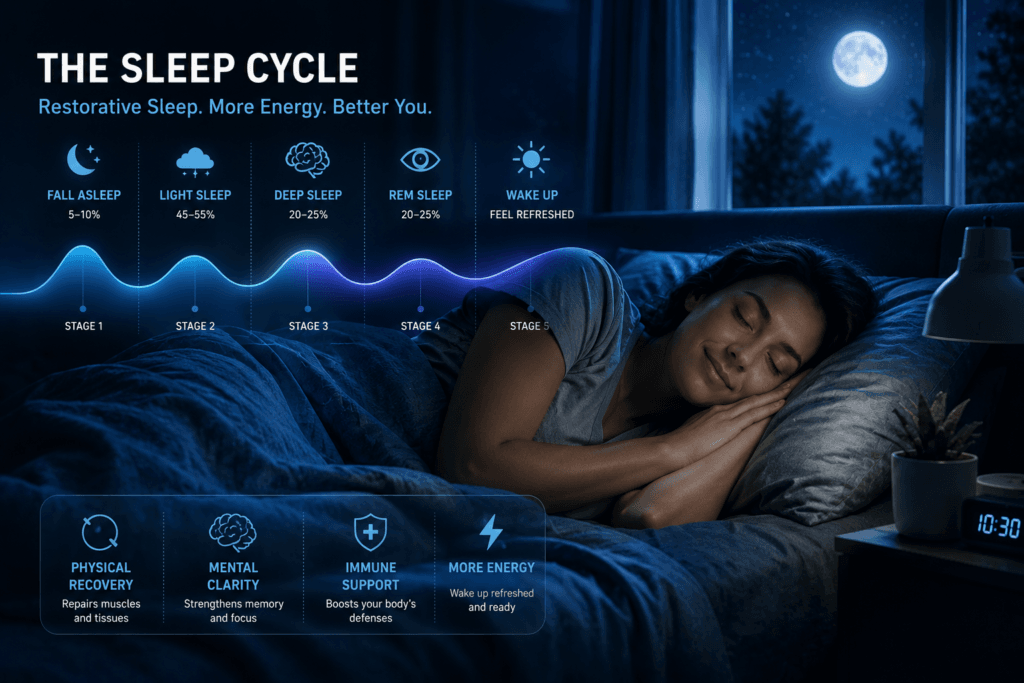
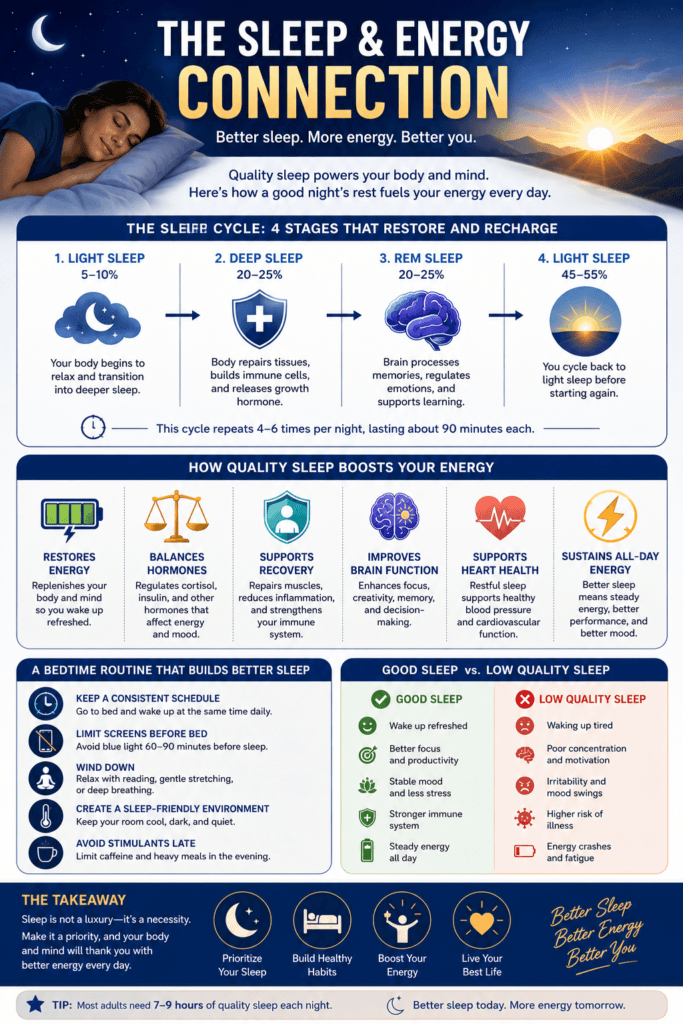
Sleep is the foundation upon which nearly every aspect of health is built. During sleep, your body performs critical repair and recovery processes that directly affect energy levels the next day.
Why Sleep Is the Foundation of Energy
Quality sleep supports:
- Hormone regulation
- Immune function
- Brain health
- Muscle recovery
- Metabolic function
- Emotional resilience
Without adequate sleep, even the best diet and exercise program will struggle to compensate.
Research consistently shows that sleep deprivation negatively affects reaction time, concentration, decision-making, and mood.
Why You May Still Feel Tired After 8 Hours of Sleep
One of the most common questions people ask is:
“Why am I still tired after 8 hours of sleep?”
The answer often lies in sleep quality rather than sleep quantity.
Possible causes include:
- Frequent nighttime awakenings
- Sleep apnea
- Stress-related sleep disruption
- Excessive screen exposure before bed
- Alcohol consumption
- Poor sleep environment
Someone who sleeps for eight hours but experiences fragmented sleep may wake up feeling less refreshed than someone who gets seven hours of high-quality sleep. Our guide to feeling tired after eight hours of sleep explains this difference in more detail.
Sleep Habits That Quietly Destroy Energy
Several common habits can significantly reduce sleep quality.
These include:
- Scrolling on phones before bed
- Consuming caffeine late in the day
- Maintaining inconsistent sleep schedules
- Sleeping in a room that’s too warm
- Watching television in bed
Improving these habits often produces noticeable improvements in daytime energy within just a few weeks.
Related Reading:
- Why Do I Wake Up Tired?
- Why Am I Tired All the Time?
7 Common Reasons Your Energy Is Low
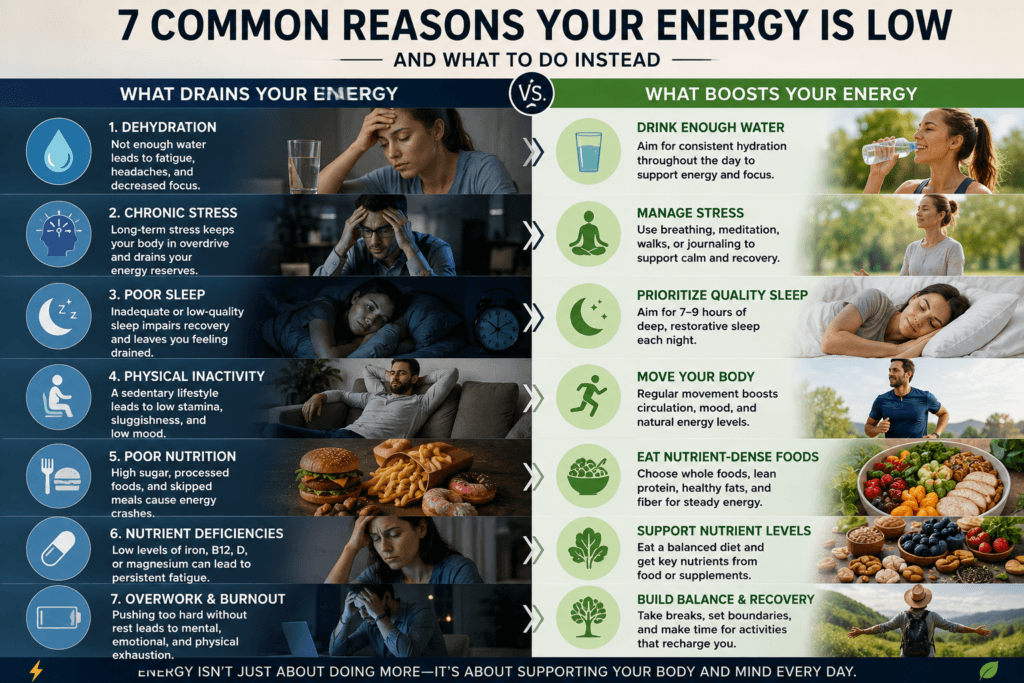
1. Poor Sleep Quality
Poor sleep remains one of the most common causes of fatigue.
Many people focus only on sleep duration while ignoring sleep quality. Yet sleep quality often has a greater impact on energy than the total number of hours spent in bed.
Why It Matters
During sleep, the body repairs tissues, regulates hormones, supports immune function, and consolidates memory.
Without sufficient restorative sleep, these processes become less efficient.
Common Signs
- Waking up tired
- Difficulty concentrating
- Afternoon energy crashes
- Increased caffeine dependence
Common Mistakes
Many people attempt to compensate for poor sleep by drinking more coffee instead of addressing the underlying issue.
Others stay up late on weekends, disrupting their sleep schedule even further.
Better Fix
Focus on:
- Consistent sleep times
- Limiting screens before bed
- Creating a cool, dark bedroom
- Managing stress
Real-Life Example
Someone who stays awake until midnight scrolling social media and wakes at 7 a.m. may technically get seven hours of sleep but still feel exhausted due to poor sleep quality.
2. Dehydration
Even mild dehydration can affect both physical and mental performance.
Many people underestimate how much hydration influences daily energy levels.
Why It Matters
Water supports:
- Nutrient transport
- Blood circulation
- Temperature regulation
- Brain function
When hydration levels drop, the body must work harder to perform normal functions.
Common Signs
- Fatigue
- Headaches
- Brain fog
- Dizziness
- Dry mouth
Common Mistakes
Waiting until you’re thirsty to drink water is a common mistake. Thirst often indicates that dehydration has already begun.
Better Fix
Aim for consistent hydration throughout the day rather than consuming large amounts all at once.
Starting your morning with water can be particularly beneficial.
Real-Life Example
Someone who drinks mostly coffee throughout the morning may mistake dehydration-related fatigue for a need for more caffeine.
3. Blood Sugar Swings
Energy levels often rise and fall with blood sugar levels.
Highly processed foods can create rapid spikes followed by sudden crashes.
Why It Matters
Stable blood sugar supports more consistent energy throughout the day.
Large fluctuations can trigger fatigue, cravings, and mood changes.
Common Signs
- Afternoon crashes
- Sugar cravings
- Hunger shortly after meals
- Irritability
Common Mistakes
Eating sugary breakfasts or relying on snacks and energy drinks can worsen blood sugar instability.
Better Fix
Build meals around:
- Protein
- Fiber
- Healthy fats
- Complex carbohydrates
Real-Life Example
A breakfast consisting only of pastries and sweet coffee may produce a burst of energy followed by significant fatigue before lunch.
4. Nutrient Deficiencies
Nutrient deficiencies are one of the most overlooked causes of fatigue.
Your body depends on vitamins and minerals to convert food into usable energy. Even if you’re eating enough calories, a lack of key nutrients can leave you feeling tired, weak, and mentally drained.
Why It Matters
Several nutrients play essential roles in energy production, including:
- Vitamin D
- Vitamin B12
- Iron
- Magnesium
- Folate
Deficiencies can reduce oxygen delivery, impair nerve function, and decrease cellular energy production.
Common Signs
- Persistent fatigue
- Weakness
- Brain fog
- Poor exercise performance
- Frequent illness
Common Mistakes
Many people assume supplements alone will solve fatigue without addressing overall diet quality.
Others take supplements without knowing whether they actually have a deficiency.
Better Fix
Focus on nutrient-dense foods while discussing testing options with a healthcare professional if symptoms persist.
Real-Life Example
Someone who spends little time outdoors and consumes limited nutrient-rich foods may gradually develop low vitamin D levels, contributing to chronic fatigue.
5. Chronic Stress
Stress affects energy in ways many people underestimate.
While short-term stress can temporarily increase alertness, long-term stress often produces exhaustion.
Why It Matters
When stress hormones remain elevated for extended periods, recovery becomes more difficult.
Over time, this can contribute to:
- Sleep disruption
- Mental fatigue
- Mood changes
- Reduced motivation
Common Signs
- Feeling tired but unable to relax
- Difficulty sleeping
- Irritability
- Increased anxiety
- Trouble focusing
Common Mistakes
Many people attempt to work harder when stressed rather than improving recovery habits.
Better Fix
Stress management strategies may include the practical habits in our guide to stress management techniques:
- Walking
- Meditation
- Journaling
- Deep breathing
- Time outdoors
Real-Life Example
An individual working long hours while caring for family responsibilities may feel constantly exhausted despite sleeping enough hours.
6. Physical Inactivity
Many people believe conserving energy means moving less.
In reality, inactivity often increases fatigue.
Why It Matters
Regular movement improves:
- Circulation
- Mitochondrial function
- Mood
- Sleep quality
- Cardiovascular health
Exercise also helps the body become more efficient at producing energy.
Common Signs
- Feeling sluggish
- Reduced stamina
- Stiffness
- Poor mood
- Low motivation
Common Mistakes
Some people wait until they feel energetic before exercising.
Unfortunately, energy often improves because of movement, not before it.
Better Fix
Start with manageable activity such as:
- Walking
- Cycling
- Light strength training
- Stretching
Real-Life Example
Someone who spends most of the day sitting may notice a significant energy boost simply by adding a daily 20-minute walk.
7. Burnout and Mental Fatigue
Burnout is more than ordinary tiredness.
It occurs when physical, mental, and emotional demands exceed recovery capacity over an extended period.
Why It Matters
Burnout can affect:
- Productivity
- Sleep quality
- Mood
- Motivation
- Physical health
Common Signs
- Constant exhaustion
- Cynicism
- Reduced performance
- Emotional detachment
- Brain fog
Common Mistakes
Ignoring early warning signs and continuing to increase workload.
Better Fix
Recovery requires:
- Boundaries
- Adequate rest
- Stress reduction
- Improved sleep
- Time for enjoyable activities
Real-Life Example
A professional who consistently works evenings and weekends may eventually experience fatigue that no amount of caffeine can fix.
Why Your Energy Crashes at 2 PM
Many people experience a significant energy slump during the afternoon.
This crash often has several contributing factors.
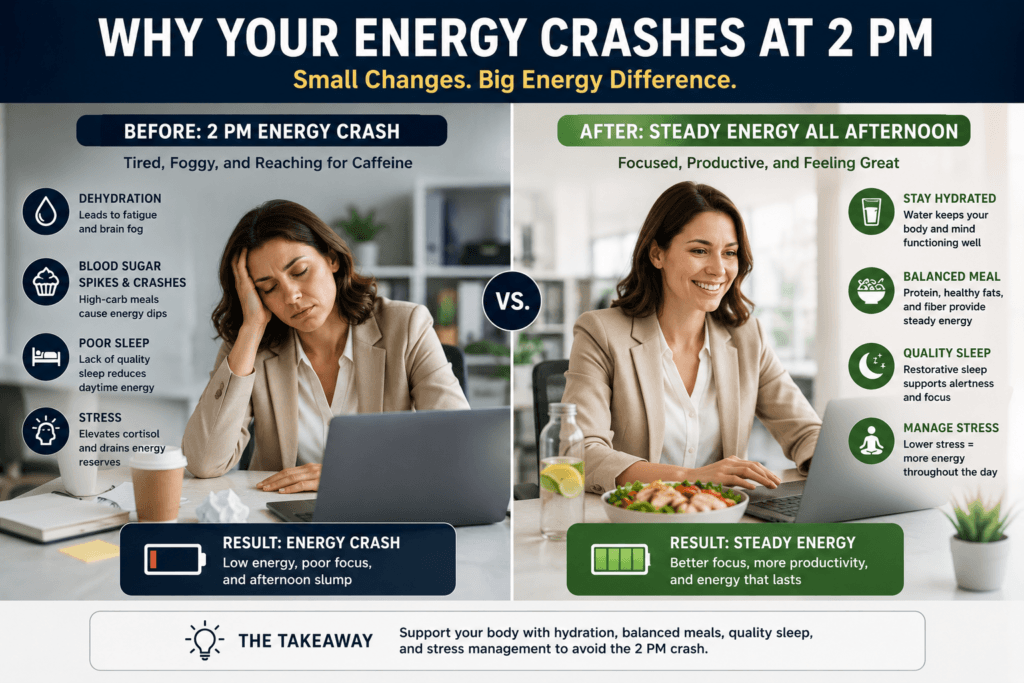
Blood Sugar and Afternoon Fatigue
A lunch high in refined carbohydrates can trigger a rapid rise in blood sugar followed by a sharp decline. This is one of the common reasons people feel tired in the afternoon.
This can leave you feeling sleepy and unfocused.
Dehydration and Energy Slumps
Many people consume most of their fluids early in the day and become progressively dehydrated by afternoon.
Even mild dehydration can affect concentration and energy.
Poor Sleep and Midday Crashes
Sleep debt often becomes more noticeable later in the day.
Individuals who slept poorly the night before frequently experience stronger afternoon fatigue.
How to Avoid Afternoon Energy Crashes
- Eat balanced meals
- Stay hydrated
- Get natural sunlight
- Take short movement breaks
- Prioritize sleep quality
Related Reading:
Why Does My Energy Crash at 2 PM?
Foods That Give You Energy Naturally
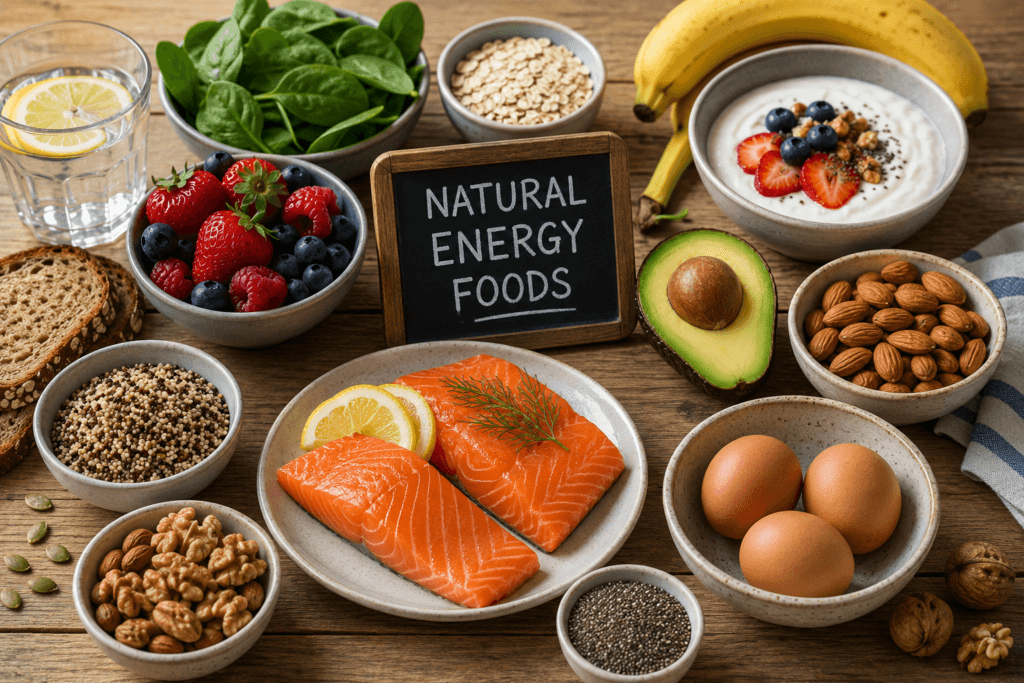
Food quality plays a major role in energy production.
The goal is not simply to eat more food but to choose foods that support steady energy throughout the day. For a complete food framework, see our best diet for energy guide.
Eggs
Eggs provide high-quality protein and nutrients that support satiety and stable energy.
Oats
Oats contain complex carbohydrates and fiber that help provide a gradual release of energy.
Greek Yogurt
Greek yogurt offers protein and beneficial nutrients that can help stabilize blood sugar.
Berries
Berries provide antioxidants and fiber while avoiding the dramatic blood sugar spikes associated with many processed snacks.
Nuts and Seeds
Healthy fats, protein, and minerals make nuts and seeds excellent energy-supporting foods.
Beans and Lentils
These foods provide fiber, protein, and complex carbohydrates that support sustained energy.
Fatty Fish
Fish such as salmon provide omega-3 fatty acids that support brain function and overall wellness.
Common Nutrition Mistakes
Many people:
- Skip breakfast
- Eat too little protein
- Consume excessive sugar
- Rely on processed snacks
These habits often contribute to energy instability throughout the day.
Related Reading:
Best Foods for Steady Energy Without Sugar Crashes
The Best Vitamins for Energy and Tiredness
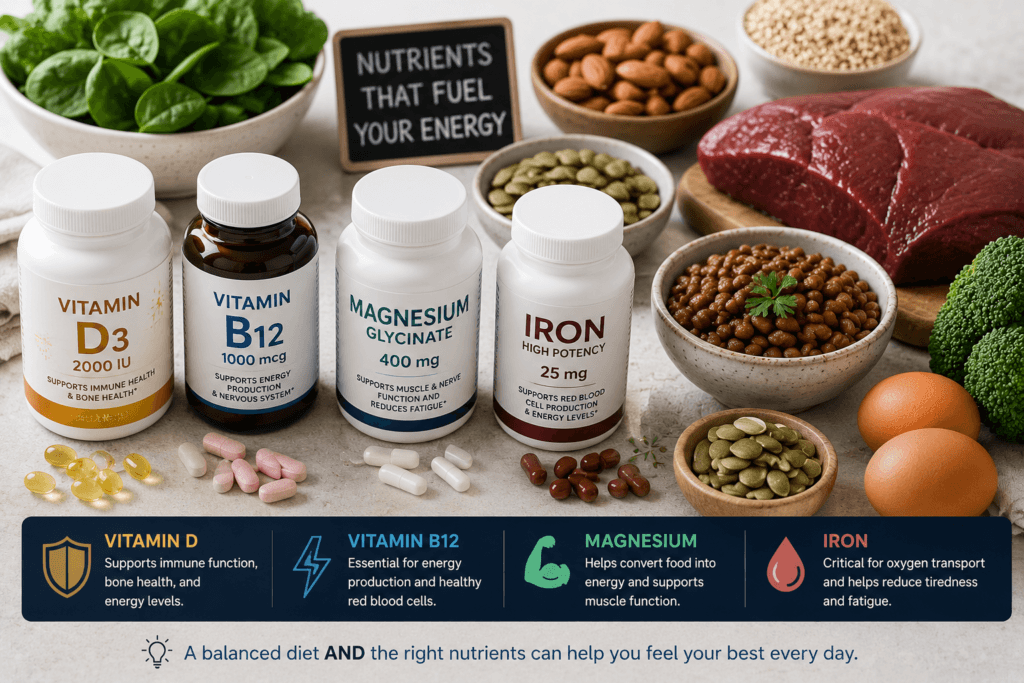
Supplements cannot replace healthy habits, but they may be helpful when deficiencies exist.
Vitamin D
Low vitamin D levels are commonly associated with fatigue and reduced well-being.
Vitamin B12
B12 supports nerve function and red blood cell production.
Low levels can contribute to tiredness and brain fog.
Iron
Iron helps transport oxygen throughout the body.
Deficiency is a common cause of fatigue, particularly in some women.
Magnesium
Magnesium supports hundreds of biochemical processes, including energy production and muscle function.
CoQ10
CoQ10 plays a role in cellular energy production and may support healthy aging.
When Supplements May Help
Supplements may be worth considering when:
- A deficiency is confirmed
- Dietary intake is inadequate
- A healthcare professional recommends them
Related Reading:
Best Vitamins for Low Energy After 40
Best Vitamin D Supplements for Energy and Immunity
Hidden Signs Your Body Is Running Low on Energy
Fatigue isn’t always obvious.
Sometimes the body sends subtle signals long before exhaustion becomes severe.
Brain Fog
Difficulty concentrating and poor mental clarity often indicate declining energy reserves.
Irritability
Low energy frequently affects mood and patience.
Sugar Cravings
The body may seek quick sources of energy through sugary foods.
Frequent Illness
Recovery and immune function often suffer when energy reserves are low.
Poor Workout Recovery
Excessive soreness and slow recovery may indicate inadequate sleep, nutrition, or recovery.
Why Does My Body Feel Heavy?
A heavy body sensation can occur when fatigue becomes significant.
Contributing factors may include:
- Poor sleep
- Stress
- Nutritional deficiencies
- Physical inactivity
This symptom often improves as overall energy-supporting habits improve.
How to Get More Energy Without Overwhelm
One of the biggest mistakes people make is attempting to change everything at once.
Instead, focus on a few high-impact habits.
Step 1: Fix Sleep First
Sleep affects every other aspect of energy.
Improving sleep often produces the greatest return on effort.
Step 2: Hydrate Consistently
Drink water throughout the day rather than waiting until you feel thirsty.
Step 3: Improve Breakfast
A protein-rich breakfast often provides better sustained energy than sugary options.
If your energy is lowest after waking, use this practical morning routine for energy to combine light, hydration, movement, breakfast, and daily planning into one repeatable sequence.
Step 4: Walk Every Day
Walking supports circulation, mood, recovery, and energy production.
Step 5: Reduce Stress
Small daily stress-management practices can have significant cumulative benefits.
Step 6: Protect Recovery Time
Recovery is productive.
The body needs time to repair and recharge.
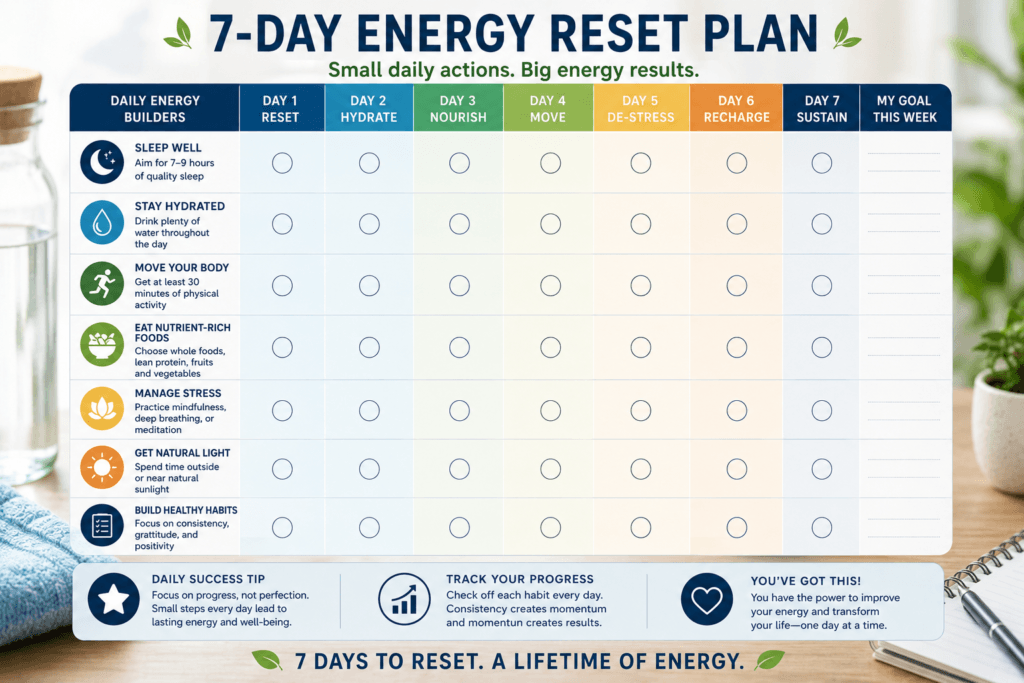
7-Day Energy Reset Plan
Day 1
Track sleep and hydration.
Day 2
Add a 20-minute walk.
Day 3
Eat a protein-rich breakfast.
Day 4
Reduce added sugar.
Day 5
Practice 10 minutes of stress reduction.
Day 6
Spend time outdoors and get natural sunlight exposure.
Day 7
Review progress and choose three habits to continue long term.
The purpose of this reset is not perfection. It is to create momentum and identify habits that have the biggest impact on your energy.
How Long Does It Take to Feel More Energized?
Week 1
Hydration improvements and better sleep habits may produce early benefits.
Week 2
Energy crashes often become less frequent.
Weeks 3–4
Improved nutrition and movement habits typically become more noticeable.
Long-Term Improvements
After several months, many people experience significant improvements in energy, recovery, mood, and overall wellness.
What to Expect After 30 Days
Many individuals who consistently follow energy-supporting habits notice:
Physical Benefits
- Better stamina
- Improved workout performance
- Reduced fatigue
- Better recovery
Mental Benefits
- Improved focus
- Better concentration
- Less brain fog
- Greater productivity
Lifestyle Benefits
- More motivation
- Improved mood
- Reduced reliance on caffeine
- Better sleep quality
The key is consistency rather than perfection.
Best Products to Consider
Cellular Energy Support
Products focused on supporting healthy cellular function and energy production throughout the body.
⭐ Editor’s Pick
Mitolyn
Best For: Adults experiencing low energy, sluggishness, or reduced daily vitality.
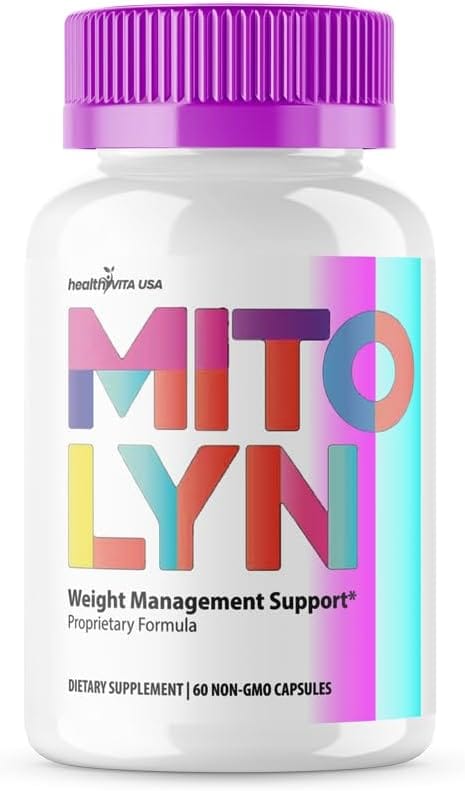
Mitolyn is marketed around supporting mitochondrial health, which plays an important role in how cells produce energy. It fits naturally within an energy and fatigue recovery article.
✔ Focuses on cellular energy support
✔ Designed for daily use
✔ Supports active lifestyles
✔ Complements healthy nutrition habits
Metabolism & Energy Optimization
Programs and supplements designed to support metabolism, energy expenditure, and daily wellness routines.
⭐ Popular Choice
Java Burn
Best For: People wanting an easy addition to their morning routine.
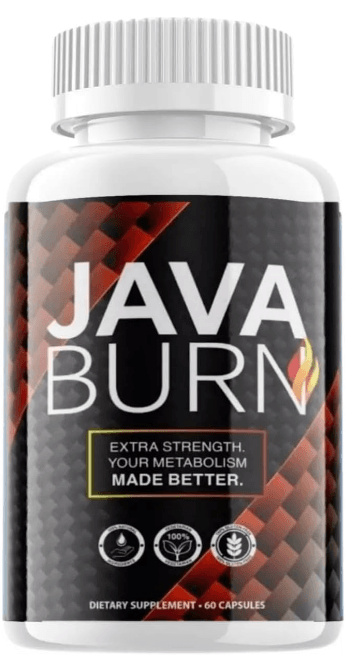
Java Burn is a coffee-based supplement designed to complement a healthy lifestyle and support energy, metabolism, and daily wellness goals.
✔ Simple morning routine integration
✔ Supports metabolism
✔ Convenient daily use
✔ Popular wellness product
Gut Health & Energy Support
Gut health products designed to support digestion, microbiome balance, and overall wellness. Healthy digestion may indirectly support energy and nutrient absorption.
⭐ Editor’s Pick
LeanBiome
Best For: Gut Health, Digestion & Daily Wellness Support

LeanBiome is a probiotic and gut-health supplement formulated with beneficial bacterial strains that support digestive balance and microbiome health. A healthy gut may help improve nutrient absorption, digestive comfort, and overall wellness, which can indirectly support healthy energy levels.
✔ Supports healthy gut microbiome balance
✔ Contains beneficial probiotic strains
✔ Supports digestive health and regularity
✔ May help improve nutrient absorption
👉 Looking to support gut health and overall wellness?
FAQ
Why am I still tired after 8 hours of sleep?
Poor sleep quality, sleep disorders, stress, and nutrient deficiencies can all contribute to fatigue despite getting sufficient sleep duration.
Why do I feel tired after I eat?
Large meals, blood sugar fluctuations, and highly processed foods can contribute to post-meal fatigue.
Why does my body feel heavy?
A heavy body sensation may occur due to poor sleep, chronic stress, inactivity, or fatigue-related recovery issues.
What vitamin deficiency causes fatigue?
Vitamin D, B12, iron, magnesium, and folate deficiencies are commonly associated with low energy.
How can I get energy without caffeine?
Focus on sleep, hydration, nutrition, movement, and stress management to support sustainable energy naturally.
Can dehydration cause fatigue?
Yes. Even mild dehydration can negatively affect physical performance, mood, and concentration.
How do I recover from burnout?
Recovery often requires improved sleep, reduced stress, better boundaries, adequate recovery time, and lifestyle adjustments.
When should I see a doctor about fatigue?
Seek medical advice if fatigue is severe, persistent, unexplained, or accompanied by other concerning symptoms.
When to Seek Medical Help
Consider consulting a healthcare professional if you experience:
- Extreme fatigue lasting several weeks
- Sudden unexplained exhaustion
- Chest pain
- Shortness of breath
- Significant weight changes
- Persistent sleep problems
- Severe brain fog
Professional evaluation can help identify underlying causes and appropriate treatment options.
Want practical tips for better energy, sleep, healthy aging, and overall wellness?
Join the Purely Vital Living newsletter and receive science-backed wellness tips, healthy habit strategies, and trusted product recommendations delivered directly to your inbox.

Final Summary
Learning how to get more energy naturally doesn’t require extreme diets, expensive programs, or endless caffeine.
The most effective energy solutions focus on fundamentals: quality sleep, proper hydration, balanced nutrition, regular movement, stress management, and recovery.
Fatigue is often the result of multiple small factors working together. Fortunately, the same principle applies to recovery. Small improvements in daily habits can create meaningful increases in energy over time.
Start with one or two changes this week. Prioritize consistency, track your progress, and give your body time to respond. Over the coming weeks and months, these habits can help you experience better focus, improved mood, stronger physical performance, and greater overall vitality.
Related Reads
- Why Am I Tired All the Time?
- Why Do I Wake Up Tired?
- Why Am I So Tired in the Afternoon? 7 Common Causes + Fixes
- 7 Healthy Sleep Habits to Transform Your Nighttime Routine
- Best Diet for Energy: Foods That Help Prevent Energy Crashes
- Best Vitamins for Energy After 40
- Best Vitamin D Supplements for Energy and Immunity