
Quick Verdict
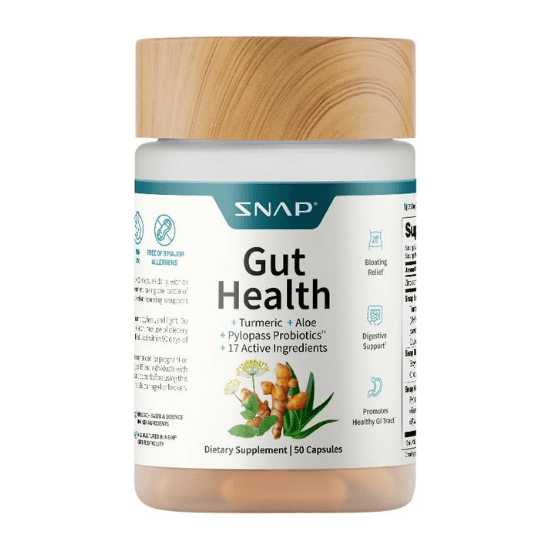
Snap Gut Health is an ambitious all-in-one digestive supplement, but its breadth is both its strength and its weakness. Two capsules combine digestive enzymes, prebiotic fibers, probiotic ingredients, zinc, and several traditional botanicals. That may appeal to adults who want one convenient formula rather than separate enzyme, probiotic, and herbal products.
Best for: Adults seeking a vegan, multi-ingredient supplement for general digestive support who understand that results are individual and are comfortable with proprietary blends.
Consider another option if: You want clearly disclosed enzyme activity units, named probiotic quantities, a simple formula, or targeted treatment for persistent bloating, irregularity, or a diagnosed digestive condition.
PVL Rating: 3.9/5
Editorial score by Purely Vital Living. We rated the product across formula design, evidence relevance, label transparency, safety and usability, and value. This is an evidence-informed product assessment, not a claim of hands-on testing.
- Formula design: 4.3/5
- Evidence relevance: 3.8/5
- Label transparency: 3.2/5
- Safety and usability: 3.8/5
- Value: 4.1/5
Snap Gut Health at a Glance
| Product | Snap Supplements Gut Health |
|---|---|
| Format | 50 vegan capsules |
| Serving | 2 capsules daily |
| Servings per bottle | 25 |
| Key categories | Digestive enzymes, prebiotics, probiotic ingredients, botanicals, zinc |
| Zinc | 15 mg per serving |
| Mucosal-support blend | 850 mg |
| Digestive blend | 200 mg |
| Probiotic/botanical blend | 325 mg |
| Price reviewed | $29.95 sale price; $39.95 list price |
| Cost at sale price | About $1.20 per daily serving |
What Is Snap Gut Health?
Snap Gut Health is a broad digestive-support formula for adults. Instead of focusing on one mechanism, it combines ingredients intended to work at several levels: enzymes for food breakdown, inulin and fructooligosaccharides as prebiotic fibers, microbial ingredients for microbiome support, botanicals traditionally used for digestive comfort, and zinc for normal immune function.
The Amazon listing reviewed here contains 50 capsules, equal to 25 two-capsule servings. Snap recommends taking two capsules daily, and its current product page advises taking them on an empty stomach. Because labels and formulas can change, buyers should compare the physical bottle with the online listing before starting it.
This is a dietary supplement, not a treatment for irritable bowel syndrome, H. pylori infection, inflammatory bowel disease, or unexplained chronic symptoms. The FDA does not approve dietary supplements for safety and effectiveness before they are marketed, so the quality of the label and supporting evidence matters.
Ingredients and Formula Explained
Digestive enzyme blend
The 200 mg digestive blend lists protease, amylase, cellulase, lactase, and lipase. These enzymes correspond broadly to protein, starch, plant fiber, lactose, and fat digestion. The concept is reasonable, especially for people looking for meal-related support.
The problem is that the label reports only the combined blend weight. Enzymes are normally compared through activity units—not simply milligrams—and Snap does not disclose the activity of each enzyme. That makes it impossible to judge how this product compares with a transparent standalone enzyme formula. Our digestive enzyme guide explains why activity units and symptom-specific selection matter.
Prebiotic inulin and FOS
Chicory-root inulin and fructooligosaccharides feed certain gut microbes, which is why they are included in many microbiome formulas. They can be useful ingredients, but they are not automatically soothing. Fermentable fibers may initially increase gas, bloating, cramping, or loose stools, particularly in people sensitive to FODMAPs.
Because Snap does not state the individual amount of inulin or FOS, buyers cannot easily predict tolerance or compare the dose with amounts used in research. Starting only as directed and monitoring symptoms is more sensible than assuming that more prebiotic fiber will produce faster results.
Pylopass and Bacillus strains
The formula lists Pylopass, a preparation based on Lactobacillus reuteri DSM 17648, plus Bacillus clausii and Bacillus subtilis. Pylopass is better described as a targeted microbial ingredient than as proof that the entire Snap formula will relieve everyday bloating.
DSM 17648 has been studied mainly in relation to H. pylori, including as an adjunct to standard eradication therapy. That research does not make Snap Gut Health a substitute for testing, antibiotics, or clinician-directed care. The label also does not provide the quantity of each microbial ingredient, making product-specific effectiveness difficult to assess.
Probiotic evidence is highly strain- and condition-specific. Reviews of IBS research suggest that some products may help some symptoms, but certainty is generally low and results cannot be transferred automatically from one strain or combination to another. See our guide to the best probiotics for bloating for a more targeted comparison.
Botanical blend
The formula includes turmeric, barberry root bark, turkey rhubarb root, aloe vera leaf extract, Ceylon cinnamon, peppermint, fennel, and deglycyrrhizinated licorice. Several have a history of digestive use, but traditional use is not the same as proving that this particular combination improves bloating or irregularity.
Peppermint is one of the more familiar digestive herbs, although much of the stronger clinical evidence involves enteric-coated peppermint oil rather than an undisclosed amount of peppermint leaf in a blend. Aloe and rhubarb can affect bowel habits, while inulin and FOS may increase fermentation. This makes individual response difficult to predict.
Zinc
Each serving supplies 15 mg of zinc, listed as a methionine-bound form. Zinc supports normal immune function and many enzyme processes, but it is not a direct remedy for bloating. Fifteen milligrams is below the adult tolerable upper intake level of 40 mg per day, yet users should count zinc from other supplements to avoid unnecessary long-term stacking.
Does Snap Gut Health Work?
There is no strong basis for promising one predictable result. The formula contains plausible ingredients, but the product combines many mechanisms and does not disclose most individual doses. We also found no published randomized trial evaluating the complete Snap Gut Health formula against placebo.
Some users may notice improved meal comfort or bowel regularity. Others may notice no meaningful change, and sensitive users may experience more gas or cramping during the first days. The Amazon customer rating of 4.6/5 from 401 reviews indicates generally positive buyer sentiment, but customer ratings cannot establish clinical effectiveness and can reflect taste, packaging, shipping, expectations, or other factors.
The most balanced conclusion is that Snap Gut Health is a reasonable convenience formula to try cautiously for general support—not a clinically validated solution for a specific disorder.
Potential Benefits
- Combines several digestive-support categories in two capsules.
- Includes enzymes for multiple food components.
- Contains prebiotic fibers and more than one microbial ingredient.
- Provides a clearly stated 15 mg zinc dose.
- Uses vegan capsules and is marketed as gluten-free and non-GMO.
- Sale price is competitive for a complex formula.
Limitations
- Most ingredients are hidden within proprietary blends.
- No enzyme activity units are disclosed.
- Individual probiotic or postbiotic quantities are not stated.
- The wide formula makes it difficult to identify which ingredient helps or causes side effects.
- Prebiotic fibers and some botanicals may worsen gas or bowel symptoms in sensitive users.
- The product should not be presented as a treatment for H. pylori or chronic digestive disease.
Pros and Cons
| Pros | Cons |
|---|---|
| Broad all-in-one formula | Low dose transparency |
| Vegan two-capsule serving | No enzyme activity units |
| Includes enzymes, prebiotics, and microbial ingredients | Complex formula may complicate tolerance |
| 15 mg zinc is disclosed | Not tailored to one digestive problem |
| Competitive promotional price | Only 25 daily servings per bottle |
| Positive customer sentiment | No trial on the complete formula located |
Who Should Consider Snap Gut Health?
Snap Gut Health may suit an otherwise healthy adult who wants one convenient supplement for broad digestive support and prefers capsules over powders. It is more attractive at the $29.95 sale price than at the $39.95 list price.
It may also appeal to someone comparing an all-in-one formula with separate products. Before choosing, consider whether your main goal is enzyme support, added fiber, or a strain-specific probiotic. A targeted product may be easier to evaluate. Our gut health supplement guide and digestion supplement overview can help separate those categories.
Who Should Avoid It or Ask a Clinician First?
Pregnant or nursing people, anyone under 18, people with a medical condition, and those taking medication should consult a qualified healthcare professional before use, consistent with the manufacturer’s warning. Extra caution is appropriate for people who are immunocompromised, have significant gastrointestinal disease, take medicines that may interact with botanicals, or already use zinc-containing supplements.
Persistent bloating, vomiting, blood in stool, unintended weight loss, severe pain, fever, anemia, or a major change in bowel habits deserves medical evaluation rather than repeated supplement experiments. Suspected H. pylori infection also requires proper testing and clinician-directed treatment.
How to Take It
The current manufacturer direction is two capsules daily on an empty stomach. Follow the physical label you receive because online directions and formulas can change. Do not exceed the labeled serving.
When starting a complex formula, avoid introducing several other new supplements simultaneously. That makes it easier to notice tolerance problems. Stop using the product and seek professional advice if adverse effects are significant or persistent.
Price and Value
At the reviewed sale price of $29.95, each 25-day bottle costs about $1.20 per serving. At the $39.95 list price, the cost rises to about $1.60 per serving. The promotional price is fair for the number of ingredient categories included.
Value is weaker for buyers who prioritize transparent dosing. A lower-priced, single-purpose enzyme or strain-specific probiotic may provide clearer information and make it easier to judge whether it works. The decision depends on whether convenience or precision matters more to you.
Snap Gut Health vs Alternatives
| Option | Best fit | Main tradeoff |
|---|---|---|
| Snap Gut Health | Broad all-in-one digestive support | Proprietary blends limit dose transparency |
| Standalone digestive enzyme | Meal-related support with disclosed activity units | Does not provide probiotic or botanical ingredients |
| Strain-specific probiotic | Buyers matching a researched strain to a goal | Narrower formula and still variable evidence |
| Fiber supplement | People primarily seeking additional dietary fiber | May cause gas and is not an enzyme product |
For a familiar fiber comparison, read our Metamucil review. If your priority is a simpler probiotic, our Align Probiotic review covers a more focused formula.
Final Verdict
Snap Gut Health earns a 3.9/5 PVL rating. It offers a thoughtful mix of enzymes, prebiotic fibers, microbial ingredients, zinc, and botanicals in a convenient vegan capsule. At $29.95, the cost is reasonable for an all-in-one product.
Its biggest drawback is limited transparency. The label does not reveal individual ingredient doses, enzyme activity units, or microbial quantities, and evidence for individual components cannot prove the complete formula works. It is best viewed as an optional general-support product for informed adults—not a replacement for diagnosis, treatment, or a targeted supplement selected for a clear need.
Frequently Asked Questions
What is Snap Gut Health used for?
Snap Gut Health is marketed for everyday digestive comfort, regularity, and microbiome support. It combines several ingredient categories, but that does not prove the finished supplement treats a particular condition. Ongoing or unexplained digestive symptoms warrant assessment rather than relying on a supplement alone.
Does Snap Gut Health help with bloating?
Some individual ingredients have been investigated for digestive outcomes, but product-specific evidence that this blend relieves bloating is limited. Inulin and fructooligosaccharides are fermentable fibers that may increase gas in sensitive users. Start cautiously and seek advice if bloating is persistent, painful, or accompanied by other symptoms.
Is Snap Gut Health a probiotic?
The formula contains microbial ingredients, including Pylopass derived from Lactobacillus reuteri DSM 17648 and Bacillus species. It also contains prebiotic fibers, digestive enzymes, botanicals, and zinc, so it is more accurately described as a multi-ingredient digestive supplement. Compare strain information and disclosed quantities when evaluating probiotic claims.
Can Snap Gut Health treat H. pylori?
No. Research involving the Pylopass ingredient does not demonstrate that this finished supplement eliminates H. pylori infection. Diagnosis requires appropriate testing, and confirmed infection may require prescribed treatment and follow-up. Supplements should not replace a clinician’s recommended eradication regimen.
How many capsules should I take?
The manufacturer directions cited in this review specify two capsules daily on an empty stomach. Check your actual bottle because instructions and formulations can change. Do not exceed the labeled serving. Ask a clinician about suitability if you take medication, have an underlying health condition, or are pregnant.
How long does one bottle last?
At two capsules daily, a 50-capsule bottle provides 25 days of use. That is less than a 30-day supply, so consider the cost per daily serving rather than the bottle price alone. Confirm the quantity and current directions before ordering, especially when comparing bundles or subscriptions.
Can Snap Gut Health cause side effects?
Some users may experience gas, bloating, nausea, cramps, or altered bowel habits, especially from fermentable fibers. With multiple ingredients, identifying the cause of discomfort can be difficult. Stop use and seek advice for significant or persistent symptoms. People with serious illness or impaired immunity should discuss microbial supplements with a clinician.
Is Snap Gut Health worth the money?
At the $29.95 price noted in this review, the product combines several ingredient categories in a convenient format but supplies only 25 daily servings. Proprietary blends and limited dose disclosure make it difficult to assess ingredient-level value. A simpler supplement with transparent amounts may better suit shoppers seeking a specific benefit.
References
- Snap Supplements: Gut Health product information and directions
- iHerb: Snap Gut Health Supplement Facts
- NIH Office of Dietary Supplements: Probiotics fact sheet
- NCCIH: IBS and probiotic evidence
- Gastroenterology: systematic review and meta-analysis of probiotics in IBS
- Clinical study of L. reuteri DSM 17648 and H. pylori
- FDA: Information for consumers on dietary supplements
Reviews
There are no reviews yet.