
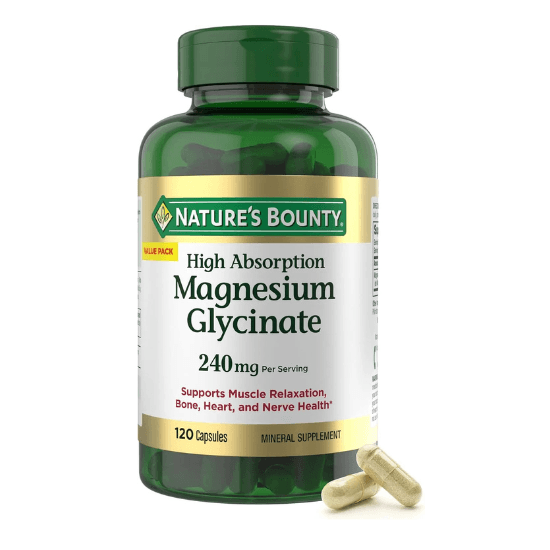
Quick Verdict: Nature’s Bounty High Absorption Magnesium Glycinate is a straightforward, affordable 240 mg magnesium supplement with a well-tolerated form and a practical two-capsule serving. It is a strong option for adults who need to improve magnesium intake, but it should not be presented as a proven insomnia treatment. Sleep benefits are possible—especially when magnesium status is low—but clinical evidence remains mixed.
PVL Rating: 4.4/5
Best for: Adults seeking a simple magnesium glycinate capsule for dietary support, muscle function, or a clinician-approved evening routine.
Avoid or ask a clinician first if: You have kidney disease, take antibiotics, bisphosphonates, diuretics, or other medicines that may interact with magnesium, or already use several magnesium-containing products.
Nature’s Bounty Magnesium Glycinate Review at a Glance
- Form: Magnesium glycinate capsules
- Serving: Two capsules
- Magnesium: 240 mg per serving
- Count: 120 capsules / 60 servings
- Dietary features: Vegetarian, non-GMO, gluten-free, lactose-free, sugar-free
- Current listed price: $15.97, subject to change
- Primary use: Supplementing dietary magnesium; supporting normal muscle, nerve, heart, and bone function
What Is Nature’s Bounty Magnesium Glycinate?
Nature’s Bounty Magnesium Glycinate is a single-mineral supplement using magnesium bound to glycine. The reviewed bottle contains 120 capsules, providing a 60-day supply when taken as directed. Each two-capsule serving supplies 240 mg of elemental magnesium.
Magnesium is essential for hundreds of enzyme systems and contributes to normal muscle and nerve function, blood glucose regulation, blood pressure, protein synthesis, and bone structure. The product’s broad wellness claims are therefore connected to established physiological roles, but a supplement is most likely to matter when dietary intake or magnesium status is inadequate.
Why Choose Magnesium Glycinate?
Magnesium glycinate is commonly chosen for gastrointestinal tolerability and because chelated magnesium is marketed as readily absorbed. However, comparative bioavailability depends on the formulation and study design, so PVL would not claim that glycinate is universally or clinically superior to every other magnesium form. It is often easier on the digestive system than forms used for laxative effects, although any magnesium supplement can still cause loose stools, nausea, or abdominal discomfort.
The formula is simple: magnesium as magnesium glycinate, with minimal capsule ingredients according to the current label. It contains no sugar, artificial colors, or artificial sweeteners. Two capsules make the dose easier to divide than a single large tablet, though buyers should follow the label rather than creating a new regimen without guidance.
Does Magnesium Glycinate Help With Sleep?
Magnesium is marketed heavily for sleep, but the evidence deserves careful interpretation. A systematic review of adult studies found an association between magnesium status and sleep quality in observational research, while randomized trials produced contradictory results. Another review in older adults found a possible reduction in sleep-onset time, but the evidence was low to very low quality.
A newer 2026 systematic review reached a similarly cautious conclusion: magnesium-sleep findings remain inconsistent, with overall certainty generally low or very low. PVL did not identify a randomized controlled trial of the finished Nature’s Bounty Magnesium Glycinate product showing that it improves insomnia or objective sleep outcomes. Ingredient-level magnesium research therefore should not be presented as proof of this specific supplement.
This means Nature’s Bounty Magnesium Glycinate may support sleep in some people, particularly those with low magnesium intake, but it is not a reliable substitute for diagnosing insomnia or addressing sleep apnea, restless legs, medication effects, stress, or irregular schedules. Our guides to improving sleep quality naturally and falling asleep faster cover the behavioral foundations that matter regardless of supplementation.
Dose and Daily Value
A 240 mg serving is substantial but remains below the adult upper limit of 350 mg per day for magnesium from supplements and medications. That upper limit does not include magnesium naturally present in food. It is intended mainly to reduce gastrointestinal side effects rather than define an ideal personal dose.
Total intake matters. Antacids, laxatives, electrolyte powders, multivitamins, and sleep blends may also contain magnesium. Add those sources before deciding whether this product fits your routine. Food-first sources include legumes, nuts, seeds, whole grains, and leafy green vegetables.
Muscle Relaxation, Heart, Nerve, and Bone Claims
Magnesium contributes to normal muscle contraction and relaxation, nerve transmission, heart rhythm, and bone health. Correcting inadequate intake can support these systems. However, this product should not be expected to treat muscle cramps, arrhythmias, osteoporosis, anxiety, or neurological disease by itself.
People experiencing persistent cramps, weakness, palpitations, numbness, or fatigue should obtain medical advice rather than assume magnesium deficiency. Blood magnesium can also be difficult to interpret because most magnesium is stored outside the bloodstream.
How to Take It
Follow the current bottle directions, which provide 240 mg in two capsules. Taking magnesium with food may improve tolerance. Many people use glycinate in the evening, but the most appropriate time depends on preference, medicines, and digestive response rather than a proven universal bedtime effect.
Do not take magnesium at the same time as certain antibiotics or osteoporosis medicines unless a pharmacist has confirmed the required separation. Use the PVL Sleep Score Calculator to identify schedule, light, caffeine, and sleep-environment issues before expecting a supplement to solve them.
Safety, Side Effects, and Interactions
The most common problems from supplemental magnesium are diarrhea, nausea, and abdominal cramping. Very high intake can cause dangerous effects, including low blood pressure, weakness, breathing difficulty, irregular heartbeat, and cardiac arrest. Healthy kidneys normally remove excess magnesium; impaired kidney function increases the risk of accumulation.
Magnesium can interfere with absorption of tetracycline and quinolone antibiotics and oral bisphosphonates. Diuretics and long-term proton-pump inhibitor use can also affect magnesium status. Tell your doctor or pharmacist about all medicines and supplements you use. Keep the bottle away from children and do not use it if the safety seal is damaged.
Pros and Cons
Pros
- 240 mg of elemental magnesium per serving
- Glycinate form is generally well tolerated
- Two-capsule serving allows practical use
- 60 servings at an accessible price
- Vegetarian, non-GMO, gluten-free, and lactose-free
- No sugar, artificial colors, or artificial sweeteners
Cons
- Sleep benefits are not guaranteed
- Requires two capsules per full serving
- Can still cause digestive side effects
- Not suitable without guidance for kidney disease
- Can interfere with several medicines
- No independent certification is highlighted on the listing
Who Should Consider It?
This product is best suited to adults with inadequate dietary magnesium, a clinician-recommended need, or a preference for glycinate over more laxative forms. It also makes sense for shoppers who want a clean-label capsule instead of sweetened gummies or multi-ingredient sleep blends.
Who Should Choose Another Option?
Choose a lower-dose formula if you already receive magnesium from other supplements. A powder may suit people who cannot swallow capsules, while magnesium citrate may be preferred when constipation relief is also desired. For persistent insomnia, prioritize an evaluation and cognitive behavioral treatment rather than cycling through supplements. Our Natrol melatonin gummies review explains why even popular sleep supplements require conservative dosing.
Nature’s Bounty vs Other Magnesium Forms
| Form | Common reason to choose it | Main limitation |
|---|---|---|
| Magnesium glycinate | General supplementation and tolerability | Usually costs more than oxide |
| Magnesium citrate | Supplementation plus bowel regularity | More likely to loosen stools |
| Magnesium oxide | Low cost and high labeled elemental amount | Lower absorption and more GI effects |
| Food sources | Daily nutrition with other nutrients | Requires consistent dietary changes |
Is Nature’s Bounty Magnesium Glycinate Worth It?
At the current price, the supplement offers good value: a two-month supply, a useful 240 mg dose, and a generally well-tolerated form from a widely available brand. It earns its place as a magnesium supplement, not as a guaranteed sleeping pill.
Our 4.4/5 score reflects the solid formula, price, and dietary accessibility. The deductions are for medication considerations, the absence of prominently stated third-party certification, and marketing expectations around relaxation and sleep that exceed the certainty of current evidence.
Frequently Asked Questions
How much magnesium is in Nature’s Bounty Magnesium Glycinate?
The reviewed serving of two capsules supplies 240 mg of elemental magnesium, meaning the amount of magnesium itself rather than the weight of the glycinate compound. Check the current Supplement Facts panel because labels can change. Account for magnesium from other supplements and medications when assessing your overall intake.
Is Nature’s Bounty Magnesium Glycinate good for sleep?
Magnesium is important for normal nerve and muscle function, and supplementation may be useful when intake is inadequate. However, clinical evidence that magnesium glycinate reliably improves insomnia is limited and mixed. It should not be described as a proven sleep treatment. Persistent difficulty sleeping warrants evaluation of other causes and consideration of established approaches.
When should I take magnesium glycinate?
Follow the bottle directions and consider taking it with food if your stomach is sensitive. Some people prefer evening dosing, but no specific bedtime has been shown to work best for everyone. Consistency and tolerance matter more than an exact clock time. Check with a pharmacist if you take medicines that require separation from minerals.
Does magnesium glycinate cause diarrhea?
Yes. Although magnesium glycinate is often chosen for digestive tolerance, supplemental magnesium can still cause loose stools, nausea, or abdominal cramping. Effects vary with the dose and individual sensitivity. Reduce or stop use and seek advice if symptoms are troublesome, and avoid taking more than the recommended amount to pursue faster results.
Is 240 mg of magnesium too much?
A two-capsule serving provides 240 mg of supplemental magnesium, below the US adult tolerable upper intake level of 350 mg per day from supplements and medications. That limit does not include magnesium naturally present in food. Suitability still depends on your total supplemental intake, kidney function, medications, and medical history.
Can I take magnesium glycinate with antibiotics?
Magnesium can bind to certain antibiotics in the digestive tract and reduce their absorption, including some tetracyclines and fluoroquinolones. The required spacing varies by medication, so ask your pharmacist for the correct schedule rather than guessing. Do not skip prescribed doses or change antibiotic treatment without professional guidance.
Is this product vegetarian and gluten-free?
Nature’s Bounty describes the reviewed formula as vegetarian, non-GMO, gluten-free, and lactose-free, without sugar or artificial sweeteners. Product formulations and manufacturing statements can change, so verify the exact label and allergen information before purchasing. People with significant allergies or dietary restrictions should not rely solely on older retailer descriptions.
Can people with kidney disease take it?
People with reduced kidney function may have difficulty clearing excess magnesium, increasing the risk of harmful accumulation. Do not start this supplement without individualized medical approval if you have kidney disease. A clinician may need to review kidney function, medicines, and magnesium levels before recommending any supplemental dose.
Final Verdict
Nature’s Bounty High Absorption Magnesium Glycinate earns a 4.4/5 PVL rating. It is a well-priced, uncomplicated way to obtain 240 mg of magnesium in a generally tolerable form. Buy it for sensible magnesium supplementation—not on the assumption that it will automatically cure insomnia, anxiety, or muscle problems.
Reviews
There are no reviews yet.