
Quick Verdict
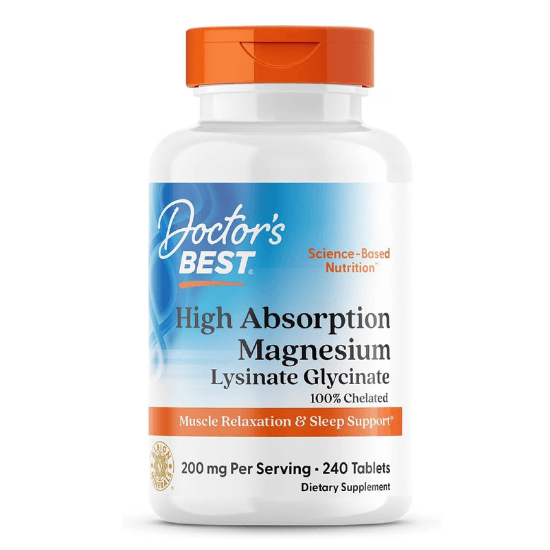
Doctor’s Best High Absorption Magnesium is a good-value, fully chelated magnesium lysinate glycinate supplement with transparent elemental dosing and a relatively simple vegan formula. It is a practical choice for adults who need supplemental magnesium and prefer tablets, but it should not be purchased as a proven insomnia treatment. The best current evidence finds inconsistent sleep results and low to very low certainty.
PVL editorial rating: 4.0/5
Best for: adults advised to supplement magnesium who value a chelated formula, 100 mg-per-tablet dose flexibility, and a large 240-tablet bottle.
This Doctor’s Best magnesium glycinate review examines the actual label, dose, ingredients, sleep evidence, tolerability, safety, and value. We did not conduct hands-on testing. Our assessment is based on the current manufacturer label, peer-reviewed research, authoritative safety guidance, and the supplied retail information.
Affiliate disclosure: This page contains an Amazon affiliate link. Purely Vital Living may earn a commission at no additional cost to you.
Pros
- Fully chelated magnesium lysinate glycinate formula
- 100 mg elemental magnesium per tablet allows dose flexibility
- 240 tablets provide 120 two-tablet servings
- Vegan, non-GMO, gluten-free, and soy-free according to the label
- Usually gentler than poorly absorbed oxide-based formulas
- Competitive $23.99 listed price
Cons
- Four-tablet suggested daily use may be inconvenient
- Suggested 400 mg daily intake exceeds the NIH supplemental upper limit
- No strong evidence that this specific product improves sleep
- Tablets may be large for people who have difficulty swallowing
- Contains several excipients rather than a minimalist capsule formula
- Not appropriate for everyone, particularly with impaired kidney function
Doctor’s Best Magnesium Glycinate at a Glance
| Product | Doctor’s Best High Absorption Magnesium Lysinate Glycinate |
|---|---|
| Form | Chelated magnesium lysinate glycinate tablets |
| Elemental magnesium | 100 mg per tablet; 200 mg per two-tablet serving |
| Bottle size | 240 tablets / 120 two-tablet servings |
| Manufacturer directions | Two tablets twice daily, or as recommended by a nutritionally informed physician |
| Dietary features | Vegan, non-GMO, gluten-free, soy-free |
| Listed price | $23.99 at the time of review |
Best For
- Adults whose clinician or dietitian has identified a reason to supplement magnesium
- People who want a chelated form rather than magnesium oxide
- Buyers who prefer 100 mg tablets for more flexible dose adjustment
- Vegans seeking a formula labeled free of gluten and soy
- Value-focused shoppers who will use a 240-tablet bottle consistently
Who Should Avoid It or Ask a Clinician First
- People with kidney disease, reduced kidney function, or a history of dangerously high magnesium
- Anyone taking tetracycline or quinolone antibiotics, bisphosphonates, diuretics, or other medicines that can interact with magnesium
- People already using magnesium-containing antacids, laxatives, multivitamins, electrolyte products, or other magnesium supplements
- Anyone with persistent unexplained weakness, vomiting, low blood pressure, abnormal heartbeat, or significant gastrointestinal symptoms
- Pregnant or breastfeeding people and children unless a qualified clinician recommends the product and dose
- People with swallowing difficulties who may find the tablets unsuitable
Formula and Ingredient Analysis
The supplement uses magnesium lysinate glycinate chelate made with Albion TRAACS technology. “Chelated” means magnesium is bound to amino acids—in this case glycine and lysine. The label declares elemental magnesium, not the total weight of the chelated compound: two tablets provide 200 mg, or 48% of the current US Daily Value.
The distinction matters because the front label can easily be misread. A “200 mg serving” is two tablets, not one. Following the manufacturer’s full suggested use of two tablets twice daily provides 400 mg of supplemental magnesium and uses four tablets per day. At that rate, the 240-count bottle lasts 60 days. At one two-tablet serving daily, it lasts 120 days.
Other ingredients listed by the manufacturer include microcrystalline cellulose, croscarmellose sodium, vegetable-source magnesium stearate, stearic acid, hydroxypropyl cellulose, silicon dioxide, and hypromellose. These are common manufacturing and tablet-forming ingredients, but buyers seeking a very short excipient list may prefer a capsule or powder alternative.
Absorption: What “High Absorption” Really Means
Doctor’s Best markets the product as high absorption and says its TRAACS chelate is better absorbed than some other magnesium forms. Chelation may improve solubility and gastrointestinal tolerance compared with poorly soluble magnesium oxide. However, the NIH specifically identifies aspartate, citrate, lactate, and chloride as forms shown in small studies to be more bioavailable than oxide and sulfate; it does not establish that every glycinate product is clinically superior.
Absorption is also not the same as a meaningful outcome. A form can be absorbed without automatically improving sleep, stress, cramps, or another symptom. Baseline magnesium status, diet, kidney function, dose, adherence, and the cause of the symptom all matter.
Does Doctor’s Best Magnesium Glycinate Help With Sleep?
Manufacturer Position
The label presents “muscle relaxation & sleep support” as a structure/function claim. This describes the intended wellness positioning; it does not mean the product has been proven to treat insomnia or another sleep disorder.
Independent Evidence
The strongest current synthesis is a 2026 systematic review of randomized controlled trials of oral magnesium in adults. It included 12 main sleep trials and found substantial differences in populations, magnesium forms, doses, durations, and measurement methods. Results were inconsistent across subjective ratings and objective measures. The authors rated the certainty low to very low and concluded that current evidence does not support oral magnesium as a routine insomnia treatment.
An earlier 2021 review of three randomized trials in 151 older adults reported a roughly 17-minute reduction in sleep-onset latency, but total sleep time did not improve significantly and the underlying studies were low quality. Observational research also links magnesium status with sleep, but associations cannot prove that taking a supplement causes better sleep.
A 2025 randomized trial of magnesium bisglycinate in adults reporting poor sleep found a small improvement in insomnia symptoms over four weeks, but results for other outcomes were mixed. That study tested a specific protocol, not this Doctor’s Best lysinate glycinate product.
Evidence conclusion: magnesium may modestly help selected adults, especially where intake or status is inadequate, but evidence is not strong enough to promise better sleep. This supplement should support an identified nutritional need—not replace evaluation for chronic insomnia, sleep apnea, restless legs, anxiety, medication effects, or another underlying cause.
Dose and Value
The 100 mg-per-tablet format is useful because it allows a clinician to tailor the dose more precisely than a single high-dose capsule. The $23.99 price equals about $0.20 per two-tablet serving and about $0.40 per day at the full four-tablet label direction, before price changes or discounts.
More is not automatically better. The NIH adult tolerable upper intake level is 350 mg per day from supplements and medications, excluding magnesium naturally present in food. The manufacturer’s full suggested daily use supplies 400 mg of supplemental magnesium and uses four tablets per day. That does not prove 400 mg is unsafe for every adult, but it is a clear reason to check total supplemental intake and seek individualized advice rather than automatically following the maximum label schedule.
Safety, Side Effects, and Interactions
Common side effects of supplemental magnesium include diarrhea, nausea, abdominal cramping, and stomach discomfort. Glycinate-based products are often marketed as gentler, but any magnesium supplement can cause gastrointestinal effects, particularly as the dose rises.
Healthy kidneys normally remove excess magnesium. Impaired kidney function increases the risk of accumulation and toxicity. Very high magnesium exposure can cause weakness, low blood pressure, confusion, breathing difficulty, irregular heartbeat, and cardiac arrest. Seek urgent medical help for severe symptoms.
Magnesium can reduce absorption of certain medicines. NIH guidance says oral bisphosphonates should generally be separated from magnesium by at least two hours. Tetracycline and quinolone antibiotics may need to be taken at least two hours before or four to six hours after magnesium. Timing can differ by medicine, so follow the prescription label or ask a pharmacist. Diuretics and long-term acid-suppressing medicines can also affect magnesium status.
How to Use It Responsibly
- Check the Supplement Facts panel and count elemental magnesium from every supplement and medication you use.
- Do not assume the four-tablet manufacturer schedule is appropriate for you.
- Ask a clinician or pharmacist about kidney function, medication timing, pregnancy, and an appropriate dose.
- Start only at the advised amount and monitor gastrointestinal tolerance.
- Do not use a sleep supplement to delay assessment of persistent sleep problems or daytime impairment.
Alternatives
| Product or approach | Best for | Trade-off |
|---|---|---|
| Thorne Magnesium Bisglycinate | Premium powder and brand-level testing emphasis | Typically costs more |
| Pure Encapsulations Magnesium | A minimalist, hypoallergenic-positioned option | Higher price per serving |
| Magnesium-rich foods | Building intake through nuts, seeds, legumes, whole grains, and leafy greens | Less precise dosing but no supplemental upper-limit concern |
| Clinician-directed testing and treatment | Suspected deficiency, kidney disease, or persistent sleep symptoms | Requires professional assessment |
Is Doctor’s Best Magnesium Glycinate Worth It?
It is a strong value when the goal is straightforward magnesium supplementation and a qualified professional agrees that the dose is appropriate. The chelated formula, clear 100 mg-per-tablet amount, vegan labeling, and 240-tablet bottle are practical strengths.
It is less compelling if the main reason for buying is a promise of deeper or faster sleep. The research does not justify that expectation, and the full label schedule creates a four-tablet burden while exceeding the NIH supplemental upper limit. Buyers who need only 100–200 mg daily may get better flexibility and longer bottle life, but should still confirm the dose.
Search-Based FAQs
Is Doctor’s Best magnesium glycinate good for sleep?
It may support magnesium intake and could modestly help some adults, but current evidence is inconsistent and low certainty. It is not a proven treatment for insomnia or another sleep disorder.
How much magnesium is in Doctor’s Best High Absorption Magnesium?
Each tablet provides 100 mg of elemental magnesium. The labeled serving is two tablets, providing 200 mg. The manufacturer suggests two tablets twice daily, which totals 400 mg per day.
Is magnesium lysinate glycinate the same as magnesium glycinate?
They are closely related chelated forms, but this product binds magnesium with both lysine and glycine rather than glycine alone. Evidence does not establish that the lysinate-glycinate combination produces better sleep outcomes than other well-absorbed forms.
When should I take Doctor’s Best magnesium glycinate?
The label does not require bedtime use. Timing should accommodate tolerance and medication separation. A pharmacist can advise on timing when you take antibiotics, bisphosphonates, or other interacting medicines.
Can Doctor’s Best magnesium glycinate cause diarrhea?
Yes. Glycinate is often considered gentler than some forms, but diarrhea, nausea, and abdominal cramping remain possible, especially at higher supplemental doses.
Can I take 400 mg of this magnesium every day?
The manufacturer’s four-tablet schedule supplies 400 mg, which is above the NIH adult upper limit of 350 mg daily from supplements and medications. Ask a clinician whether that amount is appropriate and count magnesium from all other products.
Who should not take magnesium glycinate?
People with kidney disease or reduced kidney function should not self-prescribe it. Anyone using interacting medicines, pregnant or breastfeeding people, children, and people with significant medical conditions should obtain professional guidance first.
How long does a 240-tablet bottle last?
It lasts 60 days at four tablets daily, 120 days at two tablets daily, or 240 days at one tablet daily. Use only the amount recommended for you.
Related PVL Reviews and Guides
- Melatonin vs. Magnesium for Sleep
- Thorne Magnesium Glycinate Review
- Pure Encapsulations Magnesium Review
- How to Improve Sleep Quality Naturally
- How to Fall Asleep Faster Naturally
Reliable References
- Doctor’s Best: Current product label and Supplement Facts
- NIH Office of Dietary Supplements: Magnesium fact sheet for health professionals
- Lopresti AL, et al. Magnesium Supplementation for Sleep in Adults: A Systematic Review of Randomized Controlled Trials. 2026.
- Mah J, Pitre T. Oral magnesium supplementation for insomnia in older adults: systematic review and meta-analysis. 2021.
- Magnesium bisglycinate supplementation in healthy adults reporting poor sleep. 2025.
Bottom Line
Doctor’s Best High Absorption Magnesium offers a credible, flexible, and economical chelated formula. We recommend considering it for an identified magnesium need—not because the words “sleep support” appear on the bottle. Confirm the right dose, check medication timing and kidney safety, and keep expectations for sleep modest.



Reviews
There are no reviews yet.