
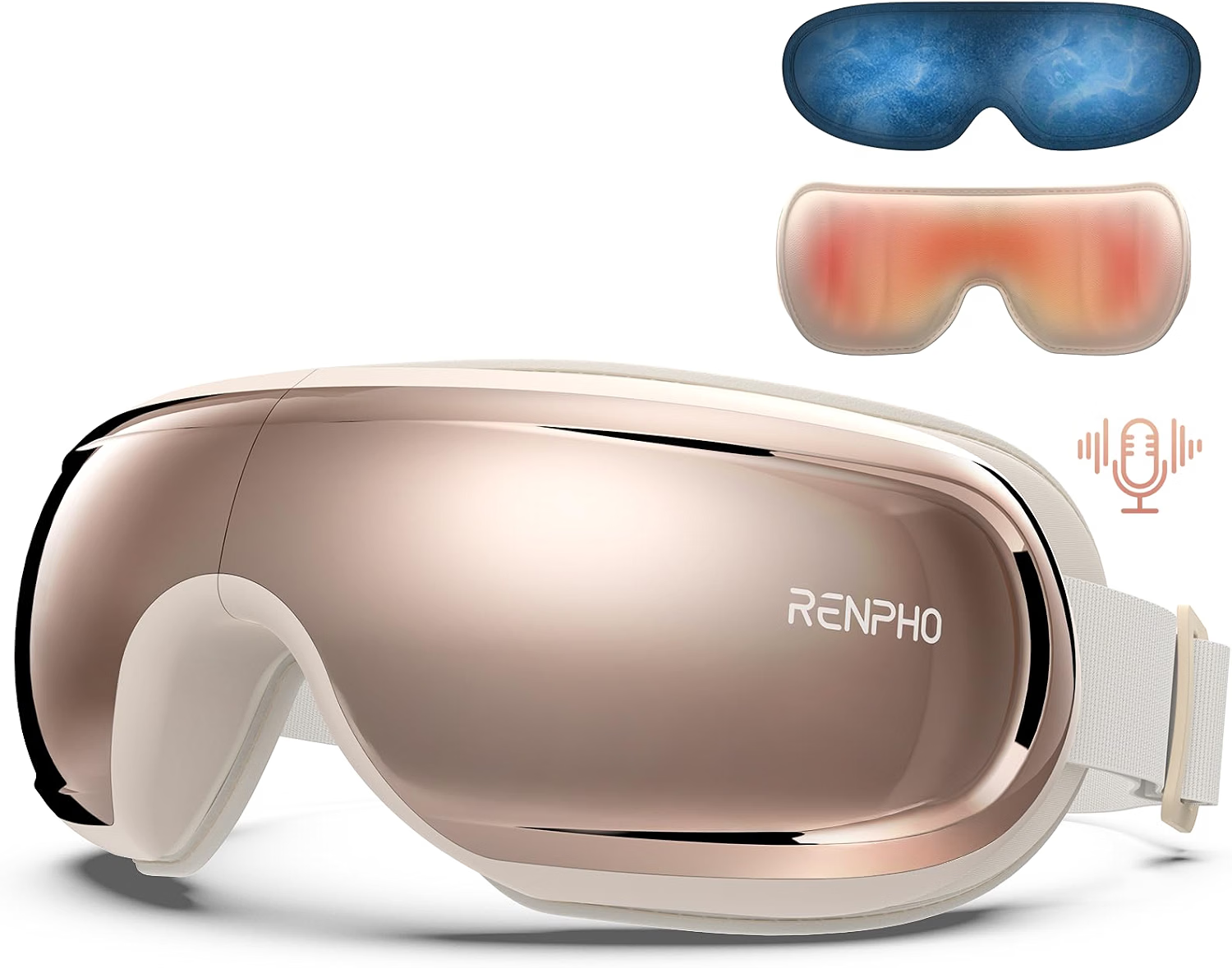
Quick verdict: The RENPHO Eyeris 3 is a versatile eye massager that combines adjustable heat, air compression, vibration, voice control, Bluetooth audio and a removable cooling gel mask. It is a stronger all-season relaxation option than the Eyeris 1, especially for users who want both warmth and cooling, but facial fit and pressure remain personal. It is a comfort device—not a treatment for dry eye, headaches, migraines, dark circles or any eye condition.
Editorial note: Purely Vital Living did not conduct hands-on testing of this unit. This review is based on RENPHO documentation, independent clinical research, product specifications and the supplied customer-rating data. Manufacturer claims are identified separately from independent evidence.
RENPHO Eyeris 3 at a glance
| Model | RENPHO Eyeris 3 (R-G010V) |
|---|---|
| Core functions | Air compression, dry heat, vibration and optional Bluetooth audio |
| Cooling | Removable gel mask used at room temperature or chilled; not powered refrigeration |
| Heat | 104°F, 108°F or 113°F, plus heat off |
| Pressure | Soft, strong or off |
| Massage zones | Eyes and temples, eyes only, or temples only |
| Timers | 10, 15 or 20 minutes |
| Controls | Physical buttons and “Hi Eyeris” voice commands |
| Audio | Built-in music, Bluetooth and silent mode |
| Supplied Amazon rating | 4.3/5 from approximately 1,700 ratings |
| Price reviewed | $79.99 |
Pros and cons
Pros
- Heat plus a removable chilled gel mask provides more flexibility than heat-only models
- Three heat levels, two pressure intensities and three massage zones
- Voice control is useful when the mask blocks your view
- 10-, 15- and 20-minute timers with memory for recent settings
- RENPHO lists operating noise below 43 dB
Cons
- The gel insert provides passive cooling and must be chilled beforehand
- Rigid fit and pressure may be uncomfortable on some face shapes
- Air compression remains audible despite the quieter motor
- Not appropriate for several eye or health conditions without medical clearance
- Independent evidence does not validate the product’s broad symptom claims
Best for
- Adults seeking a short relaxation ritual after screen-heavy work
- People who want both warming and chilled-mask options
- Users who enjoy gentle facial compression but want the option to turn it off
- Anyone who values voice control while their eyes are covered
Who should avoid the RENPHO Eyeris 3?
Do not use the Eyeris 3 without clearance from an eye-care professional if you have glaucoma, cataracts, retinal disease or detachment risk, corneal disease, severe or unexplained dry eye, an eye infection or injury, unexplained eye pain, or recent eye surgery such as LASIK or cataract surgery.
RENPHO also advises medical consultation for older adults, pregnant or postpartum users, people with pacemakers or other implants, serious heart conditions, abnormal blood pressure, major health conditions or ongoing medical treatment. Avoid use over swelling, wounds, burns, infection or highly sensitive skin. Remove contact lenses, glasses, false eyelashes and hairpins first.
Children and anyone unable to report discomfort or remove the device independently should not use heated massage unattended.
Design, fit and everyday use
The Eyeris 3 is a rigid, padded mask designed to cover the eyes and reach the temples. RENPHO says the revised nose bridge and extended cushions improve fit compared with earlier models. Still, no fixed shell will fit every face equally well. Users with a narrow nose bridge, prominent brow or pressure sensitivity may feel uneven contact.
The device offers three massage zones: eyes and temples, eyes only, and temples only. Pressure can be set to soft or strong—or disabled. Vibration can also be switched independently, so the product is more configurable than a one-button eye massager.
Heat settings
The three listed temperatures are 104°F, 108°F and 113°F. Warmth is the feature with the clearest connection to independent eye-care research because repeated eyelid warming can help some people with meibomian gland dysfunction-related symptoms. Begin at the lowest setting. More heat is not automatically more effective and can increase discomfort or burn risk.
Cooling gel mask
“Heat and cooling” can sound as though the device actively refrigerates. It does not. Cooling comes from a removable gel mask that can be used at room temperature or chilled before attachment. RENPHO says a frozen gel insert should be allowed to thaw before use, and the heating function should remain off while using it for cooling.
The chilled insert may feel refreshing for short-term comfort, but it should not be presented as a treatment for swelling, blurred vision, dark circles or dry eye. Persistent swelling or visual symptoms require professional evaluation.
Voice control and audio
After powering on the device, saying “Hi Eyeris” activates the native voice assistant. RENPHO lists 18 preset commands for heat, pressure, timer, vibration, modes, music and volume. Because the mask blocks vision, voice control is more useful here than it might be on an ordinary wellness device.
Built-in music and Bluetooth playback are optional, and a silent mode disables voice broadcasts and built-in tracks. Bluetooth audio is not necessary for the massage functions.
Noise, charging and timers
RENPHO lists motor noise below 43 dB, though the inflation and deflation cycles remain audible. The manual lists an approximate 1.5-hour charge using a 5V/2A charger and selectable 10-, 15- or 20-minute sessions. Do not use the device while charging or while asleep.
Manufacturer claims versus independent evidence
RENPHO’s position: the Eyeris 3 is marketed for comfort and relaxation, with additional claims around eye strain, headaches, dry eyes, swelling and dark circles. Its documented functions—heat, compression, vibration, cooling gel, voice commands and audio—are verifiable product features. Symptom-relief statements are marketing claims, not proof that the device treats a medical condition.
What independent research supports: randomized and small clinical studies suggest that eyelid warming can improve some symptoms and tear-film measures in people with meibomian gland dysfunction. A 2021 pilot study of a different heat-and-vibration mask reported short-term improvements, while a randomized thermal-massage trial also found dry-eye improvements.
What remains uncertain: these studies do not establish that the Eyeris 3 itself treats dry eye, eye strain, headaches or migraines. In another randomized trial, adding an eyelid-massage device to warm compresses produced statistically significant but not clinically meaningful additional improvement. Evidence for dark-circle reduction, vision improvement or headache treatment is particularly weak.
Safety and possible side effects
Possible adverse effects include excessive pressure, overheating, cold discomfort, skin irritation, temporary blurred vision, dizziness, nausea, worsening headache and discomfort at the nose or temples. The American Academy of Ophthalmology notes that direct pressure and chronic rubbing can damage the eye or eyelids in some individuals. Research also shows that ocular massage can temporarily alter intraocular pressure.
- Use only over closed eyes and remove contact lenses first.
- Start with low heat, soft pressure and a comfortably loose strap.
- Never apply a rock-hard frozen gel mask; follow RENPHO’s thawing instructions.
- Do not use while driving, walking, charging, sleeping or under a blanket or pillow.
- Stop for pain, visual changes, flashes or new floaters, marked redness, nausea, dizziness, worsening headache or skin irritation.
- Seek prompt eye care for sudden visual changes, persistent pain or new flashes/floaters.
RENPHO Eyeris 3 vs. Eyeris 1
| Feature | Eyeris 3 | Eyeris 1 |
|---|---|---|
| Cooling option | Removable chilled gel mask | No dedicated cooling insert |
| Voice control | Yes, 18 preset commands | No native voice-command system |
| Timers | 10, 15 or 20 minutes | 15-minute auto-off |
| Massage zones | Eyes and temples, eyes only, temples only | Combined modes with fewer zone controls |
| Price reviewed | $79.99 | Generally lower |
The Eyeris 3 is the better match for users who will use the cooling insert or hands-free controls. The Eyeris 1 remains the simpler value option if heat and basic compression are enough.
Alternatives
- RENPHO Eyeris 1: a lower-cost heat-and-compression model without the Eyeris 3’s cooling gel or voice controls.
- Therabody SmartGoggles 2nd Generation: a more premium relaxation device with app integration, but at a much higher price.
- Microwavable warm eye mask: lighter, silent and inexpensive when warmth is the primary goal.
- Reusable cooling eye mask: a simpler option for people who want cooling without motors, pressure or audio.
Bottom line
The RENPHO Eyeris 3 is a meaningful upgrade over a basic heated eye mask. Adjustable heat, optional pressure and vibration, selectable zones, a passive cooling insert and practical voice controls make it unusually flexible at $79.99. Its biggest limitations are fit, pump noise and the gap between broad marketing claims and product-specific evidence.
For healthy adults who already enjoy gentle facial compression, it is a well-equipped relaxation tool and earns a 4.2/5 PVL editorial rating. Anyone with an eye condition, recent eye surgery or unexplained symptoms should consult an eye-care professional before use.
Frequently asked questions
Does the RENPHO Eyeris 3 actually cool?
It includes a removable gel mask that can be chilled before use. The device does not actively refrigerate the eye area, so cooling gradually fades as the gel warms.
Can the Eyeris 3 help dry eyes?
Warm eyelid therapy can help some people with meibomian gland dysfunction-related dry-eye symptoms, but evidence specific to the Eyeris 3 is limited. Persistent dry eye needs an eye-care evaluation.
Is the RENPHO Eyeris 3 safe?
It may be reasonable for healthy adults using gentle settings. People with glaucoma, retinal or corneal disease, eye injury or infection, recent eye surgery, severe dry eye or unexplained eye pain should get professional clearance first.
Can it treat headaches or migraines?
No. Some users may find the pressure, warmth or cooling relaxing, but the Eyeris 3 is not proven to treat headaches or migraines. Compression, vibration, sound or heat can worsen symptoms for some people.
What is the Eyeris 3 Rosé?
Rosé refers to a blush-gold color edition of the Eyeris 3. It is not a different therapy or separate eye-massage technology; buyers should confirm the exact included accessories on the retailer listing.
Can you sleep while wearing it?
No. Use the Eyeris 3 while awake and remove it when the timed session ends. Its rigid shell, heat and compression are unsuitable for overnight wear.
Should contact lenses be removed?
Yes. RENPHO directs users to remove contact lenses, glasses, false eyelashes, hairpins and similar accessories before use.
Is the Eyeris 3 better than the Eyeris 1?
It is more versatile because it adds a cooling gel insert, voice control, selectable timers and more zone control. The Eyeris 1 may be the better value if those extras are unnecessary.
Reliable references
- RENPHO: Eyeris 3 product specifications
- RENPHO: Eyeris 3 R-G010V user manual
- Vigo L, et al. Short-Term Effects of a Heat-and-Vibration Eye Mask (2021)
- Lee JE, et al. Randomized trial of thermal massage for dry eye (2014)
- Wang MTM, et al. Randomized trial of an eyelid massage device (2019)
- American Academy of Ophthalmology: Eye-massager safety after cataract surgery
As an Amazon Associate, Purely Vital Living may earn from qualifying purchases at no additional cost to you. Price and availability can change.

Reviews
There are no reviews yet.