
Affiliate disclosure: Purely Vital Living may earn a commission from qualifying purchases made through links on this page, at no extra cost to you.
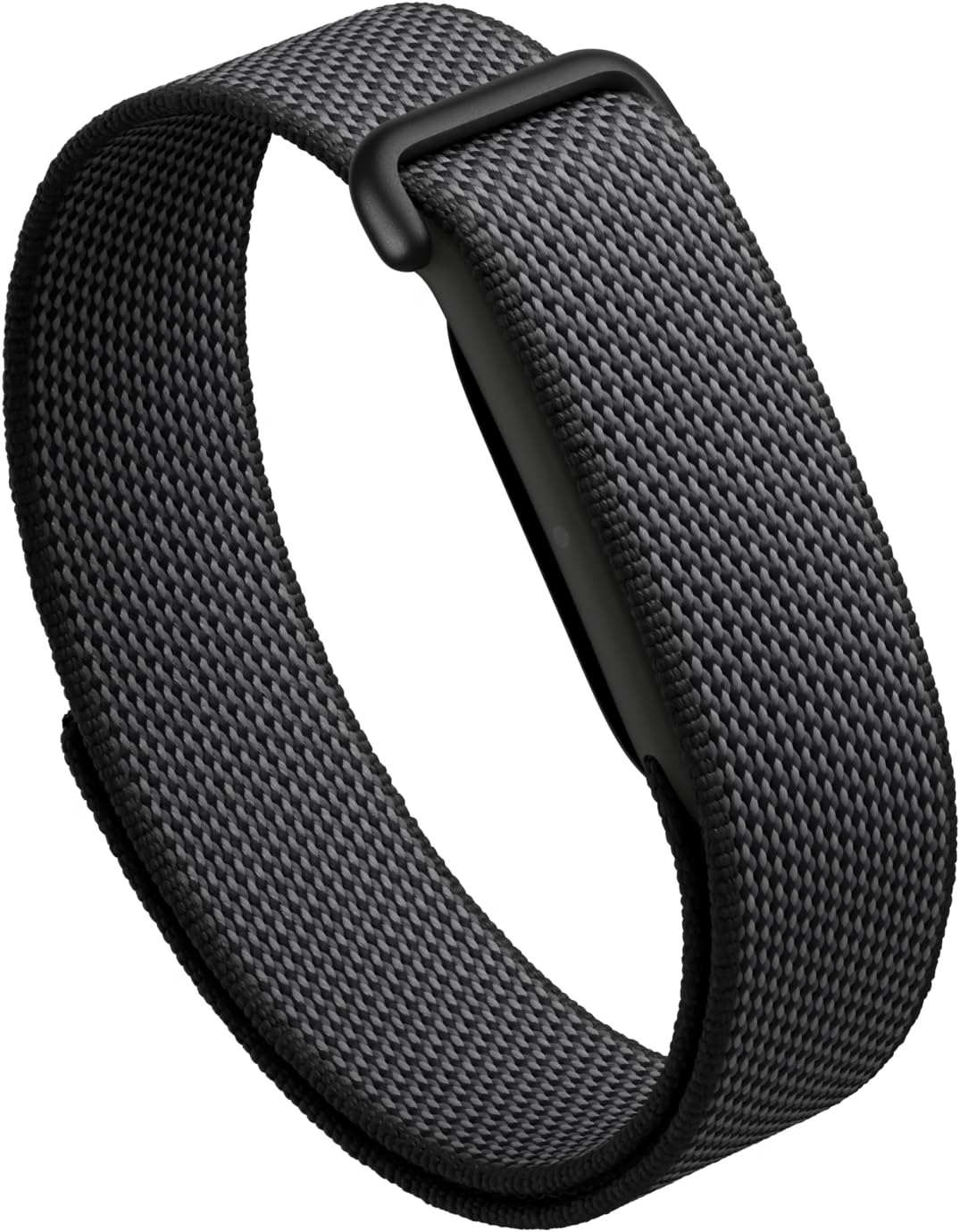
The Fitbit Google Air is a screenless activity tracker built for people who want continuous fitness, heart-rate, and sleep data without another display competing for attention. Its light woven band, automatic tracking, and claimed seven-day battery life make it especially appealing for overnight wear—but the minimalist design also means you must use the Google Health app to see your data.
Quick verdict
PVL editorial rating: 4.3/5
The Fitbit Google Air is a strong value for passive, low-distraction health tracking. It combines a very light design with useful heart-rate, activity, and sleep metrics at a lower upfront price than many screenless rivals. The trade-offs are important: there is no display or built-in GPS, detailed insights live on your phone, and some AI coaching features require Google Health Premium. It is best viewed as a wellness and habit-tracking tool—not a medical device or substitute for professional evaluation.
Product snapshot
| Product | Fitbit Google Air – Obsidian |
|---|---|
| Type | Screenless activity and sleep tracker |
| Key tracking | Heart rate, activity, workouts, sleep duration and stages, SpO2 trends, skin temperature trends, HRV and resting heart rate |
| Battery | Up to 7 days, according to Google; actual life varies with use |
| GPS | No built-in GPS; phone-connected GPS is needed for route tracking |
| Compatibility | Google Health app on compatible Android and iOS phones |
| Water resistance | 5 ATM / water resistant to 50 meters under rated conditions |
| Amazon listing | 4.3/5 from 2,181 ratings; 10K+ bought in the past month (figures supplied at review time) |
| Listed price | $99.00 at review time; prices can change |
Pros and cons
Pros
- Very light, screenless design may be comfortable for all-day and overnight wear
- Tracks core activity, heart-rate, recovery, and sleep metrics automatically
- Up to seven days of claimed battery life
- Lower upfront price than many screenless subscription-focused trackers
- Works with both compatible iOS and Android phones
- 5 ATM water-resistance rating
Cons
- No screen for real-time stats, notifications, maps, or workout controls
- No built-in GPS; outdoor route tracking depends on a connected phone
- Some advanced coaching and insight features require Google Health Premium
- Proprietary charger is another accessory to keep track of
- Wearable sleep and wellness metrics are estimates, not diagnoses
Best for
- People who want passive tracking without a smartwatch display
- Sleep-focused users who find watches bulky overnight
- Casual exercisers who mainly want trends rather than on-wrist navigation
- Fitbit or Google Health users seeking a compact, affordable tracker
- Anyone who prefers checking health data intentionally in an app
Who should skip it
- Runners and cyclists who need built-in GPS, maps, or live pace on the wrist
- Anyone wanting calls, messages, music controls, or smartwatch apps
- People who do not want their useful insights tied to a phone app or optional subscription
- Users who need medical-grade heart or sleep monitoring
- Anyone with skin sensitivity who cannot comfortably wear a snug sensor band
Design and everyday use
Google designed Fitbit Air around a small removable sensor and a lightweight woven band. The absence of a screen is the defining feature: it reduces visual distraction and bulk, but every detailed reading, setting, and trend must be reviewed in the Google Health app. A small light and vibration feedback provide limited status cues.
The compact sensor measures about 34.9 × 17 × 8.3 mm. Google lists the tracker at roughly 12 grams with its standard band, making it substantially less noticeable than most smartwatches. Its 5 ATM rating supports normal water exposure and swimming under the manufacturer’s stated conditions, although water resistance can decline with wear.
Fitness and heart-rate tracking
The manufacturer says Fitbit Air continuously tracks heart rate and uses motion sensors and algorithms to recognize activity and workouts. It can help users follow steps, activity patterns, resting heart rate, heart-rate variability, cardio load, and other trends in Google Health. Automatic tracking is convenient, but it may misclassify movement or miss short or unusual activities.
Fitbit Air does not have onboard GPS. For mapped distance and route data outdoors, you must bring a compatible phone and allow connected GPS. This is the main reason serious runners may prefer a tracker such as the Fitbit Charge 6 or a GPS sports watch.
Sleep tracking and recovery insights
Its small, light profile is one of the Air’s strongest practical advantages for sleep. The tracker estimates sleep duration, timing, stages, and related overnight trends from wrist movement and optical sensor data. These estimates can be useful for spotting patterns across several nights—especially changes linked with schedule, exercise, alcohol, illness, or stress.
Independent evidence needs context: consumer wearables can reasonably estimate sleep versus wake over time, but they do not measure sleep stages with the same signals as clinical polysomnography. Treat stage totals and scores as trend indicators rather than precise measurements. A wearable cannot diagnose insomnia, sleep apnea, atrial fibrillation, or another medical condition. Persistent fatigue, loud snoring, witnessed breathing pauses, chest symptoms, or concerning rhythm alerts warrant professional assessment regardless of an app score.
Google Health and AI coaching
Fitbit Air syncs with the Google Health app, where users review data and receive guidance. Google markets a Gemini-powered Health Coach that can build personalized plans and offer adaptive insights. These are manufacturer-described software features, not independent medical advice. Feature availability varies by country, account, age, device, and subscription; some coaching tools require Google Health Premium after any included trial.
Before buying, confirm that the Google Health app and the specific Premium features you want are available in your region and compatible with your phone. Users should also review Google’s current privacy controls and decide whether continuous health-data collection fits their preferences.
Battery life and charging
Google claims up to seven days between charges. Actual endurance depends on sensor use, syncing, workouts, settings, battery age, and temperature. Fast charging is useful for topping up before bed, but the tracker relies on its dedicated charger. The week-long claim is competitive for a lightweight band and reduces the risk of losing multiple nights of data to daily charging.
Accuracy and evidence analysis
PVL has not performed hands-on laboratory testing of this product. Our assessment is based on manufacturer documentation, current listing information, independent reporting, and the broader wearable-science literature.
Wrist wearables are most useful for repeated personal trends. Optical heart-rate accuracy can vary with motion, fit, skin contact, physiology, tattoos, temperature, and exercise type. Step totals and calorie estimates also depend on proprietary algorithms. Sleep-stage estimates are particularly sensitive to algorithmic assumptions because the tracker does not directly record brain waves, eye movements, breathing airflow, or muscle activity as a sleep laboratory does.
Use the data to ask better questions and notice changes—not to self-diagnose or adjust medication. One unusual reading is less informative than a consistent pattern, symptoms, and properly validated clinical testing.
Safety, privacy, and skin care
- Wear the band snugly enough for sensor contact but not so tight that it causes numbness, pain, or marked indentations.
- Keep the band and skin clean and dry; remove it if irritation, swelling, or a rash develops.
- Do not rely on the tracker for emergencies, diagnosis, medication decisions, or clearance to exercise.
- Seek medical care for concerning symptoms even if the device shows normal readings.
- Review app permissions, data-sharing settings, and subscription terms before connecting health information.
- Follow Google’s current guidance for charging, water exposure, implanted medical devices, and sensor use.
Alternatives
Fitbit Charge 6
A better choice if you want a small display, built-in GPS, and Google integrations. It is less discreet for sleep and needs more on-device interaction.
Garmin Vivosmart 5
A straightforward band with a display and Garmin’s wellness ecosystem. It suits users who want at-a-glance data without moving to a full smartwatch.
Oura Ring
A screenless alternative focused heavily on sleep and recovery. It is more expensive and uses a ring form factor that not everyone finds comfortable.
Bottom line
The Fitbit Google Air is one of the most accessible screenless trackers for users who value comfort, battery life, and passive health trends over live workout data. At the supplied $99 price, it offers substantial baseline tracking, and its lightweight design makes sense for sleep. Its limitations—no display, no built-in GPS, phone dependence, and subscription-gated coaching—should drive the decision. Buy it for low-friction trend tracking, not as a medical monitor or a replacement for a sports watch.
Frequently asked questions
Does Fitbit Google Air have a screen?
No. Fitbit Google Air is intentionally screenless, so it does not display steps, notifications, workout statistics, or sleep results on your wrist. Detailed readings and settings are accessed through the Google Health app, while the tracker uses limited vibration and indicator-light feedback for basic status information.
Does Fitbit Google Air track sleep?
Yes. Fitbit Google Air estimates sleep duration, timing, stages, and related overnight trends using wrist movement and optical sensor data. These measurements can help identify patterns across multiple nights, but they are consumer wellness estimates and do not replace polysomnography, professional sleep assessment, or medical diagnosis.
Does Fitbit Google Air have GPS?
No. Fitbit Google Air does not contain built-in GPS. To record an outdoor route, pace, or mapped distance, you must carry a compatible phone and allow the tracker to use connected GPS. Runners wanting phone-free route tracking should consider Fitbit Charge 6 or a dedicated GPS sports watch.
Does Fitbit Google Air require a subscription?
No subscription is required for basic activity, heart-rate, and sleep tracking. However, some detailed insights, personalized plans, and Gemini-powered coaching features require Google Health Premium after any included trial. Premium availability, pricing, and supported features can vary by country, age, account, and device.
How long does the Fitbit Google Air battery last?
Google advertises up to seven days of battery life for Fitbit Google Air. Actual endurance varies with sensor use, workout tracking, syncing frequency, settings, temperature, and battery age. Its multi-day battery should reduce charging interruptions, although the tracker relies on a dedicated proprietary charging accessory.
Is Fitbit Google Air waterproof?
Fitbit Google Air has a 5 ATM water-resistance rating, meaning it is designed to withstand pressure equivalent to approximately 50 meters under controlled testing conditions. It may be suitable for swimming and everyday water exposure, but it is not permanently waterproof, and resistance can decline through wear, impact, or damage.
Does Fitbit Google Air work with iPhone?
Yes. Fitbit Google Air works with compatible iPhones and Android phones through the Google Health app. Google’s published technical requirements list iOS 16.4 or later and Android 11 or later, but compatibility requirements can change, so confirm your phone and operating-system version before purchasing.
Can Fitbit Google Air detect sleep apnea or heart disease?
No. Fitbit Google Air can record wellness measurements and surface certain trends or alerts, but it cannot diagnose sleep apnea, heart disease, or another medical condition. Seek professional evaluation for persistent fatigue, breathing pauses, chest symptoms, unusual heart rhythms, or other concerns regardless of what the tracker reports.
Related Purely Vital Living guides
- Garmin Vivosmart 5 review
- Fitbit Charge 6 review
- How to improve deep sleep
- PVL sleep resources
- Best wellness products


Reviews
There are no reviews yet.