
Quick Verdict
Hooga red and near-infrared light devices offer an accessible way to experiment with home photobiomodulation, but benefits depend on the exact device, wavelength, irradiance, dose, distance, treatment schedule, and condition being studied. PVL would not treat broad claims about muscle recovery, skin health, inflammation, energy, or longevity as interchangeable or automatically proven for a Hooga panel.
PVL Rating: 3.9/5
- Home-use concept: 4.4/5
- Ease of use: 4.3/5
- General photobiomodulation evidence: 3.8/5
- Finished-product evidence: 3.0/5
- Value: 3.9/5
Best for: Adults who understand that red-light therapy is protocol-specific and want a home device for a defined, evidence-informed use rather than a general “longevity” treatment.
Not ideal for: Anyone expecting one panel to treat pain, accelerate muscle healing, reverse skin aging, boost energy, reduce systemic inflammation, or extend lifespan based only on general red-light research.
What Is a Hooga Red Light Therapy Device?
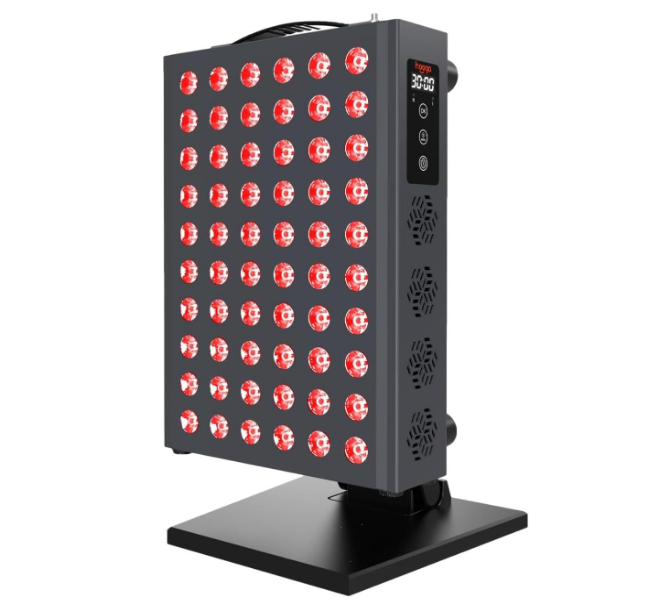
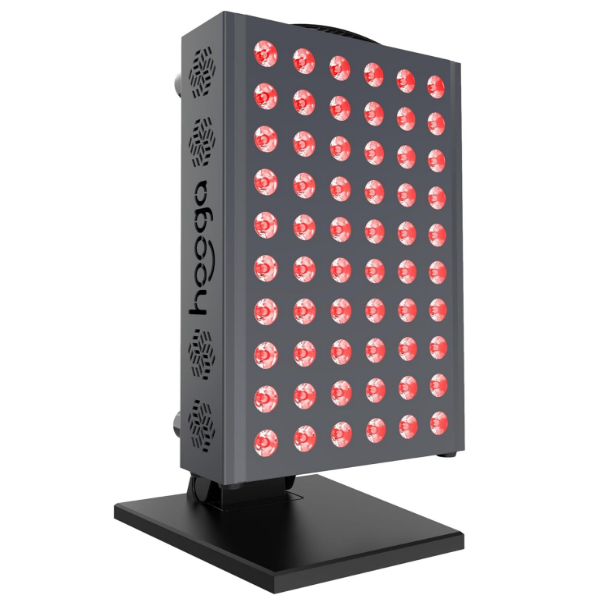
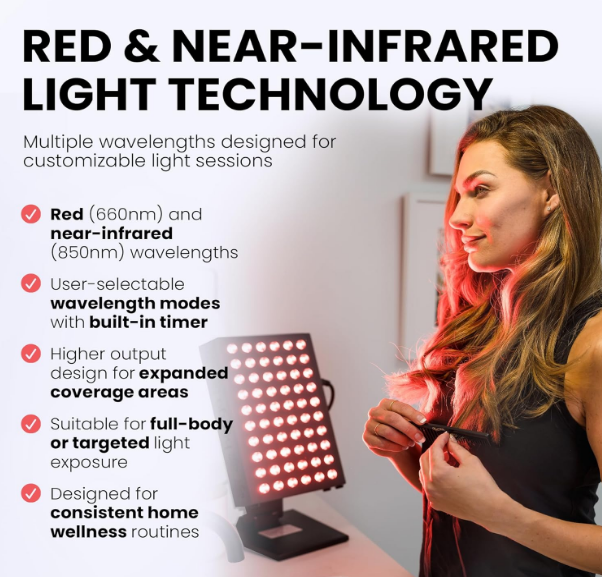
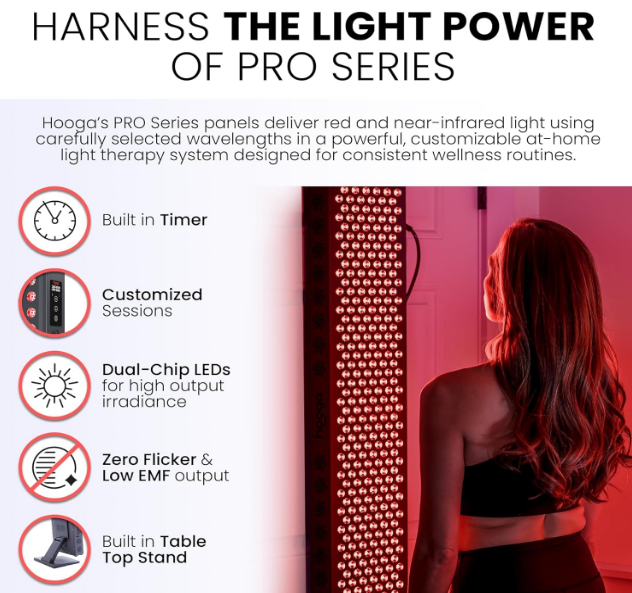
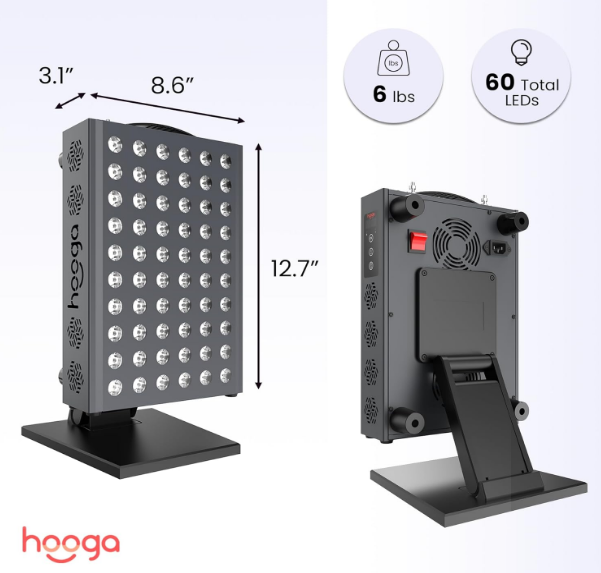
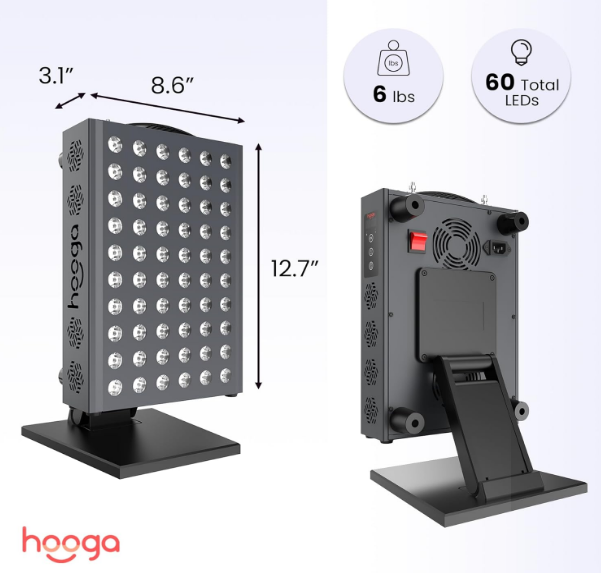
Hooga sells multiple LED photobiomodulation products that emit visible red and near-infrared wavelengths. Because the brand offers different models, PVL would not assign one wavelength, irradiance, treatment area, dose, or session protocol to every Hooga device.
Check the exact current model specifications before purchase. In photobiomodulation, technical parameters are part of the intervention—not minor details.
What Is Red Light Therapy?
Red light therapy, often discussed scientifically as photobiomodulation, uses non-ionizing visible red or near-infrared light at defined wavelengths and doses. Proposed biological effects involve light absorption by cellular chromophores and downstream signaling.
A plausible cellular mechanism does not mean every device or dosing schedule produces a clinically meaningful outcome. Photobiomodulation research uses widely varying wavelengths, energy densities, irradiances, treatment durations, sites, and populations.
Does Hooga Red Light Therapy Improve Muscle Recovery?
PVL did not identify strong independent evidence showing that an unspecified Hooga consumer panel reliably accelerates muscle recovery. Photobiomodulation has been studied around exercise, with some reviews reporting favorable effects on selected performance, soreness, or biochemical outcomes.
Those findings are protocol-specific and cannot automatically be transferred across devices. Reduced soreness or a biomarker change also does not necessarily demonstrate faster muscle-tissue repair.
Does Red Light Therapy Reduce Pain?
Photobiomodulation has been investigated for several pain conditions, but results depend on the diagnosis and treatment protocol. Evidence for one musculoskeletal condition does not establish a general analgesic effect for every type of pain.
Persistent or unexplained pain should be appropriately assessed. A home LED panel should not be used to delay evaluation of injury, neurological symptoms, infection, or another condition requiring treatment.
Does Red Light Therapy Reduce Inflammation?
“Reduces inflammation” is too broad as a consumer claim. Research may measure particular inflammatory markers or outcomes under specific experimental conditions, but that is not equivalent to proving that home red-light exposure lowers harmful systemic inflammation in generally healthy users.
PVL would avoid using a change in one laboratory marker to market a panel as a general anti-inflammatory treatment.
Can Red Light Therapy Improve Skin?
Red and near-infrared light have been studied in dermatology and cosmetic applications, including photoaging-related outcomes. Some controlled studies report improvements in selected skin measures.
However, skin evidence is device- and protocol-specific. It does not prove that every Hooga model, distance, session length, or home routine will reproduce those results, and it should not be generalized to treating skin disease.
Does Red Light Therapy Boost Energy or Mitochondria?
Photobiomodulation is often marketed through mitochondrial mechanisms, particularly interactions involving cytochrome c oxidase and cellular signaling. This is scientifically interesting but frequently overextended in wellness marketing.
A cellular mechanism is not proof that a consumer feels more energetic, has better metabolic health, or gains whole-body “mitochondrial optimization.” Those outcomes require direct human evidence.
Does Red Light Therapy Promote Longevity?
PVL would not present a Hooga panel as a proven longevity intervention. Mechanistic, cell, or animal findings cannot establish that regular red-light exposure extends human lifespan or healthspan.
“Longevity” is therefore better understood as a marketing context around these devices, not an established clinical indication or demonstrated human outcome.
Why Dose and Distance Matter
Light dose depends on more than session duration. Irradiance at the skin, distance from the device, wavelength, exposure time, treatment area, angle, and tissue all influence delivered energy.
More exposure is not automatically better. Photobiomodulation can show dose-dependent or biphasic responses, so copying a study requires much more than buying a panel that emits a similar color of light.
Do You Need Eye Protection?
Follow the eye-safety instructions for the exact Hooga model. Near-infrared light is not visible even though energy is being emitted, and high-intensity sources should not be stared into.
People with eye disease, unusual photosensitivity, or concerns about ocular exposure should obtain appropriate guidance rather than assuming that “non-ionizing” means every exposure pattern is risk-free.
Who Should Be Cautious With Red Light Therapy?
Check with an appropriate clinician if you have a photosensitivity disorder, take a medication known to increase photosensitivity, are treating a suspicious skin lesion, or intend to use the device over an active medical condition.
Do not use a wellness device to delay diagnosis or treatment. Follow the manufacturer’s contraindications, distance, duration, and eye-safety instructions for the exact model.
What Hooga Red Light Therapy Has Not Been Shown to Do
- Extend human lifespan or healthspan
- Provide general “mitochondrial optimization” or guaranteed energy improvement
- Reduce systemic inflammation in every user
- Accelerate muscle or tissue healing regardless of protocol
- Treat all types of pain
- Treat skin disease simply because some photobiomodulation studies report cosmetic benefits
- Reproduce results from other lasers, LED devices, wavelengths, or dosing protocols automatically
Pros and Cons
Pros
- Convenient home access to red and near-infrared light
- Photobiomodulation is a legitimate research field, not merely a wellness trend
- Non-drug intervention with multiple condition-specific research areas
- Home panels can make repeated sessions more practical
Cons
- Benefits are highly protocol- and condition-specific
- Limited finished-product clinical evidence for broad Hooga wellness claims
- Technical specifications can be difficult for consumers to translate into study-equivalent dosing
- “Recovery,” “inflammation,” “mitochondria,” and “longevity” claims are easily overstated
- Requires appropriate eye and photosensitivity precautions
Who Should Consider It?
A Hooga device makes the most sense for someone who has identified a specific photobiomodulation use case, understands the limits of the evidence, and is willing to follow the exact model’s dosing and safety instructions rather than treating red light as a universal wellness intervention.
Who Should Choose Something Else?
If the goal is treating persistent pain, a skin disorder, an injury, unexplained fatigue, or another medical problem, start with appropriate assessment and evidence-based care. A red-light panel should complement—not replace—care when clinically indicated.
Frequently Asked Questions
Does Hooga red light therapy speed muscle recovery?
PVL did not identify strong independent evidence that an unspecified Hooga panel reliably accelerates muscle recovery. Photobiomodulation studies sometimes report improvements in selected soreness, performance, or biochemical outcomes, but effects depend on wavelength, dose, timing, treatment site, and device. Findings from another laser or LED protocol cannot automatically be transferred to Hooga.
Does red light therapy reduce inflammation?
Red light therapy should not be marketed as a universal anti-inflammatory treatment. Some photobiomodulation studies measure inflammatory markers or condition-specific outcomes, but results vary by protocol and population. A laboratory-marker change does not prove that a home panel lowers harmful systemic inflammation or treats an inflammatory disease in otherwise unselected users.
Can a Hooga red light device improve skin?
Photobiomodulation has evidence in selected cosmetic and dermatologic research, but results cannot automatically be assigned to every Hooga device. Wavelength, irradiance, dose, distance, treatment schedule, and outcome all matter. A consumer panel may be used for an evidence-informed skin routine, but it should not be presented as treating skin disease without appropriate evidence.
Does red light therapy boost mitochondrial energy?
Photobiomodulation has plausible cellular mechanisms involving mitochondrial chromophores and signaling, but that does not prove a noticeable whole-body energy boost. Mechanistic evidence is often stretched into claims about “mitochondrial optimization,” metabolism, or vitality. Those broader outcomes require direct human studies using relevant devices, doses, populations, and clinically meaningful measures.
Can Hooga red light therapy increase longevity?
No good evidence establishes a Hooga consumer panel as a human longevity intervention. Laboratory, mechanistic, or animal findings cannot demonstrate longer human lifespan or healthspan. Red and near-infrared light may have useful condition-specific applications, but “longevity” should not be treated as a proven clinical outcome from routine home red-light exposure.
Is Hooga red light therapy safe for your eyes?
Follow the eye-safety instructions for the exact Hooga model rather than assuming all red-light exposure is harmless. Do not stare into high-intensity LEDs, and remember that near-infrared emission is invisible. People with eye disease, unusual photosensitivity, or relevant medications should seek appropriate guidance if they are uncertain about ocular or light exposure.
Final Verdict
PVL Rating: 3.9/5. Hooga provides convenient access to a legitimate and actively researched technology, but the evidence must be interpreted one indication and protocol at a time. The device should not inherit every positive red-light study or be marketed as a universal solution for recovery, inflammation, skin health, energy, or longevity.
References
- Systematic review and meta-analysis of photobiomodulation before exercise and skeletal-muscle performance/recovery. PMID 27874264.
- Review of photobiomodulation mechanisms and dose-response considerations. PMID 24286286.
- Randomized controlled study of red/near-infrared light for skin rejuvenation outcomes. PMID 17566756.
Reviews
There are no reviews yet.