
Quick Verdict
PVL editorial rating: 4.1/5
Best for: Adults who want a drug-free, temporary way to open the front of the nasal passages when congestion or a narrow nasal valve makes nose breathing feel restricted.
Bottom line: Breathe Right Extra Strength Clear nasal strips are a simple, non-medicated option that can mechanically widen the nasal valve and reduce airflow resistance. They may improve the sensation of nasal breathing and may reduce snoring when nasal congestion is a contributing factor. They do not treat obstructive sleep apnea, and benefits for sleep quality or snoring are inconsistent across studies.
This Breathe Right nasal strips review examines how the Extra Strength Clear version works, who may benefit, its limitations and side effects, and what clinical research says about external nasal dilators. We did not conduct hands-on testing. Product details are based on the manufacturer’s current information and the existing PVL product listing.
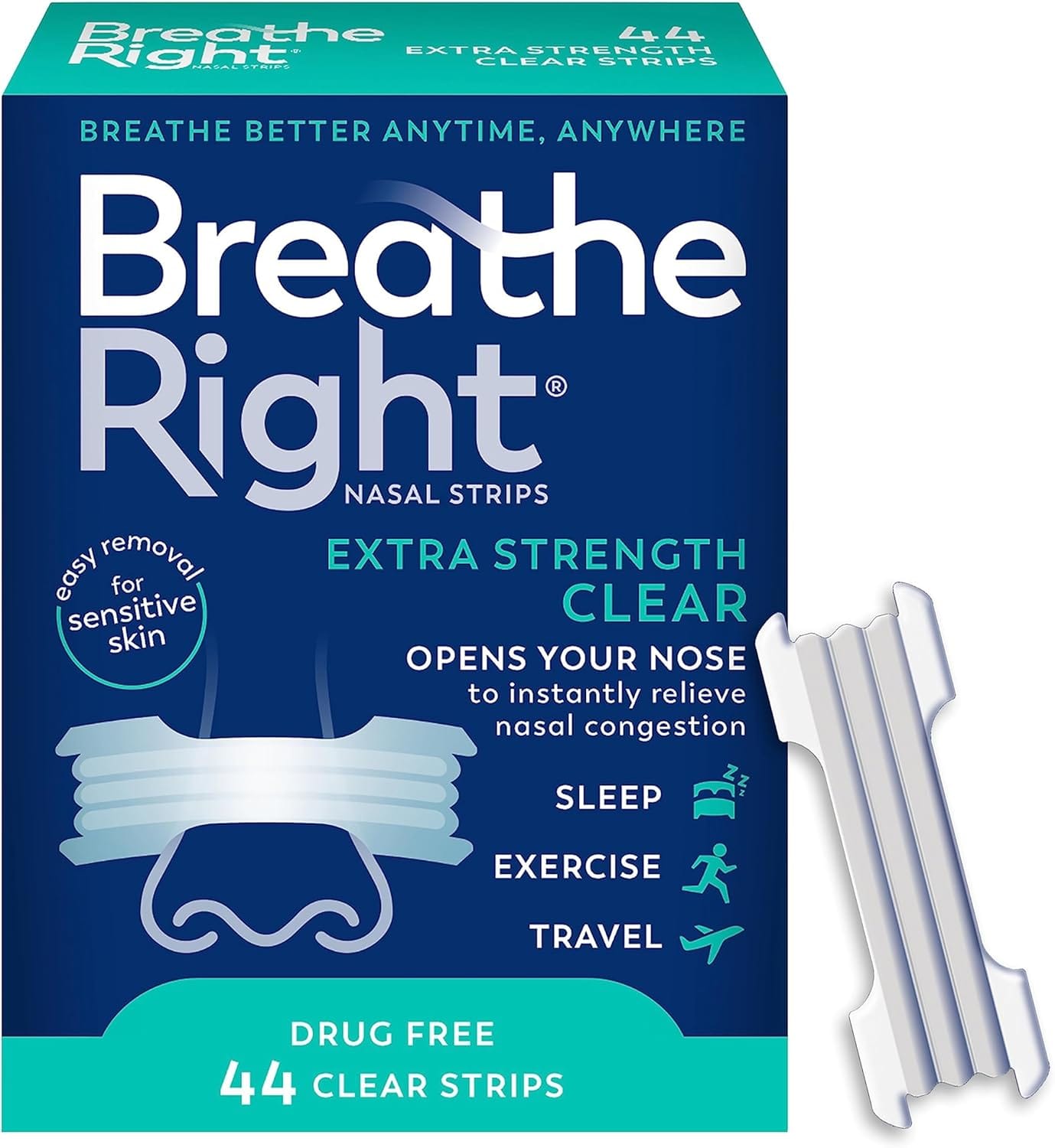
Breathe Right Extra Strength Clear at a Glance
| Feature | Details |
|---|---|
| Product type | Drug-free external nasal dilator strip |
| Version | Extra Strength Clear |
| How it works | Flexible spring-like bands lift the sides of the nose to widen the nasal valve |
| Manufacturer positioning | 50% stronger than Original Clear; hypoallergenic, flexible, non-porous material |
| Medication | None |
| Existing PVL price | $17.51 sale price; price may change |
Pros and Cons
Pros
- Drug-free and works mechanically rather than pharmacologically
- Can immediately widen the front of the nasal airway
- May make nasal breathing feel easier when the nasal valve is narrow or congested
- Clear, low-profile material
- Extra-strength version provides more lift than Original Clear, according to Breathe Right
- No rebound congestion associated with medicated decongestant sprays
Cons
- Does not treat the underlying cause of chronic congestion
- Evidence for reducing snoring or improving sleep is mixed
- Not an obstructive sleep apnea treatment
- Can cause redness, irritation, adhesive sensitivity, or discomfort during removal
- May loosen on oily, wet, or improperly prepared skin
- Single-use strips create ongoing cost and waste
Who Are Breathe Right Nasal Strips Best For?
- Adults with temporary nasal stuffiness from a cold or seasonal allergies
- People who notice that the sides of their nose collapse inward during a deep breath
- Those seeking a drug-free option for temporarily improving nasal airflow
- People whose snoring appears primarily related to nasal congestion rather than throat obstruction
- Adults who cannot or prefer not to use a medicated nasal decongestant, after checking with a clinician when appropriate
Who Should Avoid Them or Ask a Clinician First?
- Anyone with broken, sunburned, irritated, infected, or recently treated skin on the nose
- People with a known allergy or sensitivity to adhesives or strip materials
- Anyone whose nasal obstruction is persistent, severe, one-sided, recurrent, or accompanied by bleeding, facial pain, fever, or loss of smell
- People with loud habitual snoring, witnessed breathing pauses, gasping, morning headaches, or excessive daytime sleepiness
- Anyone expecting nasal strips to replace CPAP, an oral appliance, or another prescribed sleep-apnea treatment
- Children below the minimum age stated on the current package
Design and How Breathe Right Nasal Strips Work
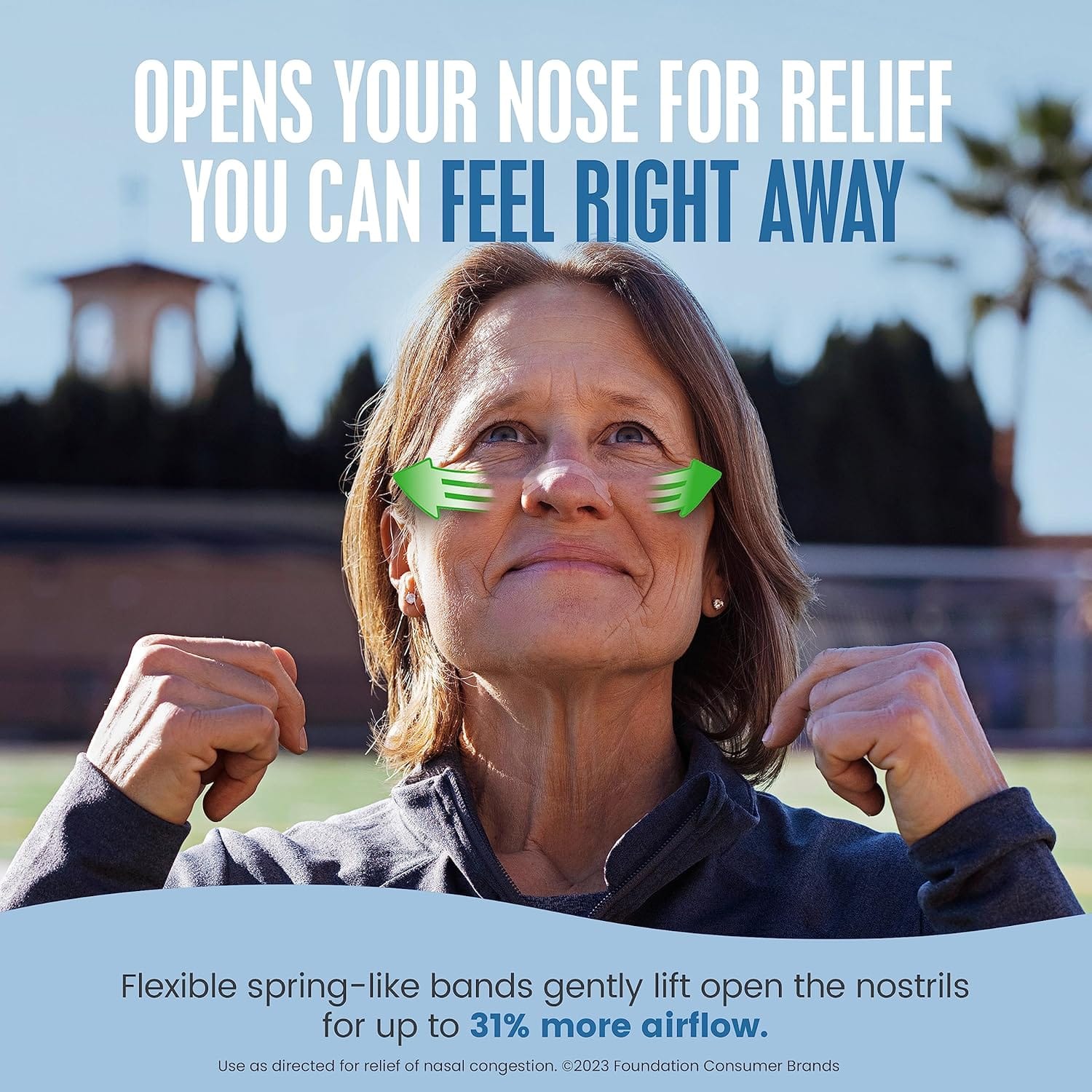
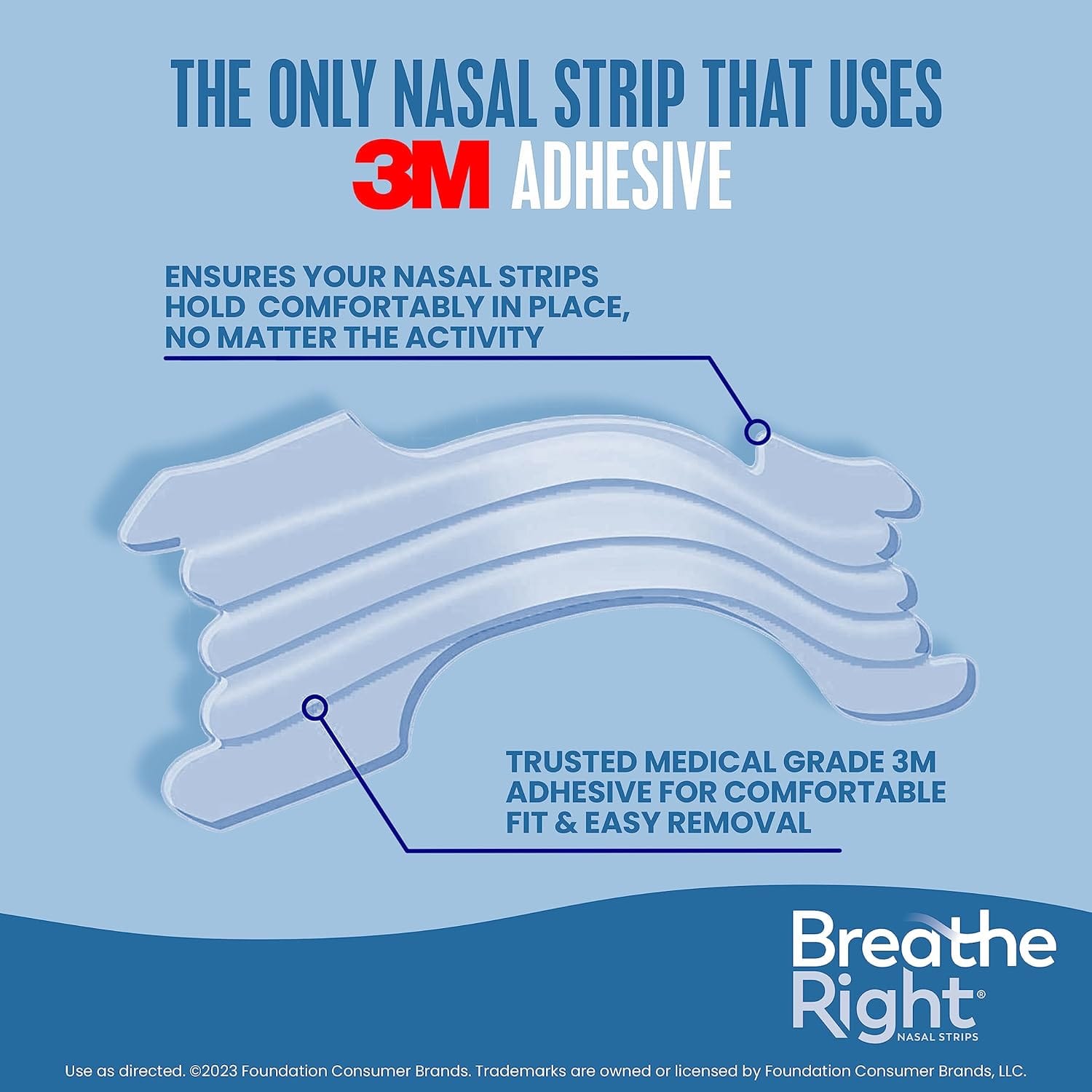
Breathe Right strips sit across the outside of the nose. Their spring-like bands attempt to straighten after application, gently lifting the skin and sides of the nose. This widens the nasal valve—the narrow area near the entrance to the nasal passages—and can reduce resistance to airflow.
The Extra Strength Clear version is marketed as 50% stronger than Original Clear. Breathe Right also describes its clear material as hypoallergenic, flexible, and non-porous. These are manufacturer statements about the product design; they do not mean every user will avoid irritation or experience a meaningful sleep benefit.
Because the strips act at the nasal valve, they cannot directly open an airway that collapses farther back in the throat. This distinction explains why easier nose breathing does not equal treatment for obstructive sleep apnea.
How to Apply Breathe Right Nasal Strips
- Wash and thoroughly dry the nose. Oils, moisturizer, sweat, and moisture can reduce adhesion.
- Remove the liner without excessively bending the strip.
- Center the strip across the bridge of the nose, just above where the nostrils flare.
- Press the ends down and rub gently to secure the adhesive.
- Follow the package limit for wear time and use each strip only once.
For removal, Breathe Right recommends wetting or washing the face with warm water, then slowly lifting both ends. Pulling it off quickly may increase irritation.
Manufacturer Claims vs Independent Evidence
| Manufacturer claim or positioning | Independent evidence assessment |
|---|---|
| Physically opens the nose and improves airflow | Supported mechanistically and by studies showing improved measures of nasal patency or reduced nasal resistance. Individual comfort and response vary. |
| Provides drug-free congestion relief | The strip contains no decongestant and may temporarily improve airflow through the nasal valve, but it does not treat inflammation, infection, allergy, or structural disease. |
| May help relieve snoring caused by congestion | Some small studies found benefit in selected people with nasal obstruction, but pooled evidence does not show a consistent meaningful improvement in snoring or obstructive sleep apnea outcomes. |
| May support better sleep | Feeling less congested may improve comfort, but strong evidence that nasal strips improve overall sleep quality in the general population is lacking. |
What Does the Research Say?
The evidence is clearest for a short-term mechanical effect at the nasal valve. A systematic review of over-the-counter mechanical nasal dilators found objective evidence that external nasal strips can improve measures such as nasal airflow, nasal-valve cross-sectional area, or resistance in selected users. That supports their role as a mechanical aid for nasal obstruction, not as a treatment for every cause of difficult breathing.
Evidence for snoring is mixed. A small randomized controlled trial in 12 nonobese adults with chronic rhinitis found fewer snores per hour with Breathe Right than placebo, but no improvement in snoring loudness, apnea-hypopnea index, arousals, or sleep quality. Other small studies have reported different results, so a benefit in selected people with nasal obstruction should not be generalized to all snorers.
The evidence is more consistent against using nasal strips as treatment for sleep-disordered breathing. A 2025 systematic review and meta-analysis included 17 studies with 496 participants and found no significant improvement in apnea-hypopnea index, apnea index, hypopnea index, snoring index, sleep time, sleep architecture, REM latency, oxygen saturation, or nasal airway resistance compared with controls. The authors concluded that nasal dilators cannot be recommended as monotherapy for sleep-disordered breathing, although they may have an adjunctive role in selected people with mild symptoms or nasal congestion.
Sleep-quality claims also deserve caution. Two multicenter, double-blind randomized trials involving 270 people with chronic nocturnal nasal congestion and self-reported sleep difficulty found that Breathe Right strips did not significantly outperform placebo strips on the prespecified sleep-related quality-of-life outcomes after 7 or 14 days.
Overall, Breathe Right is best viewed as a drug-free mechanical nasal-airflow aid. Easier nasal breathing may improve comfort for some users, but it should not be presented as a proven treatment for obstructive sleep apnea or as a reliable way to improve sleep quality or snoring in everyone.
Can Breathe Right Nasal Strips Help Snoring?
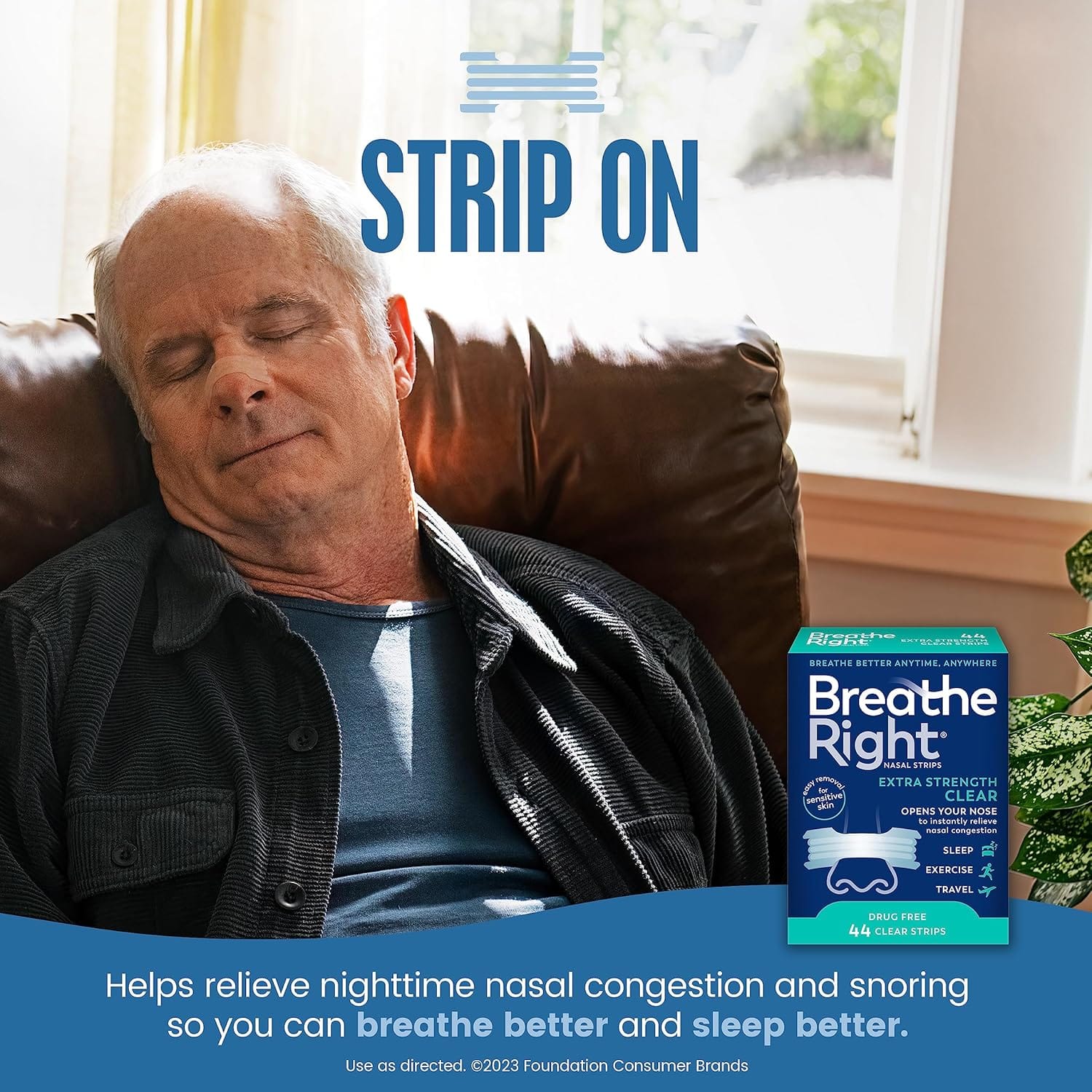
They may help when congestion or nasal-valve narrowing is a major contributor. Opening the nose can reduce the effort needed for nasal breathing, and a few small studies found reduced snoring in selected participants with nasal obstruction.
They are less likely to help snoring generated by tissue vibration or airway collapse in the throat. A lack of improvement does not mean a stronger strip is needed; it may mean the obstruction is elsewhere. Loud, frequent snoring—especially with gasping, pauses in breathing, or daytime sleepiness—should be evaluated for sleep apnea.
Can Breathe Right Strips Treat Sleep Apnea?
No. Breathe Right strips are not a treatment for obstructive sleep apnea. They may make nasal breathing more comfortable, including for some people using a nasal CPAP mask, but they cannot reliably prevent the deeper airway collapse that defines OSA. Do not replace or reduce prescribed therapy without guidance from your sleep clinician.
Safety and Possible Side Effects
The most likely problems are localized skin effects: redness, itching, rash, soreness, acne aggravation, or discomfort when the adhesive is removed. Risk may be higher with sensitive skin, repeated application to the same area, or rapid removal.
Stop using the strips if irritation develops. Do not apply them over wounds, rashes, sunburn, or inflamed skin. If congestion is severe, persistent, repeatedly one-sided, or accompanied by other concerning symptoms, seek medical advice instead of continuing to mask the symptom.
Nasal strips are drug-free, but “drug-free” does not mean risk-free or appropriate for every cause of impaired breathing.
Breathe Right vs Other Options
| Option | Main advantage | Key limitation |
|---|---|---|
| Breathe Right Extra Strength Clear | External, drug-free nasal-valve lift | Single-use adhesive; does not treat deeper airway obstruction |
| Internal nasal dilator | Reusable and unaffected by oily skin | May feel intrusive and requires cleaning |
| Saline spray or rinse | Can moisturize and help clear mucus | Does not mechanically support a collapsing nasal valve |
| Allergy treatment | Addresses allergic inflammation when appropriately selected | Requires correct diagnosis and may involve medication precautions |
| Mouth tape | Marketed to encourage nasal breathing | More restrictive, limited evidence, and unsafe with nasal obstruction or suspected sleep apnea |
Are Breathe Right Nasal Strips Worth It?
Breathe Right Extra Strength Clear strips are worth considering when the goal is modest and specific: temporarily making nasal breathing easier without medication. They are simple, fast acting, and supported by a plausible mechanism. The Extra Strength version may suit users who found the Original Clear strip too weak.
They are less compelling as a nightly long-term solution for unexplained congestion or snoring. Ongoing cost, skin irritation, mixed sleep evidence, and the need to identify the underlying cause reduce their value for indefinite use.
Frequently Asked Questions
Do Breathe Right nasal strips actually work?
They can mechanically widen the nasal valve and reduce airflow resistance, which may make nasal breathing feel easier. Results for snoring and sleep quality are inconsistent, and they do not work for every cause of congestion.
Can you use Breathe Right nasal strips every night?
Some adults use them nightly, but follow the current package directions and monitor the skin. Stop if redness, soreness, rash, or adhesive irritation develops. Persistent nightly congestion should be medically assessed rather than managed indefinitely without knowing the cause.
Do Breathe Right nasal strips stop snoring?
They may reduce snoring when nasal congestion or nasal-valve narrowing is an important contributor. They are unlikely to resolve snoring caused by obstruction farther back in the airway, and overall clinical evidence for snoring reduction is mixed.
Do nasal strips help sleep apnea?
Nasal strips do not treat obstructive sleep apnea. They may improve nasal comfort for some people, but studies have not shown a consistent meaningful improvement in apnea severity. Continue any prescribed sleep-apnea treatment and consult your clinician.
What is the difference between Breathe Right Original and Extra Strength?
The manufacturer says Extra Strength strips provide 50% more strength than the corresponding Original version. Greater spring tension may provide more lift, but it may also feel firmer on the skin.
How long can you wear a Breathe Right nasal strip?
Follow the wear-time limit on the current package. Do not reuse a strip, and remove it sooner if it becomes uncomfortable or causes irritation.
Why does my Breathe Right strip keep falling off?
Oil, sweat, moisturizer, makeup, moisture, or incorrect placement can weaken adhesion. Wash and completely dry the nose before applying the strip, then press and rub the ends gently as directed.
Can Breathe Right strips damage your skin?
They can cause redness, irritation, rash, or discomfort during removal, particularly on sensitive or damaged skin. Warm water and slow removal can reduce pulling. Stop use if irritation persists.
Related PVL Reviews and Guides
- Napify Mouth Tape for Sleeping Review
- How to Improve Sleep Quality Naturally
- How to Fall Asleep Faster Naturally
- What Is Core Sleep?
- PVL Sleep Score Calculator
Reliable References
- Breathe Right: Extra Strength Clear product information.
- Breathe Right: How to use nasal strips.
- Pevernagie D, et al. External nasal dilation and snoring in chronic rhinitis. 2000.
- Djupesland PG, et al. External nasal dilation, airway dimensions, sleep architecture and snoring. 2001.
- Camacho M, et al. Nasal dilators for obstructive sleep apnea and snoring: systematic review and meta-analysis. 2016.
- AlEnazi A, et al. Clinical effectiveness of nasal dilators in sleep-disordered breathing: systematic review and meta-analysis. 2025.
- Noss MJ, et al. Sleep quality and congestion with Breathe Right nasal strips: two randomized controlled trials. 2019.
- Kiyohara N, et al. Comparison of over-the-counter mechanical nasal dilators: systematic review. 2016.
- Mayo Clinic: Snoring diagnosis and treatment.
Bottom Line
Breathe Right Extra Strength Clear nasal strips are a reasonable drug-free option for temporary nasal-valve opening and congestion-related breathing comfort. Their design is straightforward and the immediate mechanical effect is better supported than broad promises about deeper sleep or universal snoring relief.
They do not treat obstructive sleep apnea or the underlying cause of chronic nasal obstruction. For persistent congestion, loud habitual snoring, gasping, witnessed breathing pauses, or daytime sleepiness, seek clinical evaluation instead of relying on strips alone.
Existing PVL sale price: $17.51. Price and availability may change. This page contains an affiliate link, which means Purely Vital Living may earn a commission at no additional cost to you.
Reviews
There are no reviews yet.