
Quick Verdict
PVL editorial rating: 3.0/5
Best for: Adults who can breathe comfortably through an unobstructed nose, understand that evidence for mouth taping is limited, and have already discussed persistent mouth breathing or sleep symptoms with a qualified clinician.
Bottom line: Napify Breath Training Tape is a low-cost, 30-piece mouth tape designed to encourage nasal breathing. Its open-center design may feel less restrictive than a fully sealed strip, but it still limits free mouth opening. Independent research does not establish mouth taping as a reliable treatment for snoring, insomnia, sleep apnea, or any medical condition. Safety screening matters more than convenience.
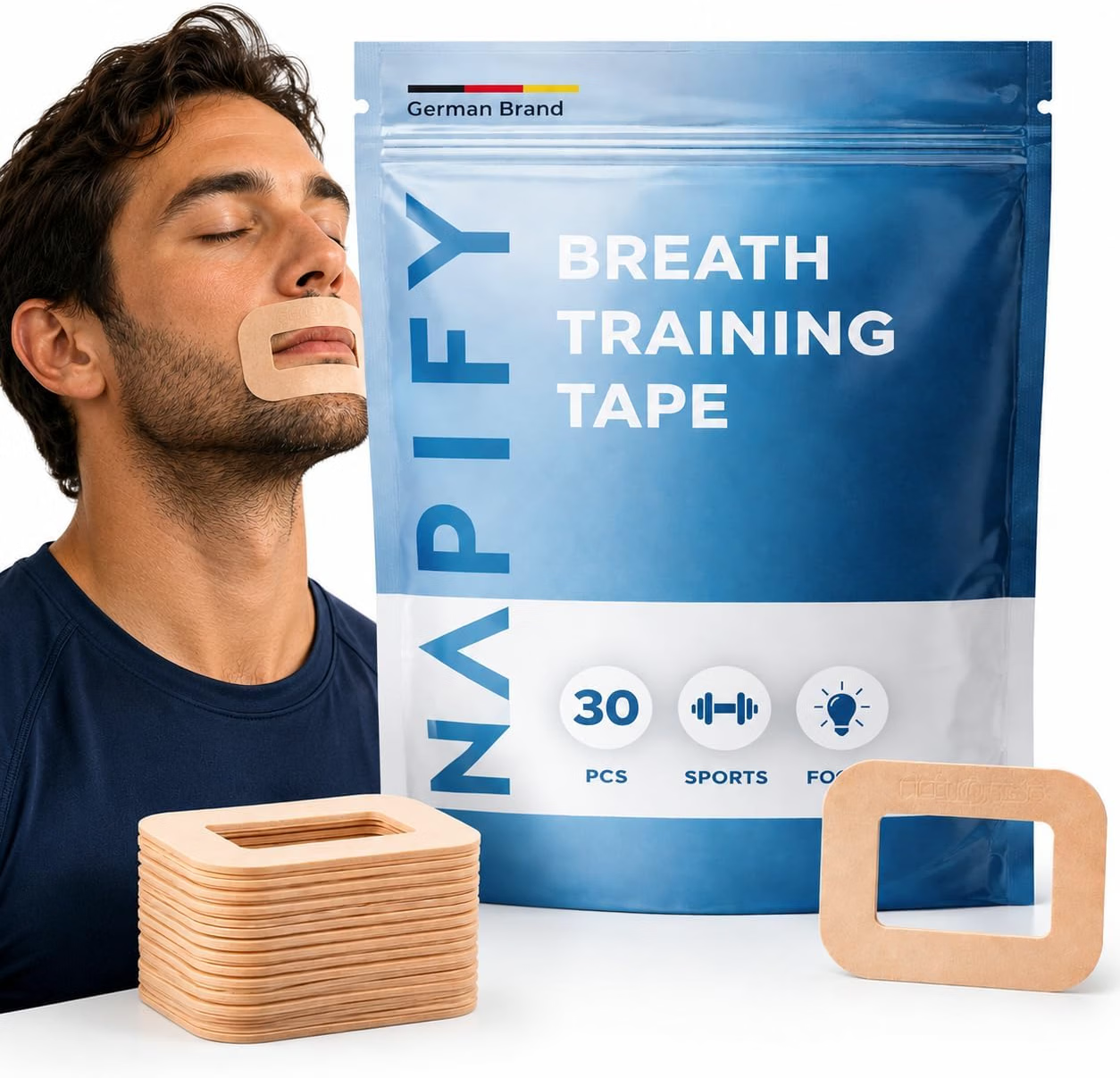
This Napify mouth tape for sleeping review evaluates the design, supplied product information, current independent evidence, safety concerns, and alternatives. We did not conduct hands-on testing. Product specifications, price, sales activity, and Amazon customer-rating information below were supplied for this review and should be checked on the current listing.
Important Safety Warning
Do not use mouth tape if you have nasal obstruction or congestion, suspected or untreated sleep apnea, difficulty breathing through your nose, or a relevant respiratory condition. Avoid it if you have irritated skin or adhesive sensitivity, if you are a child, or if you cannot remove the tape independently. Stop immediately if you feel short of breath, panicked, dizzy, or otherwise unwell.
Loud snoring, witnessed pauses in breathing, choking or gasping during sleep, morning headaches, and excessive daytime sleepiness warrant medical evaluation rather than self-treatment with tape.
Napify Breath Training Tape at a Glance
| Feature | Details supplied |
|---|---|
| Product | Napify Breath Training Tape for Adults |
| Format | Adhesive mouth/sleep tape with an open center |
| Count | 30 pieces |
| Intended user | Adults |
| Price supplied | $19.95 (about $0.67 per piece) |
| Amazon feedback supplied | 3.6/5 from 771 ratings; 2K+ bought in the past month |
Price, rating count, customer score, and purchase activity can change. Check Amazon for current information.
Pros and Cons
Pros
- Open-center design may feel less restrictive than a solid strip
- Pre-cut pieces avoid measuring or cutting tape
- Thirty-night supply if one piece is used nightly
- Low upfront price
- Strong recent marketplace interest based on supplied Amazon data
Cons
- Independent evidence for mouth taping remains limited and uncertain
- Not appropriate when nasal airflow is obstructed or unreliable
- May cause skin irritation, discomfort, anxiety, or disrupted sleep
- Adhesion may vary with facial hair, skincare products, moisture, and movement
- Supplied Amazon customer score is modest at 3.6/5
- Not a treatment for snoring, insomnia, sleep apnea, or another condition
Who Is It Best For?
Napify may only be worth considering for an adult who breathes freely through the nose while awake, has no suspected sleep-disordered breathing or relevant respiratory limitation, can remove the tape without help, and accepts that benefits are not well established. Anyone considering it should discuss persistent nighttime mouth breathing with a clinician because the cause—not simply the open mouth—should guide the response.
Who Should Avoid It?
- Anyone with nasal obstruction or congestion, including a blocked nose from illness, allergies, sinus problems, nasal polyps, enlarged tissue, or a deviated septum that impairs airflow
- Anyone with suspected or untreated sleep apnea, including people with loud habitual snoring, witnessed breathing pauses, gasping, or marked daytime sleepiness
- Anyone with breathing difficulty or who cannot breathe comfortably and continuously through the nose
- People with relevant respiratory or cardiopulmonary conditions unless their treating clinician specifically confirms it is appropriate
- People with adhesive allergy, sensitive or damaged skin, active rash, sores, or irritation around the mouth
- Children
- Anyone unable to remove the tape independently, including a person with impaired mobility, dexterity, cognition, consciousness, or intoxication
Product Design and Use
The supplied image shows a rectangular adhesive patch with a large opening over the lips. Napify markets the 30-piece pack as “breath training tape” intended to encourage nasal breathing. That is a manufacturer positioning statement, not proof of a clinical benefit.
An open center does not eliminate risk. The adhesive still resists normal mouth opening, and nasal airflow can change during the night. We could not independently verify the adhesive formulation, exact dimensions, hypoallergenic status, manufacturing quality, or suitability for a particular user from the information supplied.
If a clinician says a trial is reasonable, read the current package directions, first confirm that nasal breathing is easy while awake, and test skin tolerance cautiously. Do not use the product after drinking alcohol or taking sedating substances. Never layer multiple pieces or use stronger household tape. Remove it immediately if breathing becomes uncomfortable or anxiety develops.
Manufacturer Claims vs Independent Evidence
| Manufacturer/listing position | What independent evidence supports |
|---|---|
| Designed to encourage nasal breathing | Mechanically limiting mouth opening may encourage nasal breathing in some users, but high-quality evidence showing meaningful sleep or health benefits is insufficient. |
| Marketed as sleep tape for adults | Being marketed for sleep does not establish that it improves sleep quality or safely addresses the reason a person mouth-breathes. |
| Open-center patch design | The opening may be less restrictive than full sealing, but no product-specific clinical trial was identified and contraindications still apply. |
What Does the Evidence Say About Mouth Taping?
The supporting evidence is limited. A 2025 systematic review found only 10 eligible studies involving 213 patients. Two studies reported improvements in established sleep-apnea measures, while others found no difference; the review also identified potential harm when nasal obstruction is present. Many studies excluded people with nasal obstruction, which limits how broadly the findings can be applied.
A small 2022 preliminary study followed selected mouth-breathing adults with mild obstructive sleep apnea who could tolerate mouth sealing. It reported improvements after one week, but the study included only 20 participants, lacked a randomized control group, and used a specific 3M silicone tape—not Napify. Those results cannot establish that this product treats sleep apnea or that unscreened consumers should tape their mouths.
Cleveland Clinic states that evidence is not strong enough to support mouth tape as beneficial and that it is not part of current practice for treating sleep disorders. Sleep Foundation likewise describes most claimed benefits as anecdotal and advises against use by people with untreated sleep apnea, chronic nasal congestion, or difficulty breathing through the nose.
No product-specific clinical evidence for Napify was identified in the sources reviewed. Therefore, the design and marketplace popularity should not be confused with demonstrated medical effectiveness.
Safety, Side Effects, and Practical Limitations
Possible effects include redness, rash, dryness, allergic contact irritation, painful removal, pulled facial hair, lip discomfort, anxiety, difficulty falling or staying asleep, and restricted breathing if nasal airflow becomes compromised. Mouth “puffing” or air escaping around the tape may also occur.
The main concern is airway safety. A person may mouth-breathe because nasal airflow is inadequate or because of sleep-disordered breathing. Restricting the backup oral route without assessing the cause can be unsafe. The 2025 systematic review specifically noted a potential risk of asphyxiation when nasal obstruction is present.
Stop use and remove the tape immediately if you experience breathing difficulty, chest discomfort, marked anxiety, dizziness, or a concerning skin reaction. Seek urgent medical help for severe or persistent breathing trouble.
Alternatives to Mouth Tape for Sleeping
| Alternative | When it may make more sense |
|---|---|
| Medical evaluation | For loud snoring, gasping, witnessed pauses, persistent congestion, morning headaches, or daytime sleepiness. |
| Treat the cause of nasal congestion | When allergies, infection, or structural obstruction makes nasal breathing difficult; seek individualized medical advice. |
| External nasal strip or dilator | May help some people improve nasal airflow without restricting mouth opening, though it does not treat sleep apnea. |
| Side sleeping and appropriate sleep habits | General, lower-risk steps that may help some forms of positional snoring or disrupted sleep. |
| Clinician-prescribed therapy | CPAP or a professionally fitted oral appliance may be appropriate after a sleep-apnea diagnosis. |
Is Napify Mouth Tape Worth It?
At the supplied $19.95 price, Napify costs about $0.67 per piece. The pre-cut, open-center format is convenient, but value depends on safe suitability and tolerance—not simply cost per night. A modest supplied Amazon score of 3.6/5 also suggests mixed buyer experiences.
Because evidence for mouth taping is limited and no Napify-specific clinical study was identified, we view this as a cautious, niche wellness accessory rather than a broadly recommendable sleep product. It should never delay assessment for nasal obstruction, sleep apnea symptoms, or other breathing problems.
Frequently Asked Questions
Does mouth tape for sleeping actually work?
Evidence is limited. A few small studies in carefully selected groups reported changes in snoring or sleep-apnea measures, while other studies found no meaningful difference. Research does not establish mouth taping as a reliable treatment for snoring, insomnia, sleep apnea, or another medical condition.
Is it safe to tape your mouth while sleeping?
It is not safe for everyone. Avoid mouth tape if you have nasal blockage or congestion, suspected or untreated sleep apnea, breathing difficulty, a relevant respiratory condition, adhesive sensitivity, or cannot remove it independently. Children should not use it. Ask a healthcare professional before trying it.
Can mouth taping help with snoring?
Some small studies have reported reduced snoring in selected participants, but the overall evidence is insufficient. Snoring can signal obstructive sleep apnea, so persistent or loud snoring—especially with gasping, breathing pauses, or daytime sleepiness—should be medically evaluated rather than self-treated with tape.
Can mouth tape treat sleep apnea?
No. Mouth tape should not be presented or used as a treatment for sleep apnea. Suspected or untreated sleep apnea is a reason to avoid unsupervised mouth taping and seek professional assessment. Proven treatment options depend on a diagnosis and may include CPAP, an oral appliance, or other clinician-directed care.
Can I use mouth tape when my nose is congested?
No. Nasal congestion or obstruction is a major contraindication because taping can restrict the alternative route for breathing. Wait until the cause is assessed and nasal breathing is reliably unobstructed; seek clinical advice for persistent congestion.
What are the side effects of mouth taping?
Possible side effects include skin redness, rash, dryness, adhesive reaction, painful removal, facial-hair pulling, anxiety, disrupted sleep, and difficulty breathing. Remove the tape immediately if breathing feels restricted or you feel unwell.
Is mouth tape safe for children?
No. Children should not use mouth tape for sleeping. A child who snores, breathes through the mouth, or has suspected breathing pauses needs evaluation by a pediatric healthcare professional.
How is Napify mouth tape different from regular tape?
Napify is supplied as pre-cut adhesive patches with an open center and is marketed for adult breath training or sleep use. Regular household tape is not designed for facial skin or overnight use. The purpose-made format does not prove clinical effectiveness or remove breathing and skin risks.
Related PVL Reads
- How to Improve Sleep Quality Naturally
- How to Fall Asleep Faster Naturally
- What Is Core Sleep?
- PVL Sleep Score Calculator
Reliable References
- Rhee J, et al. Systematic review of the safety and efficacy of mouth taping. PLOS One. 2025.
- Lee YC, et al. Preliminary study of mouth taping in selected mouth-breathers with mild OSA. Healthcare. 2022.
- Cleveland Clinic. Is Mouth Tape Safe To Use While Sleeping? Updated 2025.
- Sleep Foundation. Mouth Taping for Sleep: Does It Work? Updated 2026.
Bottom Line
Napify Breath Training Tape offers a convenient 30-piece, open-center format for adults curious about encouraging nasal breathing. However, current research is too limited to support broad claims, and the product should not be described as treating snoring, insomnia, sleep apnea, or any medical condition.
Our assessment is cautious because airway suitability cannot be assumed. Avoid this product if any contraindication applies, and seek evaluation for persistent mouth breathing, snoring, congestion, or nighttime breathing symptoms.
Price supplied: $19.95. Price and availability may change. This page contains an affiliate link, which means Purely Vital Living may earn a commission at no additional cost to you.

Reviews
There are no reviews yet.