
Quick Answer
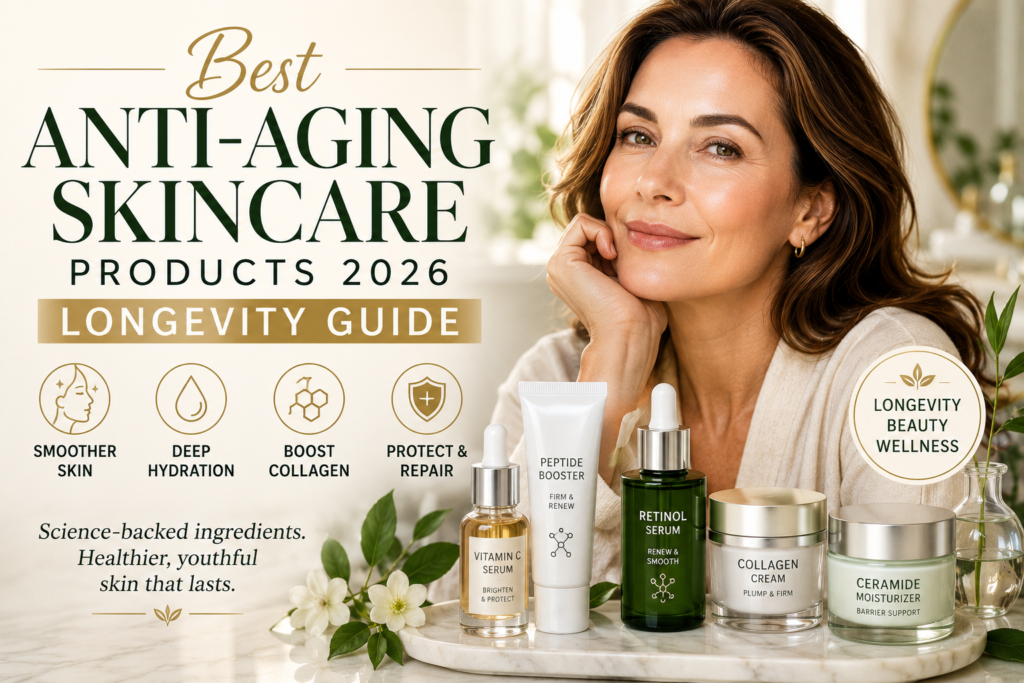
The best anti-aging skincare products for 2026 focus on supporting skin longevity rather than simply hiding wrinkles. Ingredients like retinol, peptides, hyaluronic acid, niacinamide, vitamin C, and ceramides may help improve skin texture, hydration, firmness, and overall skin resilience. A consistent skincare routine combined with healthy lifestyle habits often produces the best long-term results.
Introduction
Healthy aging is becoming one of the biggest trends in wellness and skincare.
Instead of focusing only on “looking younger,” more people are now interested in skin longevity—supporting healthier, stronger, and more resilient skin over time.
This shift has changed how people approach anti-aging skincare.
Today, the best products are not just about reducing wrinkles temporarily. They aim to support hydration, skin barrier health, collagen production, and long-term skin quality.
The good news is that you don’t need a complicated 15-step routine to improve aging skin.
With the right products and ingredients, a simple and consistent routine can help support smoother, firmer, and healthier-looking skin naturally.
In this guide, we’ll explore the best anti-aging skincare products for 2026, along with the most effective ingredients, routines, and habits for skin longevity.
What Is Longevity Skincare?
Longevity skincare focuses on supporting the long-term health and function of your skin.
Instead of only targeting wrinkles, longevity-focused skincare aims to:
- strengthen the skin barrier
- support collagen production
- reduce inflammation
- improve hydration
- protect against environmental damage
This approach helps skin remain healthier and more resilient as you age.
The Science of Skin Longevity
Skin longevity focuses on maintaining the health and function of your skin over time rather than only reducing visible wrinkles.
As we age, several natural processes begin to slow down.
Collagen production decreases, skin cell turnover becomes slower, and the skin barrier becomes weaker. At the same time, environmental stressors like UV exposure, pollution, poor sleep, and chronic stress increase inflammation and oxidative damage.
This combination can lead to:
- dryness
- fine lines
- uneven texture
- dullness
- reduced elasticity
Longevity-focused skincare aims to support the skin’s natural repair systems while protecting it from unnecessary damage.
This is why modern anti-aging routines focus not only on appearance, but also on hydration, barrier health, inflammation control, and long-term skin resilience.
Why Skin Ages
Skin aging happens naturally over time, but several factors can speed up the process.
Common causes include:
- sun exposure
- stress
- poor sleep
- dehydration
- smoking
- processed diets
- collagen loss
- reduced skin repair
Over time, these factors can contribute to:
- fine lines
- wrinkles
- dullness
- dryness
- uneven texture
The goal of anti-aging skincare is to slow these visible changes while supporting healthier skin function.
Best Ingredients for Skin Longevity
1. Retinol
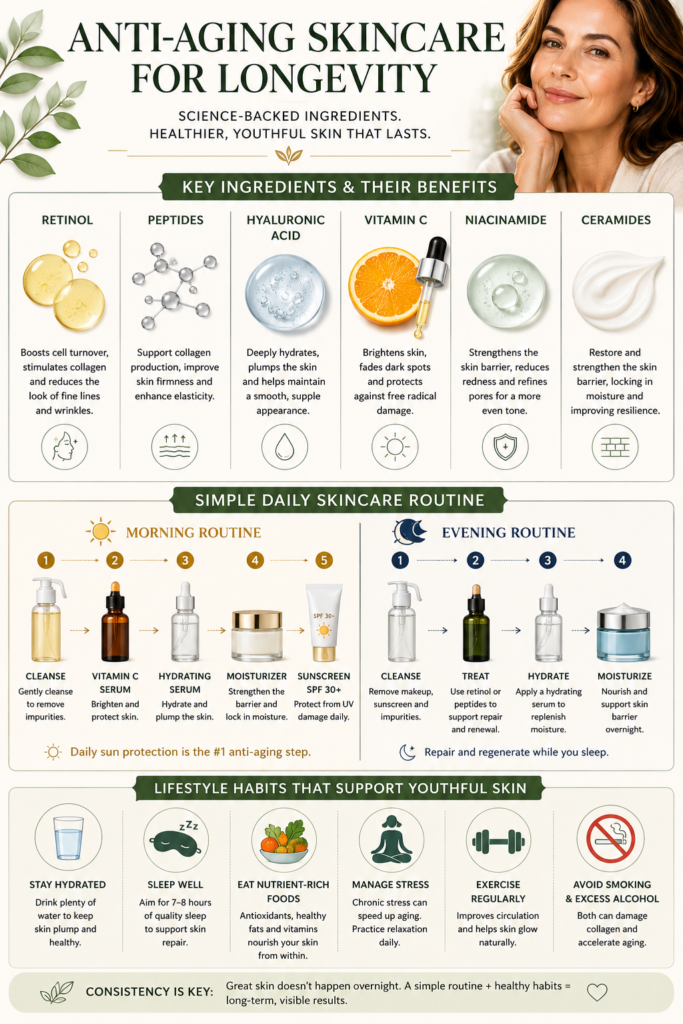
Retinol is often considered one of the most effective anti-aging skincare ingredients because it supports skin renewal and collagen production.
As skin ages, cell turnover naturally slows down. This can cause dullness, rough texture, and fine lines to become more noticeable.
Retinol helps encourage faster skin renewal, which may improve the appearance of aging skin over time.
However, many people make the mistake of using too much too quickly, leading to dryness or irritation.
A better approach is to start slowly and use it consistently a few nights per week before increasing frequency.
When paired with moisturizer and sunscreen, retinol can become one of the most powerful long-term skincare ingredients for healthier-looking skin.
It may help:
- improve skin texture
- reduce fine lines
- support collagen production
Many people notice smoother-looking skin after consistent use.
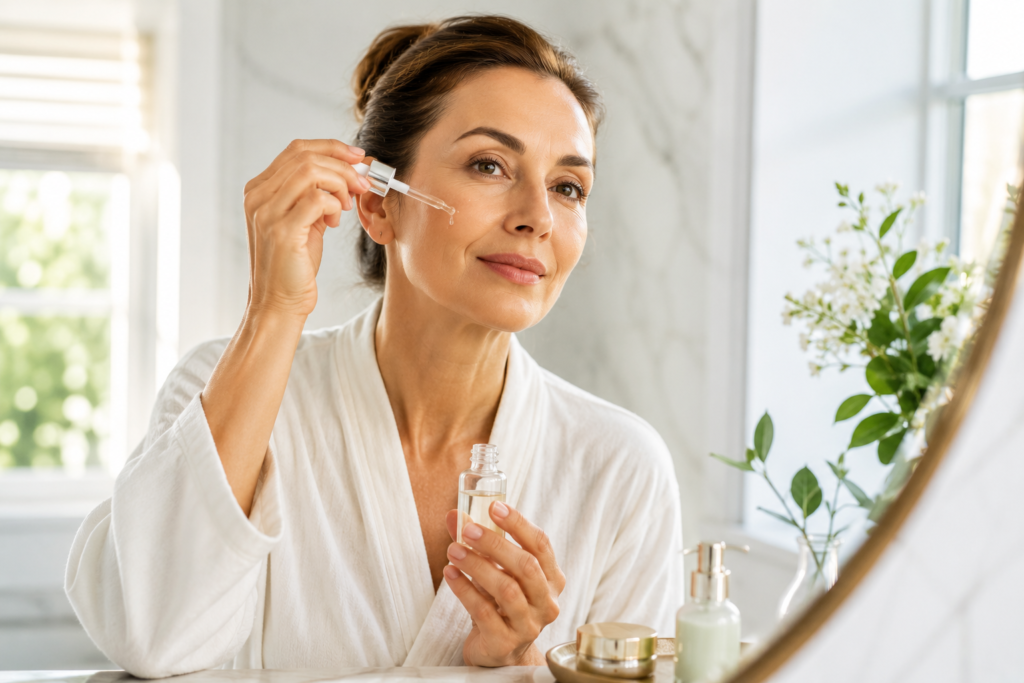
2. Peptides
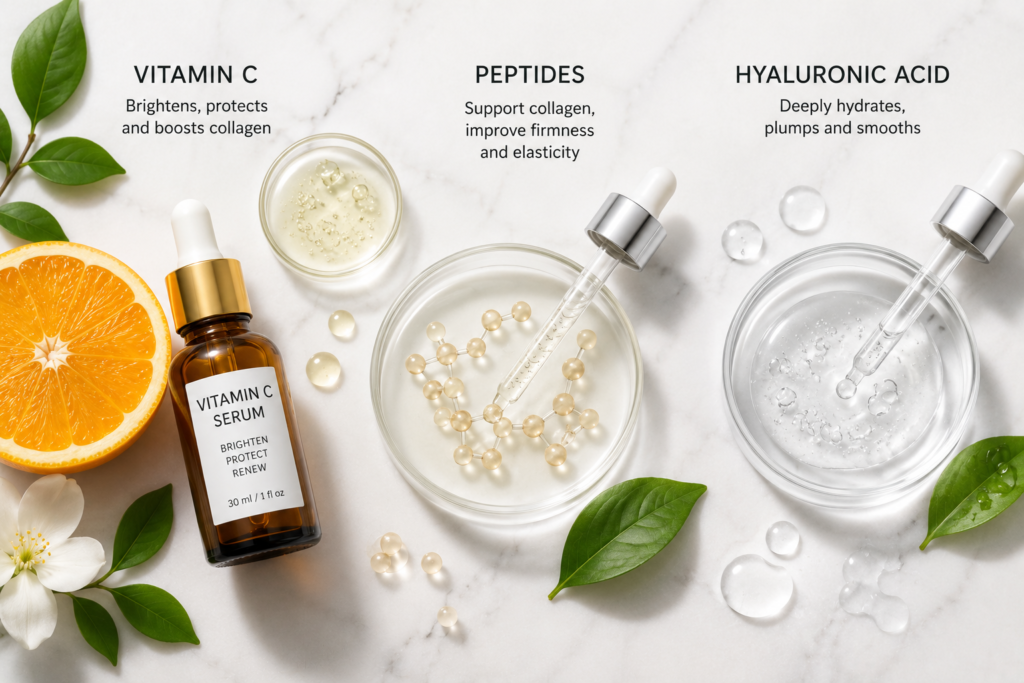
Peptides are small chains of amino acids that help support the structure and resilience of the skin.
As collagen production naturally declines with age, skin can begin to lose firmness and elasticity. This often leads to sagging, fine lines, and thinner-looking skin over time.
Peptides work by helping support the skin’s natural repair and renewal processes. Many anti-aging skincare products use peptides to help improve the appearance of firmness and smoother texture.
Unlike some stronger active ingredients, peptides are generally well tolerated by most skin types, making them a popular option for people with sensitive or mature skin.
A helpful approach is to combine peptide products with hydrating ingredients like ceramides or hyaluronic acid to support both firmness and moisture balance.
With consistent use, peptide-based skincare may help support healthier and more resilient-looking skin over time.
They may improve:
- firmness
- elasticity
- hydration
Peptides are popular in longevity skincare because they support skin repair processes.
3. Hyaluronic Acid
Hyaluronic acid is one of the most popular hydration-focused skincare ingredients because it helps attract and retain moisture in the skin.
As skin ages, natural moisture levels often decline. This can lead to dryness, tightness, dullness, and the appearance of more noticeable fine lines.
Hyaluronic acid helps improve skin hydration by drawing water into the outer layers of the skin, which can make the skin appear plumper and smoother.
Many people expect instant anti-aging results from hyaluronic acid alone, but its main role is hydration support rather than collagen stimulation.
A common mistake is applying it to completely dry skin without sealing it in with moisturizer afterward.
For best results, apply hyaluronic acid to slightly damp skin and follow with a moisturizer to help lock in hydration.
Well-hydrated skin often looks healthier, softer, and more youthful overall.
This improves:
- skin hydration
- plumpness
- softness
Hydrated skin often appears healthier and more youthful.
4. Vitamin C
Vitamin C is a powerful antioxidant widely used in anti-aging skincare because it helps protect the skin from environmental stress and supports collagen production.
Daily exposure to UV rays, pollution, and oxidative stress can contribute to uneven skin tone, dullness, and visible signs of aging over time.
Vitamin C helps neutralize some of this oxidative damage while also supporting brighter and more even-looking skin.
Many people use vitamin C in the morning because it pairs well with sunscreen as part of a protective daytime routine.
However, one common mistake is choosing unstable formulas that lose effectiveness quickly when exposed to light or air.
A better approach is to use a stable vitamin C serum packaged in dark or airtight containers and apply it consistently.
With regular use, vitamin C may help support brighter, smoother, and healthier-looking skin over time.
It may help:
- brighten skin tone
- reduce oxidative stress
- support collagen formation
It’s especially popular in morning skincare routines.
5. Niacinamide
Niacinamide is a versatile skincare ingredient that supports skin barrier health and helps improve overall skin balance.
As skin ages, the barrier can become weaker and more sensitive to dryness, irritation, and environmental stress.
Niacinamide helps support the skin barrier while also improving hydration and reducing visible redness or uneven texture.
This ingredient is especially popular because it works well for many different skin types, including sensitive and combination skin.
Many people also use niacinamide to help improve the appearance of enlarged pores and uneven skin tone.
A common mistake is layering too many strong active ingredients together, which may increase irritation instead of improving results.
Niacinamide is often most effective when used as part of a simple and consistent routine focused on long-term skin support.
Over time, it may help the skin appear calmer, smoother, and healthier overall.
It may improve:
- redness
- uneven texture
- oil balance
This ingredient works well for many skin types.
6. Ceramides
Ceramides are natural lipids that help maintain the protective barrier of the skin.
As we age, ceramide levels naturally decline, which can lead to dryness, irritation, and increased sensitivity.
When the skin barrier becomes weaker, moisture escapes more easily and the skin becomes more vulnerable to environmental stressors.
Ceramides help reinforce this barrier and improve the skin’s ability to retain hydration.
Many people focus heavily on anti-aging actives like retinol while overlooking barrier support, which can lead to irritation or dryness.
Adding ceramides into a skincare routine helps balance stronger ingredients and supports long-term skin comfort and resilience.
Ceramide-rich moisturizers are especially useful for mature, dry, or sensitive skin types.
With consistent use, ceramides may help support softer, smoother, and healthier-looking skin while improving overall skin barrier function.
They support:
- moisture retention
- skin resilience
- reduced dryness
Barrier health becomes increasingly important with age.
Hidden Habits That Accelerate Skin Aging
Many people focus only on skincare products while ignoring lifestyle habits.
Common habits that may speed up skin aging include:
- poor sleep
- chronic stress
- smoking
- dehydration
- excess sun exposure
- high sugar intake
These habits increase inflammation and oxidative stress, which can affect skin quality over time.
Lifestyle Habits That Affect Skin Aging
Skincare products are important, but your daily habits also play a major role in how your skin ages.
Poor sleep, chronic stress, dehydration, smoking, and high sugar intake can increase inflammation and oxidative stress throughout the body.
Over time, this may contribute to:
- dullness
- dryness
- wrinkles
- slower skin recovery
Sleep is especially important because much of your skin repair happens overnight.
Stress also affects hormone balance and may weaken the skin barrier over time.
This is why healthy aging often requires both skincare products and lifestyle support together.
Small habits—like hydration, sleep quality, and stress management—can have a noticeable impact on long-term skin health.
How to Build a Simple Longevity Skincare Routine
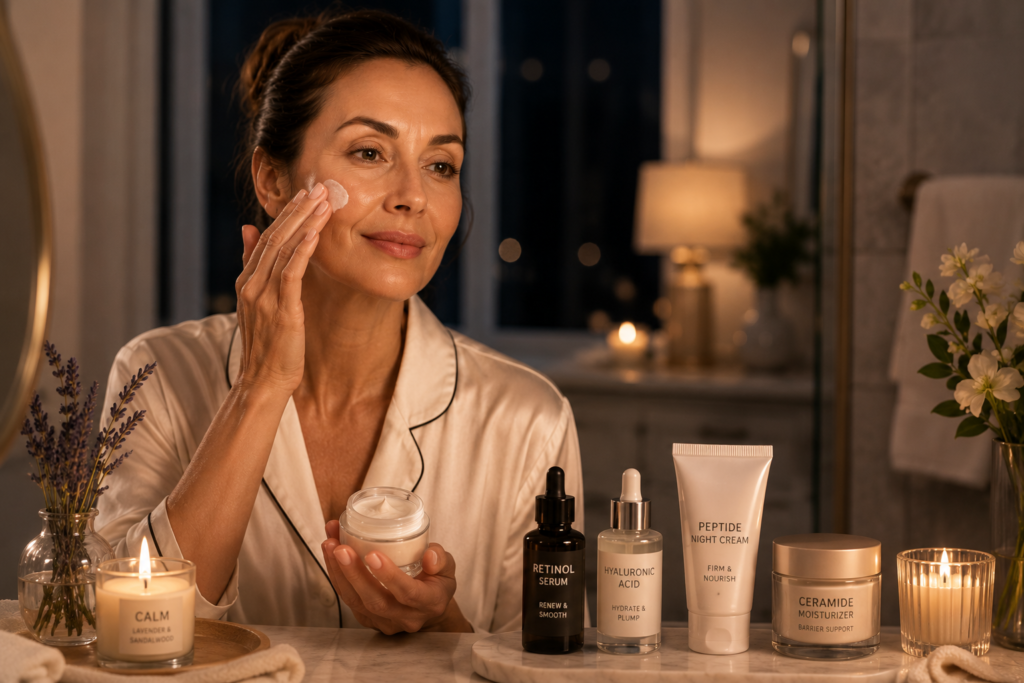
A basic routine is often enough when done consistently.
Morning Routine
- gentle cleanser
- vitamin C serum
- moisturizer
- sunscreen SPF 30+
Evening Routine
- cleanser
- retinol or peptides
- moisturizer
- hydrating serum
Consistency matters more than using too many products.
Many people make the mistake of using too many products too quickly.
This can irritate the skin barrier and make the routine difficult to maintain consistently.
A better approach is to keep your routine simple and focus on high-quality ingredients that support your main skin concerns.
Consistency is usually more important than complexity.
Even a basic routine followed daily can produce better long-term results than an overly complicated routine used inconsistently.
Common Anti-Aging Skincare Mistakes
Many people unintentionally slow their results by following inconsistent or overly aggressive routines.
Common mistakes include:
- skipping sunscreen
- using too many active ingredients at once
- changing products too often
- over-exfoliating
- expecting overnight results
These habits can weaken the skin barrier and increase irritation.
Healthy aging skincare works best when products are used consistently and gradually over time.
Protecting your skin barrier is just as important as using anti-aging ingredients.
How Long Results Take
Anti-aging skincare takes time.
Some hydration improvements appear within days, but collagen-related improvements usually take several weeks or months.
Most people begin noticing:
- smoother skin
- improved hydration
- healthier texture
within 4–8 weeks of consistent use.
What to Expect After 90 Days
With consistent skincare habits, many people notice:
- improved skin texture
- better hydration
- reduced dullness
- smoother appearance
- healthier-looking skin
Long-term skin health is usually the result of gradual, sustainable improvements.
Best Products to Consider
Anti-Aging Serums & Skin Brightening
Vitamin C serums are commonly used in anti-aging skincare routines to help support brighter-looking skin, reduce dullness, and protect against environmental stress.
⭐ Editor’s Pick
TruSkin Vitamin C Serum
Best For: Brightening & Supporting Healthy-Looking Skin
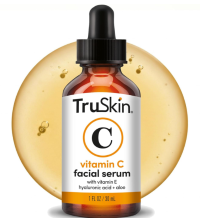
TruSkin Vitamin C Serum combines vitamin C, hyaluronic acid, and botanical ingredients designed to support smoother, brighter, and healthier-looking skin as part of a daily longevity skincare routine.
✔ Helps support brighter-looking skin
✔ Supports hydration and smoother texture
✔ Includes antioxidant-rich ingredients
✔ Lightweight daily-use formula
👉 Support healthier, glowing skin naturally.
Anti-Aging Moisturizers & Skin Barrier Support
Anti-aging moisturizers are designed to support hydration, improve skin softness, and help maintain healthier-looking skin over time.
⭐ Editor’s Pick
Olay Regenerist Micro-Sculpting Cream
Best For: Hydration & Firmness Support
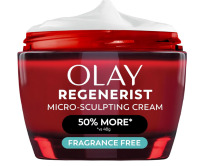
Olay Regenerist Micro-Sculpting Cream features peptides, niacinamide, and hydrating ingredients formulated to support skin firmness, moisture retention, and smoother-looking texture.
✔ Supports long-lasting hydration
✔ Helps improve skin softness and texture
✔ Includes peptides and niacinamide
✔ Designed for daily anti-aging skincare routines
👉 Nourish and support your skin barrier daily.
Sunscreen & Skin Longevity Protection
Daily sunscreen helps protect the skin from UV-related damage, which is one of the leading contributors to visible skin aging..
⭐ Editor’s Pick
EltaMD UV Clear SPF 46
Best For: Daily UV Protection & Healthy Aging
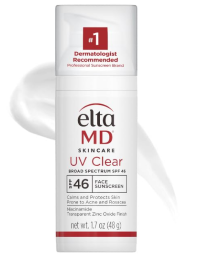
EltaMD UV Clear SPF 46 is a lightweight facial sunscreen designed to support daily skin protection while helping maintain healthier-looking skin with niacinamide and broad-spectrum UV coverage.
✔ Broad-spectrum SPF 46 protection
✔ Lightweight non-greasy formula
✔ Includes niacinamide for skin support
✔ Suitable for daily longevity skincare routines
👉 Protect your skin and support healthier aging daily.
FAQ
What is the best anti-aging skincare ingredient?
Retinol is often considered one of the most effective anti-aging skincare ingredients because it supports skin renewal and collagen production. However, the “best” ingredient depends on your skin type and goals. For example, hyaluronic acid helps improve hydration, peptides support firmness, and vitamin C helps protect against environmental stress. Many effective anti-aging routines combine several ingredients together rather than relying on just one product alone.
Is sunscreen really necessary for anti-aging?
Yes, sunscreen is one of the most important anti-aging skincare products you can use. Daily UV exposure is one of the leading causes of visible skin aging, including wrinkles, uneven tone, and loss of elasticity. Even on cloudy days, UV rays can still affect the skin over time. Using a broad-spectrum sunscreen consistently helps protect collagen levels and supports healthier-looking skin long term. Many experts consider sunscreen the foundation of any longevity skincare routine.
What age should I start anti-aging skincare?
Many people begin preventive anti-aging skincare in their mid-to-late 20s or early 30s, but it’s never too late to start. The goal of longevity skincare is not only to reduce visible signs of aging but also to support long-term skin health. Younger skin may benefit more from hydration and sun protection, while mature skin often benefits from ingredients like retinol, peptides, and ceramides. Consistency matters more than starting at a perfect age.
Can lifestyle affect skin aging?
Absolutely. Lifestyle habits play a major role in how your skin ages over time. Poor sleep, chronic stress, dehydration, smoking, and excessive sun exposure can all increase inflammation and oxidative stress, which may accelerate visible signs of aging. Nutrition and hydration also influence skin barrier health and recovery. Even the best skincare products work better when combined with healthy daily habits that support long-term skin wellness and resilience.
How long does skincare take to work?
Most anti-aging skincare products require consistent use over several weeks before noticeable improvements appear. Hydration-focused ingredients like hyaluronic acid may improve skin softness fairly quickly, while ingredients that support collagen production—such as retinol or peptides—usually take longer. Many people begin noticing visible improvements in texture and hydration within 4–8 weeks. Long-term results often come from maintaining a simple and consistent routine rather than expecting overnight changes.
Healthy aging starts with consistency.
Support your skin naturally with smarter skincare habits, quality ingredients, and wellness-focused routines from Purely Vital Living.
Final Summary
The best anti-aging skincare products for 2026 focus on supporting long-term skin health rather than chasing quick fixes. Modern longevity skincare is centered around protecting the skin barrier, supporting collagen production, maintaining hydration, and reducing environmental stress that contributes to visible aging over time.
Ingredients like retinol, peptides, vitamin C, hyaluronic acid, niacinamide, and ceramides each play an important role in helping skin remain healthier, smoother, and more resilient. However, skincare products work best when combined with healthy lifestyle habits such as quality sleep, stress management, hydration, and daily sun protection.
The key to healthy aging skin is consistency, not perfection. A simple routine followed regularly often produces better long-term results than an overly complicated routine used inconsistently.
By focusing on skin longevity instead of temporary trends, you can support stronger, healthier, and more youthful-looking skin naturally over time.