

Quick Answer
The gut brain axis is the two-way communication network between your digestive system and your brain. It allows signals to travel through nerves, hormones, the immune system, and the gut microbiome, helping regulate digestion, mood, stress responses, sleep quality, and energy levels. While researchers are still learning about this complex relationship, maintaining a healthy gut through balanced nutrition, quality sleep, regular exercise, and stress management may support both digestive and mental well-being.
Introduction
Most people think of the stomach as simply the place where food is digested. However, scientists now understand that the digestive system communicates with the brain continuously through a sophisticated network known as the gut brain axis.
This connection helps explain why stressful situations can trigger stomach discomfort, why poor sleep may affect digestion, and why digestive issues sometimes occur alongside low mood or fatigue. Rather than functioning independently, the brain and digestive system constantly exchange information that may influence many aspects of overall health.
At the center of this communication is the gut microbiome—the trillions of bacteria and other microorganisms that live primarily in the large intestine. These microbes help digest food, support nutrient absorption, interact with the immune system, and produce compounds that may influence brain function.
Modern lifestyles can challenge this delicate balance. Highly processed diets, chronic stress, inadequate sleep, and sedentary habits may all affect the health of the gut microbiome and, in turn, the gut brain axis.
The encouraging news is that many of the same healthy habits that support digestion may also contribute to better energy, improved mood, and healthier sleep patterns.
In this guide, you’ll learn what the gut brain axis is, how it works, and practical lifestyle strategies that may help support this remarkable connection naturally.
What Is the Gut-Brain Axis?
The gut brain axis is the communication system linking the gastrointestinal tract with the central nervous system. Rather than operating separately, the brain and digestive system exchange information throughout the day, allowing each to influence the other.
This communication helps regulate digestion, appetite, stress responses, sleep patterns, immune function, and aspects of emotional well-being.
Although the brain sends signals that affect digestion, the gut also sends signals back to the brain. Researchers continue studying how these interactions influence overall health and quality of life.
The Communication Between Your Gut and Brain
The relationship between the gut and brain is often described as bidirectional, meaning information flows in both directions.
For example:
- Feeling nervous before an important event may cause stomach discomfort.
- Emotional stress can sometimes change appetite or digestion.
- Digestive discomfort may affect concentration, mood, or sleep quality.
These everyday experiences demonstrate that the gut and brain work together rather than independently.
The body relies on several communication pathways, including nerves, hormones, immune signals, and the gut microbiome itself.
The Role of the Gut Microbiome
The gut microbiome consists of trillions of microorganisms living inside the digestive tract.
Many of these microbes perform beneficial functions, including:
- helping digest certain foods,
- supporting nutrient absorption,
- producing helpful compounds,
- interacting with the immune system,
- and contributing to digestive balance.
Researchers are also investigating how the microbiome may influence communication with the brain through the gut brain axis.
A diverse and balanced microbiome is generally considered an important part of digestive wellness.
Although scientists are still exploring the details, maintaining healthy lifestyle habits may help support microbial diversity over time.
Why the Gut-Brain Axis Matters for Overall Health
The gut brain axis extends beyond digestion alone.
Current research suggests this communication network may play a role in:
- emotional well-being,
- stress regulation,
- sleep quality,
- cognitive performance,
- energy production,
- immune function,
- and overall health.
This does not mean gut health alone determines these outcomes. Instead, it highlights that digestive wellness is one piece of a much larger picture involving nutrition, movement, sleep, genetics, and lifestyle.
Understanding this relationship helps explain why improving gut health often supports benefits beyond digestion.
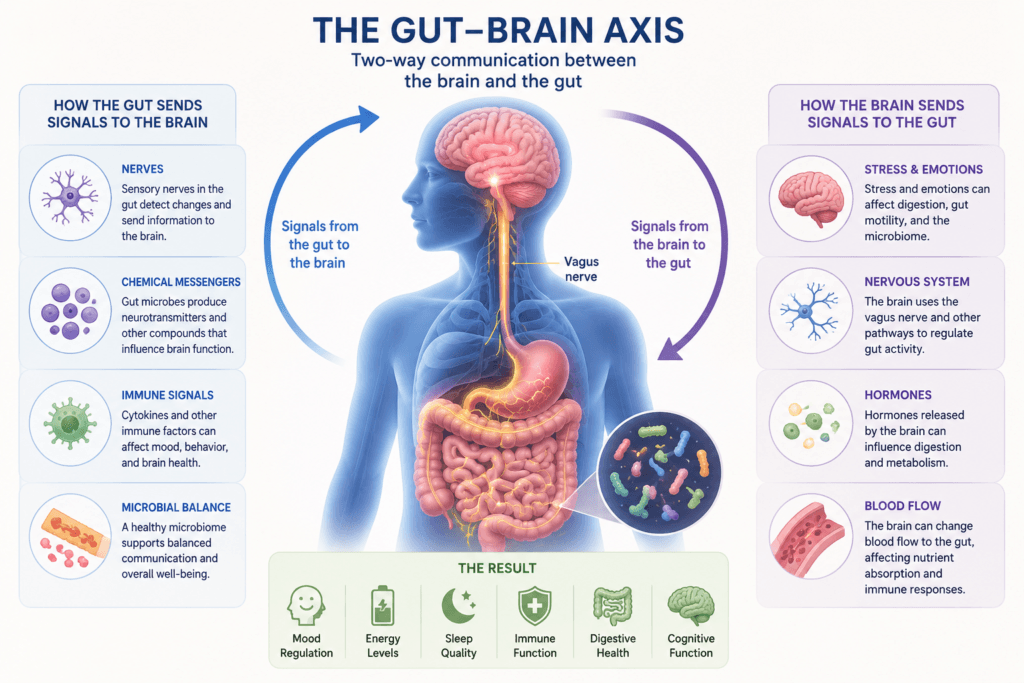
How the Gut-Brain Axis Works
Communication between the digestive system and the brain occurs through several interconnected pathways.
Together, these systems allow the body to coordinate digestion, metabolism, immune responses, and stress adaptation.
Nerves and the Vagus Nerve
One of the most important communication routes is the vagus nerve, a major nerve connecting the brain with multiple organs, including the digestive tract.
The vagus nerve helps regulate many automatic body functions and carries signals between the gut and brain throughout the day.
Researchers continue studying how vagus nerve activity may influence digestion, mood, and stress resilience.
Healthy lifestyle habits such as regular exercise, quality sleep, and stress management may support overall nervous system health.
Gut Microbes and Chemical Messengers
Gut bacteria produce a variety of compounds while digesting food.
Some of these substances may influence communication throughout the body, including interactions with the nervous system and immune system.
Although popular media sometimes oversimplifies these relationships, scientists agree that gut microbes participate in complex biological processes that extend beyond digestion.
This is one reason why nutrition and microbiome diversity receive increasing attention in health research.
Immune System and Inflammation
A large portion of immune activity is associated with the digestive tract.
Beneficial gut bacteria help interact with immune cells and contribute to maintaining balance within the digestive environment.
Researchers are exploring how disturbances in the microbiome may influence inflammatory processes and how those processes might affect overall wellness.
While much remains under investigation, maintaining digestive health may help support healthy immune function.
Hormones and Stress Signals
Hormones also play a major role in the gut brain axis.
Stress hormones can affect:
- digestion,
- appetite,
- gut motility,
- and overall digestive comfort.
Likewise, digestive processes influence hormones involved in hunger and satiety.
This ongoing communication helps explain why prolonged stress may sometimes lead to digestive symptoms and why digestive issues can occasionally affect mood and energy.

How Gut Health May Affect Mood
Many people notice that stressful situations can trigger digestive discomfort.
Researchers believe the gut brain axis helps explain this relationship.
Although mental health is influenced by numerous factors, digestive wellness may contribute to emotional well-being as one part of a broader lifestyle picture.
The Gut-Brain Connection and Emotional Wellness
Scientists continue studying how gut bacteria interact with the nervous system.
Some microorganisms help produce compounds that participate in communication throughout the body.
This research has generated significant interest in understanding whether supporting gut health may also contribute to better emotional resilience.
Current evidence suggests maintaining a healthy gut is one valuable component of overall wellness, alongside adequate sleep, exercise, nutrition, and stress management.
Stress and Digestive Symptoms
Stress commonly affects digestion.
Many individuals experience:
- stomach discomfort,
- bloating,
- appetite changes,
- nausea,
- or altered bowel habits
during periods of heightened emotional stress.
These experiences illustrate the close relationship between the digestive system and the brain.
Reducing chronic stress may therefore benefit both mental well-being and digestive comfort.
Why a Healthy Gut May Support Better Mood
Supporting gut health does not guarantee emotional improvements, but many healthy habits benefit both systems simultaneously.
Examples include:
- eating a balanced diet,
- consuming more fiber-rich foods,
- getting adequate sleep,
- staying physically active,
- practicing relaxation techniques,
- and maintaining social connections.
Because these habits support overall wellness, they may positively influence both digestive and emotional health over time.

How Gut Health May Affect Energy
Energy levels depend on many factors, including nutrition, sleep, physical activity, hydration, stress management, and underlying health conditions.
Digestive health also plays an important supporting role.
Nutrient Absorption
Even the healthiest diet provides limited benefit if nutrients are not effectively absorbed.
The digestive system breaks down food and helps the body absorb vitamins, minerals, proteins, fats, and carbohydrates needed for normal energy production.
Maintaining digestive wellness may therefore support the body’s ability to use nutrients efficiently.
The Gut-Energy Connection
Many people experiencing digestive discomfort also report:
- fatigue,
- low motivation,
- brain fog,
- or afternoon energy crashes.
While these symptoms have many possible causes, researchers continue exploring how gut health and microbiome balance may contribute to overall energy regulation.
The connection likely involves multiple factors, including nutrient absorption, inflammation, sleep quality, and metabolic processes.
Fatigue and Poor Digestive Health
When digestion is not functioning optimally, people may notice reduced energy during everyday activities.
Poor sleep, chronic stress, low-fiber diets, and inadequate hydration may further compound these effects.
For this reason, supporting gut health often involves improving multiple lifestyle habits simultaneously rather than focusing on a single solution.

How Gut Health May Affect Sleep
Sleep and gut health share a close two-way relationship. Just as poor sleep may influence digestion and the gut microbiome, digestive discomfort can also interfere with getting a restful night’s sleep.
Researchers continue exploring how the gut brain axis helps regulate sleep patterns through interactions involving hormones, immune activity, and the nervous system. Although many factors affect sleep quality, maintaining a healthy digestive system may be one piece of the puzzle.
Sleep and the Gut Microbiome
The gut microbiome follows daily rhythms that often align with the body’s natural sleep-wake cycle.
Irregular schedules, late-night eating, chronic stress, and insufficient sleep may disrupt these rhythms and potentially affect microbial diversity.
Likewise, maintaining a consistent bedtime routine may support both sleep quality and digestive wellness.
Circadian Rhythm and Digestion
The body’s internal clock helps regulate digestion throughout the day.
Digestive processes tend to function differently during waking hours compared with nighttime rest.
Eating very large meals late at night or following inconsistent sleep schedules may place additional stress on the digestive system.
Creating predictable eating and sleeping routines can help support both circadian rhythm and overall gut health.
Why Better Sleep Supports Better Gut Health
People who consistently prioritize sleep often report:
- improved recovery,
- better digestion,
- steadier energy,
- and improved stress management.
Although sleep alone will not solve digestive issues, it represents one of the foundational habits that supports a healthier gut-brain axis.

Signs Your Gut-Brain Axis May Be Out of Balance
An unhealthy gut-brain relationship does not produce one single symptom. Instead, people may notice a combination of digestive and general wellness concerns.
Possible signs include:
Brain Fog
Difficulty concentrating or reduced mental clarity may occur alongside digestive complaints and poor sleep.
Low Energy
Feeling tired despite adequate rest may sometimes coincide with poor digestive habits or inadequate nutrient intake.
Poor Sleep
Frequent nighttime waking or difficulty falling asleep may occur together with digestive discomfort.
Frequent Stress
Chronic stress affects both the brain and digestive system, often creating a cycle that is difficult to break.
Digestive Discomfort
Recurring bloating, irregular bowel habits, or stomach discomfort may indicate that digestive wellness deserves greater attention.
Bloating
Occasional bloating is common, but persistent symptoms may benefit from dietary review or medical evaluation when appropriate.
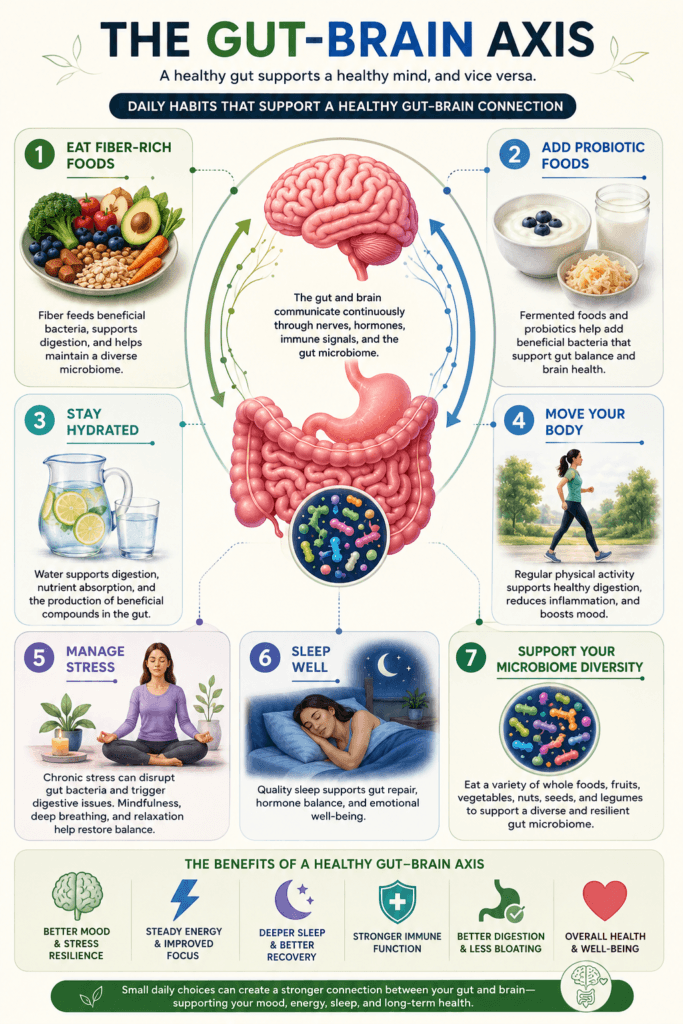
Daily Habits That Support a Healthy Gut-Brain Axis
Improving the gut brain axis does not require complicated protocols. Consistent daily habits often provide the strongest long-term benefits.
Eat More Fiber
Fiber-rich foods such as vegetables, fruits, legumes, oats, and whole grains help nourish beneficial gut bacteria and support digestive health.
Increasing fiber gradually while maintaining hydration may improve tolerance.
Include Fermented Foods
Foods like yogurt, kefir, kimchi, sauerkraut, and miso naturally contain beneficial microorganisms that may support microbiome diversity.
Adding these foods regularly can complement an overall balanced diet.
Improve Sleep Quality
Aim for a consistent sleep schedule and create a calming bedtime routine by limiting screen exposure and reducing late-night stimulation.
Quality sleep supports both brain function and digestive health.
Stay Physically Active
Walking, cycling, resistance training, and other forms of regular movement may support digestion, circulation, mood, and stress management.
Consistency is more important than intensity.
Manage Stress
Simple daily practices such as:
- mindfulness,
- deep breathing,
- journaling,
- stretching,
- and spending time outdoors
may help reduce stress and support the gut-brain connection.
Stay Hydrated
Water supports digestion and helps maintain normal bodily functions.
Many people underestimate how hydration influences overall wellness.
Reduce Highly Processed Foods
Replacing ultra-processed foods with more whole-food meals may help support both microbiome diversity and stable energy levels.
Small sustainable improvements often outperform restrictive diets.

Common Mistakes That May Harm the Gut-Brain Axis
Many people unknowingly adopt habits that may interfere with digestive and brain health.
Common examples include:
Poor Sleep Habits
Inconsistent bedtimes and inadequate sleep may disrupt recovery and digestive function.
Chronic Stress
Long-term stress may negatively affect both emotional well-being and digestion.
Low-Fiber Diets
Beneficial gut bacteria rely on dietary fiber for nourishment.
Excess Ultra-Processed Foods
Diets high in processed foods often provide less nutritional support for the microbiome.
Sedentary Lifestyle
Long periods of inactivity may contribute to poorer digestion and lower overall wellness.
Recognizing these habits is often the first step toward positive change.

7-Day Gut-Brain Reset Plan
Day 1
Increase your daily water intake.
Day 2
Add one serving of vegetables to lunch and dinner.
Day 3
Include a fermented food such as yogurt or kefir.
Day 4
Take a 30-minute walk.
Day 5
Practice 10 minutes of mindfulness or breathing exercises.
Day 6
Follow a consistent bedtime routine.
Day 7
Review your progress and choose one habit to continue long term.
Remember that consistency matters more than perfection.
How Long Does It Take to Improve the Gut-Brain Axis?
Everyone responds differently.
Some individuals notice improvements in digestion or energy within a few weeks, while others may require several months of consistent healthy habits.
Factors that influence progress include:
- dietary quality,
- sleep,
- stress,
- physical activity,
- hydration,
- and overall health status.
Rather than expecting overnight transformation, focus on sustainable improvements that become part of daily life.
What to Expect After 30 Days
After a month of consistent healthy habits, many people may notice:
- better digestive comfort,
- reduced bloating,
- steadier energy,
- improved sleep quality,
- better stress resilience,
- and healthier daily routines.
Results vary between individuals, but small changes practiced consistently often produce meaningful long-term benefits.
Best Products to Consider
Probiotic Support
Probiotic supplements are designed to help support a healthy balance of beneficial bacteria in the digestive system. They may promote digestive wellness, microbiome diversity, and overall gut health when combined with a balanced diet and healthy lifestyle.
⭐ Editor’s Pick
Physician’s Choice 60 Billion Probiotic
Best For: High-Potency Digestive & Gut Balance Support

Physician’s Choice 60 Billion Probiotic is a high-potency probiotic formula that combines multiple probiotic strains with prebiotics to support digestive balance and gut wellness.
✔ Multiple probiotic strains
✔ Includes prebiotic support
✔ Helps support digestive balance
✔ Daily microbiome wellness support
👉 Looking for high-potency probiotic support?
Digestive Enzyme Support
Digestive enzyme supplements are formulated to help break down proteins, carbohydrates, and fats during digestion. They may support digestive comfort and nutrient utilization as part of a balanced wellness routine.
⭐ Editor’s Pick
Enzymedica Digest Gold + ATPro
Best For: Digestive Comfort & Nutrient Absorption

Enzymedica Digest Gold + ATPro features a comprehensive blend of digestive enzymes formulated to assist the breakdown of foods and support digestive efficiency for everyday wellness.
✔ Helps break down proteins, fats, and carbohydrates
✔ Supports digestive comfort after meals
✔ Promotes nutrient utilization
✔ Vegan-friendly enzyme formula
👉 Support smoother digestion with advanced enzyme nutrition.
Walking & Recovery
Walking and recovery equipment encourages regular movement and active lifestyles. Consistent physical activity may support digestion, stress management, cardiovascular health, and overall well-being.
⭐ Editor’s Pick
LifePro PacerMini Foldable Walking Treadmill
Best For: Daily Walking, Energy & Healthy Lifestyle Habits

LifePro PacerMini Foldable Walking Treadmill is a compact home treadmill designed to make daily walking more convenient. Its foldable design and user-friendly controls make it easy to incorporate consistent movement into your routine, whether you’re working from home or looking to increase everyday activity.
✔ Encourages consistent daily movement
✔ Foldable, space-saving design for home use
✔ Supports active lifestyle habits and mobility
✔ Suitable for walking while working or during wellness breaks
👉 Looking for an easy way to move more every day?
Frequently Asked Questions
What is the gut brain axis?
The gut brain axis is the communication network linking the digestive system and brain through nerves, hormones, immune signals, and the gut microbiome.
Can poor gut health affect your mood?
Emerging research suggests gut health may influence emotional well-being through the gut brain axis, although mood is affected by many factors.
Does gut health affect sleep?
Sleep and gut health influence one another. Healthy sleep habits may support digestive wellness, while digestive health may also contribute to better sleep quality.
Can gut problems cause fatigue?
Digestive issues may contribute to fatigue through several mechanisms, including nutrient absorption, inflammation, and disrupted sleep, although fatigue has many possible causes.
How can I improve my gut brain axis naturally?
Eating a balanced diet, increasing fiber intake, sleeping well, staying active, managing stress, and supporting gut microbiome diversity may all help.
What foods support the gut brain axis?
Vegetables, fruits, whole grains, legumes, fermented foods, nuts, seeds, and other fiber-rich whole foods are commonly recommended as part of a healthy eating pattern.
Want free practical tips for better sleep, energy, gut health, and healthy aging?
Join the Purely Vital Living newsletter and get science-backed wellness tips delivered to your inbox.
Final Summary
The gut brain axis highlights the remarkable connection between your digestive system and your brain. Through nerves, hormones, the immune system, and the gut microbiome, these two systems constantly communicate and may influence mood, stress, energy, sleep, and overall wellness.
While researchers continue learning about this relationship, the habits that support a healthier gut are already well known. Eating a balanced diet rich in fiber, staying physically active, managing stress, prioritizing sleep, and limiting highly processed foods may all contribute to a healthier gut-brain connection.
Rather than searching for a quick fix, focus on small sustainable improvements. Over time, those daily habits can support better digestion, steadier energy, improved resilience, and a healthier lifestyle overall.
Related Reads
- How to Heal Your Gut Microbiome Naturally (2026)
- 7 Signs of Poor Gut Health and How to Fix It
- What Causes Bad Gut Health? 5 Everyday Habits to Avoid
- Best Supplements for Gut Health and Digestion
- Best Diet for Energy: Foods That Help Prevent Energy Crashes
- Why Am I Tired All the Time? 9 Hidden Causes + Fixes
- How to Improve Sleep Quality Naturally: Complete Sleep Guide
- Stress and Sleep: How Stress Affects Sleep Quality
- Healthy Lifestyle Habits for Healthy Aging and Longevity