Quick Answer
Gut-healthy recipes combine fiber-rich plants, prebiotic foods, fermented ingredients, healthy fats, and colorful produce to support digestion and nourish the gut microbiome. Practical choices include overnight oats with chia and berries, lentil vegetable soup, miso soup, chickpea salad, kefir smoothies, and vegetable-and-bean bowls. Increase fiber gradually if you are not used to it, because some otherwise healthy foods can worsen IBS or bloating in sensitive people.
Key Takeaways
- Build meals around a variety of fiber-rich plants such as oats, beans, lentils, berries, leafy greens, and whole grains.
- Include fermented foods such as yogurt, kefir, kimchi, sauerkraut, or miso when tolerated.
- Increase fiber gradually and drink enough fluids to reduce the chance of temporary gas or bloating.
- There is no single best gut-health diet; adjust ingredients to your symptoms, preferences, and tolerance.
- Persistent pain, major bowel changes, bleeding, weight loss, or severe bloating deserves medical evaluation.
- Introduction
- What Makes a Recipe Good for Gut Health?
- What Foods Are Best for Gut Health?
- Bare Bones 100% Grass-Fed Instant Beef Bone Broth Powder
- 15 Gut Healthy Recipes You Can Make at Home
- 3. Apple Cinnamon Oatmeal with Flaxseed
- 4. Lentil Vegetable Soup
- 5. Miso Soup with Tofu and Mushrooms
- NOW Foods Pure Psyllium Husk Powder
- 7 Simple Tips to Make Every Meal More Gut Friendly
- Can Gut Healthy Recipes Help IBS or Bloating?
- Terraflora Advanced Care Synbiotic
- Frequently Asked Questions
- Final Thoughts: Build a Gut-Healthy Routine
Introduction
For years, I believed that improving gut health meant finding the right supplement. I tried probiotics, digestive enzymes, herbal products, and nearly every recommendation I came across. Some helped temporarily, but the improvements rarely lasted.
Looking back, I realized I had been overlooking something much more important: what I was eating every day.
Living with IBS and chronic digestive issues taught me that healthy eating isn’t about following a perfect diet. It’s about consistently choosing foods that nourish your digestive system and support the trillions of beneficial bacteria living in your gut.
That’s where gut healthy recipes can make a real difference.
Instead of focusing on a single “superfood,” these recipes combine ingredients that work together to support digestion, feed beneficial gut bacteria, and provide your body with the nutrients it needs.
In this guide, you’ll learn what makes a recipe good for gut health, discover the foods that best support your microbiome, and explore 15 delicious recipes you can easily prepare at home. For a complete explanation of how food, lifestyle, and microbial diversity work together, read our gut microbiome guide.
What Makes a Recipe Good for Gut Health?
Not every healthy recipe is necessarily good for your gut.
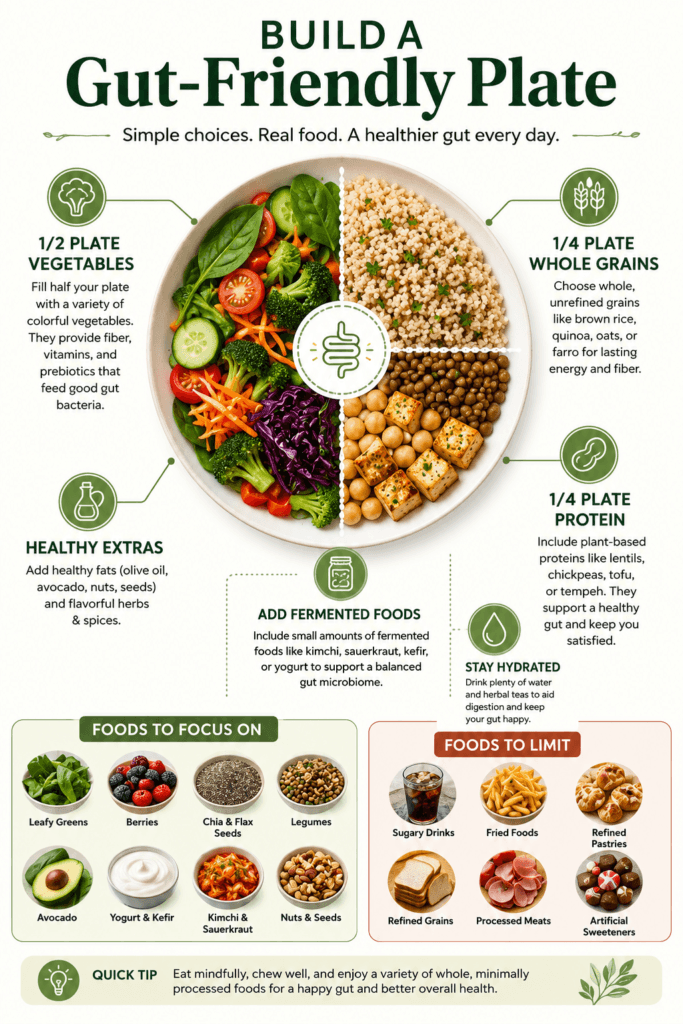
A meal that supports digestive health typically includes ingredients that nourish beneficial gut bacteria while providing fiber, vitamins, minerals, and healthy fats. Rather than relying on highly processed foods, gut-friendly recipes emphasize whole ingredients that work together to support a balanced microbiome.
Here are the key characteristics of a gut healthy recipe.
Fiber-Rich Ingredients
Dietary fiber is one of the most important nutrients for digestive health. If food alone does not meet your needs, our gut health supplement guide explains how fiber supplements, probiotics, and digestive enzymes differ.
Unlike many other nutrients, fiber isn’t fully digested by your body. Instead, it travels to the large intestine, where beneficial gut bacteria ferment certain types of fiber to produce short-chain fatty acids. These compounds help support the gut lining and contribute to a healthy digestive environment.
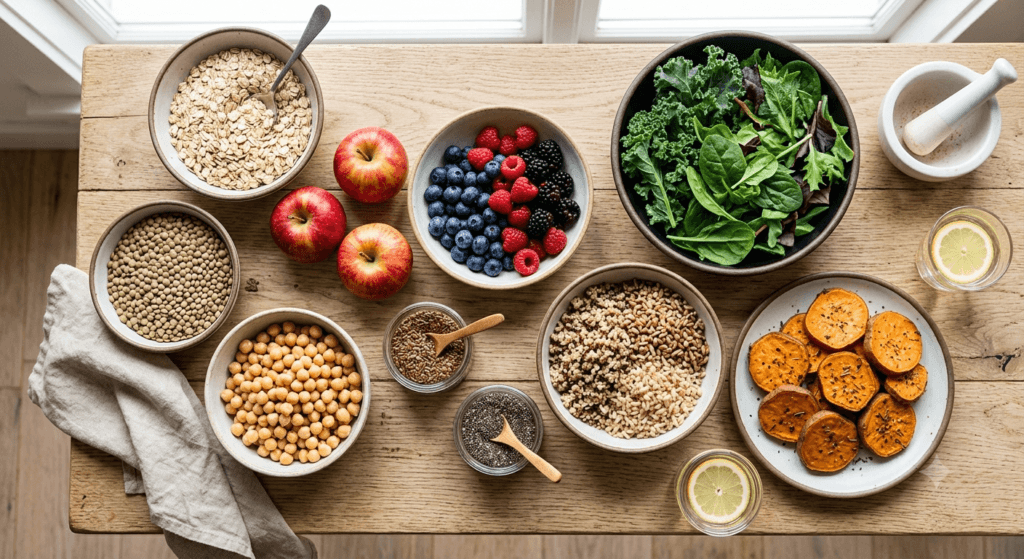
Excellent fiber-rich ingredients include:
- Oats
- Lentils
- Chickpeas
- Beans
- Apples
- Berries
- Sweet potatoes
- Whole grains
- Leafy greens
If you currently eat very little fiber, increase your intake gradually and drink enough water. Increasing fiber too quickly may temporarily worsen bloating or gas.
Prebiotic Foods
Prebiotics are types of fiber that feed beneficial gut bacteria.
You can think of them as fertilizer for your microbiome. Without enough prebiotic foods, even probiotic bacteria have less fuel to thrive.
Some of the best prebiotic ingredients include:
- Garlic
- Onions
- Leeks
- Asparagus
- Bananas
- Oats
- Chicory root
- Jerusalem artichokes
Adding these foods regularly to meals may help support a more diverse and resilient gut microbiome over time.
Probiotic Foods
While prebiotics feed beneficial bacteria, probiotics introduce live microorganisms that may support digestive health.
Fermented foods have been part of traditional diets around the world for centuries.
Examples include:
- Yogurt with live cultures
- Kefir
- Sauerkraut
- Kimchi
- Miso
- Tempeh
Although fermented foods can be beneficial, they aren’t tolerated equally by everyone. Some people with IBS or sensitive digestion may need to introduce them slowly or choose specific options that work best for their bodies.
Healthy Fats
Healthy fats do more than support heart health.
They also contribute to nutrient absorption and help create satisfying meals that keep you full longer.
Good sources include:
- Extra virgin olive oil
- Avocados
- Walnuts
- Almonds
- Chia seeds
- Flaxseeds
Using healthy fats instead of heavily processed oils is one simple way to improve the nutritional quality of everyday meals.
Polyphenol-Rich Fruits and Vegetables
Polyphenols are naturally occurring plant compounds that appear to benefit both human health and the gut microbiome.
Research suggests that many beneficial bacteria use these compounds during metabolism, while polyphenols themselves may help support a healthy balance of gut microbes.
Excellent sources include:
- Blueberries
- Strawberries
- Blackberries
- Spinach
- Kale
- Broccoli
- Red cabbage
- Green tea
- Cocoa
The easiest strategy isn’t to focus on one “superfood.” Instead, aim to eat a wide variety of colorful fruits and vegetables throughout the week.
Limiting Ultra-Processed Foods
What you leave out of your diet can matter just as much as what you include.
Many ultra-processed foods are high in refined sugars, unhealthy fats, sodium, and additives while being low in fiber. Regularly replacing these foods with minimally processed alternatives may help support a healthier digestive system.
This doesn’t mean you need to eat perfectly.
Small, sustainable improvements usually have a greater long-term impact than strict diets that are difficult to maintain.
What Foods Are Best for Gut Health?
Building gut-friendly meals starts with choosing ingredients that naturally support digestion.
Rather than relying on one or two foods, aim for variety. Different beneficial bacteria thrive on different nutrients, so eating a diverse range of plant foods helps create a healthier and more resilient microbiome.
Here are some of the best foods to include in your weekly meal plan.
Yogurt
Plain yogurt containing live active cultures provides beneficial bacteria along with protein and calcium. Choose varieties with little or no added sugar whenever possible.
Kefir
Kefir is a fermented milk drink that contains a wide variety of beneficial microorganisms. It also provides protein, calcium, and several B vitamins.
Many people enjoy kefir in smoothies or as part of breakfast.
Sauerkraut
Naturally fermented sauerkraut supplies probiotics while adding flavor and crunch to sandwiches, salads, and grain bowls.
Look for refrigerated versions labeled as naturally fermented, since shelf-stable products are often pasteurized.
Kimchi
Kimchi combines fermented vegetables with garlic, ginger, and spices to create a flavorful probiotic-rich side dish.
Because some varieties are spicy, start with small portions if you have a sensitive stomach.
Miso
Miso is a fermented soybean paste commonly used in soups, sauces, and marinades.
Adding miso to warm—not boiling—liquids may help preserve more of its live cultures.
Oats
Oats provide beta-glucan, a type of soluble fiber that supports digestive health and contributes to feelings of fullness.
They’re an excellent base for breakfast recipes and smoothies.
Lentils and Beans
Lentils, black beans, kidney beans, and chickpeas are among the most nutritious foods for gut health.
They provide:
- Fiber
- Plant protein
- Iron
- Folate
- Complex carbohydrates
When increasing legumes, start with smaller portions if your digestive system isn’t accustomed to them.
Garlic and Onions
These kitchen staples are among the richest natural sources of prebiotic compounds.
Cooking them into soups, stews, and sauces is an easy way to support beneficial gut bacteria without dramatically changing your diet.
Berries
Blueberries, raspberries, strawberries, and blackberries are rich in fiber and polyphenols.
They’re also naturally lower in sugar than many processed desserts, making them a smart addition to breakfasts and snacks.
Leafy Greens
Spinach, kale, Swiss chard, and other leafy greens provide vitamins, minerals, antioxidants, and fiber.
Adding a handful of greens to soups, smoothies, omelets, or grain bowls is one of the simplest ways to increase vegetable intake.
Whole Grains
Whole grains such as quinoa, brown rice, barley, and oats provide fiber that helps nourish beneficial gut bacteria.
Whenever possible, choose whole grains instead of refined grains to increase both fiber and nutrient intake.

15 Gut Healthy Recipes You Can Make at Home
1. Berry Kefir Breakfast Smoothie
Why It’s Good for Gut Health
This refreshing smoothie combines probiotic-rich kefir with fiber-packed berries and chia seeds to help nourish beneficial gut bacteria. It’s a quick breakfast that’s rich in protein, antioxidants, and nutrients that support digestive health.
Ingredients
- 1 cup plain kefir
- ½ cup blueberries
- ½ cup strawberries
- ½ banana
- 1 tablespoon chia seeds
- Ice cubes (optional)
Instructions
- Add the kefir, blueberries, strawberries, banana, and chia seeds to a blender.
- Blend until smooth and creamy.
- Add ice if you prefer a colder smoothie.
- Pour into a glass and enjoy immediately.
Prep Time: 5 minutes
Cook Time: None
Servings: 1
Nutrition Highlights
- Probiotics
- Fiber
- Protein
- Calcium
- Antioxidants
Pro Tip
Freeze the berries ahead of time for a naturally thicker smoothie.
2. Overnight Oats with Chia Seeds and Blueberries
Why It’s Good for Gut Health
Oats contain beta-glucan, a soluble fiber that supports beneficial gut bacteria. Chia seeds provide additional fiber and omega-3 fats, while blueberries deliver antioxidant-rich polyphenols.
Ingredients
- ½ cup rolled oats
- 1 tablespoon chia seeds
- ¾ cup unsweetened milk
- ½ cup blueberries
- ½ teaspoon cinnamon
Instructions
- Combine oats, chia seeds, milk, and cinnamon in a jar.
- Stir well until combined.
- Refrigerate overnight.
- Top with blueberries before serving.
Prep Time: 10 minutes
Cook Time: None
Servings: 1
Nutrition Highlights
- Soluble fiber
- Whole grains
- Omega-3 fats
- Antioxidants
Pro Tip
Prepare several jars at once for easy weekday breakfasts.
3. Apple Cinnamon Oatmeal with Flaxseed
Why It’s Good for Gut Health
This warm breakfast provides soluble fiber from oats, pectin from apples, and omega-3 fats from flaxseed. Together, these ingredients help nourish beneficial gut bacteria while providing lasting energy.
Ingredients
- 1 cup rolled oats
- 2 cups water or milk
- 1 apple, diced
- 1 tablespoon ground flaxseed
- ½ teaspoon cinnamon
- Chopped walnuts (optional)
Instructions
- Bring the water or milk to a gentle boil.
- Stir in the oats and cook for about 5 minutes.
- Add the diced apple and cinnamon.
- Cook for another 2–3 minutes.
- Stir in the flaxseed before serving.
- Top with walnuts if desired.
Prep Time: 5 minutes
Cook Time: 8 minutes
Servings: 2
Nutrition Highlights
- Soluble fiber
- Healthy fats
- Antioxidants
- Whole grains
Pro Tip
Leave the apple skin on to maximize fiber.
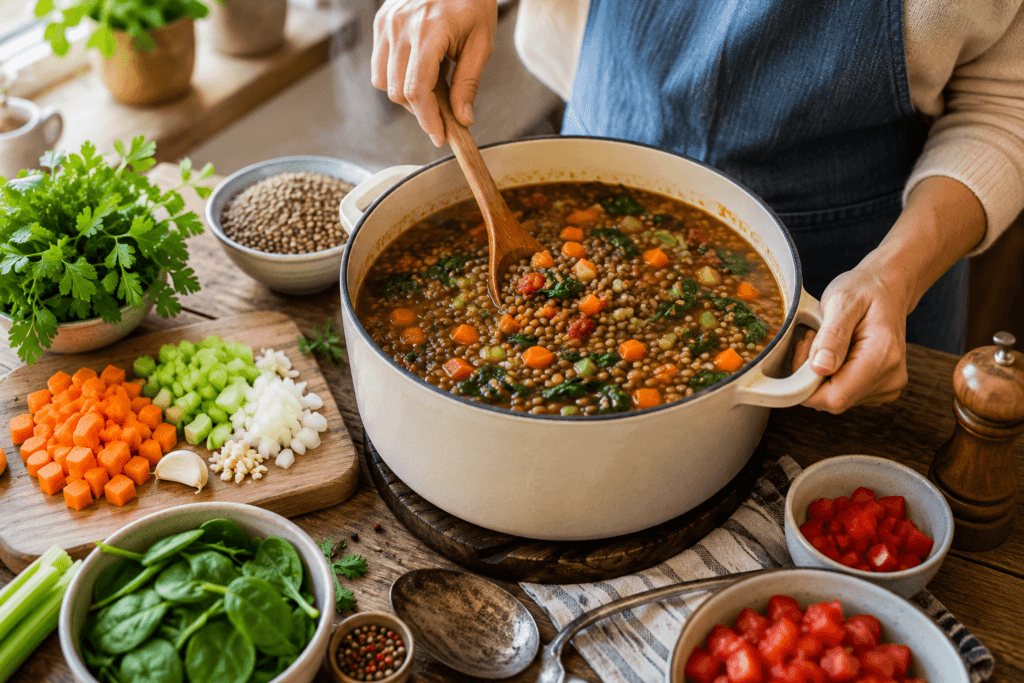
4. Lentil Vegetable Soup
Why It’s Good for Gut Health
Lentils are rich in fiber and plant protein, while carrots, celery, onions, and garlic provide prebiotic compounds that help feed beneficial gut bacteria.
Ingredients
- 1 cup dried lentils
- 1 onion, chopped
- 2 carrots, diced
- 2 celery stalks, diced
- 3 garlic cloves, minced
- 5 cups vegetable broth
- 2 cups spinach
- 1 tablespoon olive oil
Instructions
- Heat olive oil in a large pot.
- Sauté the onion, carrots, celery, and garlic for about 5 minutes.
- Add the lentils and vegetable broth.
- Bring to a boil, then reduce to a simmer.
- Cook for 30–35 minutes until the lentils are tender.
- Stir in the spinach during the final 2 minutes.
- Serve warm.
Prep Time: 15 minutes
Cook Time: 35 minutes
Servings: 4
Nutrition Highlights
- Plant protein
- Fiber
- Iron
- Folate
Pro Tip
This soup tastes even better the following day.
5. Miso Soup with Tofu and Mushrooms
Why It’s Good for Gut Health
Miso is a fermented food, while tofu provides complete plant protein. Mushrooms contribute additional fiber and nutrients.
Ingredients
- 4 cups vegetable broth
- 2 tablespoons miso paste
- 150 g firm tofu, cubed
- 1 cup sliced mushrooms
- 2 green onions, sliced
- Seaweed (optional)
Instructions
- Bring the broth to a gentle simmer.
- Add the mushrooms and tofu.
- Cook for 5 minutes.
- Remove from the heat.
- Stir a small amount of broth into the miso paste until smooth.
- Return the miso mixture to the soup.
- Garnish with green onions and seaweed.
Prep Time: 10 minutes
Cook Time: 10 minutes
Servings: 2
Nutrition Highlights
- Plant protein
- Fermented food
- Minerals
- Low calorie
Pro Tip
Avoid boiling the soup after adding the miso.

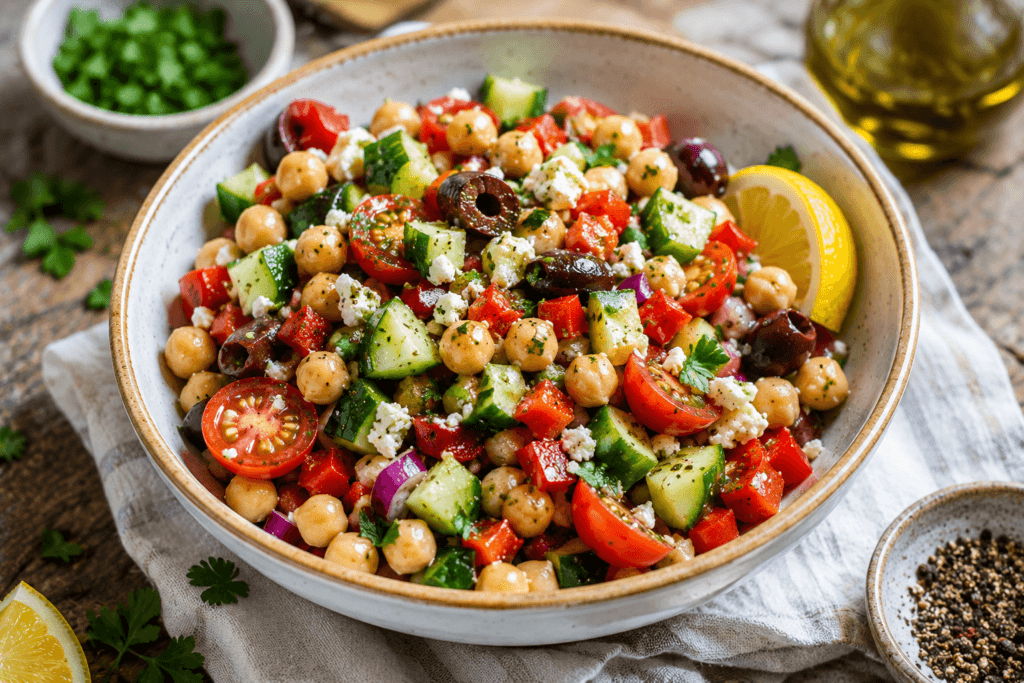
6. Mediterranean Chickpea Salad
Why It’s Good for Gut Health
Chickpeas are an excellent source of fiber and plant protein. Olive oil provides heart-healthy fats while fresh vegetables increase antioxidant intake.
Ingredients
- 1 can chickpeas
- 1 cucumber
- 2 tomatoes
- ¼ red onion
- Fresh parsley
- 2 tablespoons olive oil
- Juice of 1 lemon
Instructions
- Drain and rinse the chickpeas.
- Dice the vegetables.
- Combine everything in a large bowl.
- Add olive oil and lemon juice.
- Toss gently before serving.
Prep Time: 15 minutes
Cook Time: None
Servings: 4
Nutrition Highlights
- Fiber
- Plant protein
- Healthy fats
- Vitamin C
Pro Tip
Allow the salad to chill for 30 minutes before serving.
7. Quinoa Black Bean Bowl
Why It’s Good for Gut Health
Quinoa and black beans create a satisfying meal rich in fiber, plant protein, and minerals, while avocado contributes healthy fats.
Ingredients
- 1 cup cooked quinoa
- 1 cup black beans
- 1 avocado
- 1 bell pepper
- ½ cup corn
- Fresh cilantro
- Lime juice
Instructions
- Cook the quinoa according to package directions.
- Warm the black beans.
- Dice the avocado and bell pepper.
- Assemble all ingredients into bowls.
- Finish with cilantro and fresh lime juice.
Prep Time: 15 minutes
Cook Time: 20 minutes
Servings: 4
Nutrition Highlights
- Complete protein
- Fiber
- Healthy fats
- Magnesium
Pro Tip
Cook extra quinoa for meal prep.
8. Roasted Sweet Potato with Black Beans
Why It’s Good for Gut Health
Sweet potatoes are rich in fiber and antioxidants, while black beans provide plant protein and resistant starch that help nourish beneficial gut bacteria. This simple meal is filling, colorful, and packed with nutrients.
Ingredients
- 2 medium sweet potatoes
- 1 can black beans, drained and rinsed
- ½ avocado, sliced
- 2 tablespoons plain Greek yogurt or dairy-free yogurt
- Fresh cilantro
- Salt and pepper to taste
Instructions
- Preheat the oven to 400°F (200°C).
- Pierce the sweet potatoes with a fork and bake for 40–45 minutes until tender.
- Warm the black beans in a small saucepan.
- Slice open each sweet potato and fluff the inside with a fork.
- Top with black beans, yogurt, avocado, and cilantro.
- Season with salt and pepper before serving.
Prep Time: 10 minutes
Cook Time: 45 minutes
Servings: 2
Nutrition Highlights
- Fiber
- Plant protein
- Potassium
- Vitamin A
Pro Tip
Prepare extra baked sweet potatoes for quick lunches during the week.
9. Sauerkraut Avocado Toast
Why It’s Good for Gut Health
This simple recipe combines whole grains, healthy fats, and naturally fermented sauerkraut to provide fiber and beneficial bacteria in one satisfying meal.
Ingredients
- 2 slices whole-grain bread
- 1 ripe avocado
- ½ cup refrigerated sauerkraut
- 1 tablespoon pumpkin seeds
- Black pepper
Instructions
- Toast the bread until lightly crisp.
- Mash the avocado and spread it evenly over each slice.
- Top with sauerkraut.
- Sprinkle with pumpkin seeds and black pepper.
- Serve immediately.
Prep Time: 10 minutes
Cook Time: 2 minutes
Servings: 2
Nutrition Highlights
- Healthy fats
- Fiber
- Probiotics
- Zinc
Pro Tip
Choose refrigerated sauerkraut labeled “live cultures” for the greatest probiotic benefit.
10. Kimchi Brown Rice Bowl
Why It’s Good for Gut Health
Brown rice provides whole-grain fiber, while kimchi adds fermented vegetables that may help support a healthy gut microbiome. Edamame contributes additional protein and fiber.
Ingredients
- 1 cup cooked brown rice
- ½ cup kimchi
- ½ cup shelled edamame
- 1 carrot, shredded
- 1 cup spinach
- 1 teaspoon sesame seeds
Instructions
- Cook the brown rice according to package directions.
- Steam the edamame for 5 minutes.
- Arrange the rice in serving bowls.
- Add the spinach, carrots, kimchi, and edamame.
- Sprinkle with sesame seeds before serving.
Prep Time: 15 minutes
Cook Time: 20 minutes
Servings: 2
Nutrition Highlights
- Whole grains
- Plant protein
- Fiber
- Fermented vegetables
Pro Tip
If you’re new to kimchi, begin with small portions to assess your tolerance.
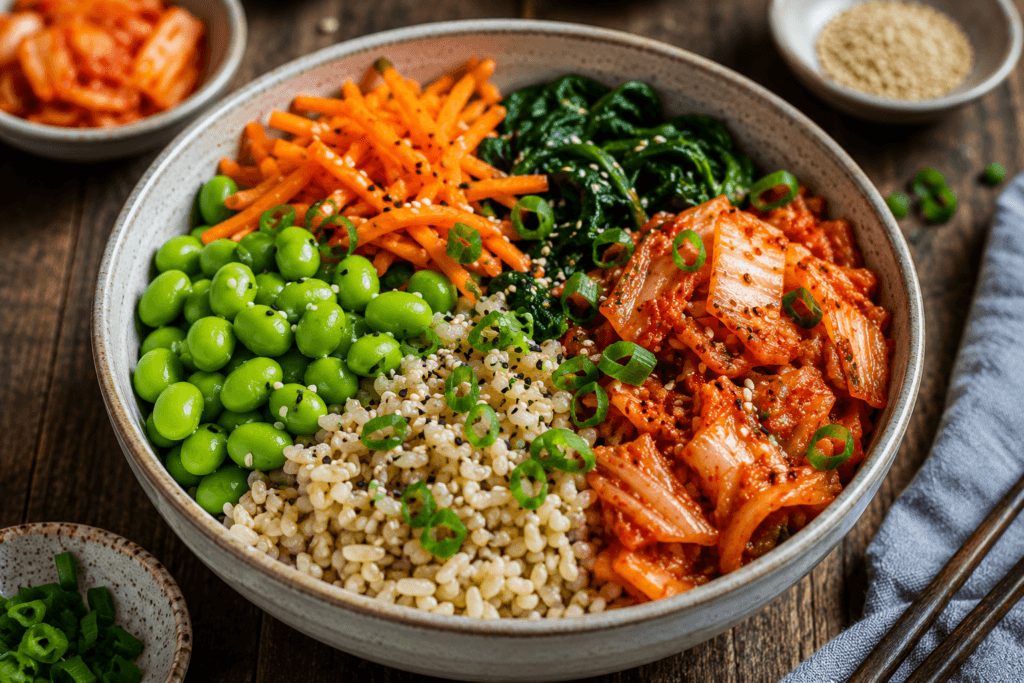
A colorful kimchi brown rice bowl provides fiber, plant protein, and fermented foods to support gut health.
11. Green Gut-Friendly Smoothie
Why It’s Good for Gut Health
Spinach, kiwi, banana, flaxseed, and kefir create a smoothie rich in fiber, probiotics, vitamins, and antioxidants. It’s an easy way to increase your daily intake of gut-friendly nutrients.
Ingredients
- 1 cup spinach
- 1 kiwi, peeled
- ½ banana
- 1 tablespoon ground flaxseed
- 1 cup plain kefir
- Ice cubes (optional)
Instructions
- Place all ingredients into a blender.
- Blend until smooth.
- Add ice for a colder texture if desired.
- Serve immediately.
Prep Time: 5 minutes
Cook Time: None
Servings: 1
Nutrition Highlights
- Probiotics
- Fiber
- Vitamin C
- Omega-3 fats
Pro Tip
Blend the spinach with the kefir first for the smoothest consistency.
12. Baked Salmon with Roasted Vegetables
Why It’s Good for Gut Health
Salmon provides omega-3 fatty acids that help support a healthy inflammatory response, while roasted vegetables contribute fiber and antioxidants.
Ingredients
- 2 salmon fillets
- 2 cups broccoli florets
- 2 cups Brussels sprouts
- 2 tablespoons olive oil
- 2 garlic cloves
- 1 lemon
Instructions
- Preheat the oven to 400°F (200°C).
- Arrange the salmon and vegetables on a baking tray.
- Drizzle with olive oil and season with garlic, salt, pepper, and lemon slices.
- Bake for 20–25 minutes until the salmon flakes easily.
- Serve immediately.
Prep Time: 15 minutes
Cook Time: 25 minutes
Servings: 2
Nutrition Highlights
- Omega-3 fats
- Protein
- Fiber
- Vitamin D
Pro Tip
Use parchment paper for quick cleanup.
13. White Bean Vegetable Stew
Why It’s Good for Gut Health
White beans are rich in fiber and plant protein, while vegetables add antioxidants, vitamins, and minerals that help support digestive health.
Ingredients
- 2 cans white beans
- 2 carrots
- 2 celery stalks
- 1 onion
- 3 garlic cloves
- 4 cups vegetable broth
- 2 cups kale
Instructions
- Sauté the onion, carrots, celery, and garlic in olive oil for 5 minutes.
- Add the beans and vegetable broth.
- Simmer for 25 minutes.
- Stir in the kale during the last 5 minutes.
- Serve warm.
Prep Time: 15 minutes
Cook Time: 30 minutes
Servings: 4
Nutrition Highlights
- Fiber
- Plant protein
- Iron
- Folate
Pro Tip
Freeze individual portions for convenient lunches.
14. Berry Chia Pudding
Why It’s Good for Gut Health
Chia seeds provide soluble fiber and omega-3 fats, while berries contribute antioxidants and polyphenols that may help support a healthy gut microbiome.
Ingredients
- ¼ cup chia seeds
- 1 cup unsweetened milk
- ½ teaspoon vanilla extract
- ½ cup mixed berries
Instructions
- Whisk together the chia seeds, milk, and vanilla.
- Refrigerate for at least 4 hours or overnight.
- Stir before serving.
- Top with fresh berries.
Prep Time: 10 minutes
Cook Time: None
Servings: 2
Nutrition Highlights
- Fiber
- Healthy fats
- Antioxidants
- Plant protein
Pro Tip
Prepare several servings at once for healthy snacks throughout the week.
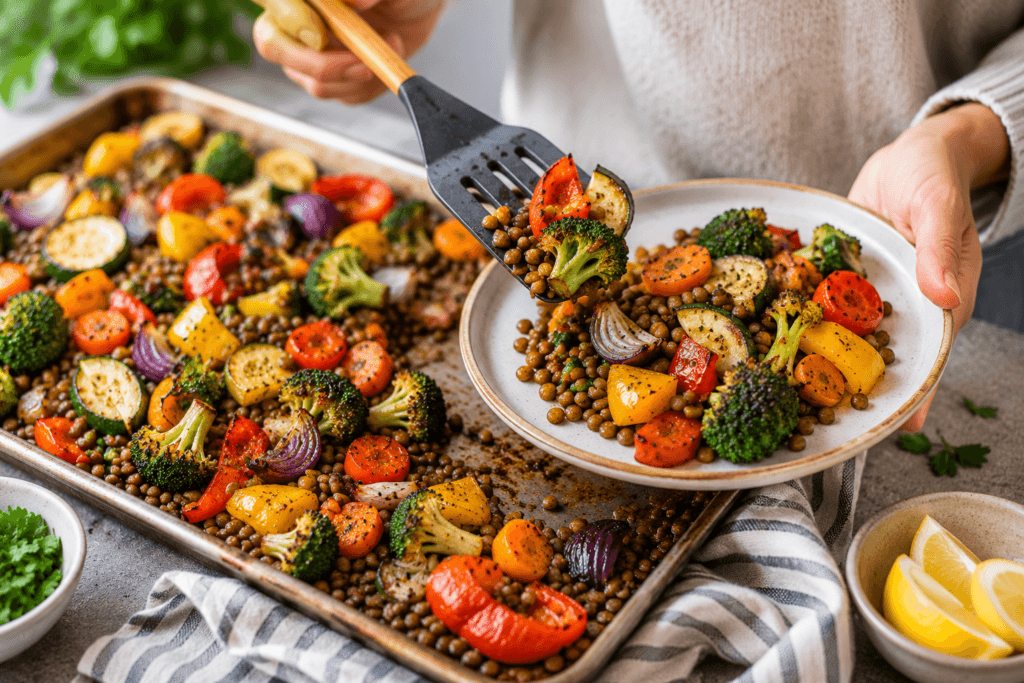
15. Roasted Vegetable & Lentil Sheet Pan Dinner
Why It’s Good for Gut Health
This simple one-pan dinner combines roasted vegetables with protein-rich lentils to create a satisfying, fiber-packed meal that supports digestive health.
Ingredients
- 2 cups cooked lentils
- 2 zucchini
- 2 bell peppers
- 1 red onion
- 2 cups broccoli florets
- 2 tablespoons olive oil
- 1 teaspoon dried oregano
- Salt and pepper
Instructions
- Preheat the oven to 425°F (220°C).
- Chop all vegetables into bite-sized pieces.
- Toss with olive oil, oregano, salt, and pepper.
- Spread on a baking sheet and roast for 25 minutes.
- Stir in the cooked lentils during the last 5 minutes to warm through.
- Serve immediately.
Prep Time: 15 minutes
Cook Time: 25 minutes
Servings: 4
Nutrition Highlights
- High in fiber
- Plant protein
- Vitamins A and C
- Antioxidants
Pro Tip
Add a squeeze of fresh lemon juice before serving to brighten the flavors and enhance the absorption of iron from the lentils.
7 Simple Tips to Make Every Meal More Gut Friendly
Healthy eating doesn’t require a complete diet overhaul. In my experience, making one small improvement at a time is much easier to maintain than trying to change everything overnight.
Here are seven simple habits that can support your gut health over time.
1. Eat More Fiber Gradually
Increasing fiber too quickly can lead to gas or bloating. Add fiber-rich foods slowly and give your digestive system time to adjust.
2. Include Fermented Foods Regularly
Adding yogurt, kefir, kimchi, miso, or sauerkraut to your weekly meals may help increase your intake of beneficial bacteria.
3. Stay Well Hydrated
Fiber works best when paired with adequate fluid intake. Drinking enough water also supports healthy digestion.
4. Eat More Colorful Plants
Aim to include fruits and vegetables of different colors throughout the week. Greater plant diversity often supports greater microbial diversity.
5. Choose Healthy Fats
Replace highly processed fats with olive oil, nuts, seeds, and avocados whenever possible.
6. Limit Ultra-Processed Foods
Whole foods generally provide more fiber and nutrients than heavily processed alternatives.
7. Be Consistent
What surprised me most during my own health journey wasn’t discovering one miracle food. It was learning that consistently making better choices week after week produced far greater results than chasing quick fixes.
Can Gut Healthy Recipes Help IBS or Bloating?
Many people notice improvements in digestion after eating more fiber-rich whole foods, but gut health isn’t one-size-fits-all.
If you have IBS, certain healthy foods—including beans, onions, garlic, or some fermented foods—may trigger symptoms. That doesn’t necessarily mean those foods are unhealthy; it simply means your digestive system may tolerate them differently.
For some people, a temporary low-FODMAP diet supervised by a qualified healthcare professional can help identify trigger foods before gradually reintroducing them.
I learned this firsthand while managing my own IBS. Some foods that are considered excellent for gut health didn’t work well for me at certain stages. Over time, I discovered that paying attention to my own tolerance was just as important as following general nutrition advice.
If bloating, abdominal pain, or digestive symptoms are persistent or severe, consult a healthcare professional for an individualized assessment. When symptoms are closely tied to particular meals, our digestive enzyme guide explains when targeted enzymes may—and may not—help.

Frequently Asked Questions
What foods are best for gut health?
Foods rich in fiber, probiotics, and prebiotics—including yogurt, kefir, oats, beans, lentils, fruits, vegetables, and fermented foods—are among the best choices for supporting a healthy gut microbiome.
What is the best breakfast for gut health?
A breakfast containing oats, berries, chia seeds, kefir, or yogurt provides fiber and beneficial nutrients that support digestive health.
How often should I eat fermented foods?
Many experts recommend including small servings of fermented foods several times per week if they are well tolerated.
Can gut healthy recipes reduce bloating?
Some people experience less bloating after improving their overall diet. However, results vary because digestive conditions such as IBS may require individualized dietary adjustments.
Are probiotic foods better than probiotic supplements?
Whole foods should generally be the foundation of a healthy diet. Supplements may be appropriate in certain situations, but they shouldn’t replace a balanced eating pattern.
Want free practical tips for better sleep, energy, gut health, and healthy aging?
Join the Purely Vital Living newsletter and get science-backed wellness tips delivered to your inbox.
Final Thoughts: Build a Gut-Healthy Routine
Supporting your gut health doesn’t require expensive cleanses or restrictive diets. In most cases, the biggest improvements come from consistently eating more whole, fiber-rich foods while including fermented foods, healthy fats, and a wide variety of fruits and vegetables.
Start with one or two recipes that appeal to you and make them part of your weekly routine. Over time, those small changes can add up to healthier eating habits and better digestive health.
Remember, your gut microbiome thrives on consistency—not perfection. Every nutritious meal is another opportunity to nourish both your body and the beneficial bacteria that help keep it healthy.