
Quick Verdict
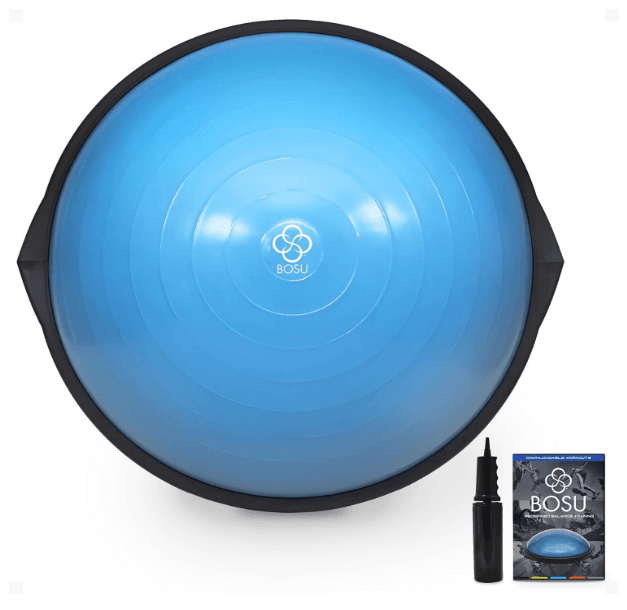
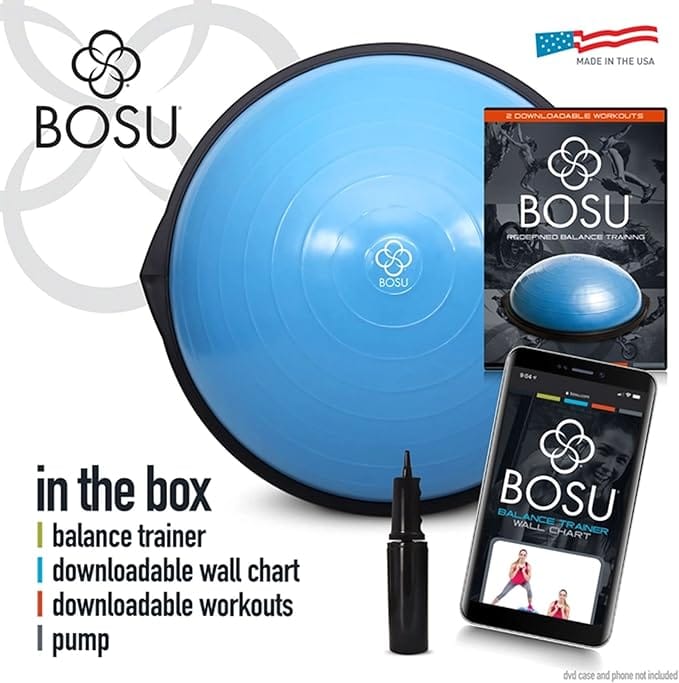
The BOSU Balance Trainer can add a controlled balance challenge to selected bodyweight exercises, but it is not automatically better than stable-surface training for strength. The existing PVL listing describes a 26-inch inflatable trainer with a rigid base, hand pump, and guided workouts. PVL has not independently confirmed the exact model, current package contents, weight limit, inflation pressure, or manufacturer-approved exercises. An unstable surface increases the importance of proper setup and fall prevention.
PVL Rating: 4.0/5 (provisional)
- Balance exercise variety: 4.5/5
- Core and coordination challenge: 4.3/5
- Home workout versatility: 4.2/5
- Beginner accessibility and fall precautions: 3.3/5
- Verified model-specific specifications: 2.9/5
What Is the BOSU Balance Trainer?
A BOSU-style balance trainer combines an inflatable dome with a rigid platform. It can be used for controlled balance, coordination, and bodyweight exercises. Unlike a full-size exercise ball, the trainer has a relatively compact footprint and a different movement pattern. Confirm the exact BOSU model and dimensions before purchase.
How Does a BOSU Balance Trainer Work?
The inflatable surface introduces movement beneath the body, requiring continuous adjustments to maintain position. Exercise difficulty depends on the stance, movement, dome inflation, and whether the equipment is used in an approved orientation. More instability is not inherently better; excessive wobbling can undermine technique.
What Does Dome-Up Mean?
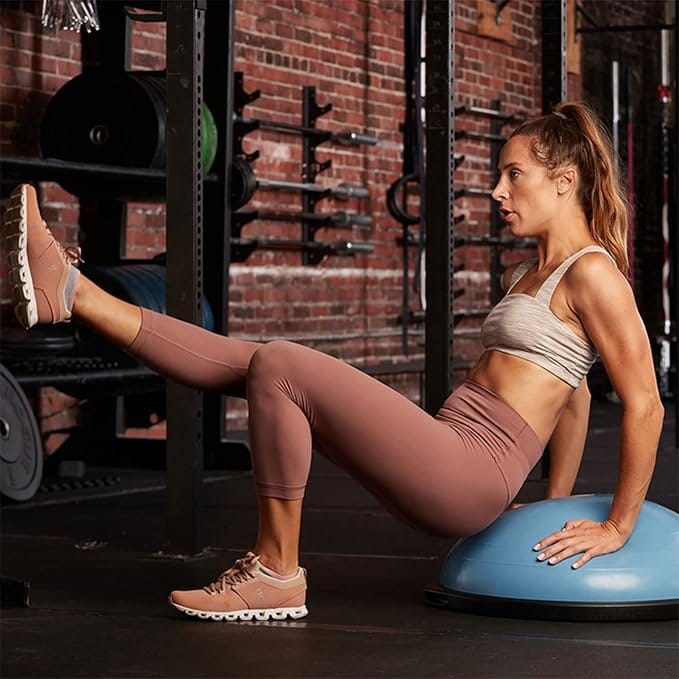
Dome-up positioning places the rigid base on the floor and the inflatable side upward. Some approved exercises involve standing, stepping, or supporting the hands on the dome. Keep movements slow and controlled, use nearby support when needed, and follow the exact model’s instructions.
Can You Use the BOSU Platform-Up?
Some BOSU models support specific exercises with the rigid platform facing upward, but approved orientations and movements vary. Do not assume that standing or jumping on an inverted trainer is permitted. Confirm manufacturer instructions and avoid unsupported configurations that could tip or roll unexpectedly.
Can a BOSU Trainer Improve Balance?
Practicing balance tasks can improve performance on those tasks and may support broader balance skills when included in a progressive program. The amount of transfer depends on the person and exercises. A BOSU trainer is one option, not a requirement for improving balance, and stable-ground exercises may be safer for some users.
Does It Strengthen Your Core?
Some controlled exercises on an unstable surface challenge trunk stabilization. However, increased muscle activation during a movement does not necessarily mean greater long-term strength gains. Traditional resistance training and stable-surface core exercises remain valuable. Choose a difficulty that allows proper technique.
Is It Good for Beginners?
Beginners can start with low-risk, supported exercises if the trainer is appropriate for their balance and mobility. Position it on a level, nonslip floor and keep stable support nearby. Start with simple weight shifts rather than jumping or performing demanding single-leg movements.
How Do You Perform Beginner Weight Shifts?
With the trainer positioned as approved and stable support within reach, practice gently shifting weight while maintaining an upright posture. Keep the movements small and stop if balance becomes difficult to control. Beginners may benefit from first practicing the same movement on the floor.
Can You Do Squats on a BOSU?
Some users perform controlled squat variations on approved BOSU configurations. However, the unstable surface may reduce the amount of resistance you can safely handle. For maximal strength development, stable-ground squats are usually more practical. Avoid heavy weights or deep ranges that compromise balance.
What About Lunges?
Selected lunge variations can introduce a balance challenge, but they also increase the chance of a misstep. Begin with stable-floor lunges and progress only when you can control the movement. Confirm that the exact model permits the planned foot placement and orientation.
Can You Do Push-Ups?
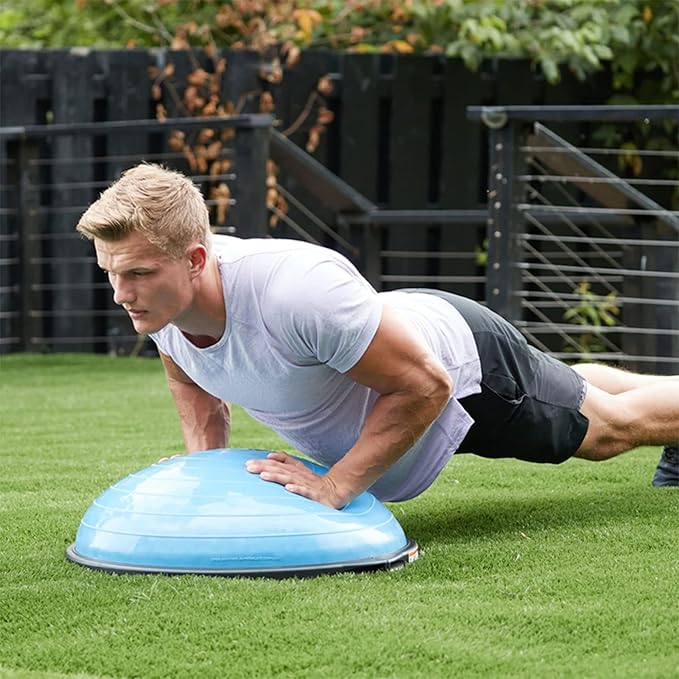
Some balance trainers support push-up variations with the hands on an approved surface. Keep the wrists comfortable and avoid sudden shifts in hand position. A standard floor push-up is an effective alternative and may be more suitable when balance or shoulder control is limited.
Can You Perform Planks?
A controlled forearm or hand-supported plank may be possible when the manufacturer approves the setup. Instability can make maintaining trunk position harder. Build a consistent floor plank first and avoid advanced variations if the trainer slides or your lower back sags.
Are Step-Ups Safe?
Step-up drills require particular attention to the trainer’s stability, the user’s balance, and the approved exercise list. Begin slowly and use nearby support. Avoid fast stepping or jumping until you have confirmed the exact model’s instructions and can maintain control without wobbling.
Can You Jump on a BOSU Trainer?
Do not assume jumping is approved for every BOSU model or orientation. Repeated impact and abrupt landings can create instability and increase fall risk. Follow the manufacturer’s exercise and load guidance. Stable-floor plyometric training may be more appropriate for people prioritizing power development.
Is It Useful for Athletic Training?
Balance trainers can add coordination variety, but sport performance depends on the athlete’s goals and the specificity of training. Unstable-surface work should not displace foundational strength, power, and sport-specific practice. Claims that a BOSU trainer automatically improves speed or athletic performance are not established for this listing.
Can It Help With Rehabilitation?
Balance devices are sometimes used in clinician-supervised rehabilitation, but the right exercise depends on the injury and recovery stage. The BOSU Balance Trainer is not a medical treatment. People recovering from ankle, knee, or other injuries should follow individualized professional guidance rather than improvising unstable exercises.
Does It Improve Posture?
Balance exercises may encourage awareness of body position during a specific movement. That does not prove a lasting improvement in everyday posture. Strength training, varied movement, and workstation ergonomics may be more relevant to broader posture goals. Avoid treating a balance trainer as a corrective medical device.
What Is the Correct Inflation Level?
Inflation affects dome firmness and how the trainer responds to movement. Follow the manufacturer’s exact model-specific instructions rather than using a guessed pressure or height. Overinflation may damage the equipment, while incorrect inflation may change its stability. The current listing does not confirm an approved pressure range.
Does It Come With a Pump?
The original PVL listing states that a hand pump is included, but the current bundle contents have not been independently verified. Check the retailer’s selected package before buying. Confirm whether inflation instructions, a plug, and any workout access are supplied with that version.
What Is the Weight Capacity?
The existing listing does not specify a verified maximum user weight or whether the rating differs for dynamic movements. Do not rely on figures from other BOSU models. Confirm the exact product’s limits and avoid exercises that exceed its approved load or impact conditions.
How Much Space Do You Need?
Allow enough clearance to step on and off safely without striking furniture. Use a level, clean, nonslip surface away from stairs and sharp edges. Keep other people and pets clear during balance drills. A compact trainer still requires adequate surrounding space for a safe fall or dismount.
How Do You Clean and Maintain It?
Follow BOSU’s care instructions for the selected model. Inspect the dome, seams, base, and inflation plug before each session. Avoid sharp objects and surfaces that could puncture the dome. Stop using the trainer if it loses air, shows cracks, or has a damaged base.
Who Should Use Extra Caution?
People with dizziness, balance disorders, recent injuries, or significant mobility limitations may face a higher fall risk. Use stable support and consider clinician guidance when appropriate. Stop for sharp pain or loss of control. Children should not use the trainer unsupervised.
How Does It Compare With a Stability Ball?
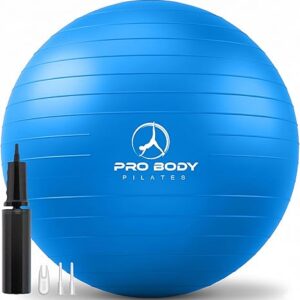
A full-size stability ball can support rolling and seated movements, while a BOSU-style trainer provides a dome and rigid base for different balance drills. Both introduce instability but neither is universally superior. Choose the device that matches the exercises you can perform safely and consistently.
How Does It Compare With a Balance Board?
Balance boards often tilt or rock around a different contact surface, while inflatable trainers add compressibility and movement. The training sensation and risks vary by design. Neither should replace foundational strength work, and both require progression suited to the user’s current ability.
Is the BOSU Balance Trainer Worth Buying?
It may be worthwhile for people who enjoy controlled balance and bodyweight variations and have room to train safely. It is less compelling if the main goal is lifting heavier weights or maximizing muscle growth. Verify the exact model, included pump, load rating, warranty, and current price.
Pros and Cons
Pros
- Supports a range of controlled balance and coordination drills
- Can add variety to selected core and bodyweight exercises
- Compact compared with some larger fitness equipment
- May complement a balanced home-training program
Cons
- Unstable exercises can increase fall risk
- Not necessarily better than stable-surface strength training
- Exact model, load rating, and approved orientations unverified
- Inflation and equipment condition require regular checks
Frequently Asked Questions
What is the BOSU Balance Trainer used for?
It is used for controlled balance drills, selected bodyweight exercises, and core-stability challenges. Depending on the exact model, approved movements may include weight shifts, planks, and step-based exercises. An unstable surface is not automatically more effective than the floor. Choose movements that match your ability and follow manufacturer instructions.
Can beginners use the BOSU Balance Trainer safely?
Beginners may use it for simple, supported balance exercises when the trainer is correctly positioned and inflated. Start with gentle weight shifts and stable support nearby. Avoid jumping or advanced single-leg drills until control improves. Stop if the trainer slides or you cannot maintain a steady position.
Can you use a BOSU Balance Trainer upside down?
Some BOSU models permit specific platform-up exercises, but approval varies by model and movement. Do not assume inverted standing, jumping, or weighted exercises are allowed. Check the current manufacturer’s instructions for the exact trainer. Use only approved orientations and keep enough clear space for a safe dismount.
Does the BOSU Balance Trainer help strengthen your core?
Selected BOSU exercises can challenge trunk stabilization, but that does not guarantee greater strength gains than stable-floor training. Results depend on exercise selection, progression, and consistency. Traditional strength and core exercises remain useful. Start with controlled movements and avoid increasing instability at the expense of good technique.
How much should I inflate a BOSU Balance Trainer?
Follow the inflation instructions for your exact BOSU model rather than using a guessed pressure or dome height. Inflation affects firmness and stability. The current PVL listing does not verify a specific pressure range. Inspect the plug and surface before use, and stop if the trainer loses air unexpectedly.
Can a BOSU Balance Trainer be used for rehabilitation?
Balance trainers are sometimes included in clinician-directed rehabilitation, but they are not stand-alone treatments for injury. The appropriate exercise depends on the condition, recovery stage, and individual balance ability. Seek professional guidance when recovering from an injury, and avoid unstable movements that cause pain or increase fall risk.
Final Verdict
PVL Rating: 4.0/5 (provisional). The BOSU Balance Trainer can add exercise variety and a meaningful balance challenge for users who progress carefully. Its strongest role is as a supplement to, not a replacement for, stable strength training. Confirm the exact model’s dimensions, load rating, inflation guidance, included accessories, and approved exercise configurations before purchase.
Reviews
There are no reviews yet.