


Quick Verdict
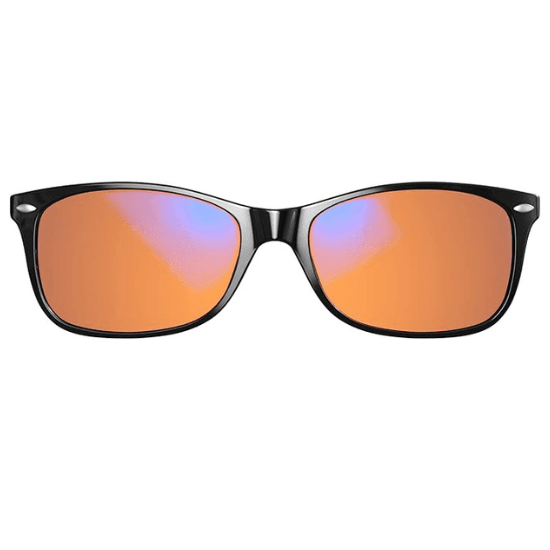
Swanwick blue-light-blocking glasses are a reasonable way to reduce short-wavelength light reaching the eyes in the evening, but that does not guarantee better sleep or less digital eye strain. Amber/orange lenses may be useful for people who want to deliberately dim their evening light exposure while still using screens, but the clinical evidence for blue-light-filtering spectacles remains mixed and product-specific evidence is limited.
PVL Rating: 3.8/5
- Light-filtering concept: 4.3/5
- Sleep evidence: 3.4/5
- Eye-strain evidence: 3.0/5
- Ease of use: 4.3/5
- Value: 3.6/5
Best for: Adults who use bright screens or indoor lighting late at night and want a wearable way to reduce evening short-wavelength light as part of a broader light-management routine.
Not ideal for: Anyone expecting glasses alone to treat insomnia, eliminate digital eye strain, or compensate for an irregular sleep schedule and very bright nighttime environment.
What Are Swanwick Blue-Light-Blocking Glasses?
Swanwick sells tinted eyewear intended to filter portions of visible short-wavelength light. The sleep-oriented versions use stronger amber/orange or red-tinted lenses than nearly clear daytime computer glasses.
The biological rationale is plausible: evening light reaching the retina can influence circadian signaling, and shorter wavelengths can be particularly effective at suppressing melatonin. But a plausible mechanism is only the first step. Whether a particular pair of glasses meaningfully improves a person’s sleep depends on the lens spectrum, timing, duration of wear, surrounding light, baseline sleep problem, and behavior.
Do Blue-Light Glasses Improve Sleep?
The evidence is mixed and not strong enough to promise a sleep benefit. Some small trials of amber or blue-blocking lenses have reported improvements in subjective sleep measures in selected populations. However, studies differ substantially in lens transmission, timing, duration, participants, and outcome measures.
A Cochrane systematic review of blue-light-filtering spectacle lenses concluded that the evidence for sleep-related outcomes was uncertain because findings were inconsistent and studies were generally small. This is important because “blue-light glasses” are not one standardized intervention: a nearly clear lens and a deeply tinted evening lens can have very different spectral effects.
PVL did not identify a randomized controlled trial of the finished Swanwick glasses demonstrating that they reliably improve chronic insomnia, total sleep time, sleep efficiency, or sleep architecture. Their most defensible role is reducing evening light exposure, not treating a sleep disorder.
Do They Reduce Digital Eye Strain?
Blue-light filtering is not well established as a treatment for digital eye strain. The Cochrane review found that blue-light-filtering lenses may not reduce short-term computer-related eye strain compared with non-blue-light-filtering lenses.
Screen discomfort can instead involve prolonged near focus, reduced blinking, dry eye, glare, uncorrected vision, poor ergonomics, and long uninterrupted viewing. Breaks, blinking, appropriate screen distance, glare control, and an up-to-date vision prescription may matter more than the blue-light label on the lens.
What Benefit Is Most Plausible?
The clearest reason to use strongly tinted evening glasses is environmental light management. If the lenses substantially attenuate short-wavelength light, wearing them consistently before bed can reduce that component of retinal light exposure while allowing some normal evening activities to continue.
That strategy makes more sense when combined with dimmer room lighting, reduced screen brightness, a consistent wake time, and less stimulating late-night device use. Glasses should not become permission to keep an otherwise intensely bright environment until bedtime.
Lens Color Matters
Consumers should not assume every product marketed as “blue-light blocking” has the same effect. Clear or lightly tinted lenses may filter relatively little of the wavelengths most relevant to circadian light exposure, while amber/red lenses can alter color perception substantially.
For sleep-oriented use, the manufacturer’s spectral-transmission data are more informative than a generic percentage claim unless the test method and wavelength range are clearly stated. PVL would avoid comparing brands solely by headline “% blue light blocked” figures measured under different conditions.
Safety and Practical Limitations
Strongly tinted lenses change color perception and can reduce overall light reaching the eye. They should not be worn for driving or other activities where accurate color recognition and visibility are important unless the product is specifically approved for that use.
Persistent eye pain, marked redness, double vision, headaches, sudden visual changes, or ongoing eye strain deserves assessment rather than repeated experimentation with screen glasses. Persistent insomnia also warrants evaluation when basic sleep and light-management measures are not enough.
Pros and Cons
Pros
- Wearable way to reduce evening short-wavelength light exposure
- Can be used while watching TV or using screens
- Strong tint makes the light-management purpose easy to understand
- May complement dimmer evening lighting and a consistent routine
- Non-drug approach
Cons
- No finished-product RCT identified for chronic insomnia
- Blue-light-filtering spectacles are not proven to relieve digital eye strain
- Strong tint changes color perception
- Benefit depends heavily on timing, lens spectrum, and surrounding light
- Can encourage overreliance on glasses instead of improving nighttime habits
Who Should Consider Them?
Swanwick glasses may suit someone who must use screens or remain under artificial lighting in the evening and wants to deliberately reduce short-wavelength exposure before bed. They are most sensible as one layer of a broader circadian-light routine.
Who Should Choose Another Approach?
If your main complaint is dry, tired eyes during daytime computer work, start with breaks, blinking, ergonomics, glare management, and an eye examination when appropriate. If insomnia persists despite adequate sleep opportunity and consistent habits, evidence-based insomnia care is more appropriate than relying on tinted glasses alone.
Are Swanwick Blue-Light Glasses Worth It?
They can be worthwhile for people who value the convenience of wearable evening light reduction and are comfortable with tinted lenses. Their value is weaker if you are buying them primarily because you expect proven relief from digital eye strain or a guaranteed improvement in sleep.
PVL therefore scores them as a practical light-management tool rather than a clinically validated sleep treatment.
Frequently Asked Questions
Do Swanwick blue-light glasses help you sleep?
They can reduce the short-wavelength light reaching your eyes, but PVL did not identify a finished-product randomized trial showing that Swanwick glasses reliably improve chronic insomnia or objective sleep outcomes.
Do blue-light glasses prevent digital eye strain?
Current systematic-review evidence does not show a meaningful short-term advantage of blue-light-filtering spectacles over ordinary lenses for computer-related eye strain.
When should I wear blue-light-blocking glasses for sleep?
Timing depends on your sleep schedule and the lens. Evening use before the intended sleep period is the relevant concept, but glasses work best as part of broader control of nighttime light rather than as a stand-alone treatment.
Are darker lenses better?
Darker amber or red lenses may filter more short-wavelength light, but visible darkness alone does not tell you the exact spectral transmission. Manufacturer test data are more useful.
Can I wear strong blue-blocking glasses while driving?
Strong tints can alter color perception and visibility. Do not use them for driving unless the specific product is approved and suitable for that purpose.
Final Verdict
PVL Rating: 3.8/5. Swanwick blue-light-blocking glasses are best understood as an evening light-management tool. The circadian rationale is credible, but evidence that blue-light-filtering spectacles reliably improve sleep is inconsistent, and evidence for digital eye-strain relief is weak. Use them to reduce evening light exposure—not as a treatment for insomnia or screen-related eye problems.
References
- Singh S, et al. Blue-light filtering spectacle lenses for visual performance, sleep, and macular health in adults. Cochrane Database Syst Rev. 2023. PMID 37593770.
- Burkhart K, Phelps JR. Amber lenses to block blue light and improve sleep: a randomized trial. Chronobiol Int. 2009. PMID 20030543.
- National Heart, Lung, and Blood Institute: Sleep disorder treatments
Reviews
There are no reviews yet.